Logical Reasoning Geometry Worksheets for 3-Year-Olds
3 filtered results
-
From - To
Unlock your 3-year-old's potential with our Logical Reasoning Geometry Worksheets! Crafted to nurture early cognitive development, these fun and engaging activities will introduce your child to crucial geometric concepts and sharpen their logical thinking skills. Through colorful shapes, patterns, and simple puzzles, kids will learn to recognize and categorize shapes, enhancing their foundational math abilities. Ideal for both home and classroom settings, our worksheets provide a playful and educational experience that supports preschool learning milestones. Give your toddler a head start in math and problem-solving with these expertly designed, age-appropriate worksheets from Kids Academy!
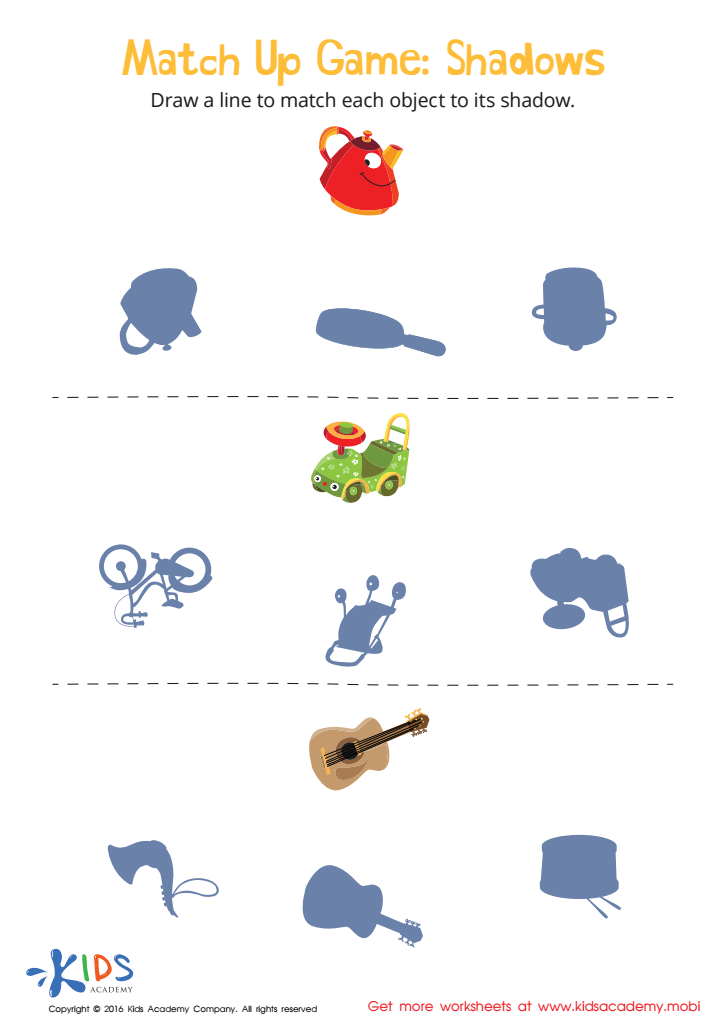
 Assign to My Students











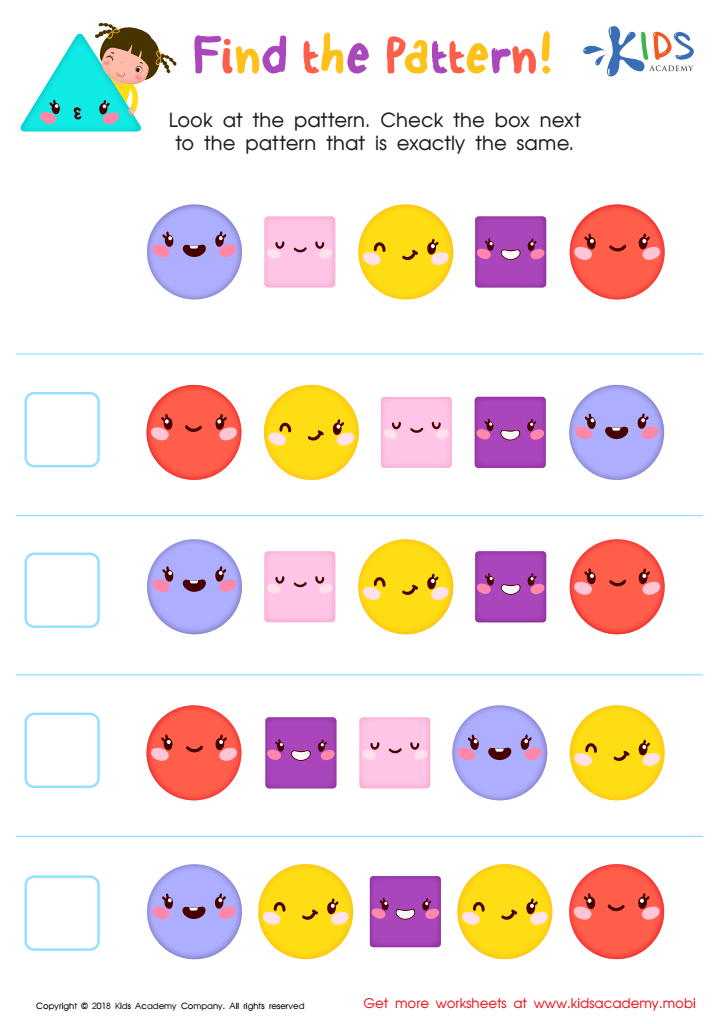
Find the Pattern Worksheet
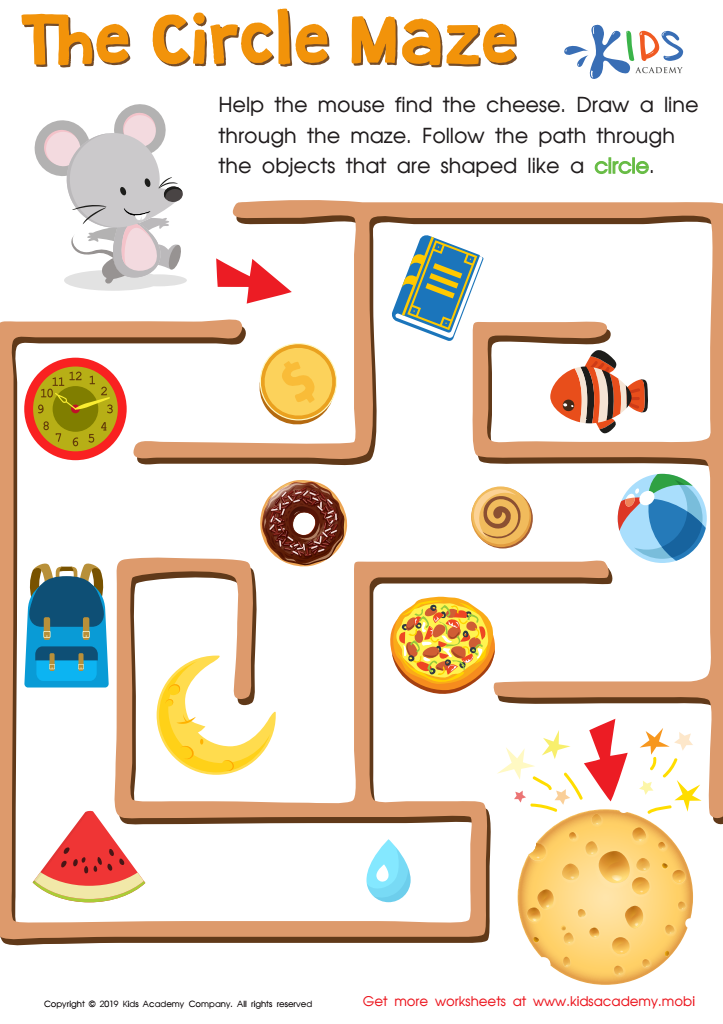
The Circle Maze Worksheet








Introducing logical reasoning and basic geometry to 3-year-olds is crucial for their cognitive and overall intellectual development. At this developmental stage, children are natural explorers with eager minds excited to learn about the world around them. Engaging them in activities that promote logical reasoning and geometric understanding lays a strong foundation for future academic success and problem-solving skills.
Logical reasoning encourages young children to think critically, recognize patterns, and make sense of their surroundings. Activities like sorting shapes, completing puzzles, and identifying similarities and differences help them develop essential cognitive tools. These skills promote an analytical mindset that will benefit them throughout their education and beyond.
Introducing geometric concepts, such as identifying shapes, understanding spatial relationships, and exploring symmetry, helps broaden their mathematical vocabulary and understanding. Early exposure to geometry can spark a child's interest in math and science, fields that heavily rely on spatial awareness. Simple hands-on activities, like sorting blocks or drawing shapes, can make abstract concepts more tangible and accessible.
Moreover, these early learning experiences are not just academically enriching but also boost confidence and stimulate curiosity. By weaving logical reasoning and geometry into playful and engaging activities, parents and teachers help children develop essential skills while nurturing a lifelong love of learning.








