Shape comparison Geometry Worksheets for 3-Year-Olds
3 filtered results
-
From - To
Welcome to our Shape Comparison Geometry Worksheets for 3-Year-Olds! These engaging worksheets are designed to introduce your little ones to the exciting world of shapes. Through fun activities, children will learn to recognize, compare, and differentiate common shapes such as circles, squares, and triangles. Our worksheets encourage critical thinking and enhance visual perception skills, all while keeping the learning process enjoyable! Ideal for home or preschool settings, these resources promote early math skills and help build a strong foundation for future learning. Download and let your child explore the wonders of geometry in a playful and interactive way!
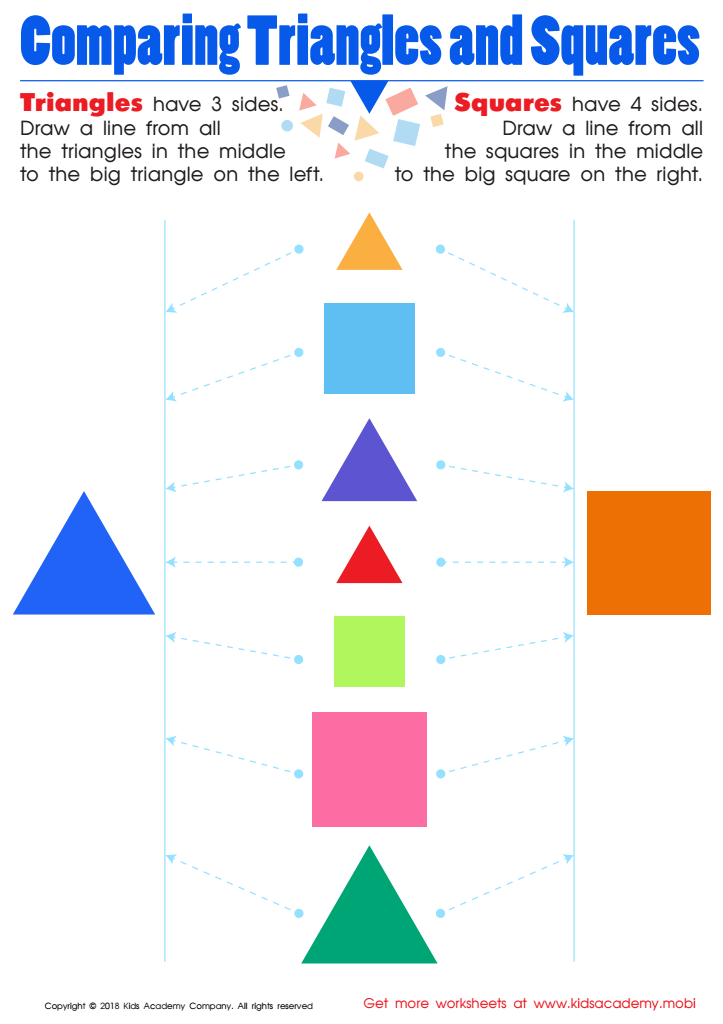
Comparing Triangles Squares Worksheet
 Assign to My Students











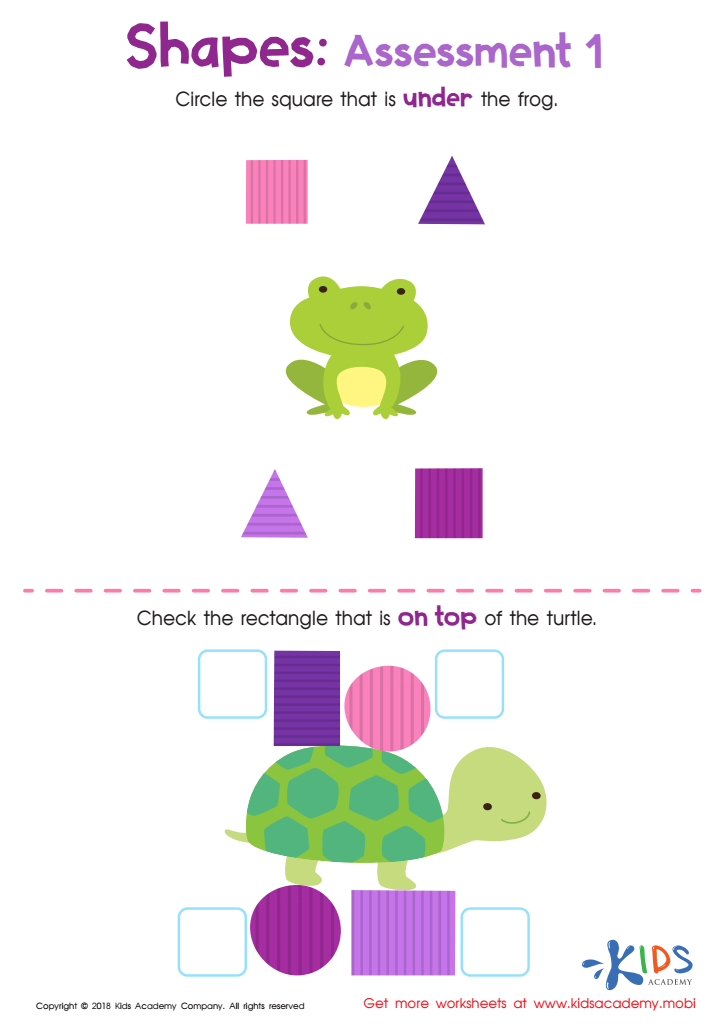
Geometry – Assessment 1 Worksheet
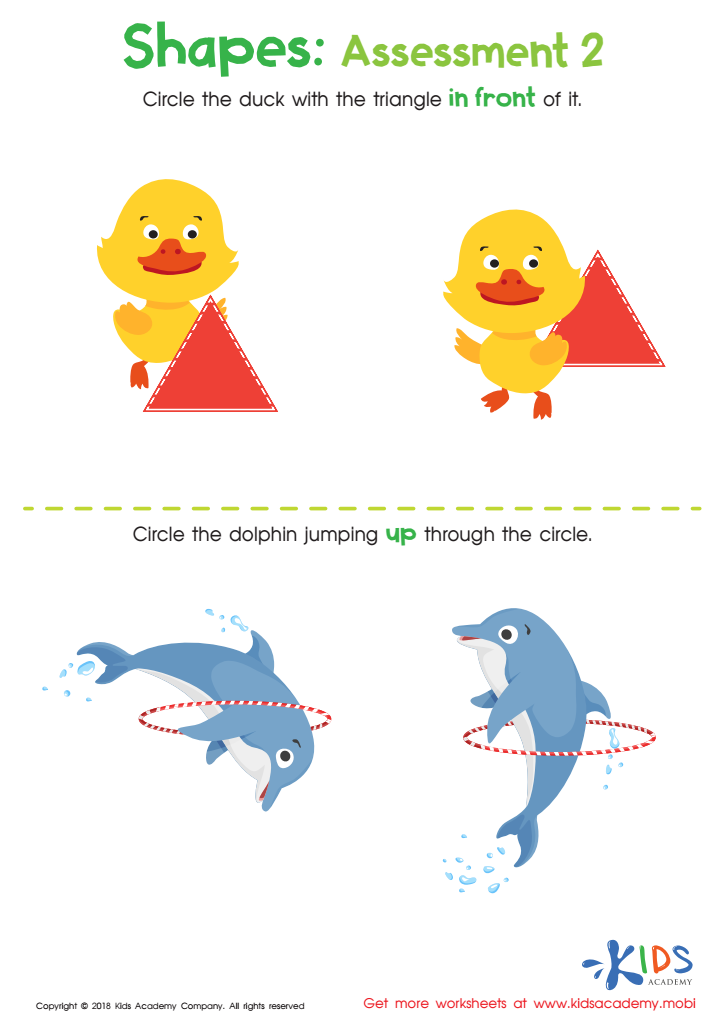
Geometry – Assessment 2 Worksheet








Teaching shape comparison geometry to 3-year-olds is crucial for their early cognitive development and can greatly impact their future learning success. At this age, children are naturally curious and eager to explore their environment. Engaging them in activities that involve identifying, comparing, and classifying shapes fosters critical thinking and problem-solving skills.
When parents and teachers emphasize shape comparison, they help children enhance their spatial awareness, leading to a better understanding of their world. Recognizing similarities and differences between shapes lays a strong foundation for skills in mathematics and science that will be further developed in later years.
Moreover, connecting shape comparisons with everyday experiences—like sorting toys, measuring objects, or recognizing patterns—makes learning meaningful and relevant. This connections support language development as children learn to articulate their observations and increase their vocabulary by describing shapes and their relationships.
Additionally, integrating shape comparison into play encourages social skills, as children collaborate and communicate with peers or family members. Ultimately, nurturing an early understanding of geometry enriches childhood learning experiences and cultivates a lifelong appreciation for math and science, paving the way for academic achievement and personal growth.








