Addition skills Numbers Worksheets for 3-Year-Olds
5 filtered results
-
From - To
Discover our fun and engaging Addition Skills Numbers Worksheets for 3-year-olds! Designed to introduce young learners to early math concepts, these worksheets provide a playful approach to basic addition. Through colorful illustrations and interactive activities, children will enhance their number recognition and counting abilities while practicing simple addition. Ideal for toddlers at home or in preschool settings, our worksheets promote cognitive development and critical thinking skills. Instill a love for math from an early age with our easy-to-use resources, making learning enjoyable and effective. Start your little one's math journey today with our carefully crafted addition worksheets!
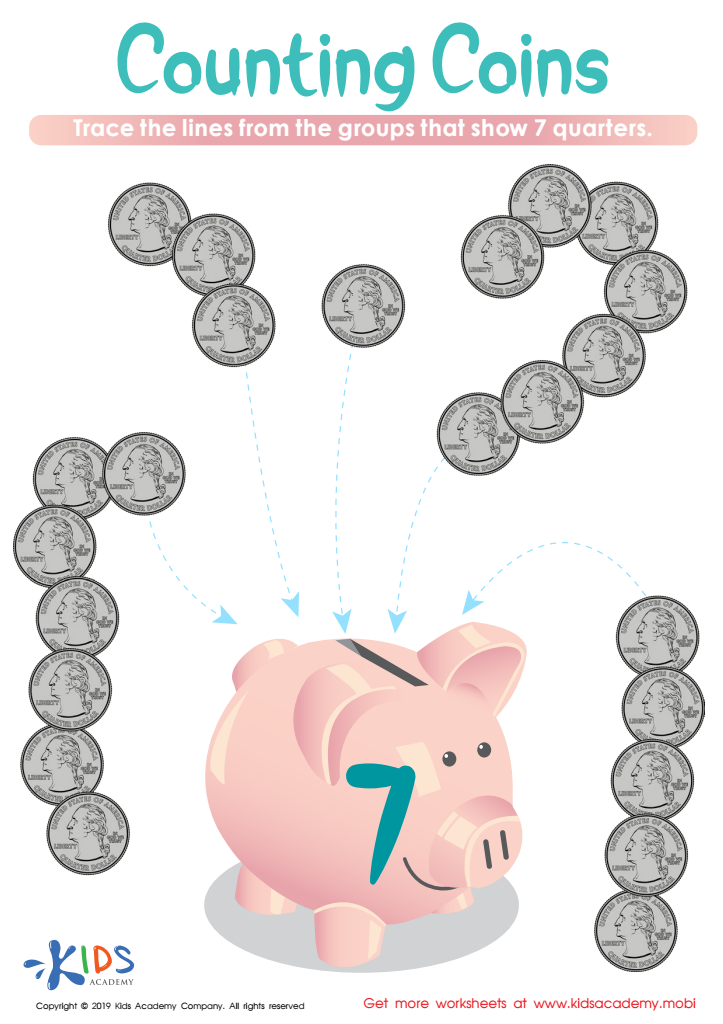
Counting Coins Worksheet
 Assign to My Students
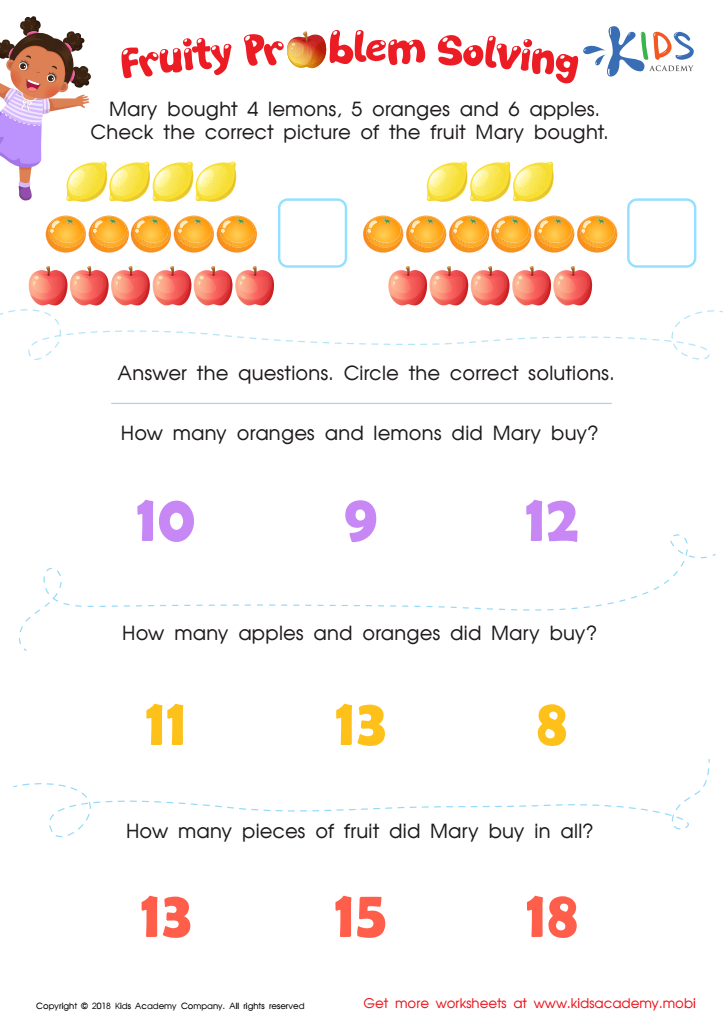
Fruity Problem Solving Worksheet
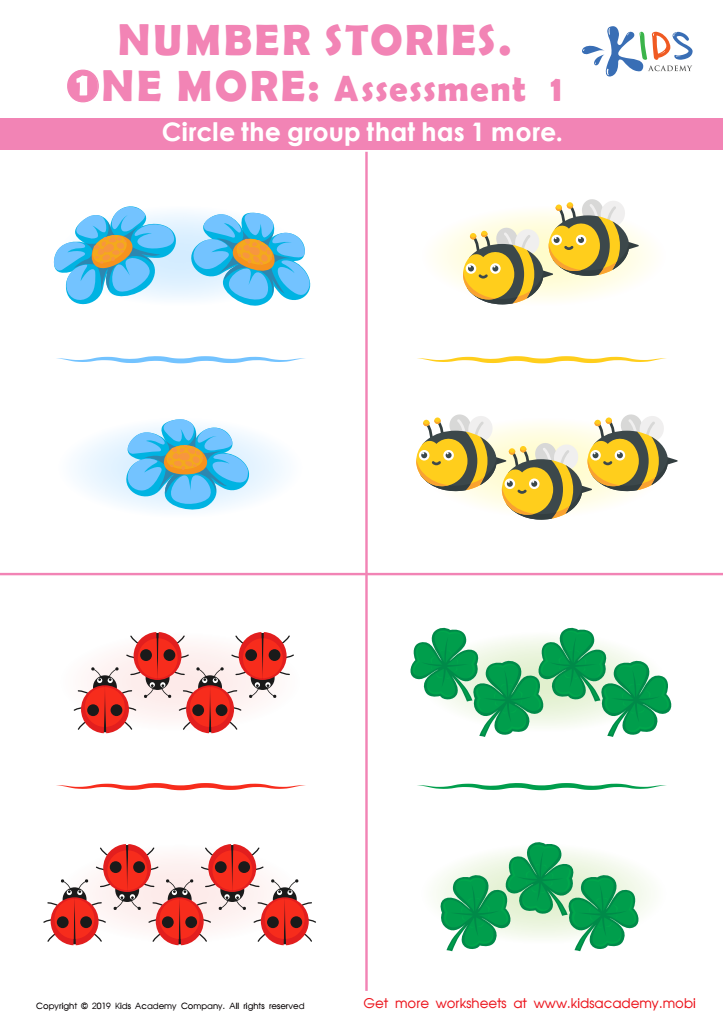
Number Stories One More – Assessment 1 Worksheet
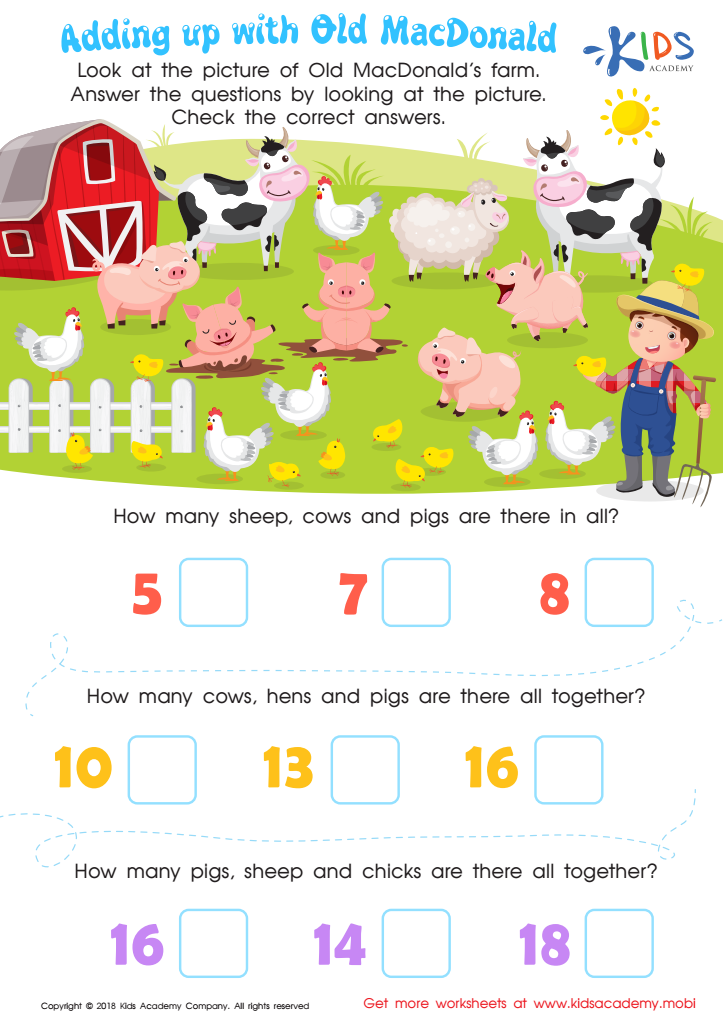
Adding Up with Old MacDonald Worksheet
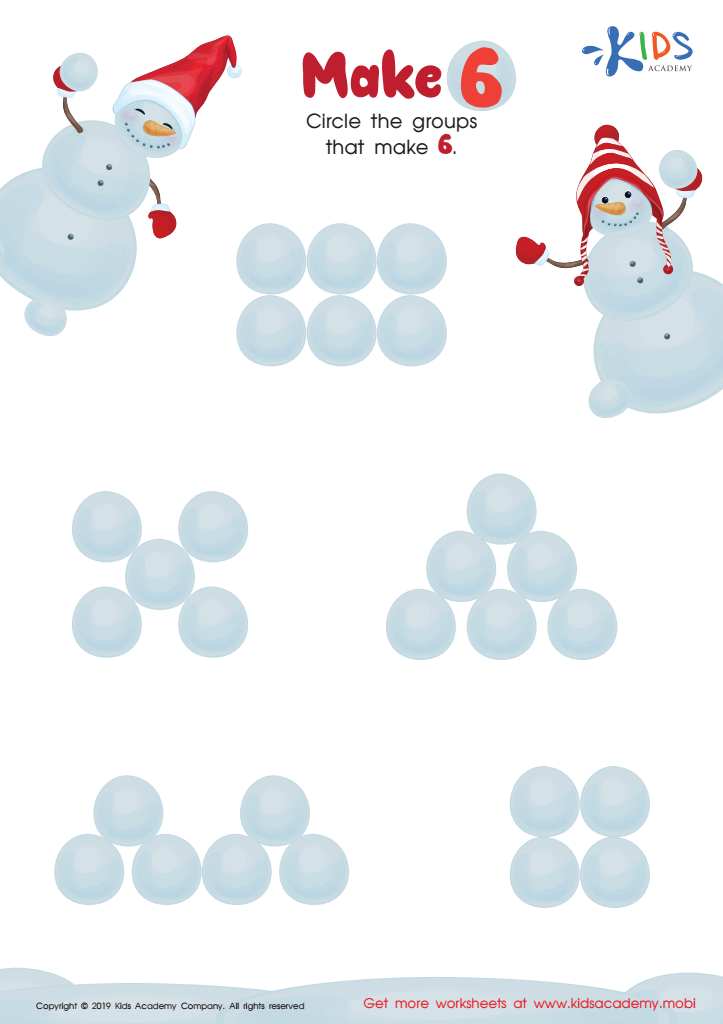
Make 6 Worksheet








Parents and teachers should prioritize addition skills for 3-year-olds because early numeracy lays the foundation for future mathematical understanding. At this age, children are naturally curious and often explore concepts through play. Introducing basic addition in a fun and interactive manner offers numerous cognitive benefits. For example, it develops critical thinking, enhances problem-solving abilities, and improves overall cognitive development.
Moreover, learning addition fosters positive attitudes towards math. When children engage with numbers in enjoyable ways, such as using toys or counting games, they associate mathematics with fun rather than fear or frustration. This positive experience is vital for encouraging a love of learning that can last a lifetime.
Additionally, developing early math skills aids in other areas of academic learning, such as language development and spatial awareness. Children who grasp basic addition concepts tend to perform better in school later on as they build on these foundational skills.
Engaging 3-year-olds in activities that reinforce addition greatness equips them with essential tools for not only their educational journey but also for everyday situations like sharing objects or managing simple tasks. Thus, fostering these skills early on is crucial for overall development and confidence in young learners.








