
Spatial awareness Numbers Worksheets for 3-Year-Olds
3 filtered results
Difficulty Level
Grade
Age
-
From - To
Subject
Activity
Standards
Introduce your child to the world of numbers with our Spatial Awareness Numbers Worksheets for 3-Year-Olds. These fun, engaging worksheets are designed to boost early math skills by combining number recognition with spatial awareness exercises. Perfectly tailored for toddlers, each activity helps little learners identify, count, and place numbers in the correct sequence. This playful approach not only strengthens their understanding of numbers but also enhances their ability to perceive and organize spatial relationships. Ideal for home or classroom use, our worksheets provide a solid foundation for your child's mathematical journey. Download and print today for endless learning fun!
Favorites
With answer key
Interactive
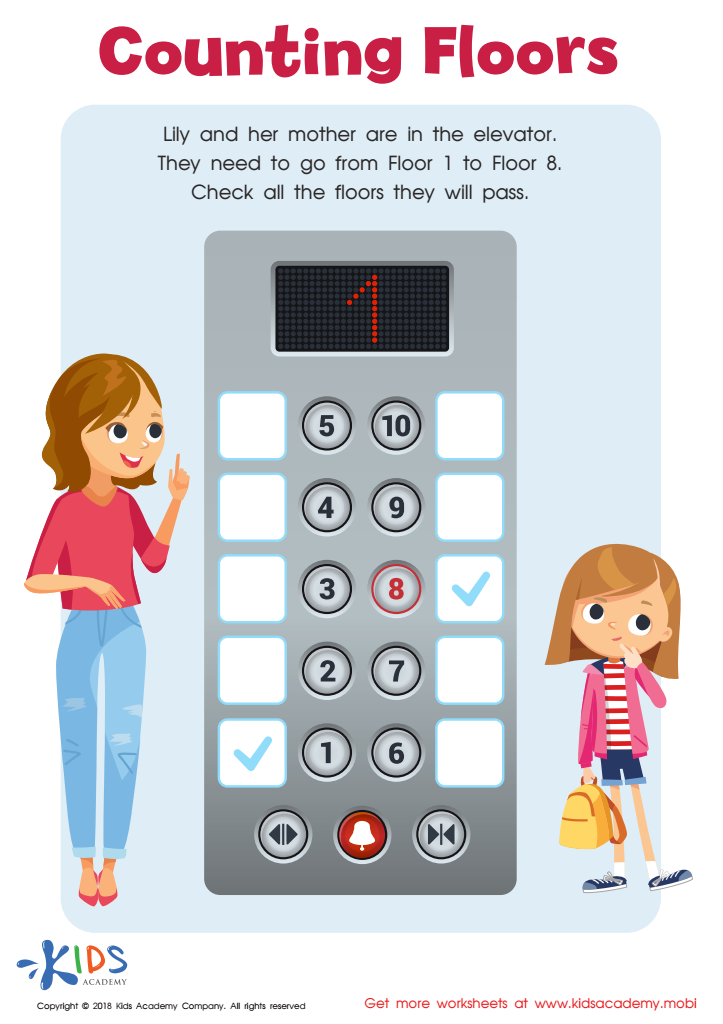
Counting Floors Worksheet
Take your kids on an elevator ride and have them help you. With this worksheet, little ones meet Lily and her mom. They're taking an elevator from Floor 1 to Floor 8. Ask them to check the floors they pass and help the two reach their destination.
 Assign to My Students
Counting Floors Worksheet
Worksheet
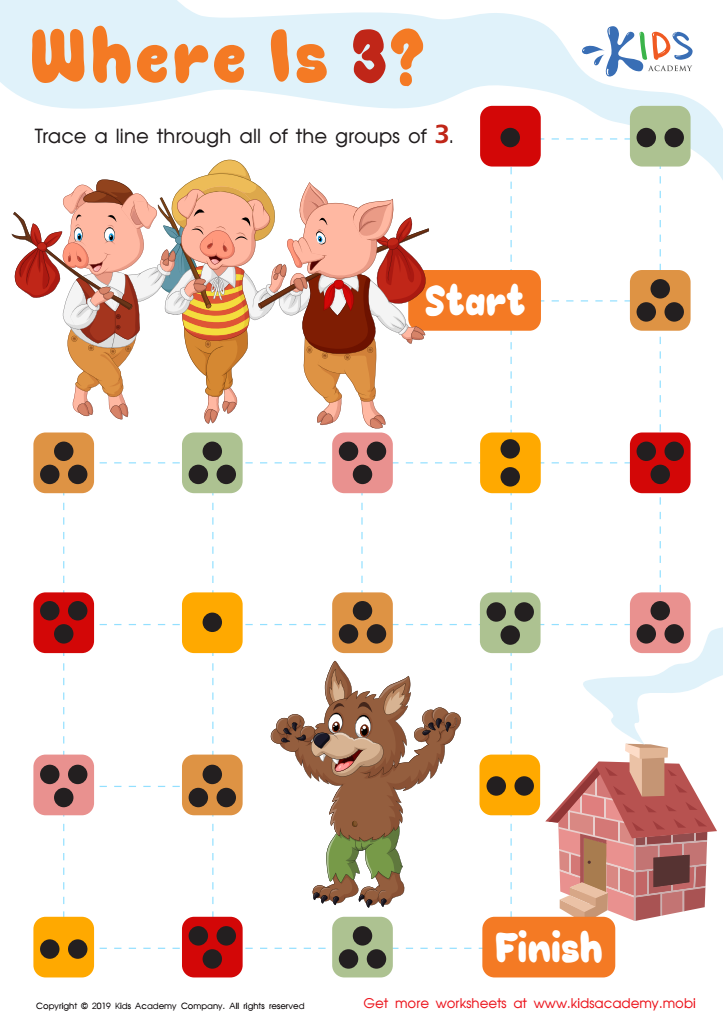
Where Is 3? Worksheet
Let your little mathematician join the Three Little Pigs on an adventure! With this free worksheet, they'll guide the pigs through a maze of numbered bricks, using one-to-one representation to get to the sturdy house. Have fun helping the piggy friends past the wolf!
Where Is 3? Worksheet
Worksheet
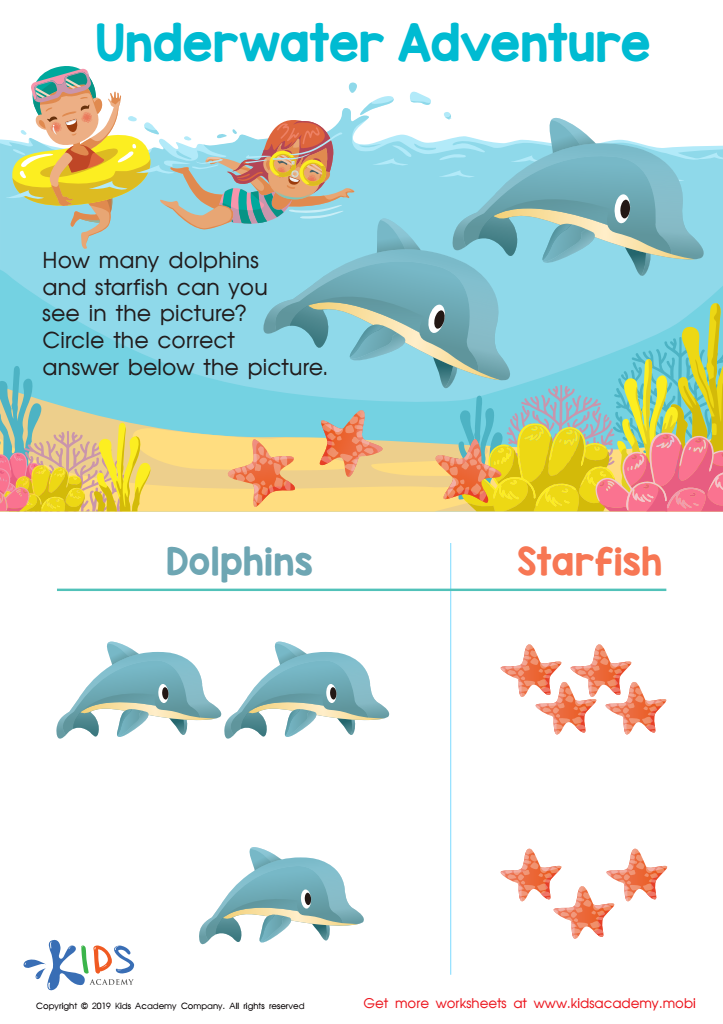
Underwater Adventure Worksheet
Kids can explore the ocean without realizing they're doing math! This free worksheet takes them on an underwater adventure with dolphins and starfish. They count using pictures and answer questions by circling the right images. Along the way, they'll have a blast!
Underwater Adventure Worksheet
Worksheet
Join Kids Academy for Free
Who is primarily going to use this learning content?








Parents and teachers should prioritize spatial awareness and numbers for 3-year-olds because these foundational skills are crucial for early development and future learning across various disciplines. Spatial awareness helps children understand the relationship between objects, allowing them to navigate their environment safely and efficiently. This skill will later support their abilities in more complex tasks like reading and writing, which require understanding the orientation and positioning of letters and words.
In terms of numbers, early numeracy is vital for developing basic math skills. Familiarity with numbers and counting sets the groundwork for later arithmetic and problem-solving abilities. When children begin to grasp concepts such as size, quantity, and sequencing, they are better prepared to tackle more advanced mathematical thinking. Moreover, engaging with numbers at an early age fosters critical thinking and logic, which are essential for everyday decision-making.
Combining spatial awareness with numerical understanding enhances cognitive development, encouraging young minds to recognize patterns, categorize objects, and understand cause-effect relationships. These skills are interconnected and reinforce each other, ultimately providing a well-rounded developmental boost.
By focusing on spatial awareness and numerical proficiency, parents and teachers enable children to build confidence, curiosity, and a love for learning—qualities that will serve them well throughout their educational journey and entire life.








