Check out this FREE Trial Lesson on Math for age 3!

T

Favorites
With answer key
Interactive
  • 3
  • Addition skills
  • Math
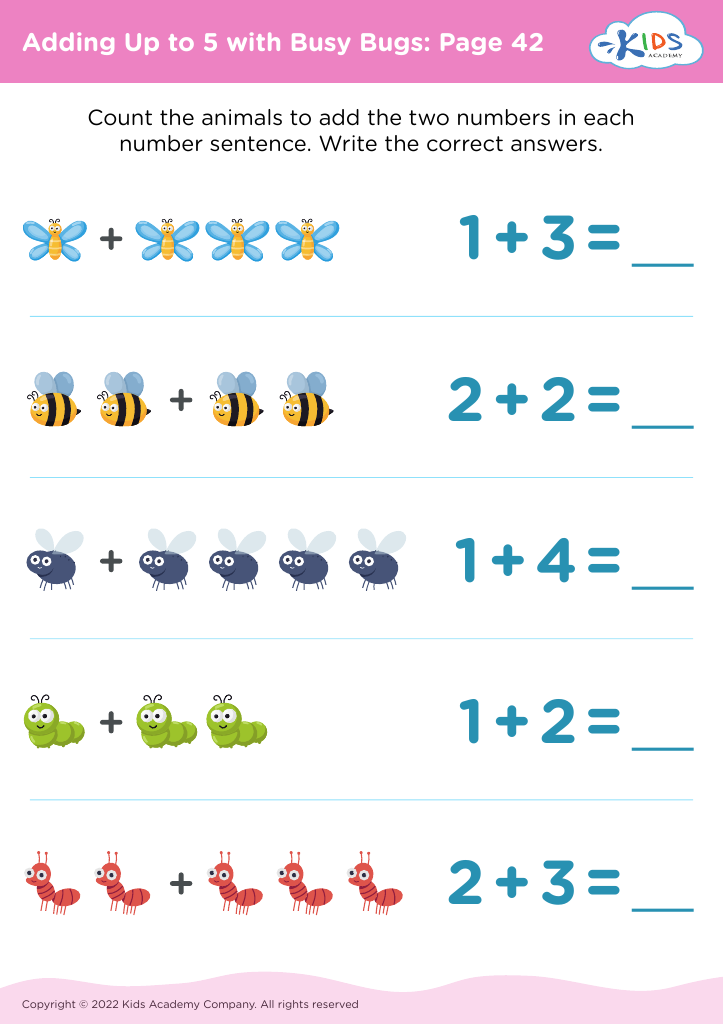
Adding Up to 5 with Busy Bugs: Page 42
Worksheet
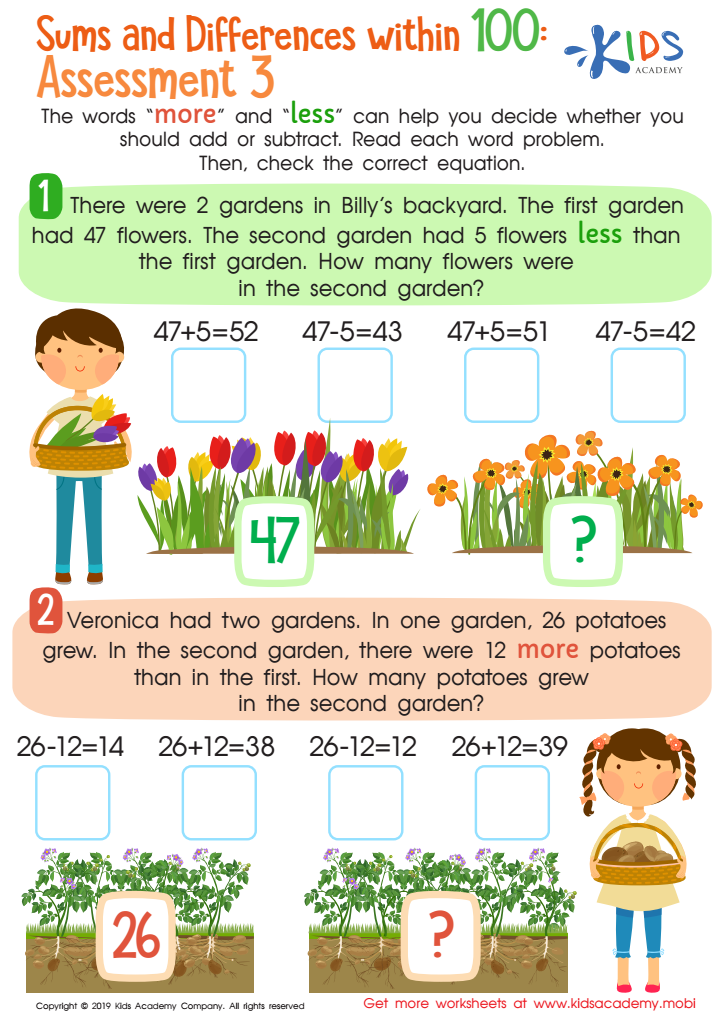
Sums and Differences Within 1 - Assessment 3 Worksheet

Sums and Differences Within 1 - Assessment 3 Worksheet

When we see 'more' or 'less', they usually refer to quantity. In Math, they indicate addition or subtraction. Help kids read aloud two simple word problems and figure out the correct equations for each. Check the correct equation afterwards.
Sums and Differences Within 1 - Assessment 3 Worksheet
Worksheet
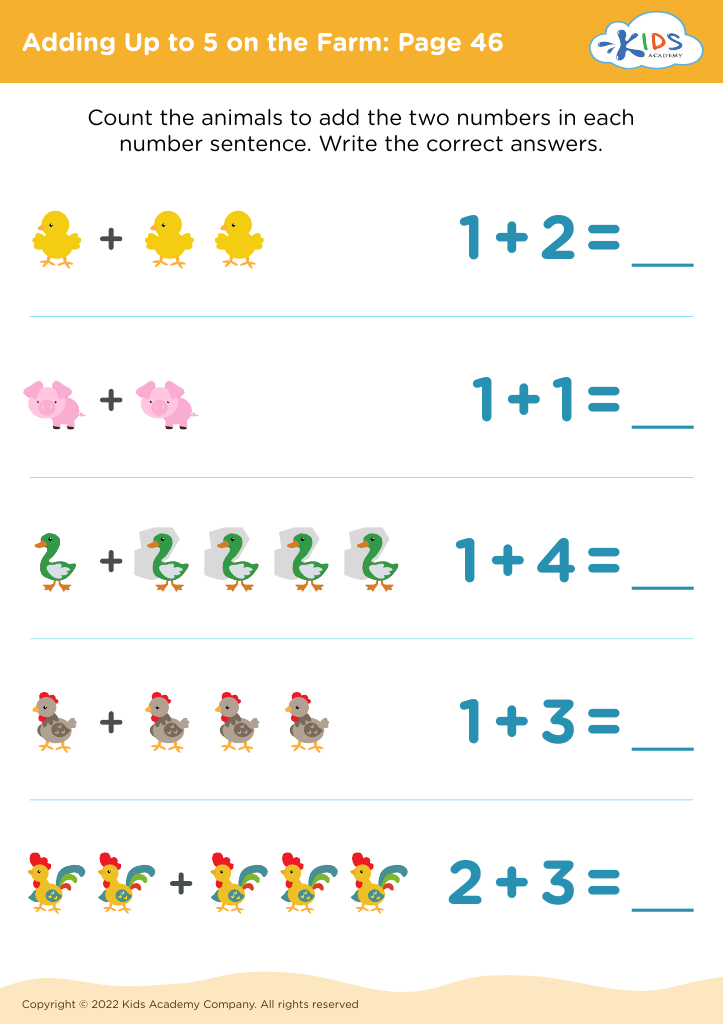
Adding Up to 5 on the Farm: Page 46
Worksheet
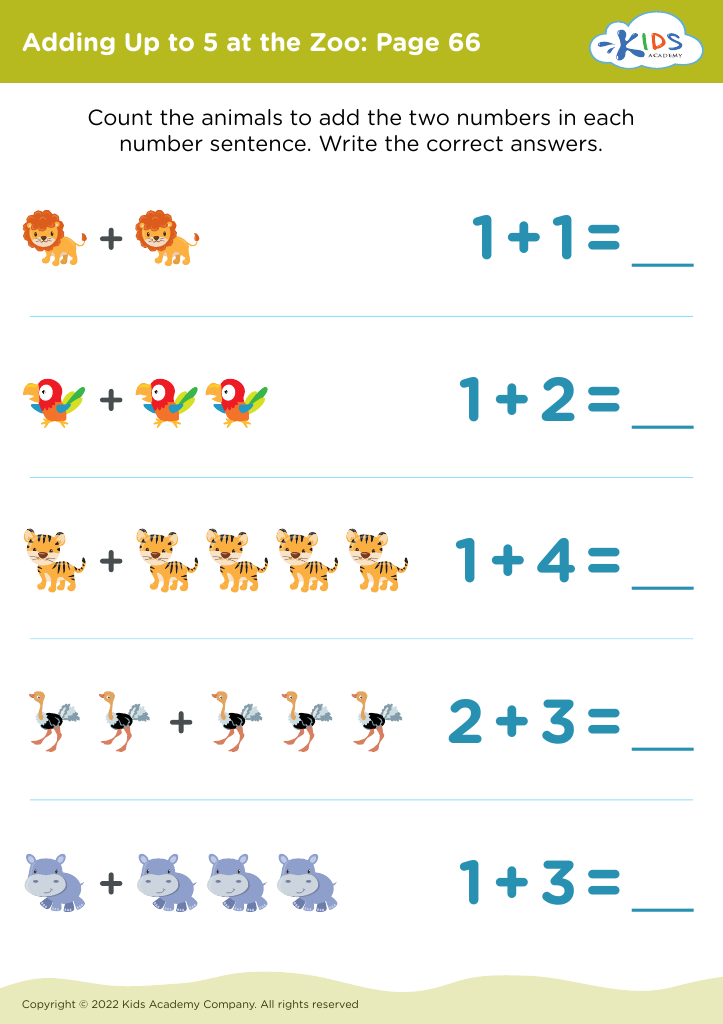
Adding Up to 5 at the Zoo: Page 66
Worksheet
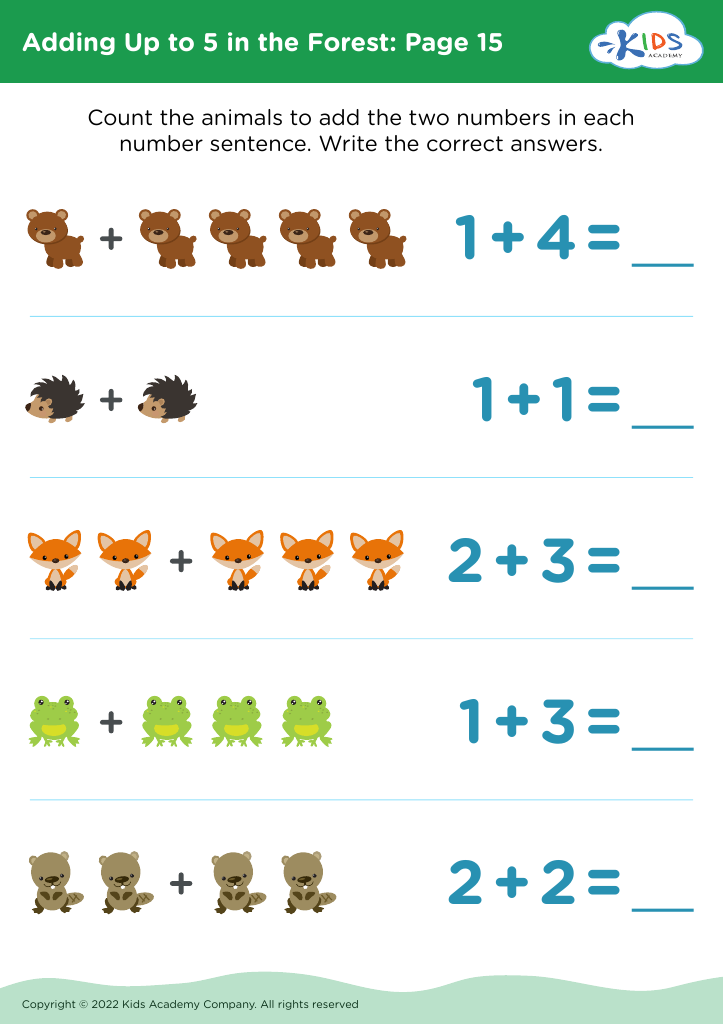
Adding Up to 5 in the Forest: Page 15
Worksheet
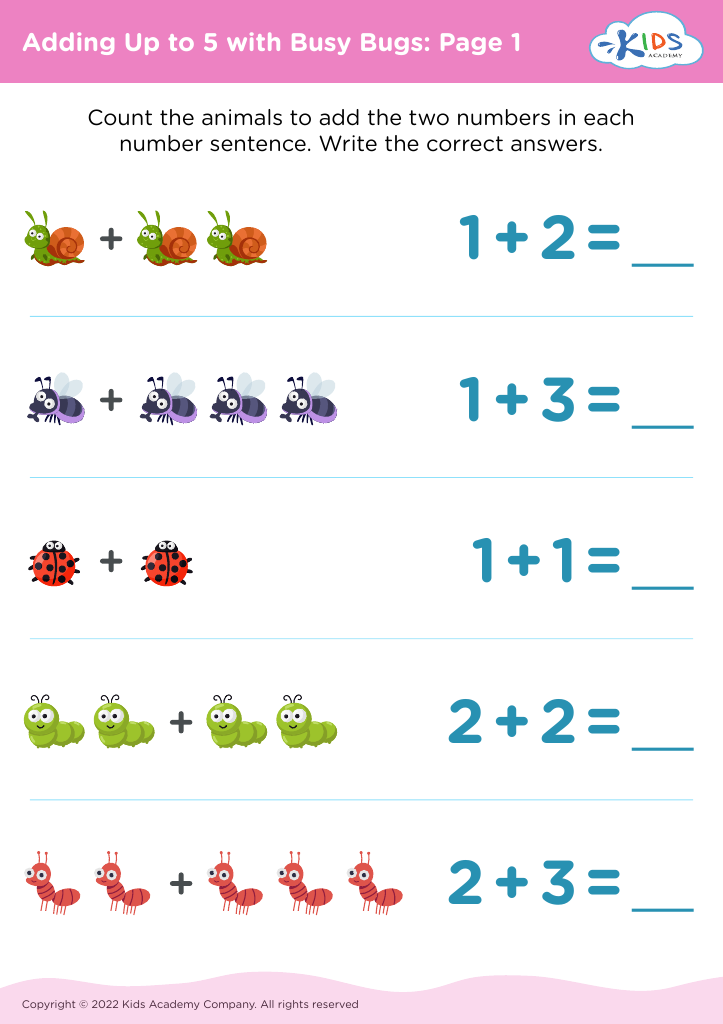
Adding Up to 5 with Busy Bugs: Page 1
Worksheet
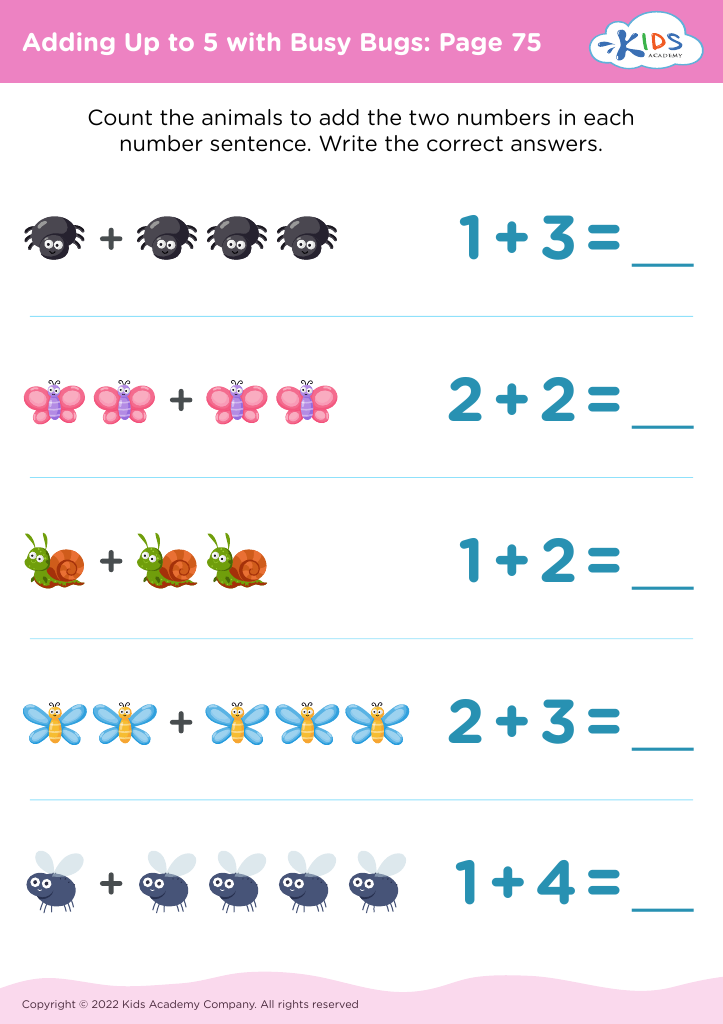
Adding Up to 5 with Busy Bugs: Page 75
Worksheet
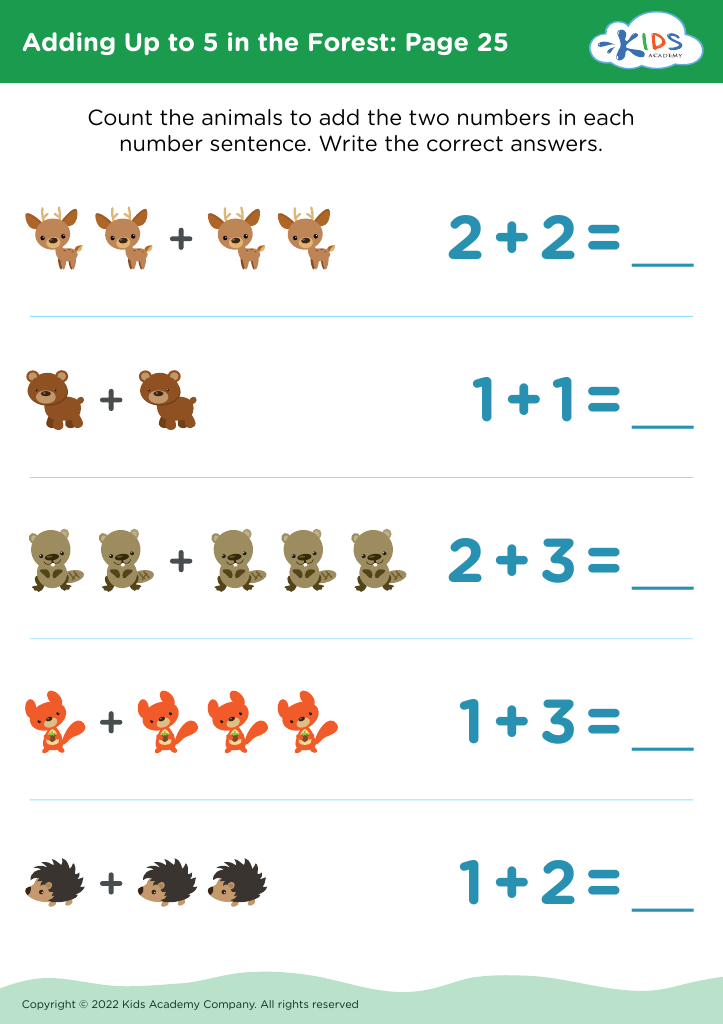
Adding Up to 5 in the Forest: Page 25
Worksheet
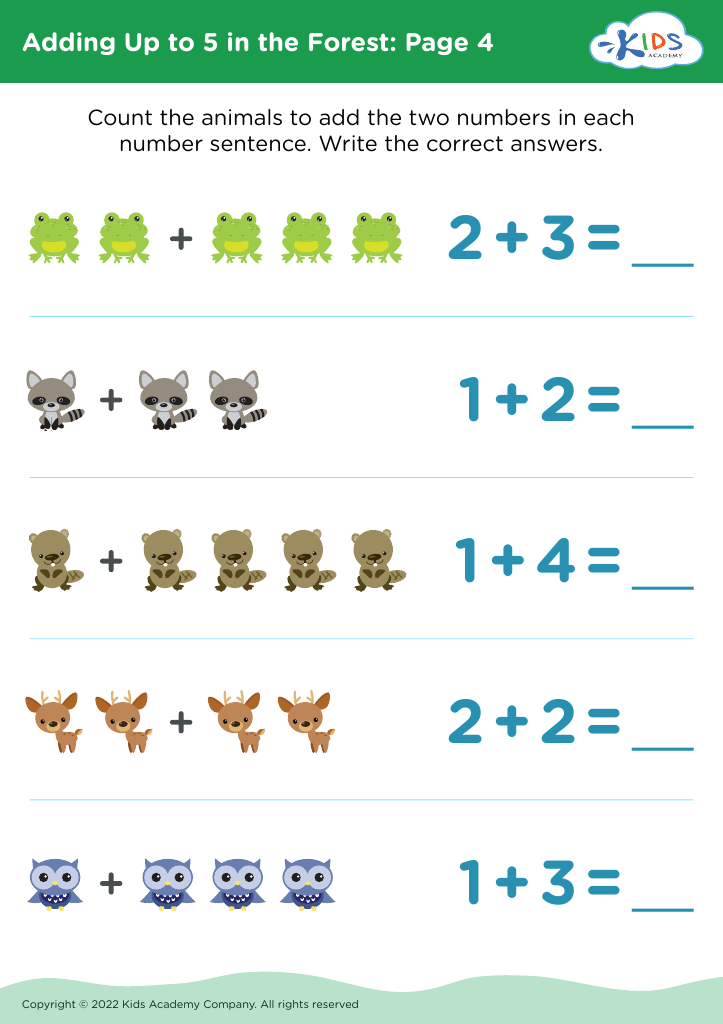
Adding Up to 5 in the Forest: Page 4
Worksheet
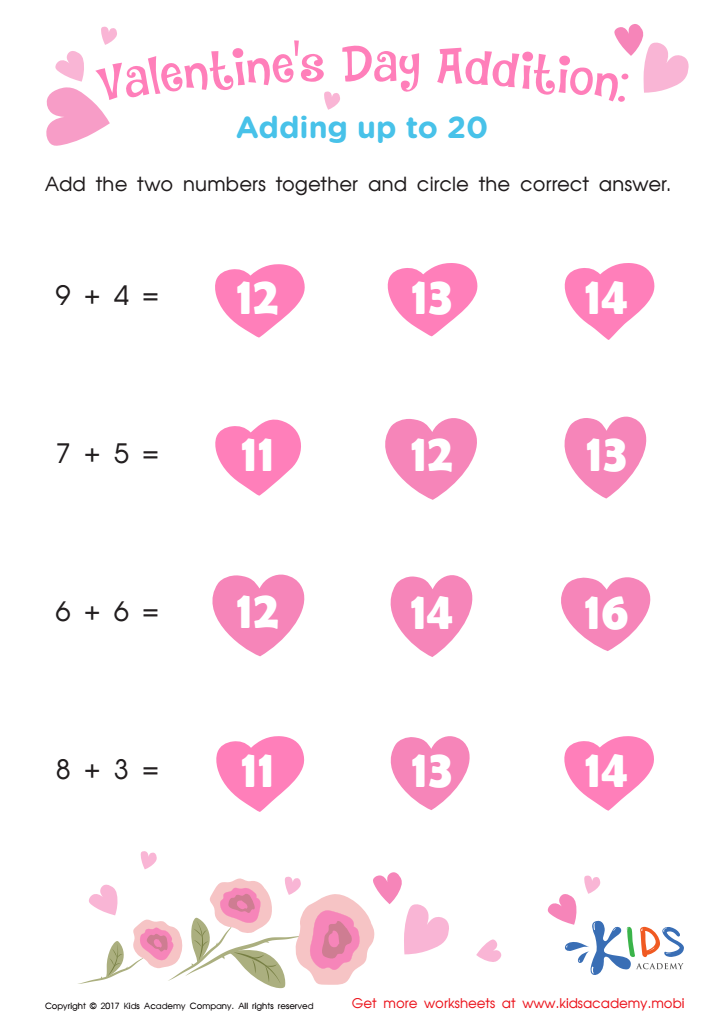
Addition up to 20 worksheet

Valentine's Day Addition Worksheet
This Valentine's Day themed worksheet is a fun way for your child to practice adding single digits up to 20! Hearts feature to help your child increase their math skills and have fun at the same time.
Valentine's Day Addition Worksheet
Worksheet
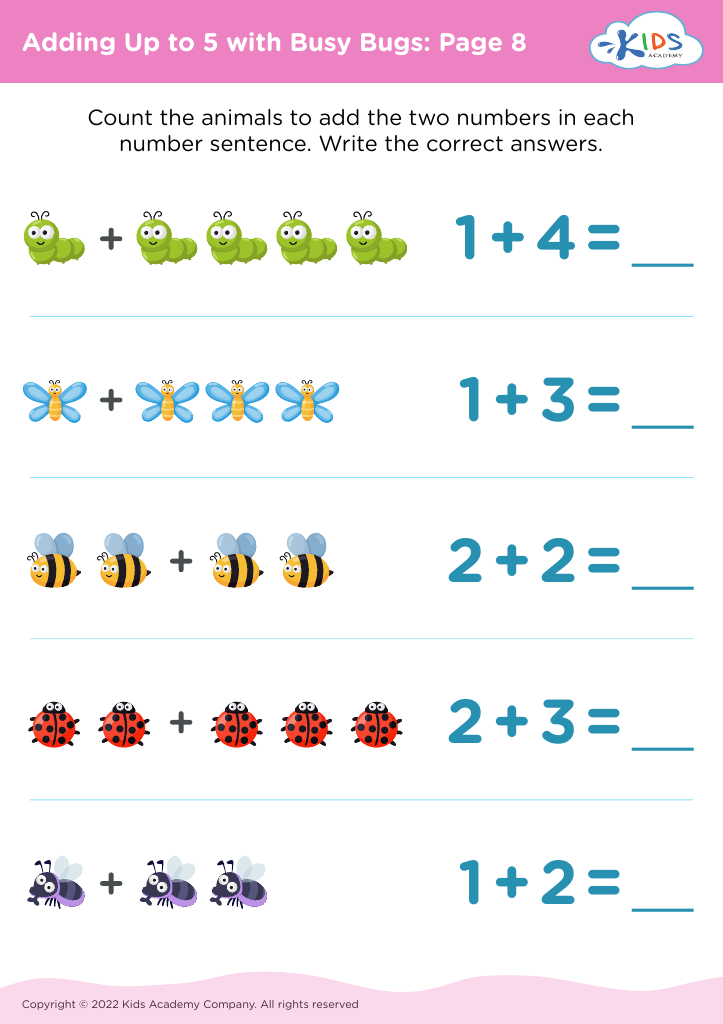
Adding Up to 5 with Busy Bugs: Page 8
Worksheet
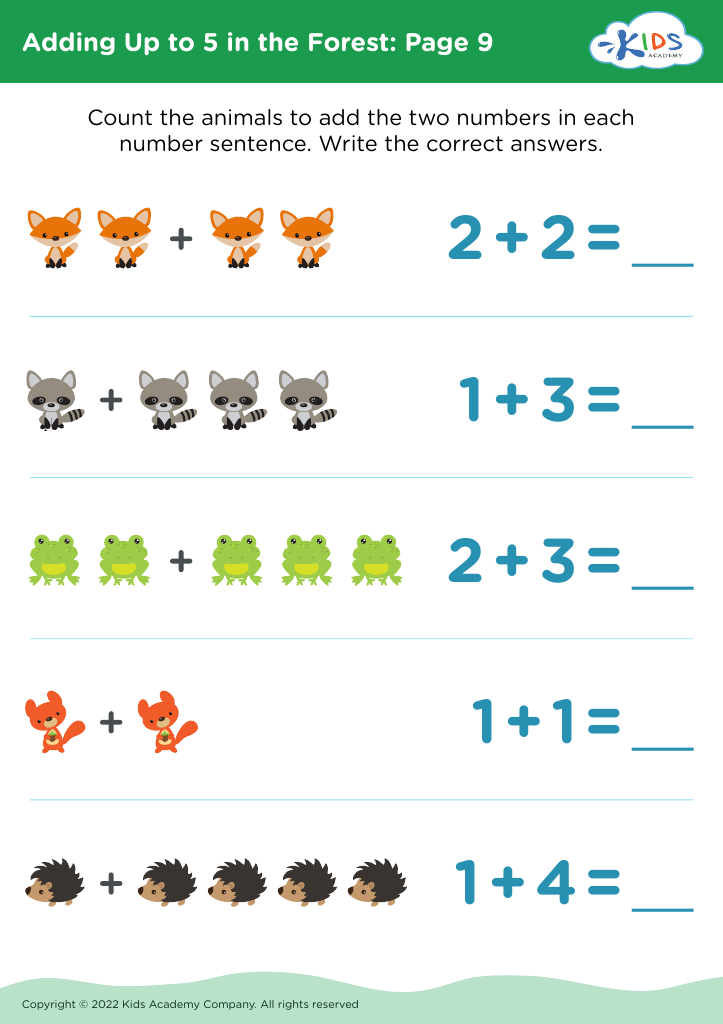
Adding Up to 5 in the Forest: Page 9
Worksheet
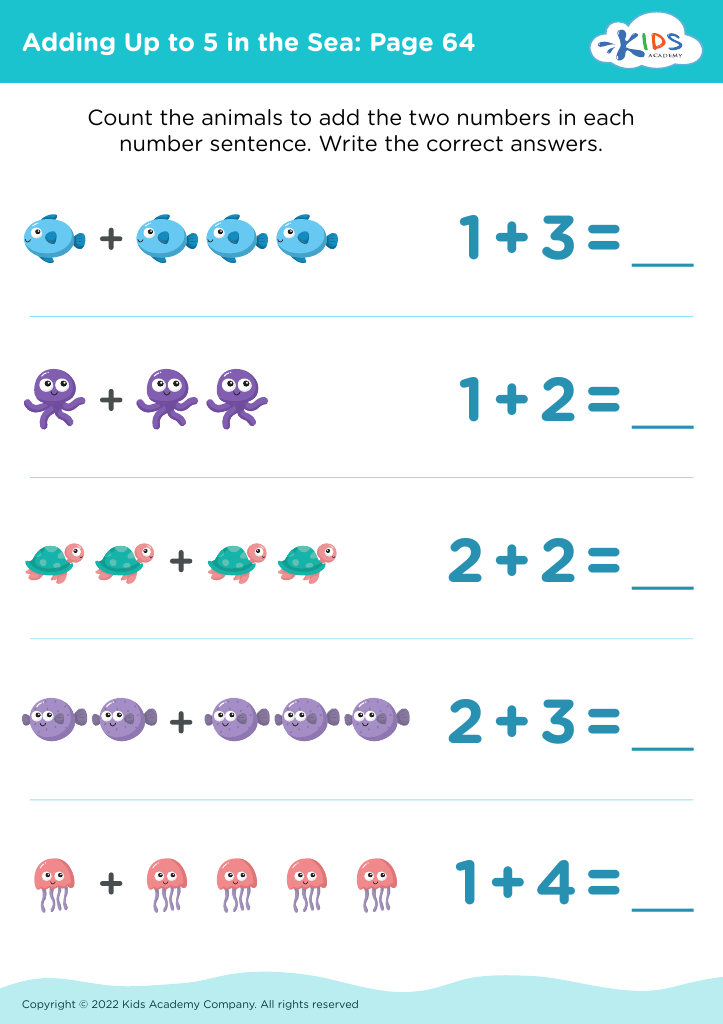
Adding Up to 5 in the Sea: Page 64
Worksheet
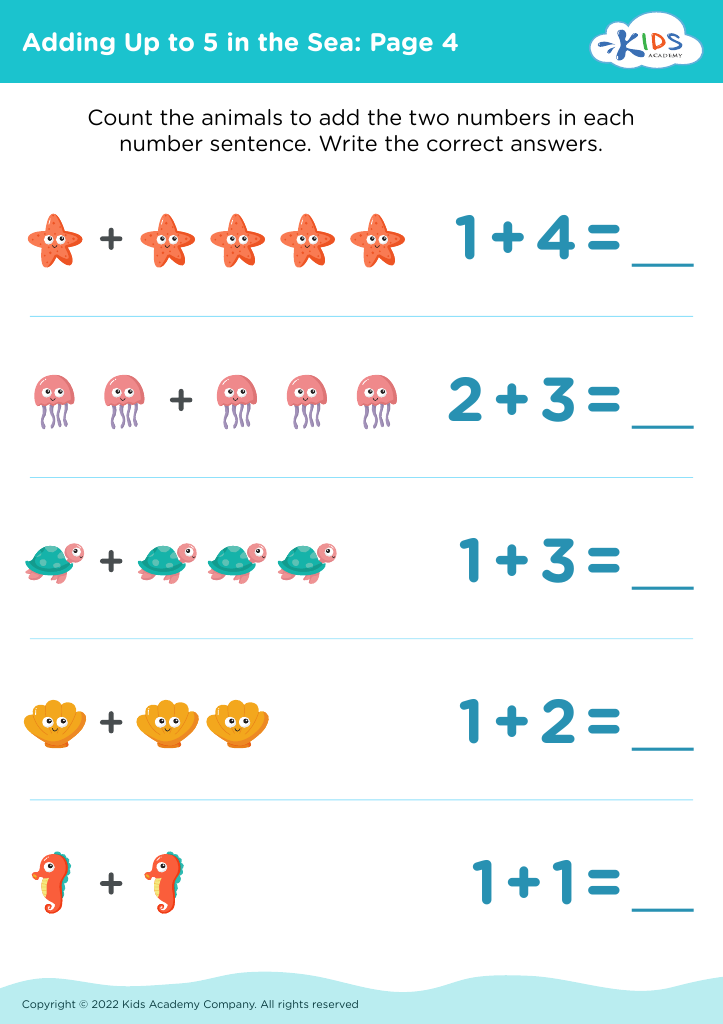
Adding Up to 5 in the Sea: Page 4

Adding Up to 5 in the Sea: Page 4

Adding Up to 5 in the Sea: Page 4
Worksheet
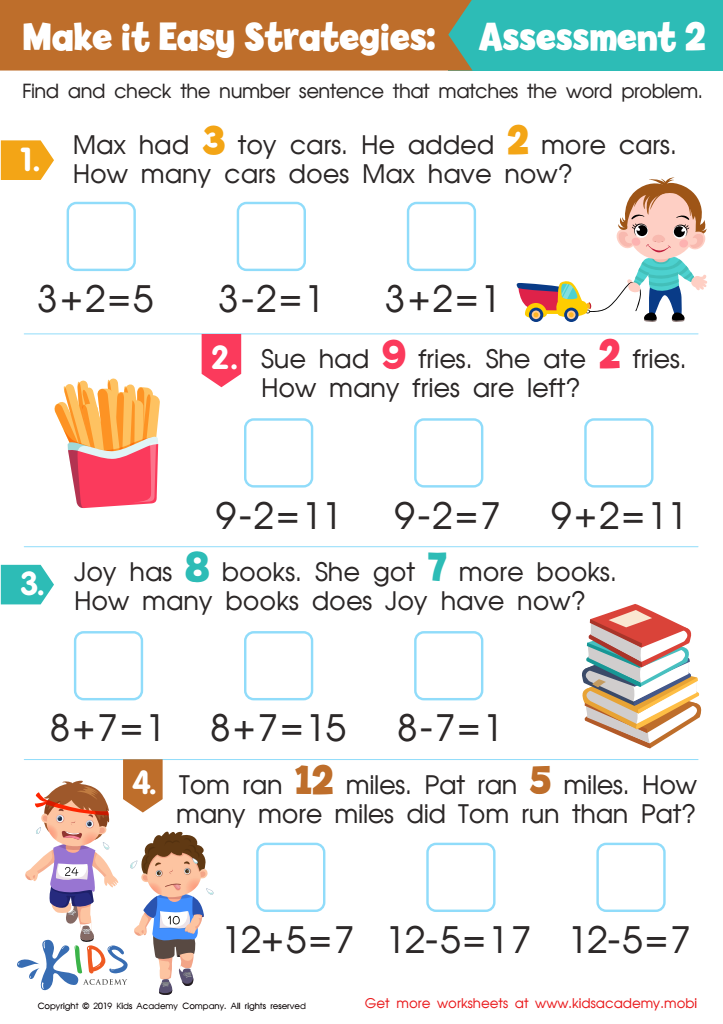
Make it Easy Strategies: Assessment 2 Worksheet
Make it Easy Strategies: Assessment 2 Worksheet
Utilize images and objects your students know to facilitate learning. Simple math problems should be a cinch for kindergartners who can count to 30. Ask them to identify the picture's subject. Then read word problems and help them find the right number sentences to match.
Make it Easy Strategies: Assessment 2 Worksheet
Worksheet
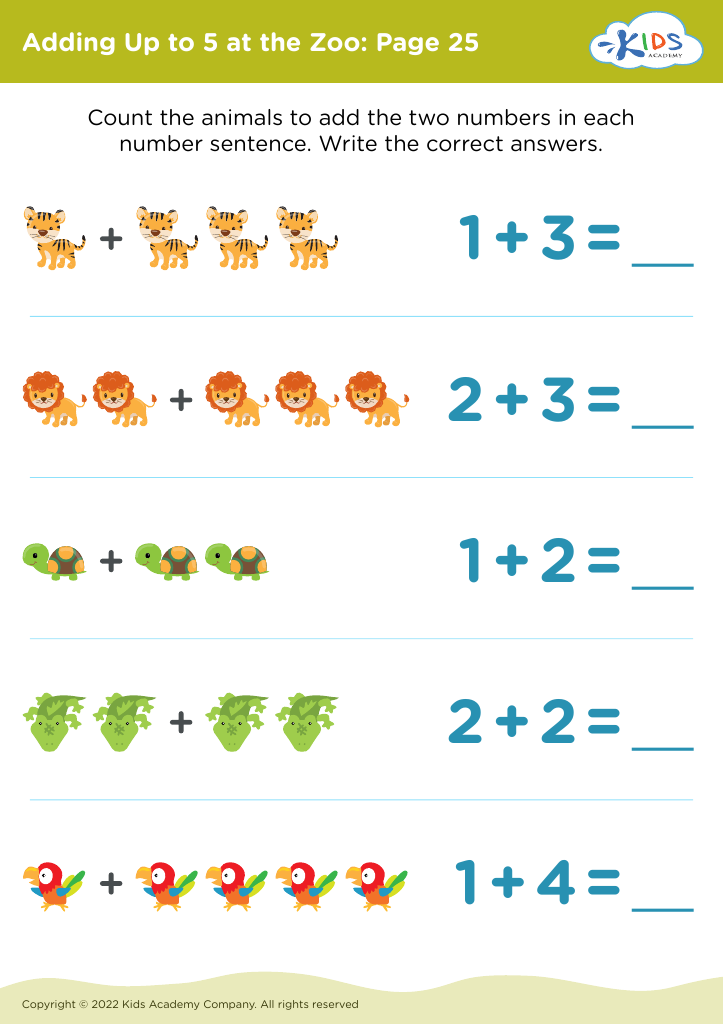
Adding Up to 5 at the Zoo: Page 25
Worksheet
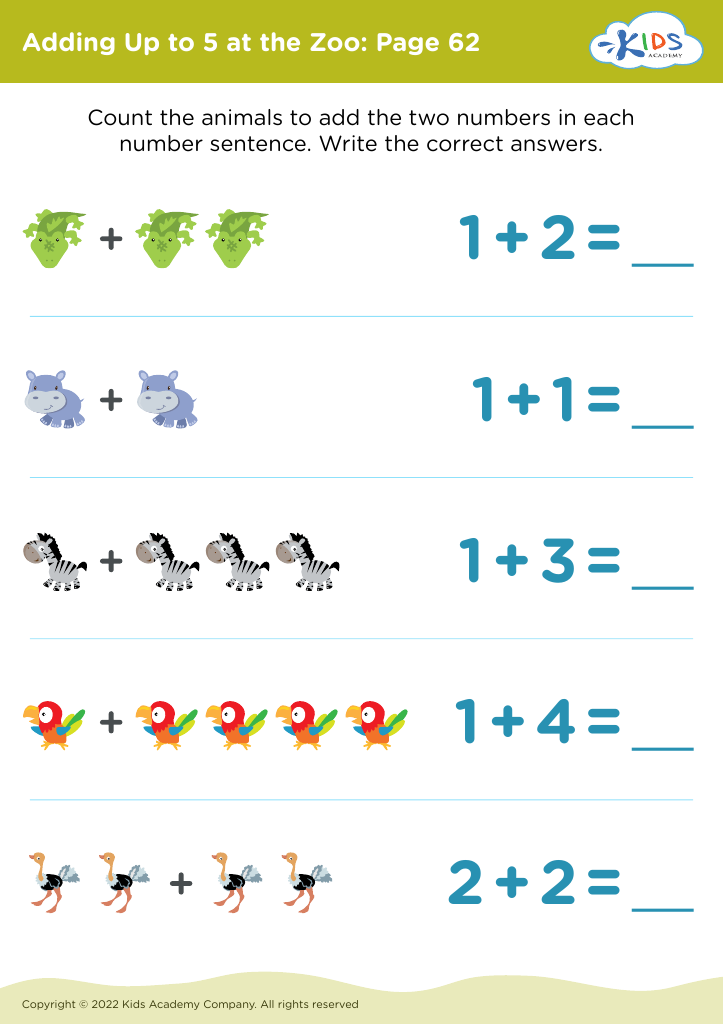
Adding Up to 5 at the Zoo: Page 62
Worksheet
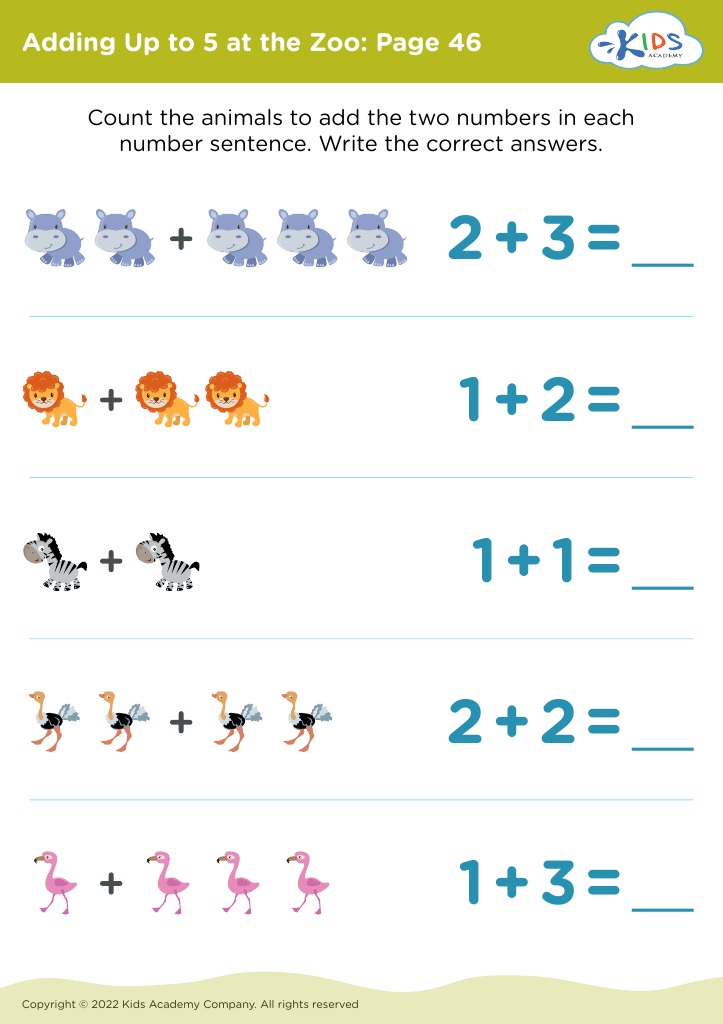
Adding Up to 5 at the Zoo: Page 46
Worksheet
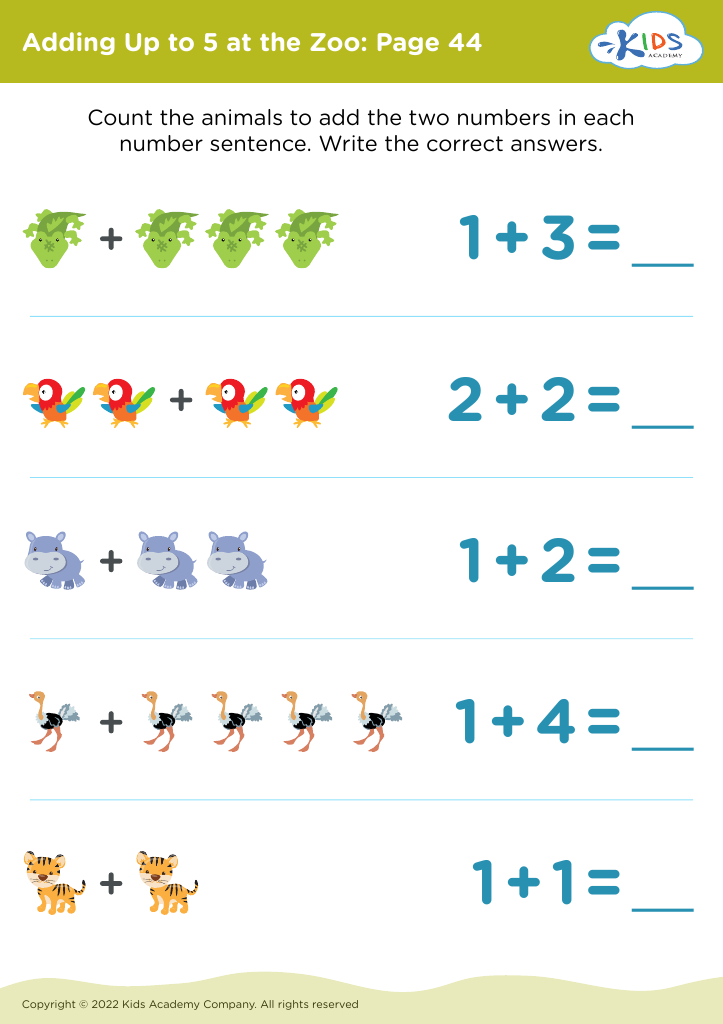
Adding Up to 5 at the Zoo: Page 44
Worksheet
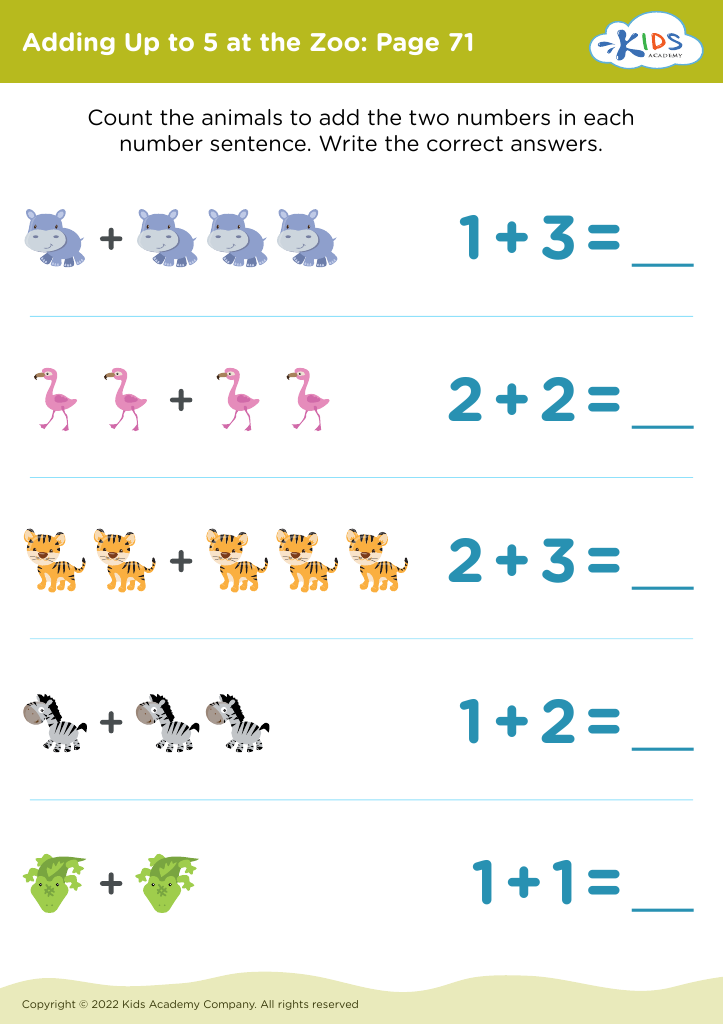
Adding Up to 5 at the Zoo: Page 71
Worksheet
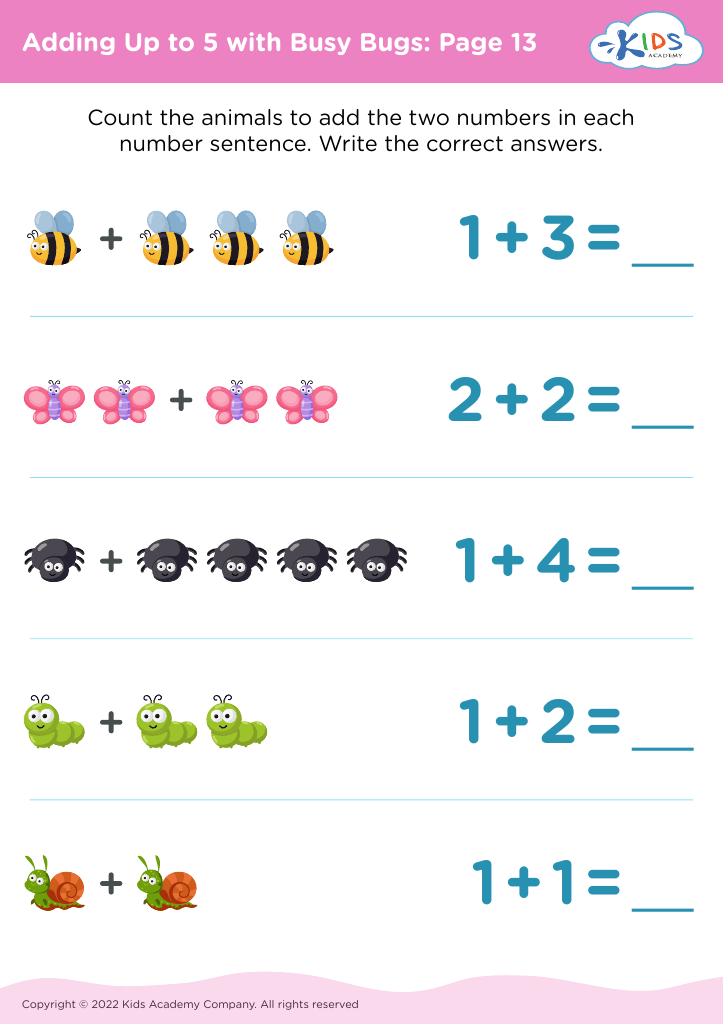
Adding Up to 5 with Busy Bugs: Page 13
Worksheet
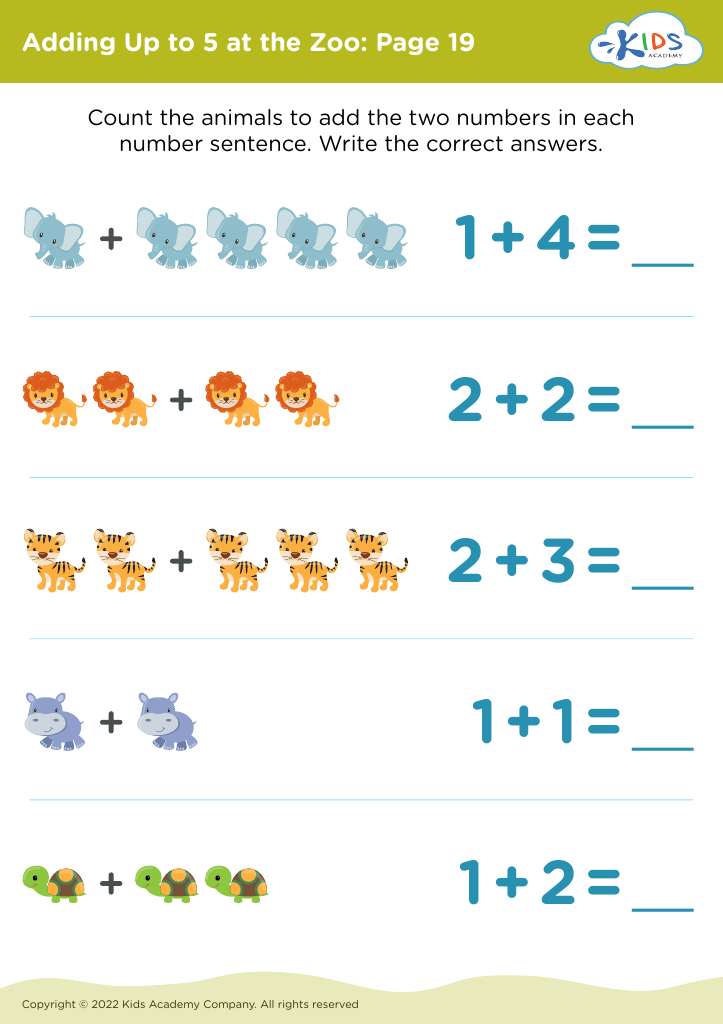
Adding Up to 5 at the Zoo: Page 19
Worksheet
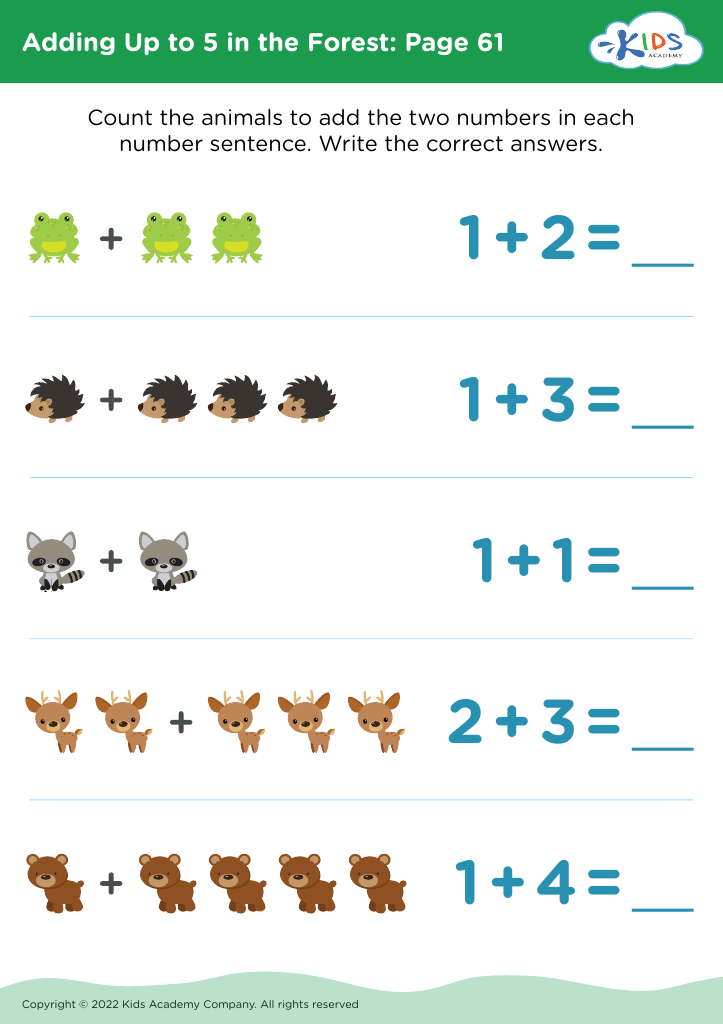
Adding Up to 5 in the Forest: Page 61
Worksheet
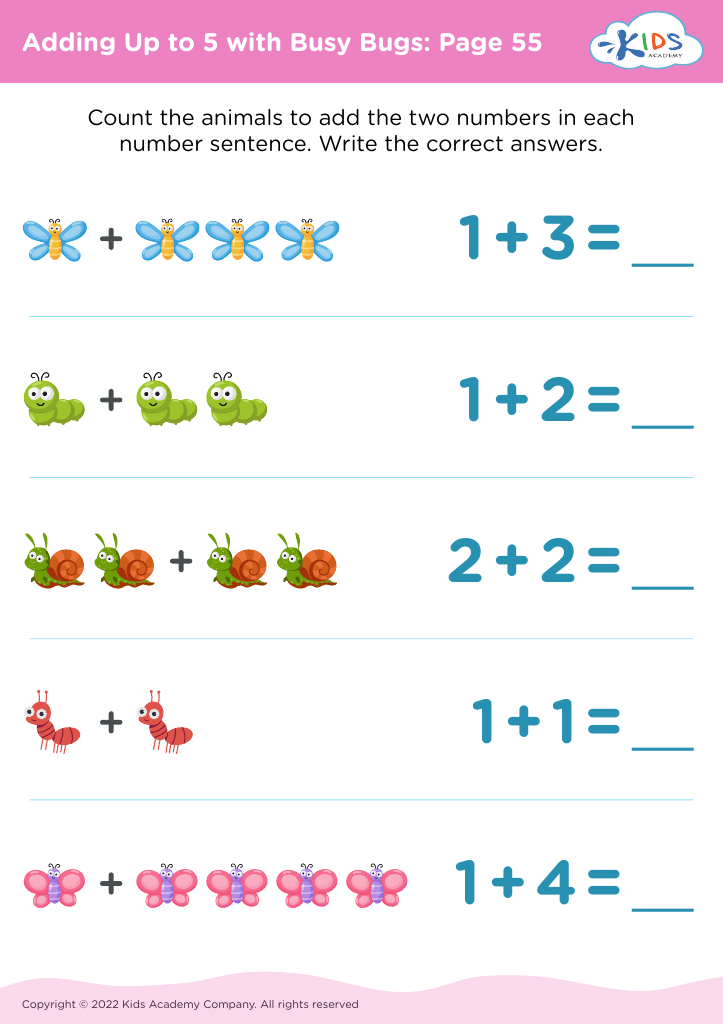
Adding Up to 5 with Busy Bugs: Page 55
Worksheet


Addition skills are fundamental to a child’s early mathematical development, making them crucial for parents and teachers to prioritize in children as young as three years old. Developing arithmetic skills at an early age lays the groundwork for more advanced math concepts and nurtures a child’s logical reasoning and problem-solving abilities.

At three years old, children's brains are exceptionally receptive to learning, making this an ideal time to introduce basic addition through fun and engaging activities. Early exposure to addition promotes numerical understanding, helping children to recognize and form relationships between quantities, which enhances their overall cognitive development.

Moreover, cultivating addition skills can improve a child's confidence in math. Positive early experiences can foster a lifelong preference for mathematics, reducing anxiety and reluctance toward the subject in later years. Additionally, these skills enhance coordination with language development, as children learn to express numbers and relationships verbally.

By implementing playful, hands-on methods like counting toys or using everyday situations to illustrate addition, parents and teachers can create enjoyable learning opportunities that are both educational and interactive. Encouraging early addition skills will not only benefit children academically but also equip them with essential skills for everyday problem-solving.