Check out this FREE Trial Lesson on Math for age 3!

H

Favorites
With answer key
Interactive
  • 3
  • Basic Addition Skills
  • Math
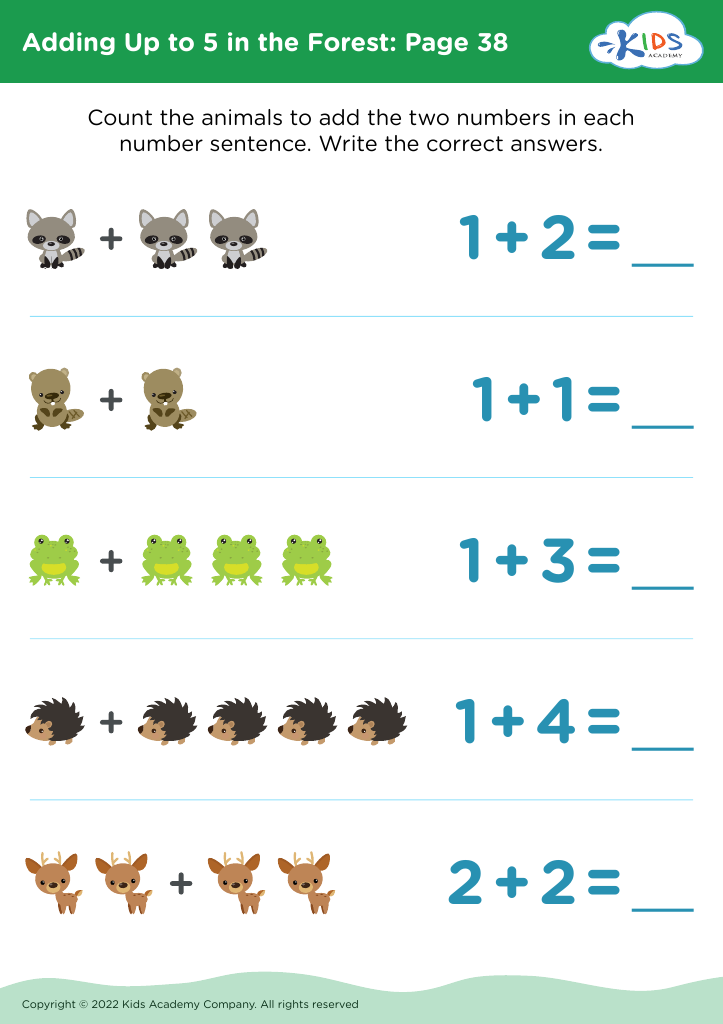
Adding Up to 5 in the Forest: Page 38
Worksheet
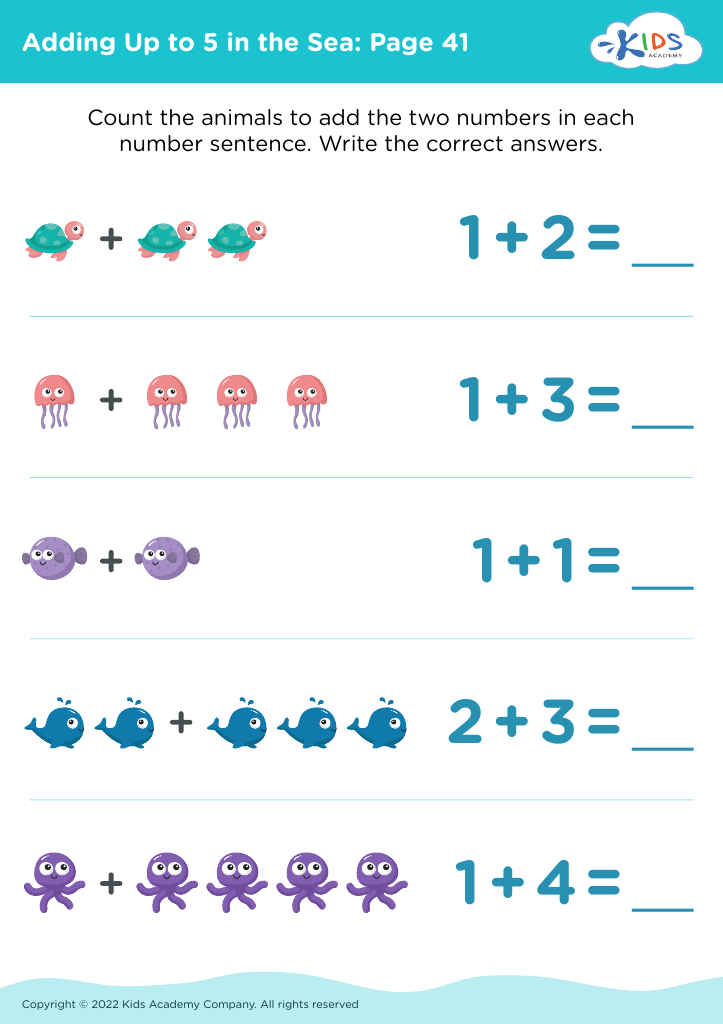
Adding Up to 5 in the Sea: Page 41
Worksheet
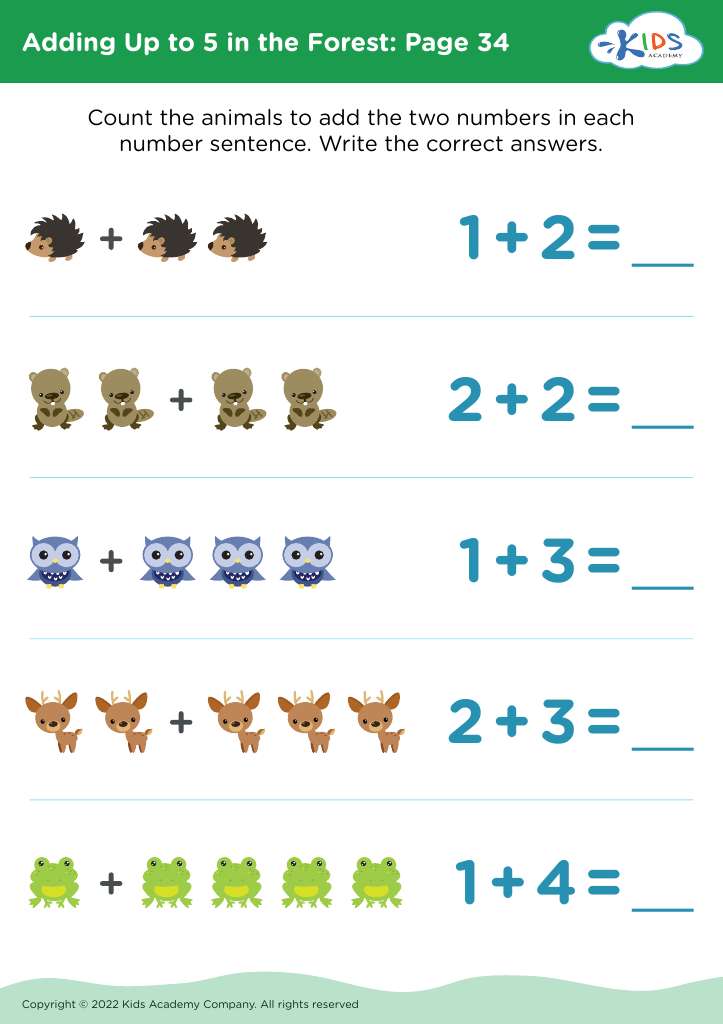
Adding Up to 5 in the Forest: Page 34
Worksheet
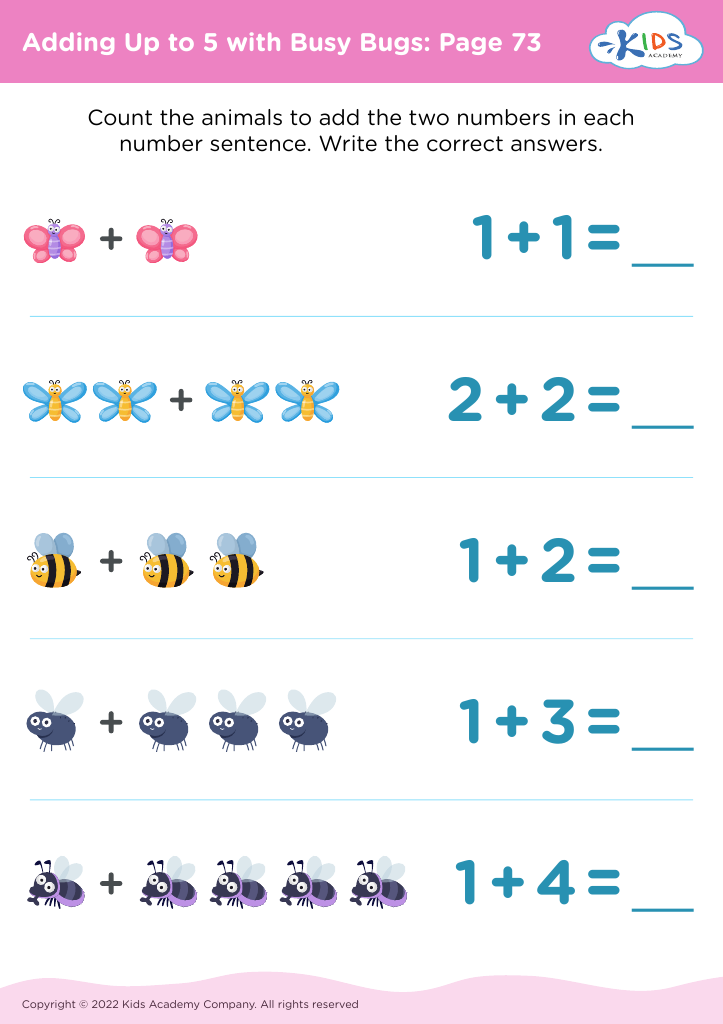
Adding Up to 5 with Busy Bugs: Page 73
Worksheet
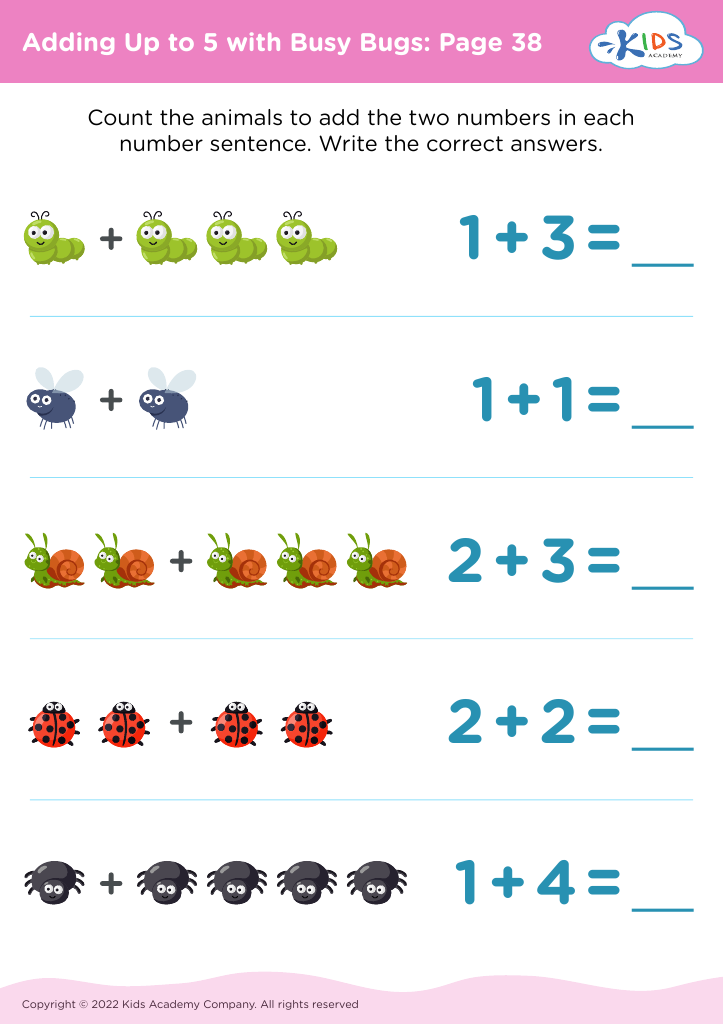
Adding Up to 5 with Busy Bugs: Page 38
Worksheet
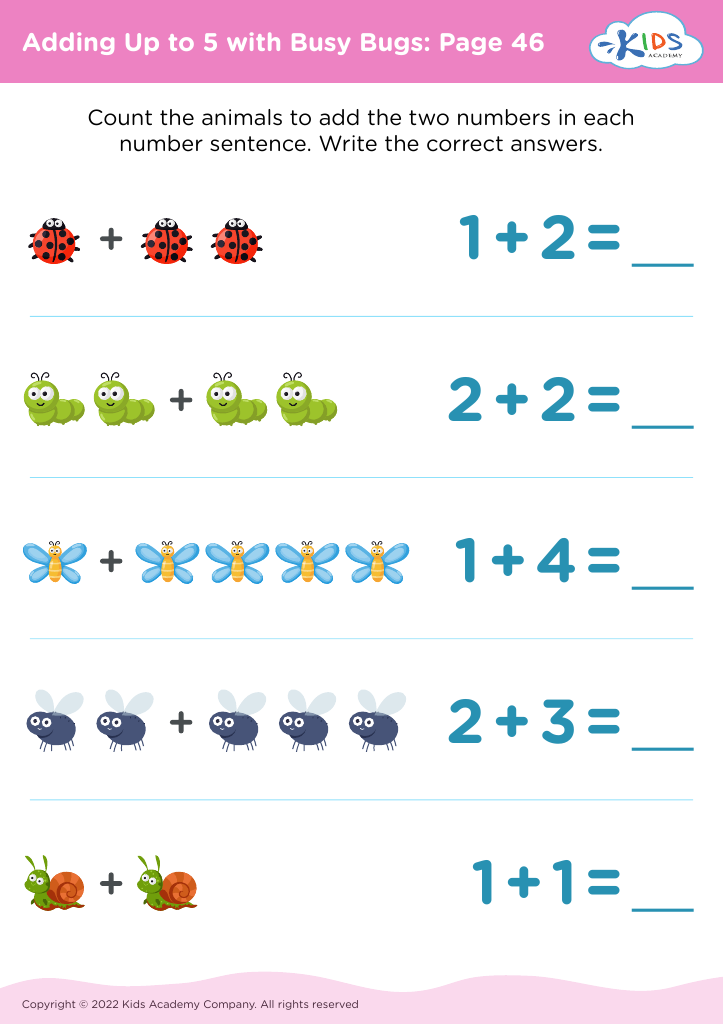
Adding Up to 5 with Busy Bugs: Page 46
Worksheet
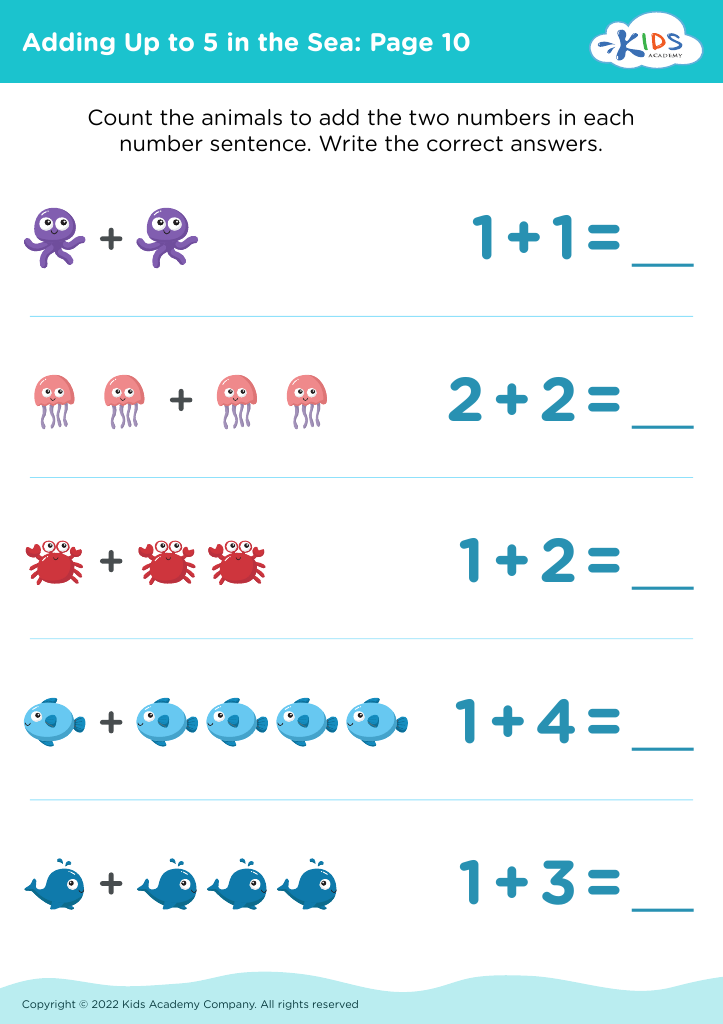
Adding Up to 5 in the Sea: Page 10
Worksheet
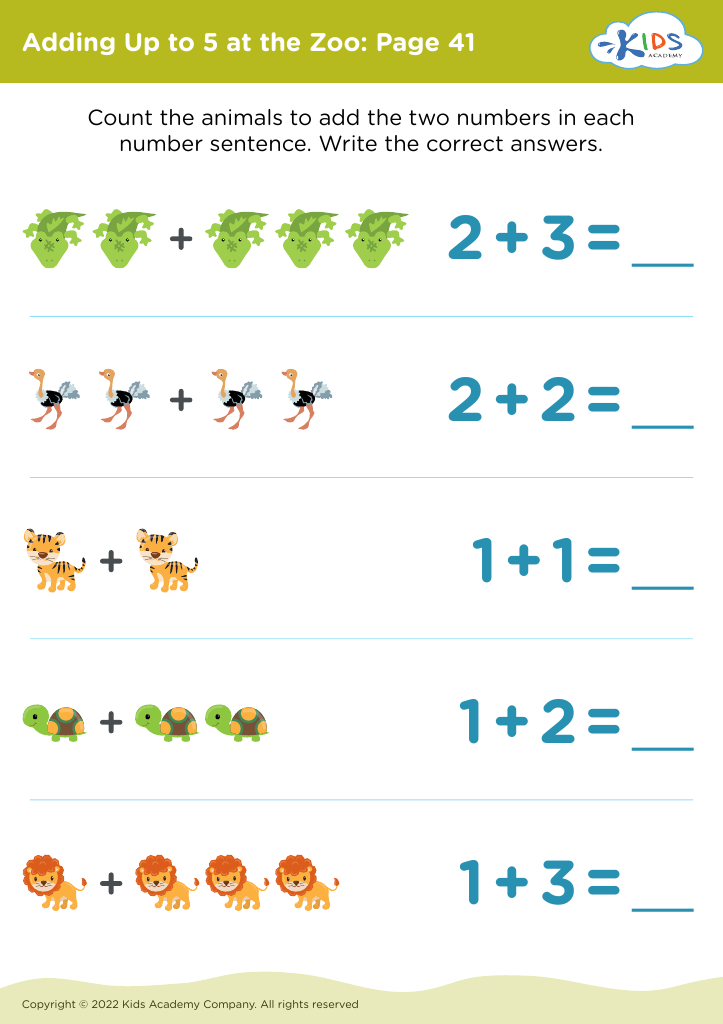
Adding Up to 5 at the Zoo: Page 41
Worksheet
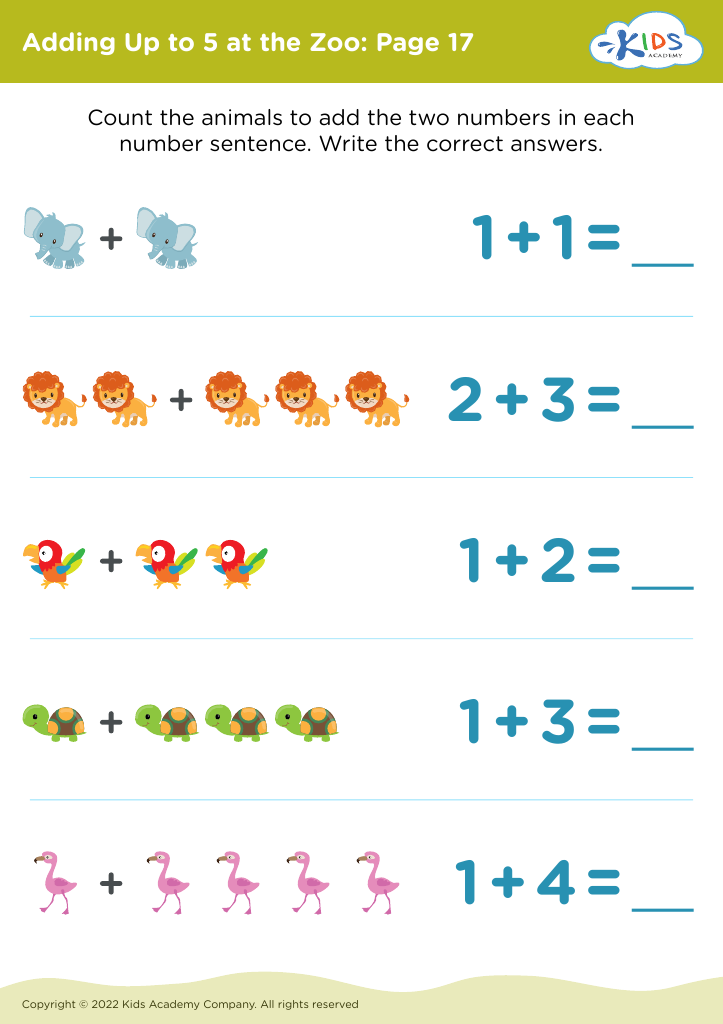
Adding Up to 5 at the Zoo: Page 17
Worksheet
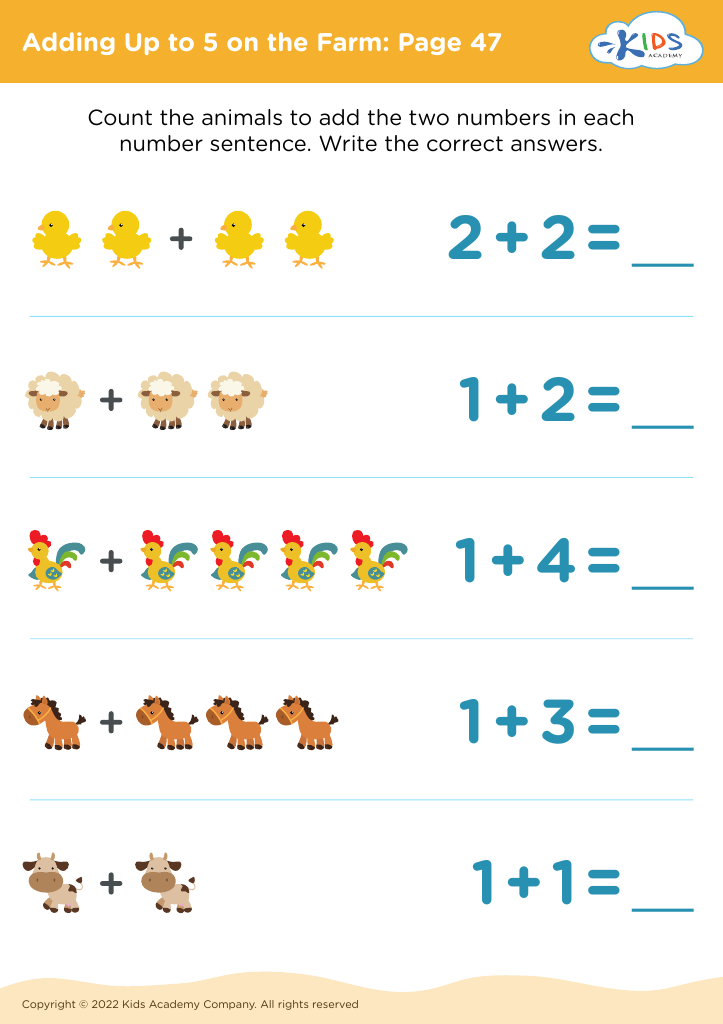
Adding Up to 5 on the Farm: Page 47
Worksheet
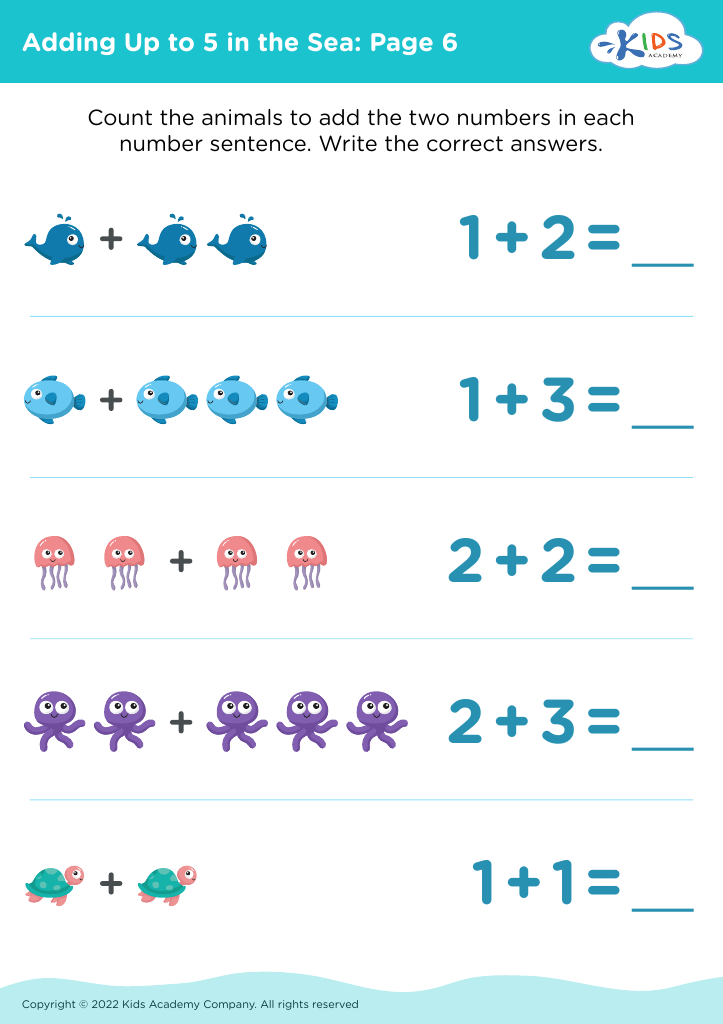
Adding Up to 5 in the Sea: Page 6

Adding Up to 5 in the Sea: Page 6

Adding Up to 5 in the Sea: Page 6
Worksheet
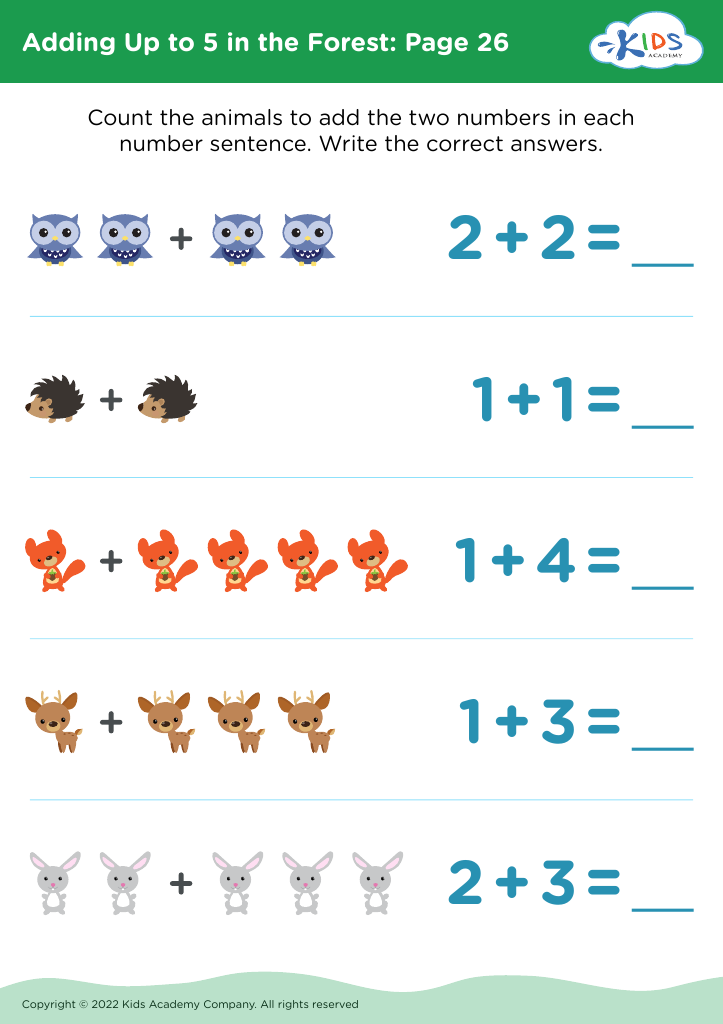
Adding Up to 5 in the Forest: Page 26
Worksheet
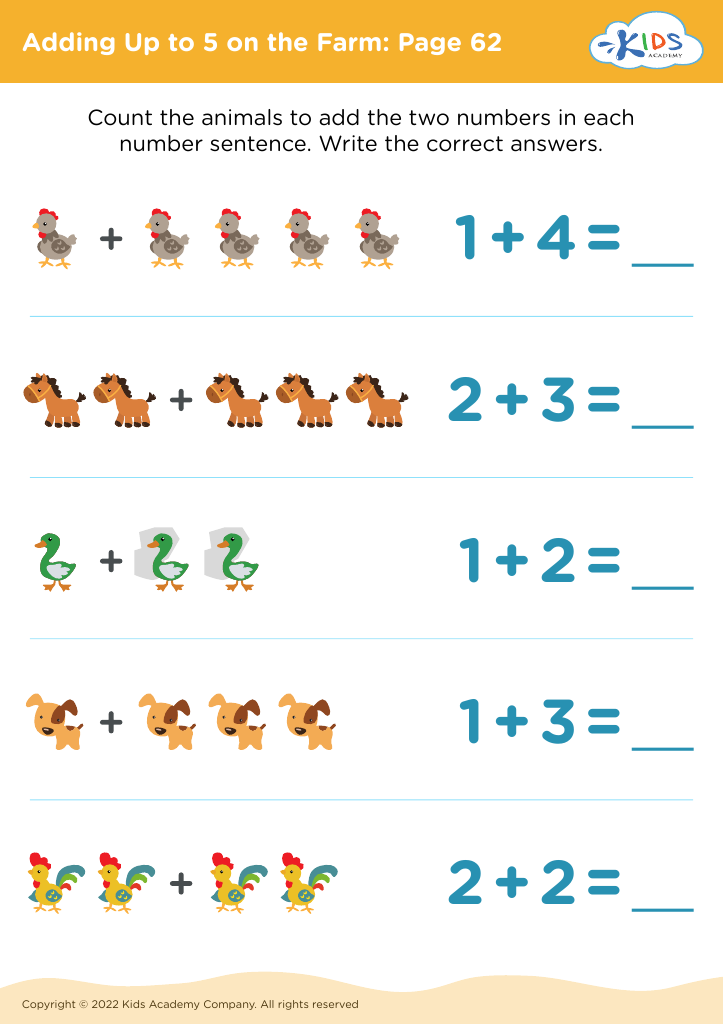
Adding Up to 5 on the Farm: Page 62
Worksheet
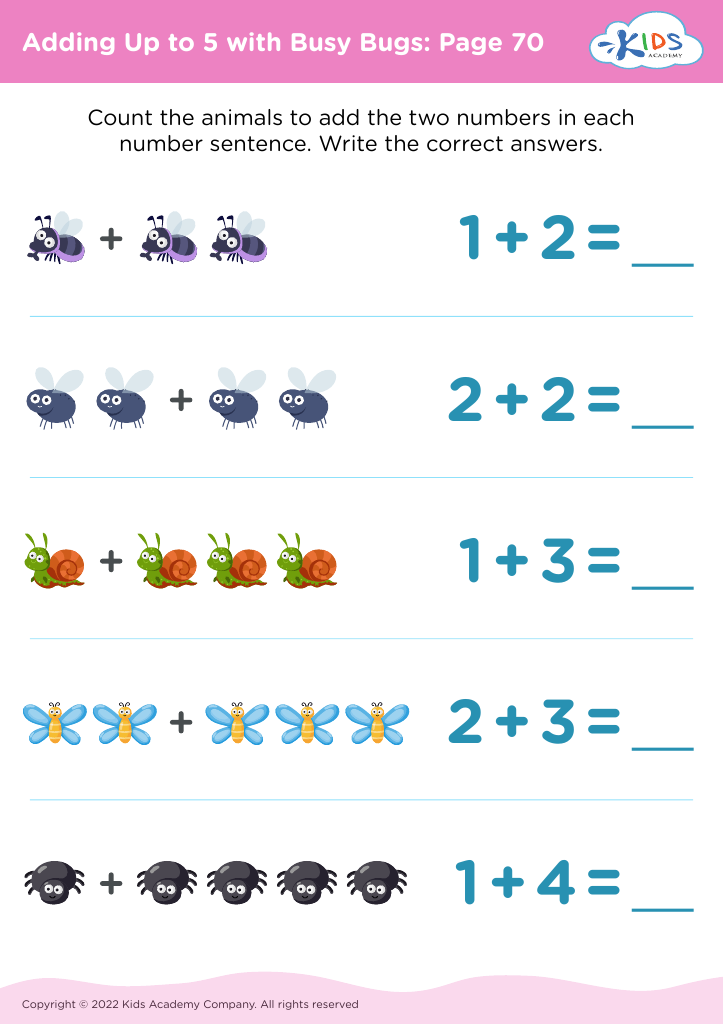
Adding Up to 5 with Busy Bugs: Page 70
Worksheet
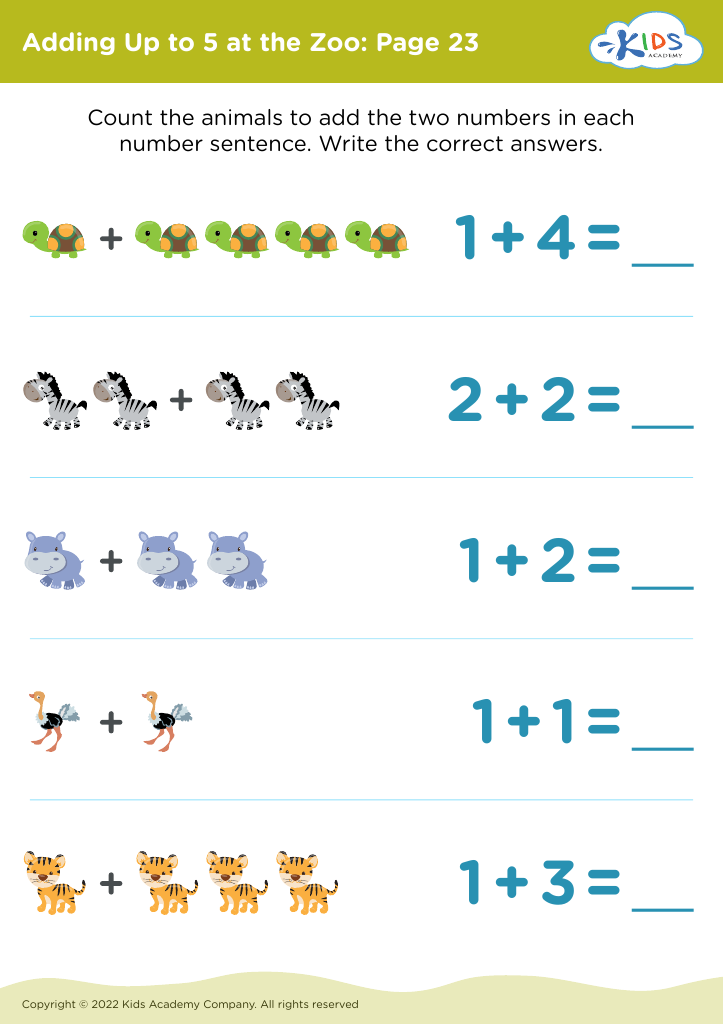
Adding Up to 5 at the Zoo: Page 23
Worksheet
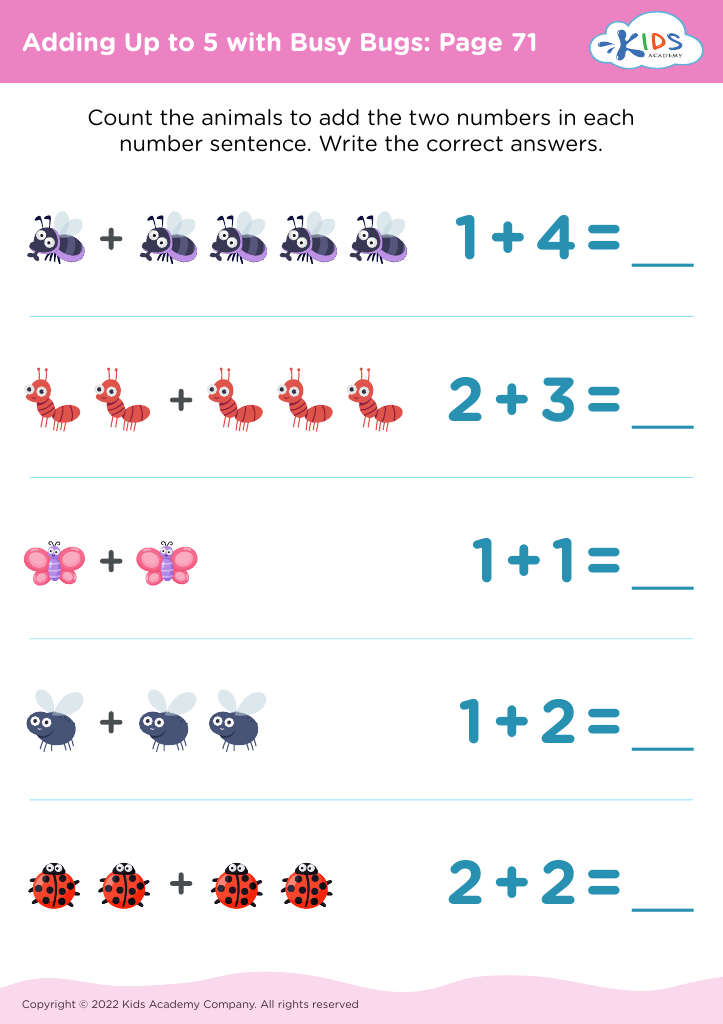
Adding Up to 5 with Busy Bugs: Page 71
Worksheet
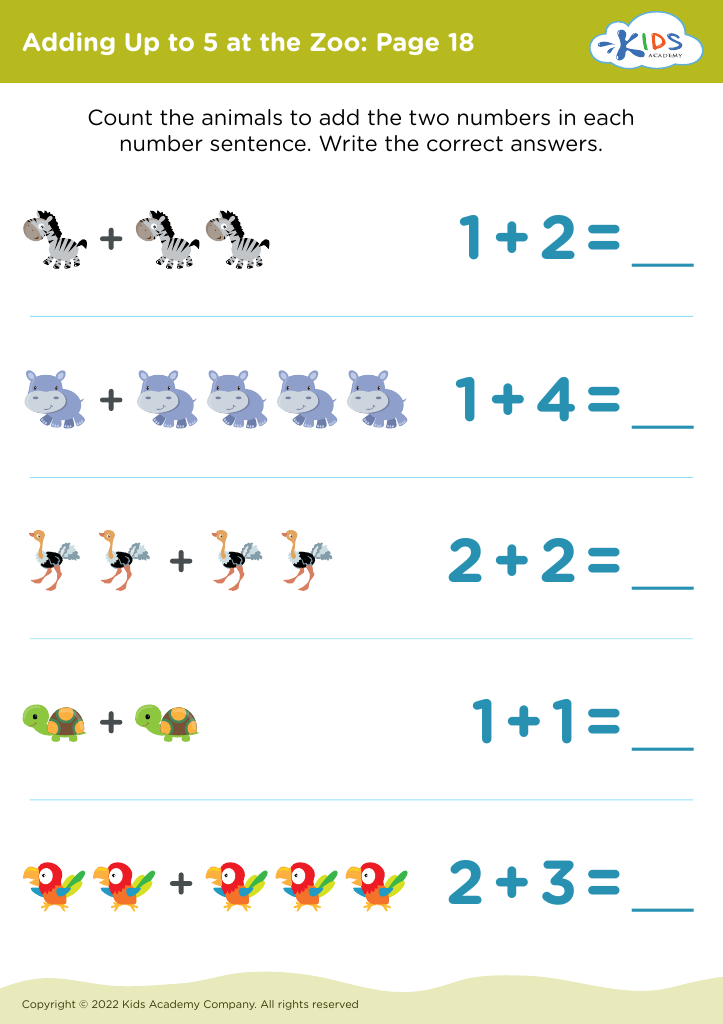
Adding Up to 5 at the Zoo: Page 18
Worksheet
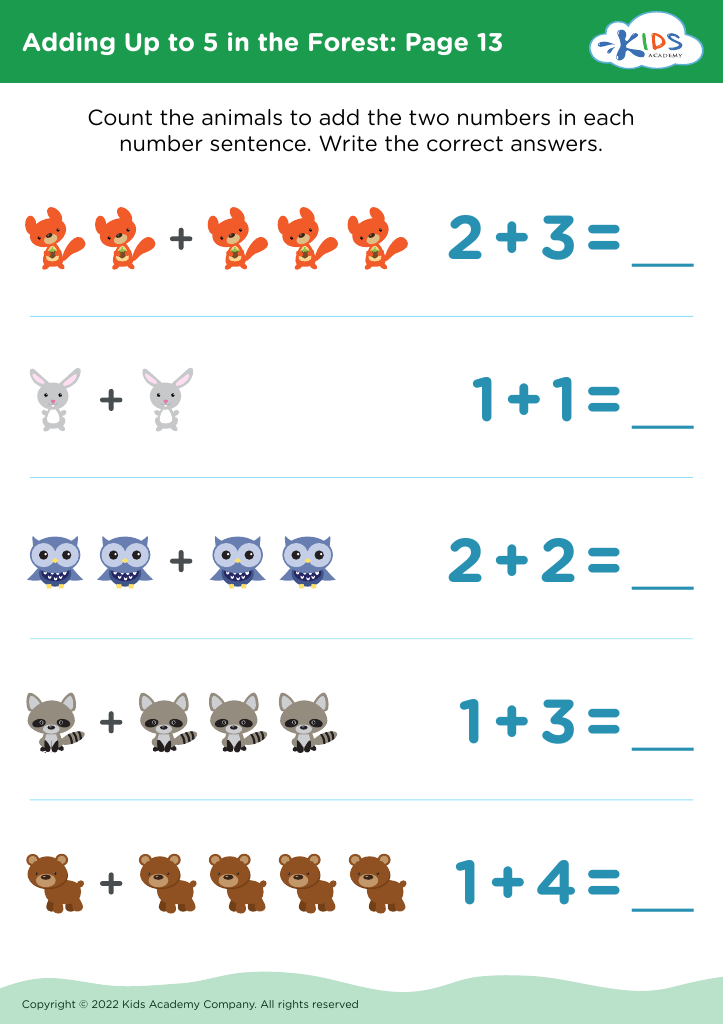
Adding Up to 5 in the Forest: Page 13
Worksheet
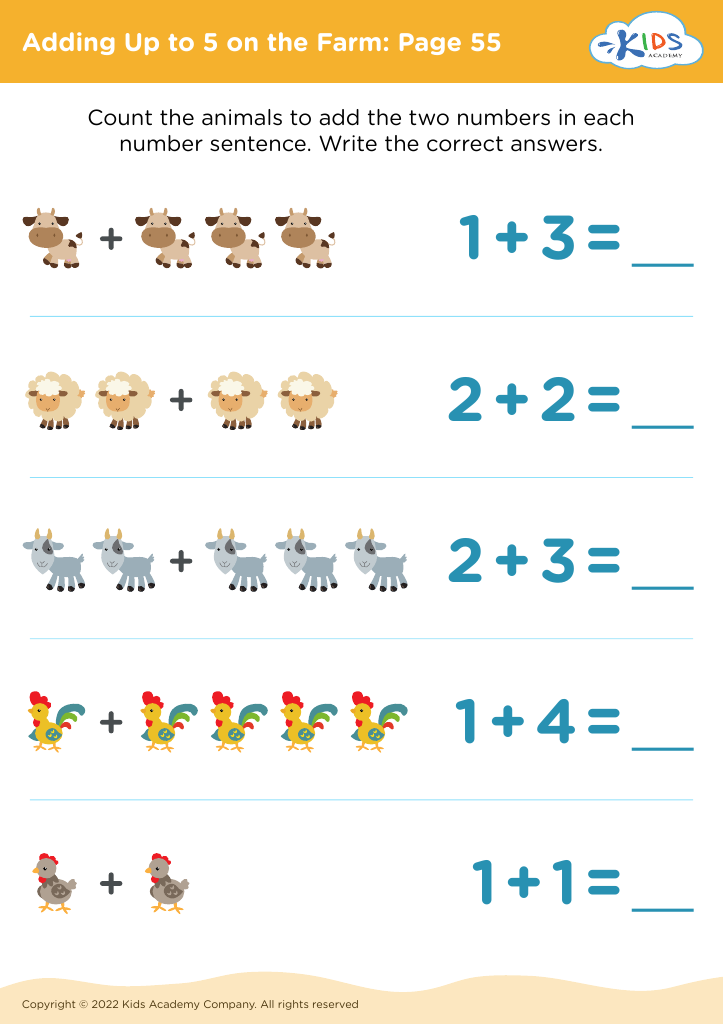
Adding Up to 5 on the Farm: Page 55
Worksheet
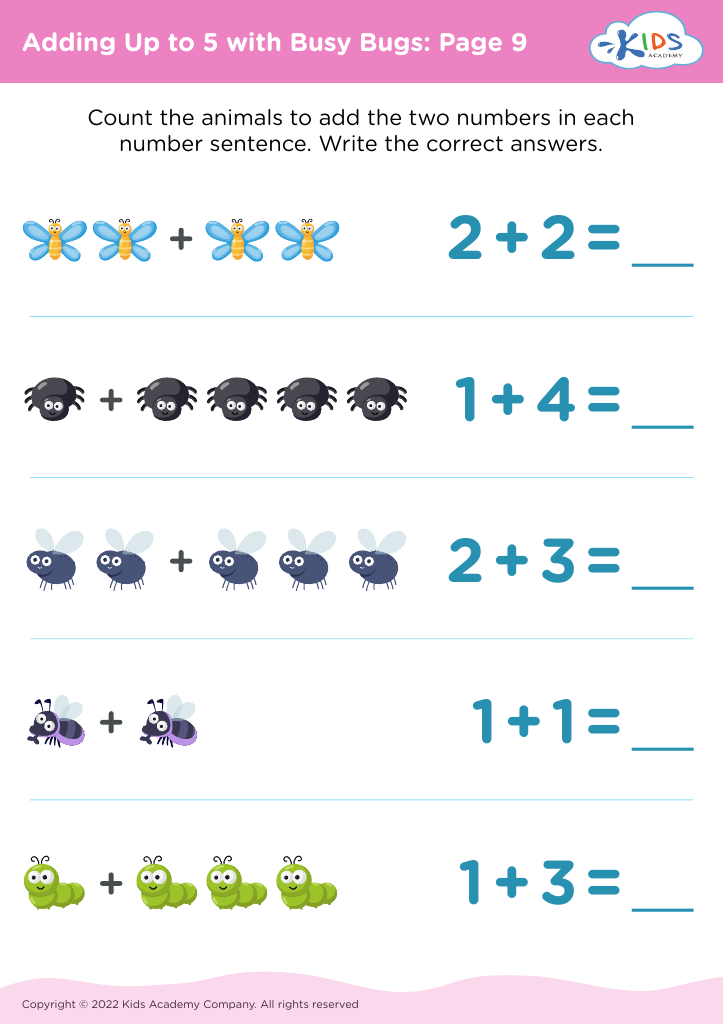
Adding Up to 5 with Busy Bugs: Page 9
Worksheet
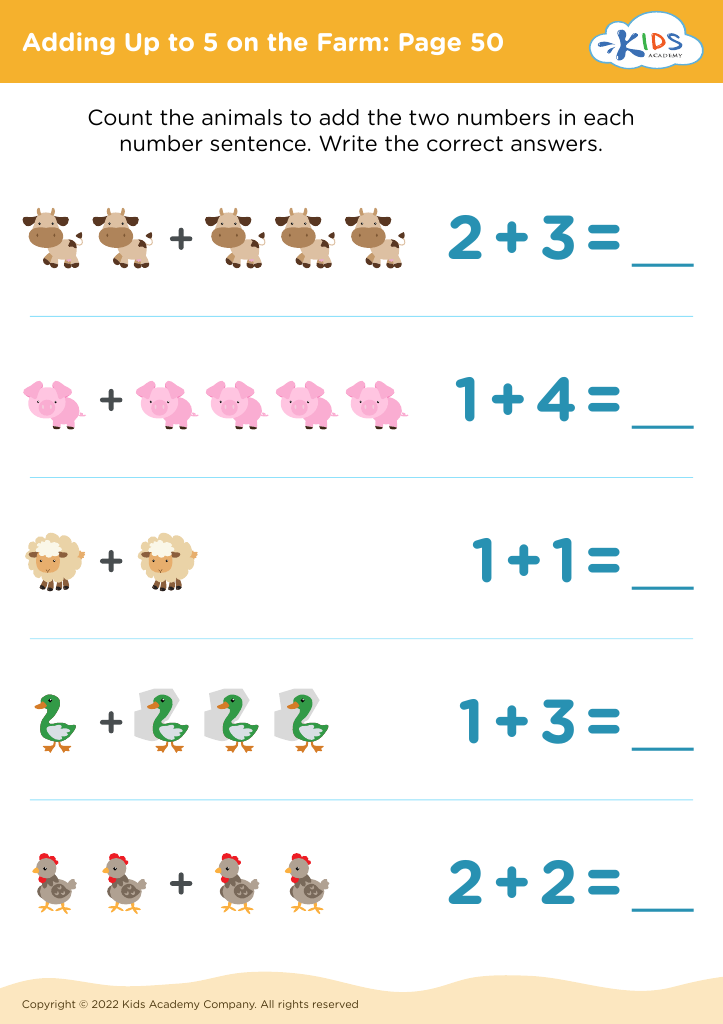
Adding Up to 5 on the Farm: Page 50
Worksheet
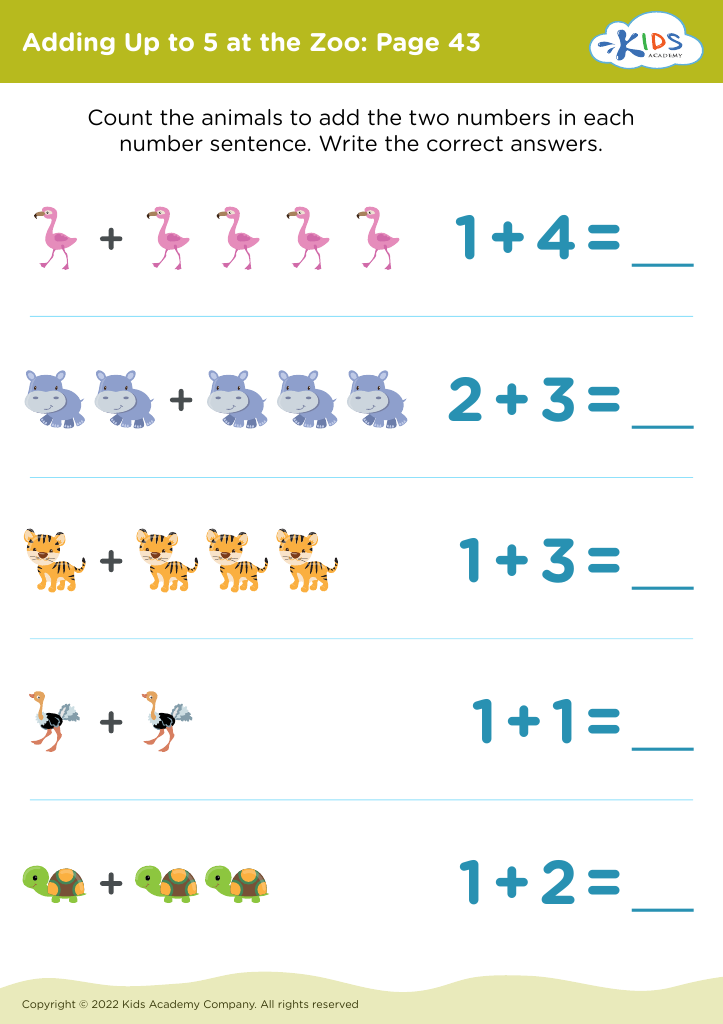
Adding Up to 5 at the Zoo: Page 43
Worksheet
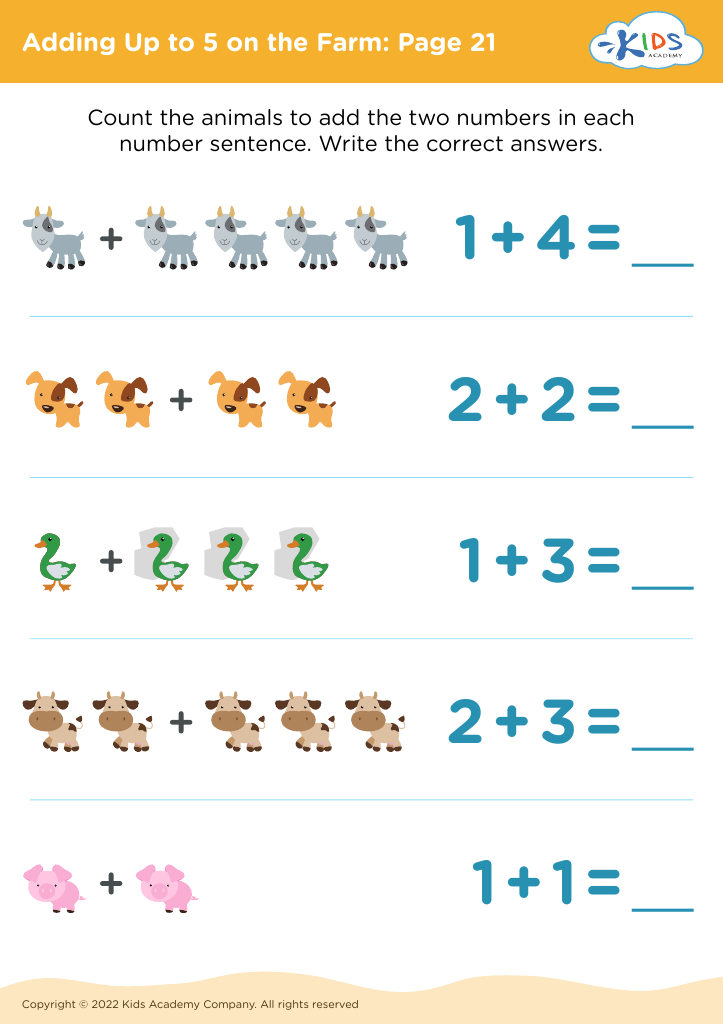
Adding Up to 5 on the Farm: Page 21
Worksheet
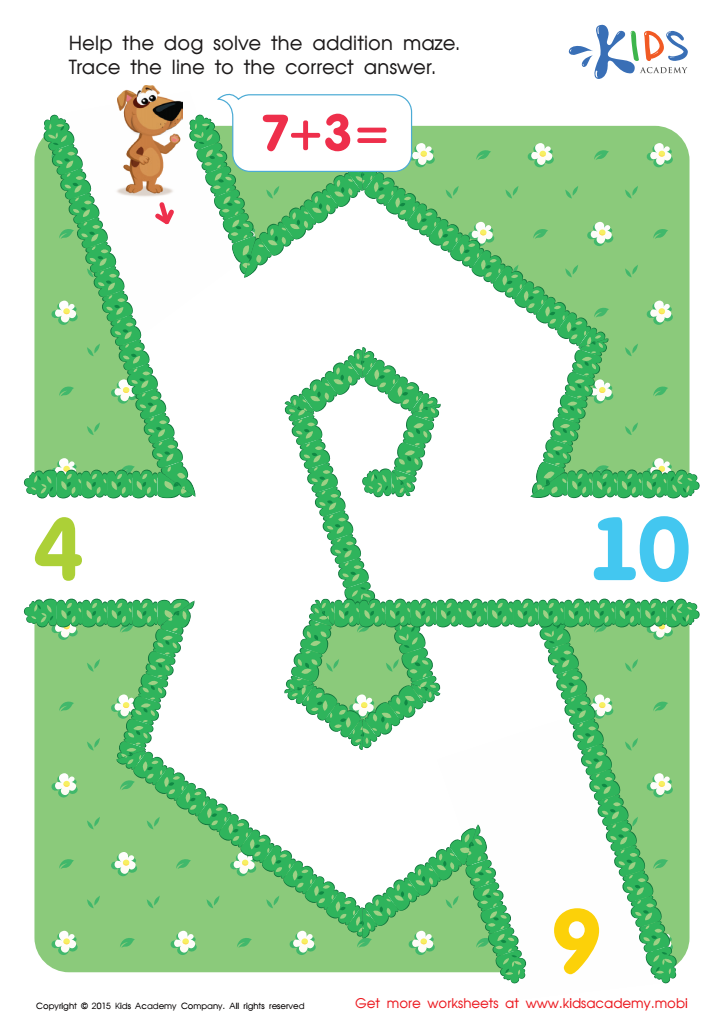
Math: Seven Plus Three PDF Worksheet

Seven Plus Three Worksheet

Practice addition and subtraction with your kids, help them out and make learning math an enjoyable activity.
Seven Plus Three Worksheet
Worksheet


Parents and teachers should care about basic addition skills math for 3-year-olds because early math proficiency is foundational for future academic success and cognitive development. At this young age, children are particularly receptive to learning new concepts, and developing basic math skills helps to foster critical thinking, problem-solving, and logical reasoning. These abilities are not limited to math; they are transferable to reading, science, and everyday decision-making.

Introducing basic addition to 3-year-olds in a playful, engaging manner, such as through counting games, toys, or everyday activities, helps children become comfortable with numbers and simple mathematical operations. This early exposure accumulates confidence and reduces math anxiety later in life. Research shows that early math skills are a strong predictor of later school achievement in both math and literacy.

Additionally, mastering basic addition at a young age lays a groundwork for more complex mathematical concepts they will encounter in school. It stimulates cognitive development by encouraging children to recognize patterns, follow sequences, and understand relationships between quantities. Teachers and parents who invest time in nurturing math skills early on provide their children with a valuable head start, setting them up for educational success and a lifelong positive attitude towards learning.