Color differentiation Math Worksheets for 3-Year-Olds
3 filtered results
-
From - To
Introduce your 3-year-old to the exciting world of color differentiation with our fun, educational math worksheets! Designed to captivate young learners, these worksheets help kids identify, compare, and categorize different colors while developing essential math skills. Through playful activities like sorting, matching, and color-by-number, children enhance their understanding of colors and numbers simultaneously. Perfect for preschoolers, these engaging exercises promote cognitive development, improve fine motor skills, and lay a solid foundation for future math success. Give your child a head start in learning with our vibrant, interactive color differentiation math worksheets!
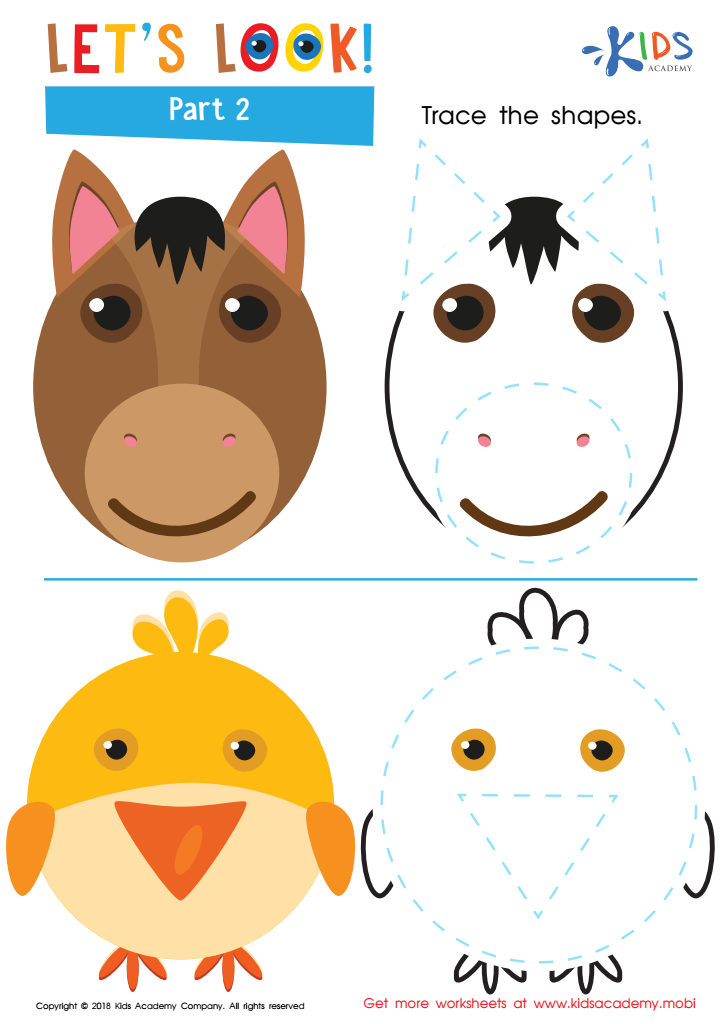
Let's Look! Part 2 Worksheet
 Assign to My Students
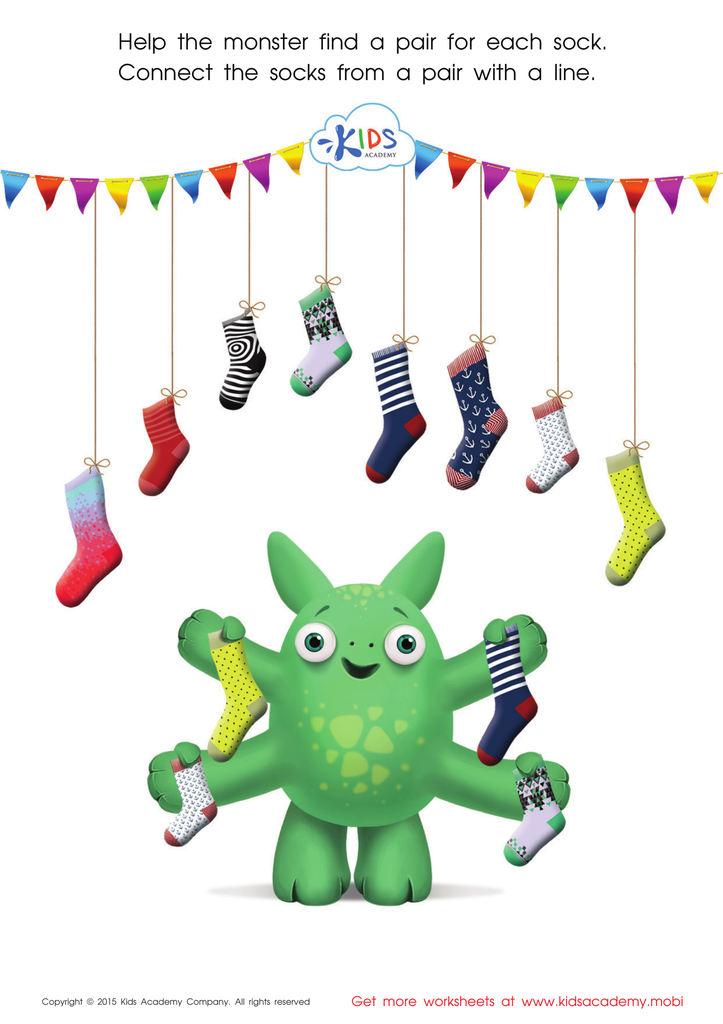
Math Matching Pairs Game: Monsterв's Socks Worksheet







Parents and teachers should care about color differentiation in math for 3-year-olds because it serves as a foundational skill that supports early cognitive development. At this age, children are in the sensorimotor stage where they learn about their world through playful interactions and sensory experiences. Differentiating colors while engaging in basic math activities helps to sharpen their visual perception and recognition skills, which are critical for more advanced learning later on.
Firstly, using colors in math activities makes learning fun and engaging for young children. Bright, vivid colors grab their attention, making it easier for them to stay focused and involved. Secondly, color differentiation helps in developing early sorting and classifying skills. When children group objects by color, they are practicing an essential form of logical thinking and laying the groundwork for understanding numerical concepts and categories.
Moreover, understanding and identifying different colors enhances language development. As children learn to name and differentiate colors, they expand their vocabulary and improve their ability to communicate their thoughts and observations. This increased language ability is integral to overall academic success.
Thus, incorporating color differentiation in early math activities not only bolsters children’s current cognitive abilities but also sets a stable platform for future learning experiences, making it a vital part of early educational strategies.








