
Counting proficiency Math Worksheets for 3-Year-Olds
12 filtered results
Difficulty Level
Grade
Age
-
From - To
Subject
Activity
Standards
Enhance your child's early math skills with our engaging Counting Proficiency Math Worksheets designed specifically for 3-year-olds. These colorful and interactive worksheets are perfect for sparking curiosity and making learning fun. Featuring a variety of counting activities, children will develop essential number recognition, one-to-one correspondence, and basic addition skills. Our worksheets cater to the developmental needs of preschoolers and encourage hands-on learning through playful exercises. Plus, they offer an excellent opportunity for parents and educators to interact with children in a meaningful way. Explore our collection today and watch your little one count their way to growth and confidence in math!
Favorites
With answer key
Interactive
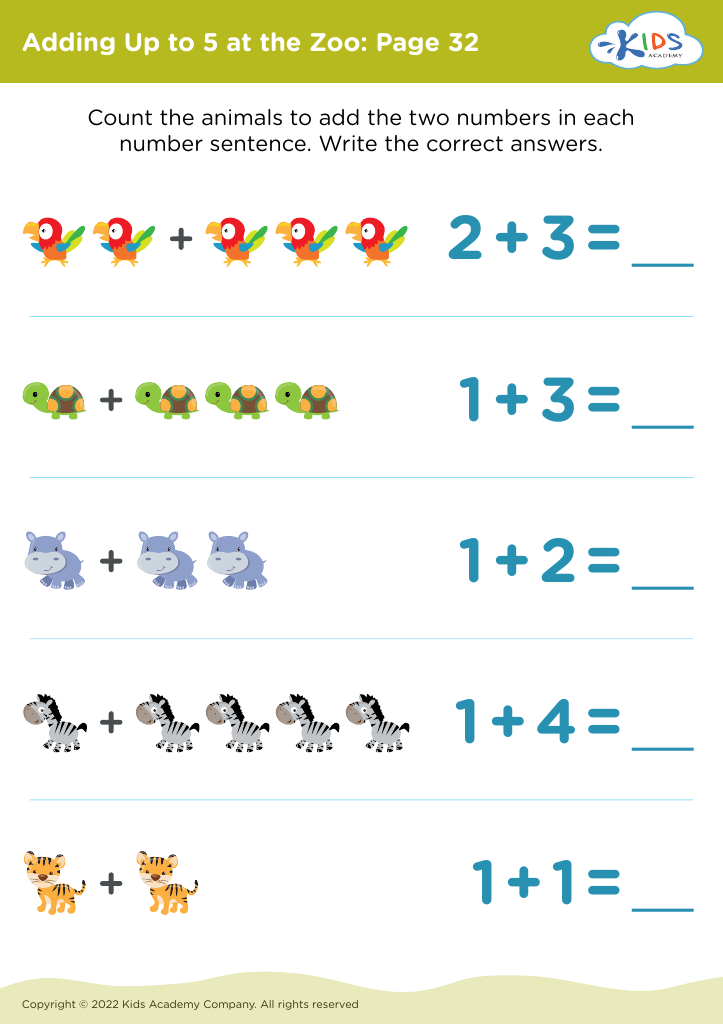
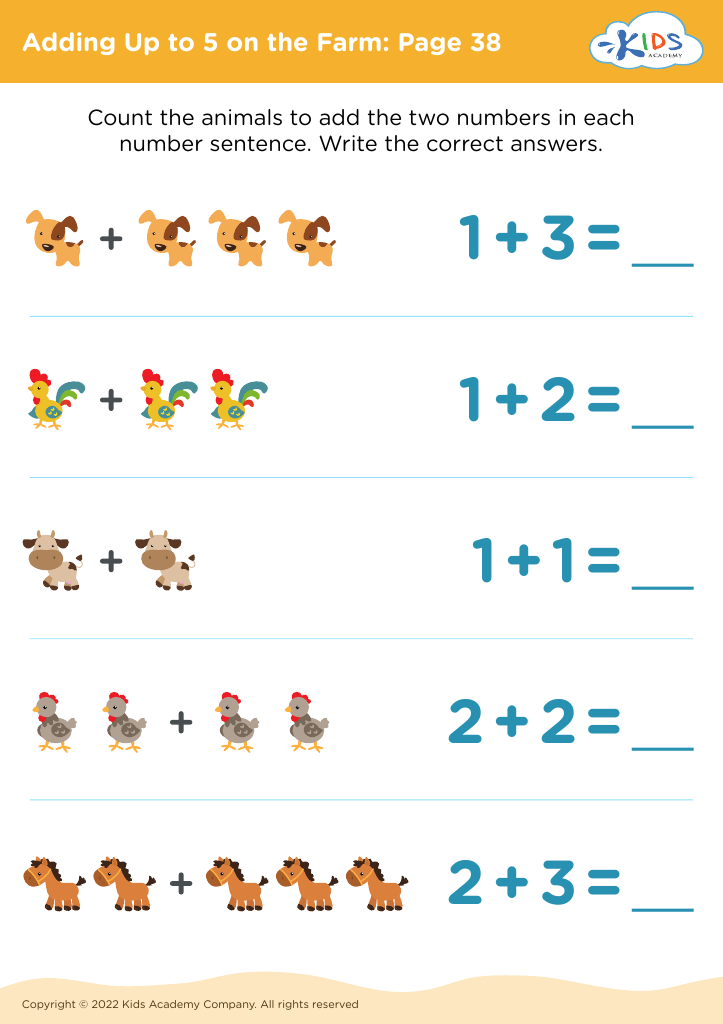
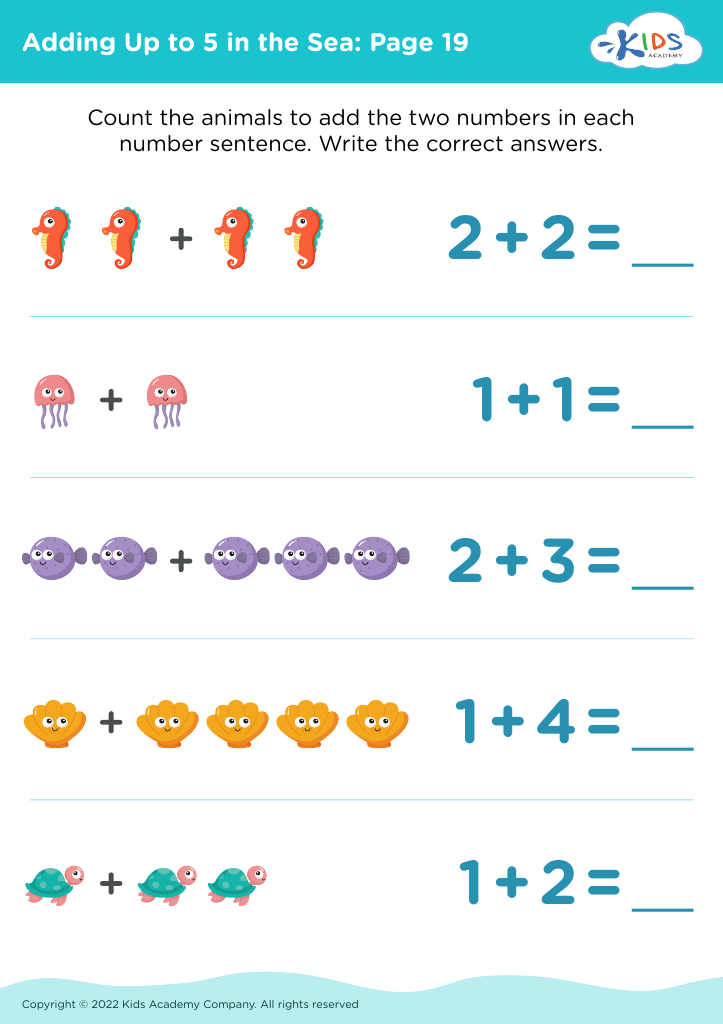
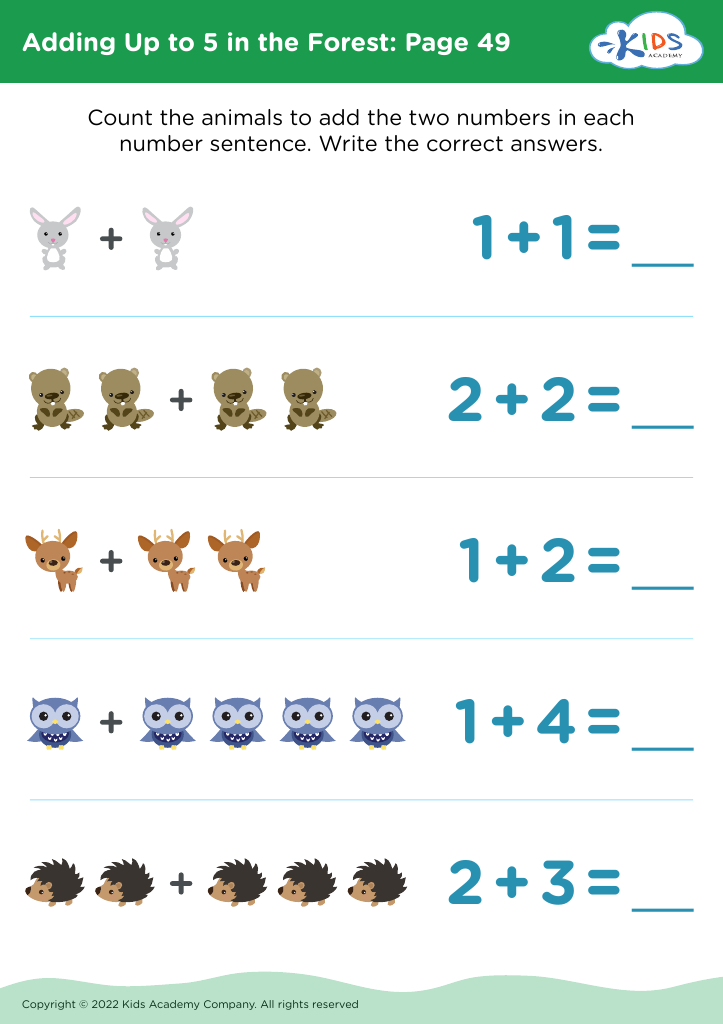
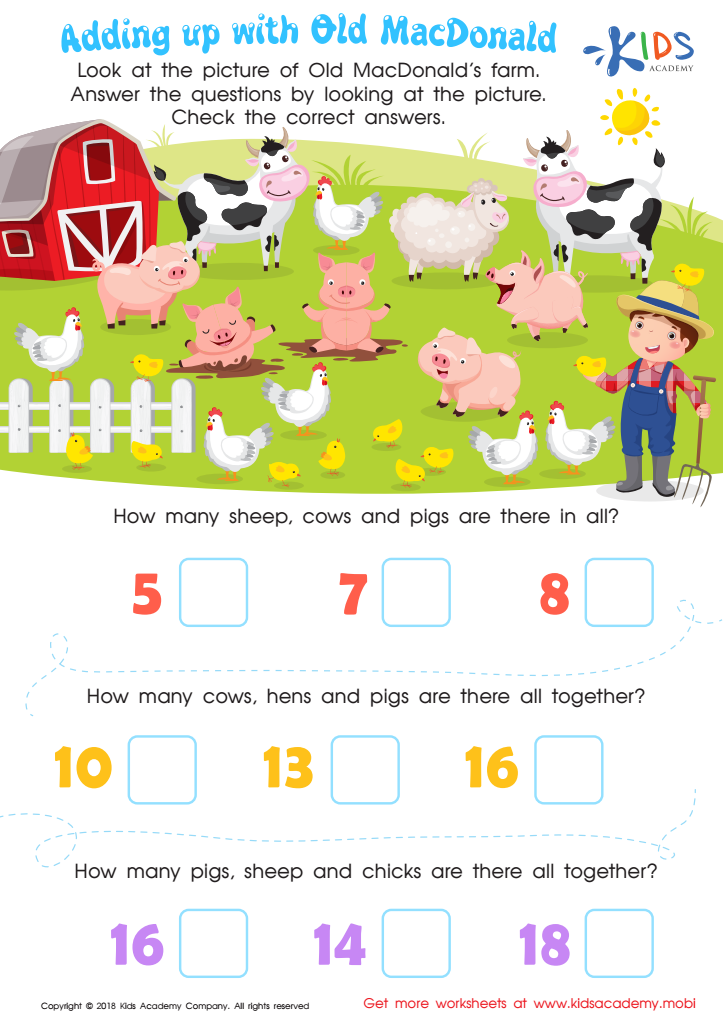
Adding Up with Old MacDonald Worksheet
Old MacDonald needs help counting his animals! Give your little math whiz a fun challenge with a free PDF worksheet. They'll love counting the animals and doing basic addition with two or three addends. Who knew math could be so much fun on the farm?
 Assign to My Students
Adding Up with Old MacDonald Worksheet
Worksheet
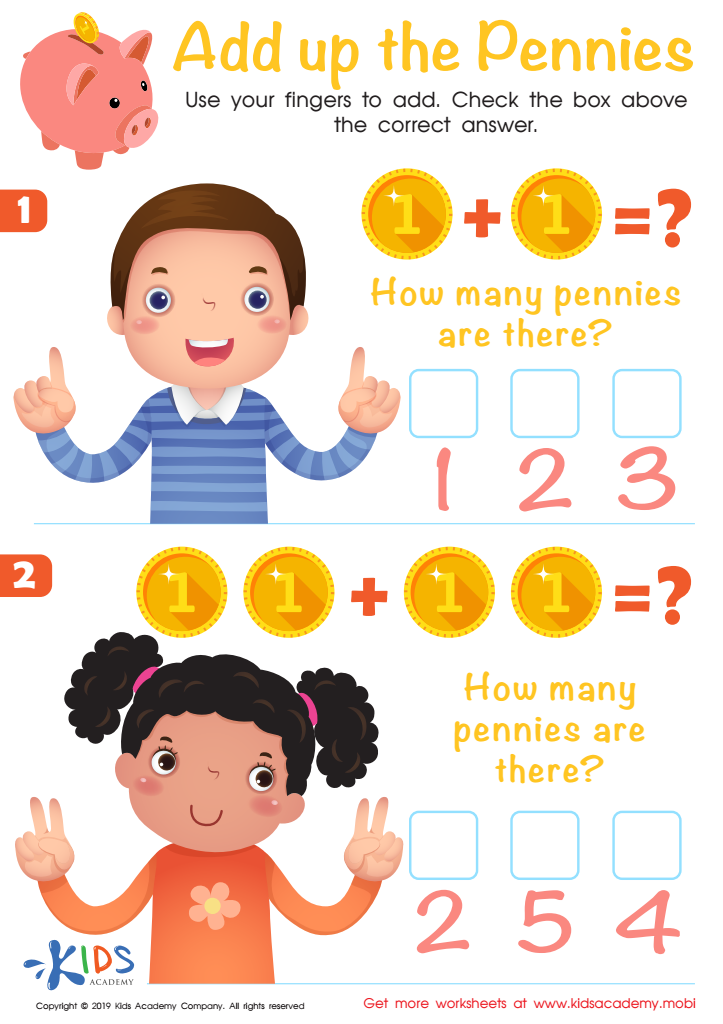
Add up the Pennies Worksheet
Help your kids ace their math skills with this simple worksheet! You can guide them to use their fingers to add numbers and then check the box above the correct answer. With practice and your support, they can become faster and better at adding numbers. No sweating required!
Add up the Pennies Worksheet
Worksheet
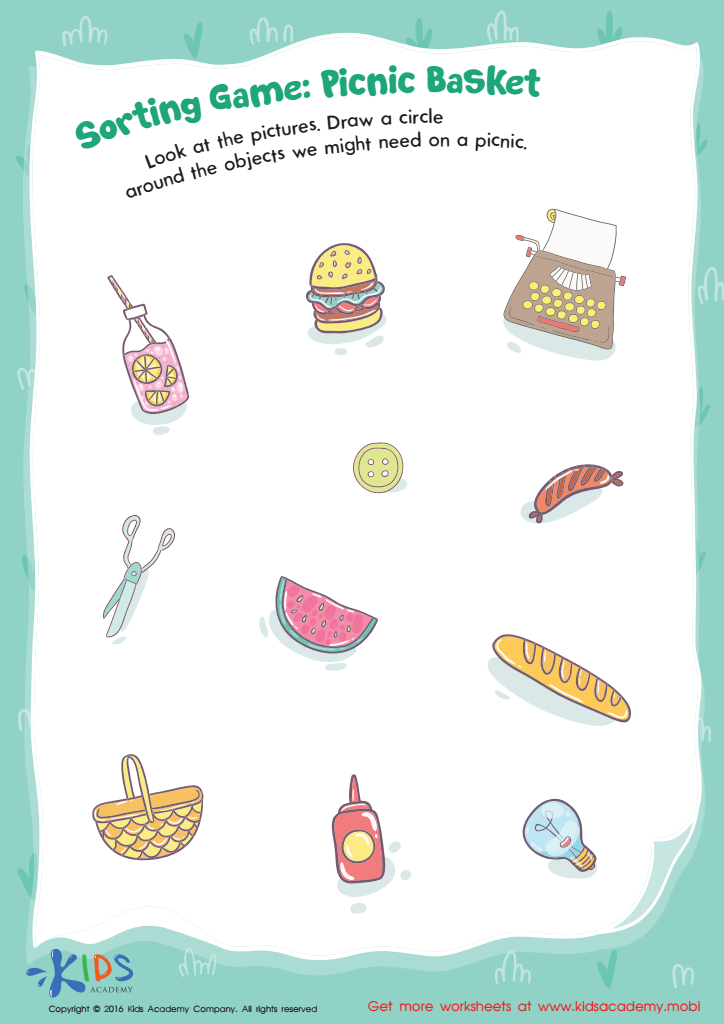
Picnic Basket Sorting Worksheet
Make picnic planning fun with this kindergarten sorting worksheet! Your child will sort everyday objects to find picnic supplies, and then use the worksheet to plan a real or pretend picnic. Extend the learning by discussing the event and its connection to the worksheet. Print out the other worksheets to sharpen sorting and classifying skills in an engaging way!
Picnic Basket Sorting Worksheet
Worksheet
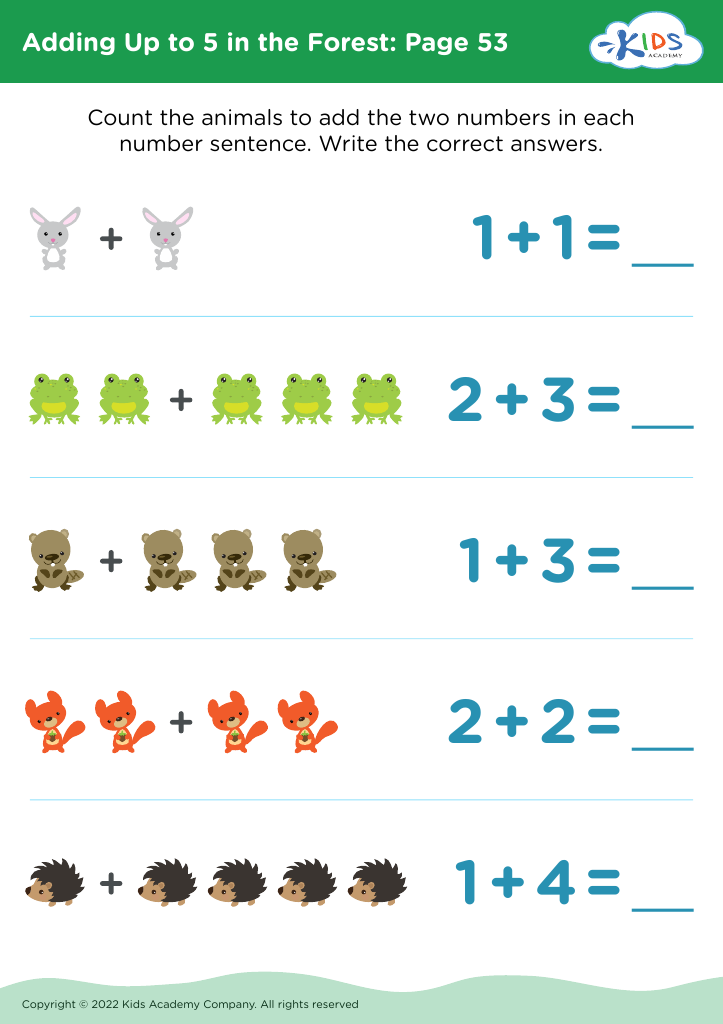
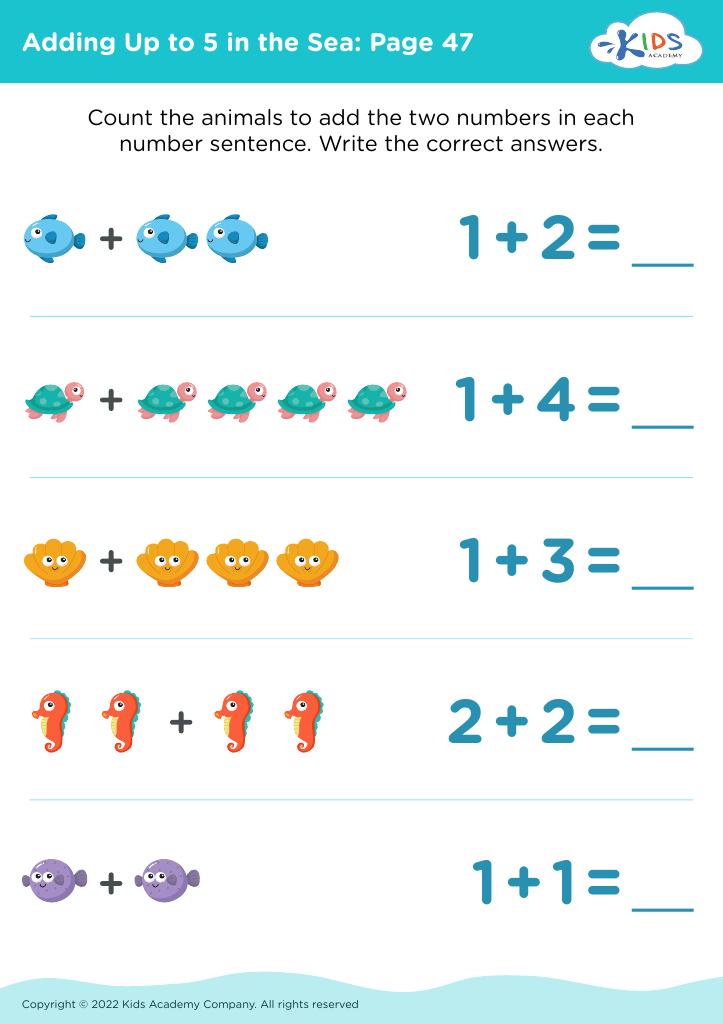
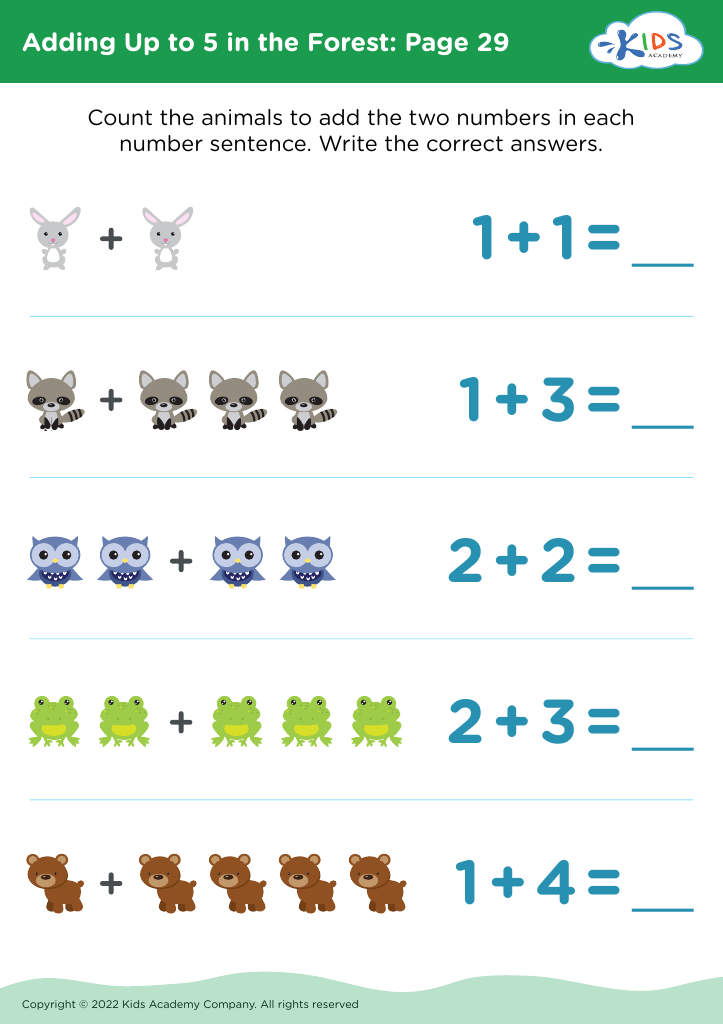
Join Kids Academy for Free
Who is primarily going to use this learning content?




Counting proficiency in three-year-olds is crucial for early mathematical development and foundational learning. At this age, children are naturally curious and eager to explore numbers which makes this period a prime time for introducing counting. Early exposure to counting helps children develop number sense, which is the ability to recognize, understand, and work with numbers.
Counting proficiency lays the groundwork for future mathematical skills, including addition, subtraction, and problem-solving. By mastering counting, children learn one-to-one correspondence, which involves matching numbers to a specific quantity. This skill is foundational for more advanced math concepts, and it promotes cognitive development, increasing their ability to think logically and abstractly.
Furthermore, counting activities engage young learners and foster curiosity and exploration. When teachers and parents incorporate counting into everyday activities, such as counting fruits at snack time or steps while walking, they create a rich learning environment. Not only does this enhance mathematical skills, but it also strengthens bonding between adults and children, encouraging communication and language development.
In short, promoting counting proficiency in three-year-olds is invaluable, as it supports their overall development and prepares them for success in future learning endeavors. It is an investment in their mathematical journey and cognitive growth.








