Enhancing observation skills Math Worksheets for 3-Year-Olds
3 filtered results
-
From - To
Discover our engaging "Enhancing Observation Skills Math Worksheets for 3-Year-Olds" designed to sharpen young minds. These fun, interactive worksheets are specially crafted to help toddlers develop their observation and attention to detail. Each activity encourages little learners to spot differences, match patterns, and identify shapes, fostering foundational math skills. Perfect for early childhood education, our printable resources make learning enjoyable and effective, setting the stage for future success in mathematics. Ideal for home or classroom use, these worksheets are a fantastic tool for parents and educators aiming to boost early cognitive and observation abilities in a playful way.
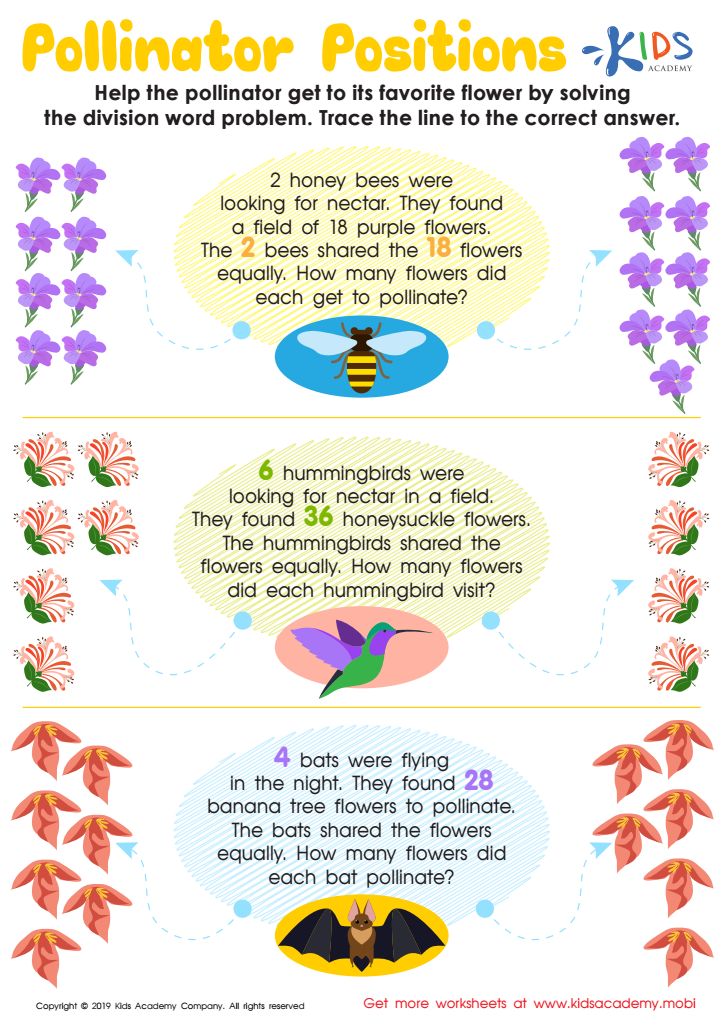
Pollinator Positions Worksheet
 Assign to My Students
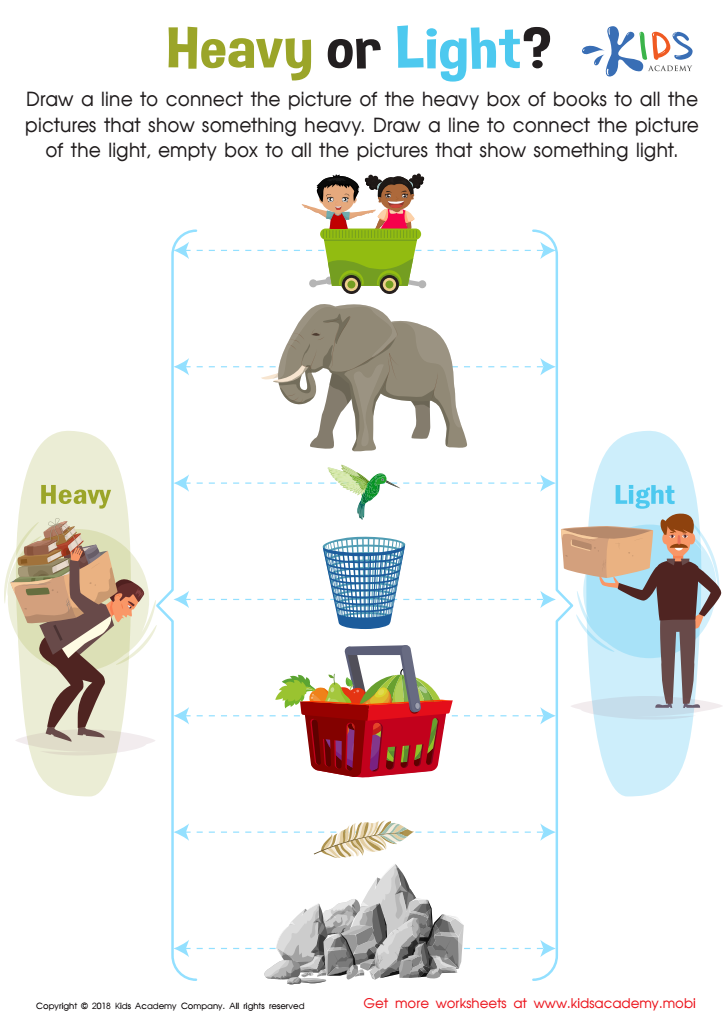
Heavy or Light? Worksheet







Enhancing observation skills in math for 3-year-olds is fundamental for their early cognitive development and sets the stage for future learning success. At this young age, children's brains are highly receptive to new information, and observational activities help stimulate their natural curiosity and analytical ability.
Observation in math can involve recognizing patterns, shapes, and numbers in their environment, which builds their foundational numeracy skills. When children learn to notice differences and similarities between objects, or count items during play, they develop critical thinking skills that are essential for problem-solving and logical reasoning. These activities make abstract math concepts more concrete and relatable, laying a strong groundwork for more advanced math learning in the future.
Moreover, enhancing observation skills can greatly improve children's attention span and focus. These skills are not only crucial in math but across all learning areas. For teachers, incorporating observational math games and activities can make learning fun and engaging, fostering a positive attitude towards math from an early age. For parents, such activities help create meaningful, educational interactions with their children.
In essence, prioritizing observation skills in math for 3-year-olds equips them with essential problem-solving abilities, enriches their learning experiences, and ensures they are well-prepared for formal education.








