
Improve counting skills Math Worksheets for 3-Year-Olds
8 filtered results
Difficulty Level
Grade
Age
-
From - To
Subject
Activity
Standards
Boost your child's counting skills with our engaging math worksheets designed specifically for 3-year-olds! Our printable resources offer a fun and interactive approach to learning, helping young learners recognize numbers, count objects, and understand basic math concepts. Each worksheet is filled with colorful illustrations and age-appropriate activities that make counting enjoyable. Ideal for home or classroom use, these worksheets encourage cognitive development through play and creativity. Watch as your little ones gain confidence and improve their numeracy skills with each completed task. Start nurturing a strong math foundation today with our specially crafted counting worksheets!
Favorites
With answer key
Interactive
 Assign to My Students
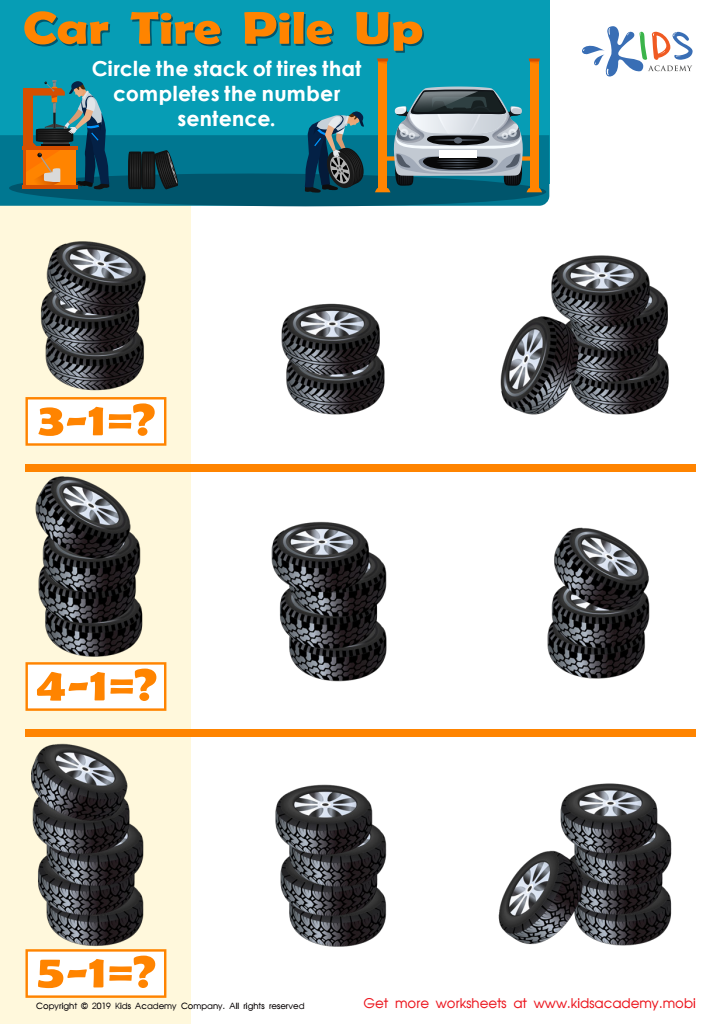
Car Tire Pile Up Worksheet
Examine the pic with your kids. Can they recognize the items piled up? The tires are organized in different quantities. Equations are on the left. Have your children work out the equations, counting the tire stacks to identify the correct answer.
Car Tire Pile Up Worksheet
Worksheet
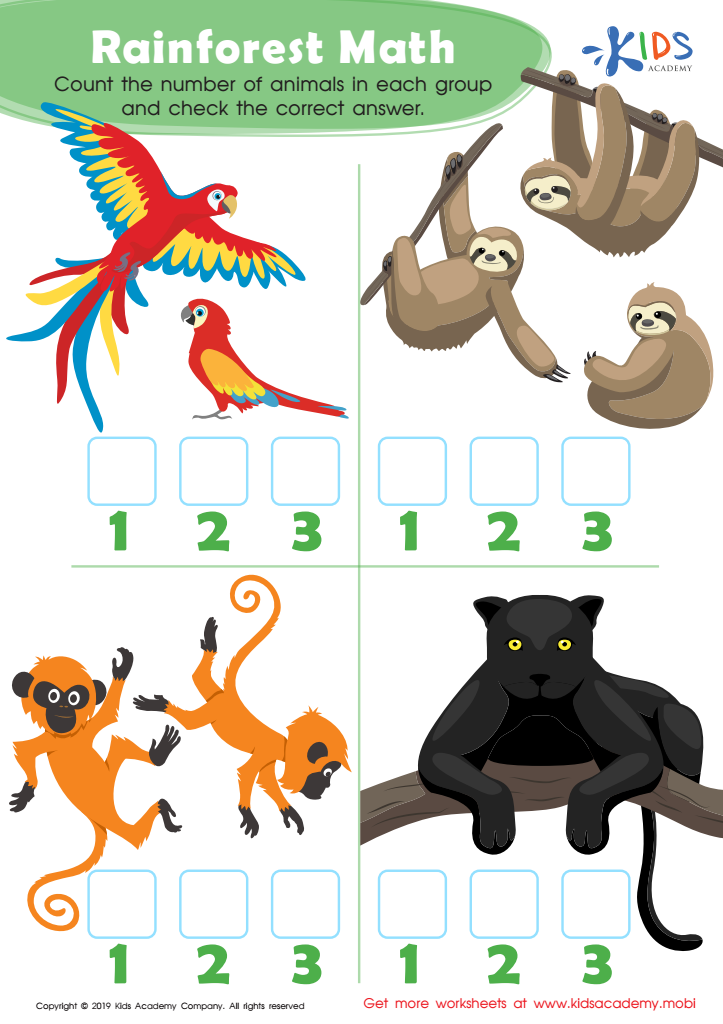
Rainforest Math Worksheet
Kids love learning about rainforest animals! This worksheet helps them with counting and number sense. It features recognizable rainforest animals and asks children to choose the correct number from the answer choices. It's a fun way for children to build their skills - without even knowing it!
Rainforest Math Worksheet
Worksheet
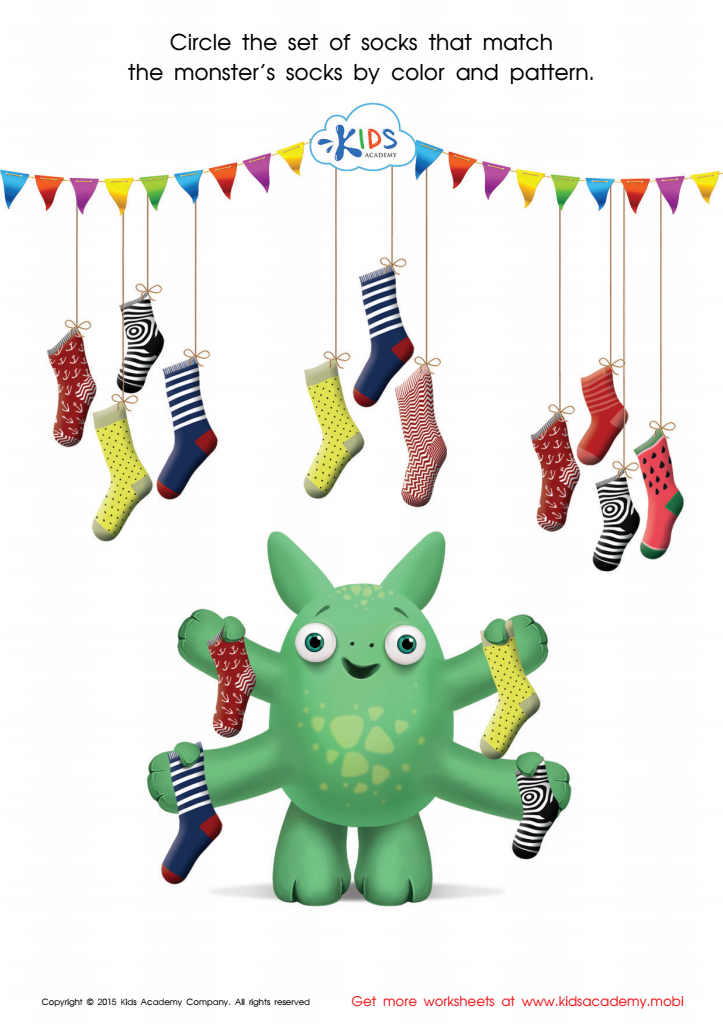
Connecting the Monster's Socks Printable
The cute monster did some washing yesterday, but now he can't put his socks back together! Children must focus on the color and pattern to make the right matches, improving their cognitive and fine motor skills. Get more educational games by Kids Academy!
Connecting the Monster's Socks Printable
Worksheet
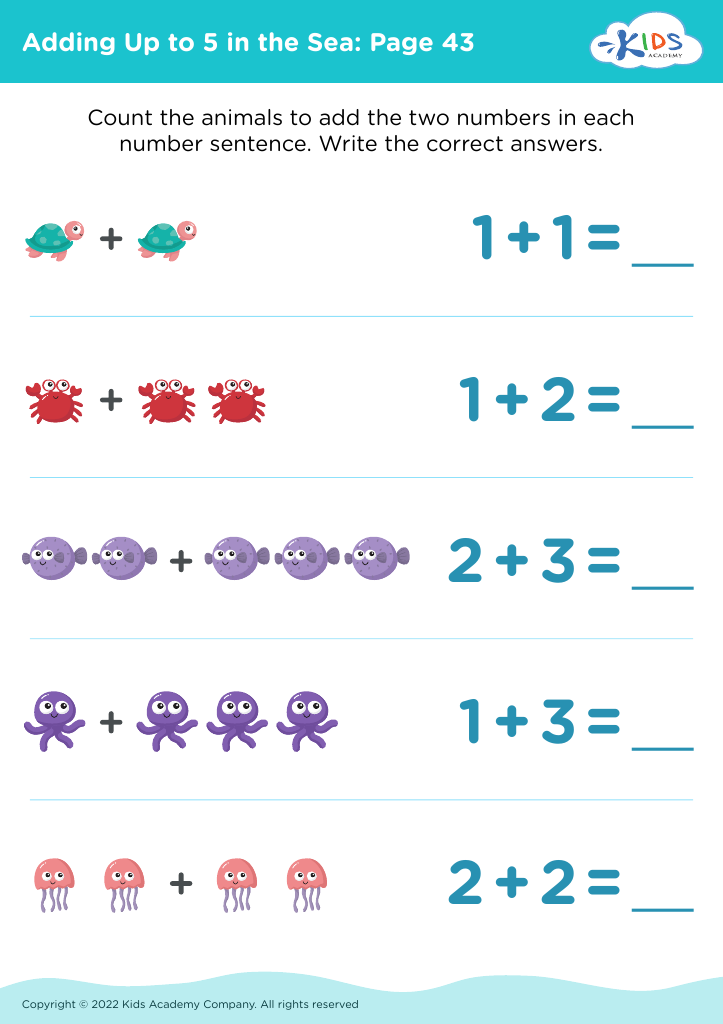
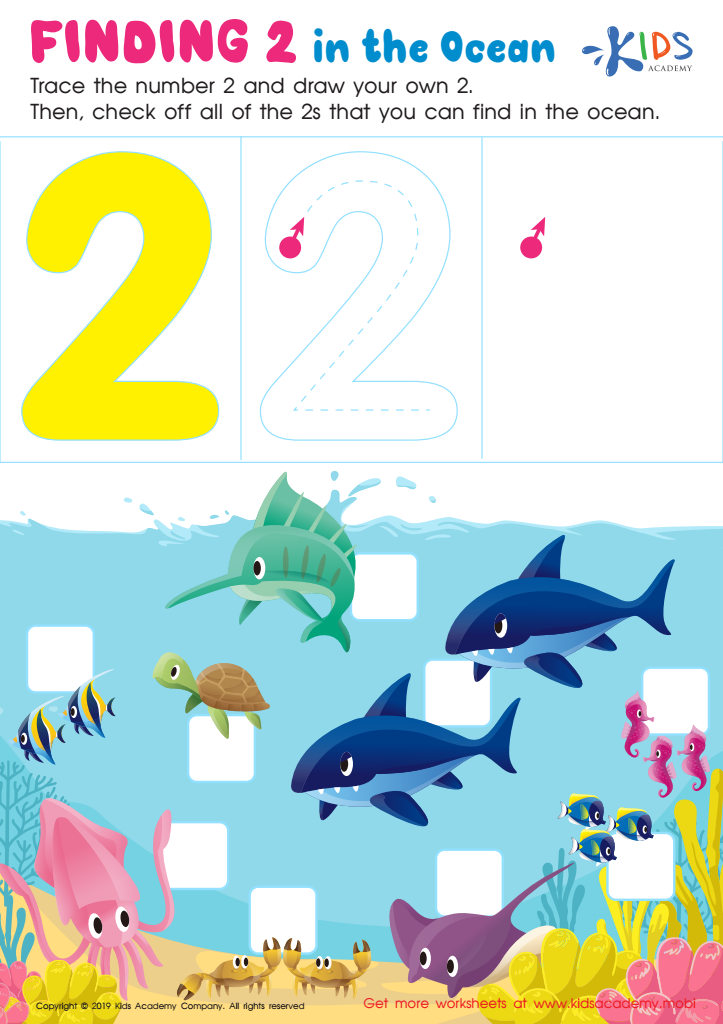
Finding 2: In the Ocean Worksheet
Kids start their math journey with basic numbers. Finger counting, number representation with pictures and this worksheet help build number sense. Kids trace lines and dots to write the number two and identify groups of two sea creatures for easy success and to feel proud of their math skills.
Finding 2: In the Ocean Worksheet
Worksheet
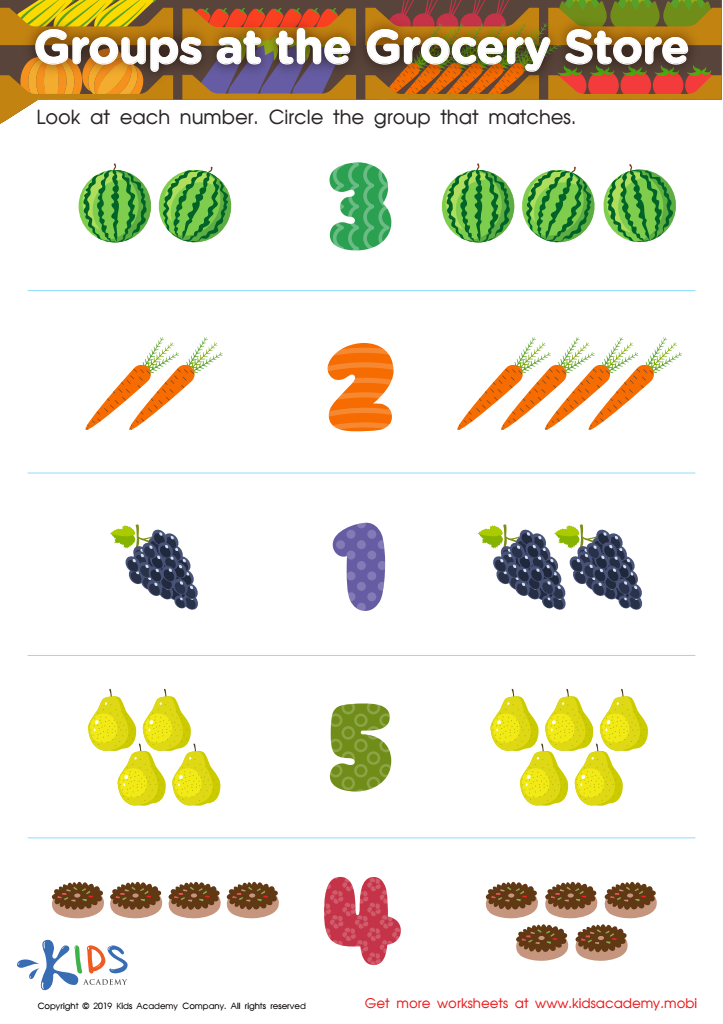
Groups at the Grocery Store Worksheet
Help your kids learn about counting with this worksheet! Look at each group of objects and circle the one that matches. It's a fun way to support what they're learning at school and give them a boost in counting.
Groups at the Grocery Store Worksheet
Worksheet
Join Kids Academy for Free
Who is primarily going to use this learning content?






Improving counting skills in 3-year-olds is essential for early childhood development, as it lays the groundwork for future mathematical understanding and overall cognitive growth. At this age, children's brains are most receptive to learning, and counting serves not only as a foundation for math but also enhances critical thinking and problem-solving abilities.
Parents and teachers should care because effective counting skills go beyond numbers; they encourage the development of language skills, motor skills, and social interactions. When children count objects, they learn to categorize and recognize quantities, which strengthens their logical thinking. Engaging in activities that incorporate counting, such as singing number songs, counting toys, or using simple games, creates a fun and interactive learning environment.
Moreover, fostering these skills promotes a sense of achievement and boosts self-esteem as children grasp new concepts. As youngsters master counting, they are more prepared to tackle advanced math concepts in later years, reducing future learning gaps. Ultimately, investing time and effort into improving counting skills nurtures well-rounded development, fostering a love for learning that lasts beyond the early years. By prioritizing this foundational skill, parents and teachers set the stage for a successful academic journey.








