Practical math application Math Worksheets for 3-Year-Olds
4 filtered results
-
From - To
Unlock the fun of learning with our "Practical Math Application Math Worksheets for 3-Year-Olds"! Designed specifically for early learners, these engaging and interactive worksheets help children grasp basic math concepts such as counting, number recognition, and shapes through relatable, real-life scenarios. Each activity promotes critical thinking and problem-solving while keeping your child entertained. Perfect for parents and educators, our age-appropriate worksheets combine playful illustrations with hands-on practice to make early math skills easy and enjoyable. Support your toddler's developmental journey with our expertly crafted math resources—exciting learning adventures await!
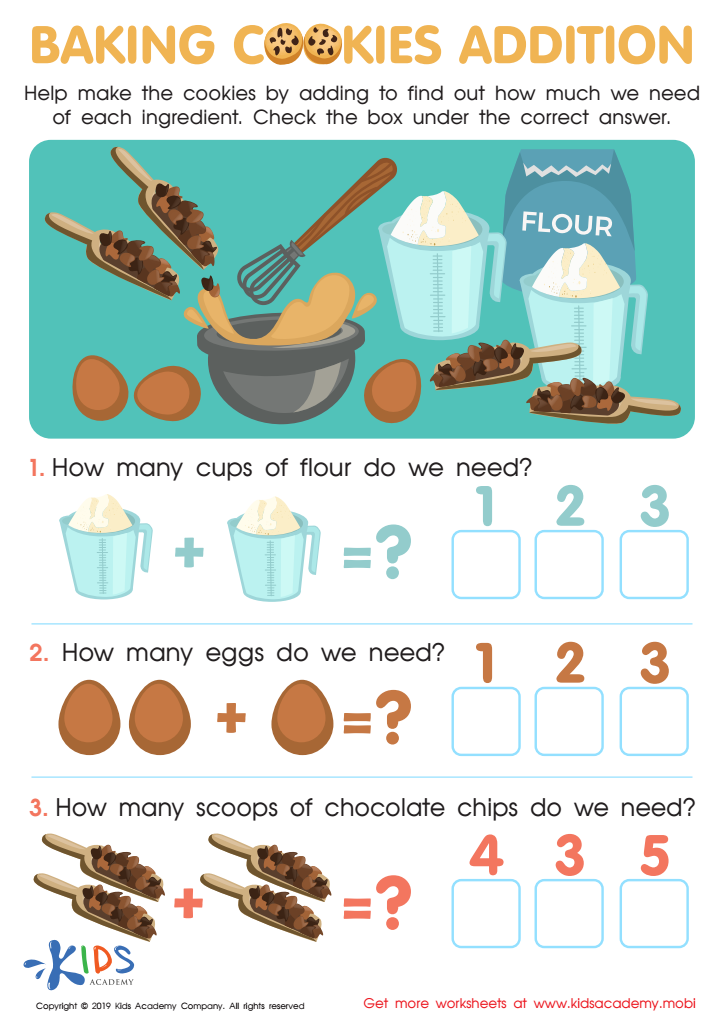
Baking Cookies Addition Worksheet
 Assign to My Students
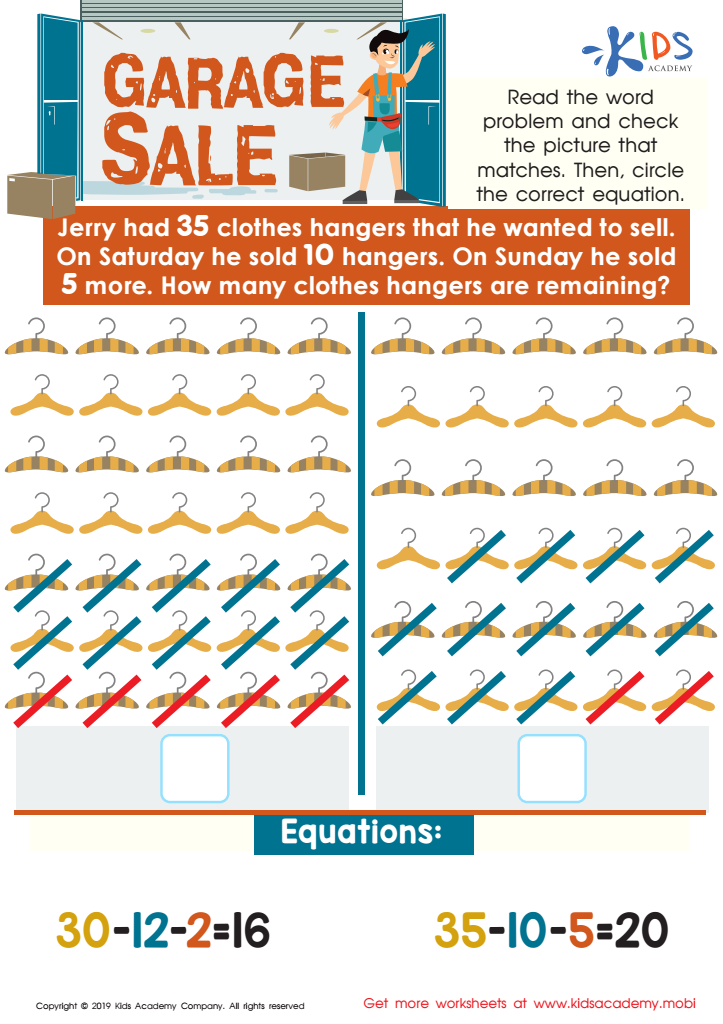
Garage Sale Worksheet
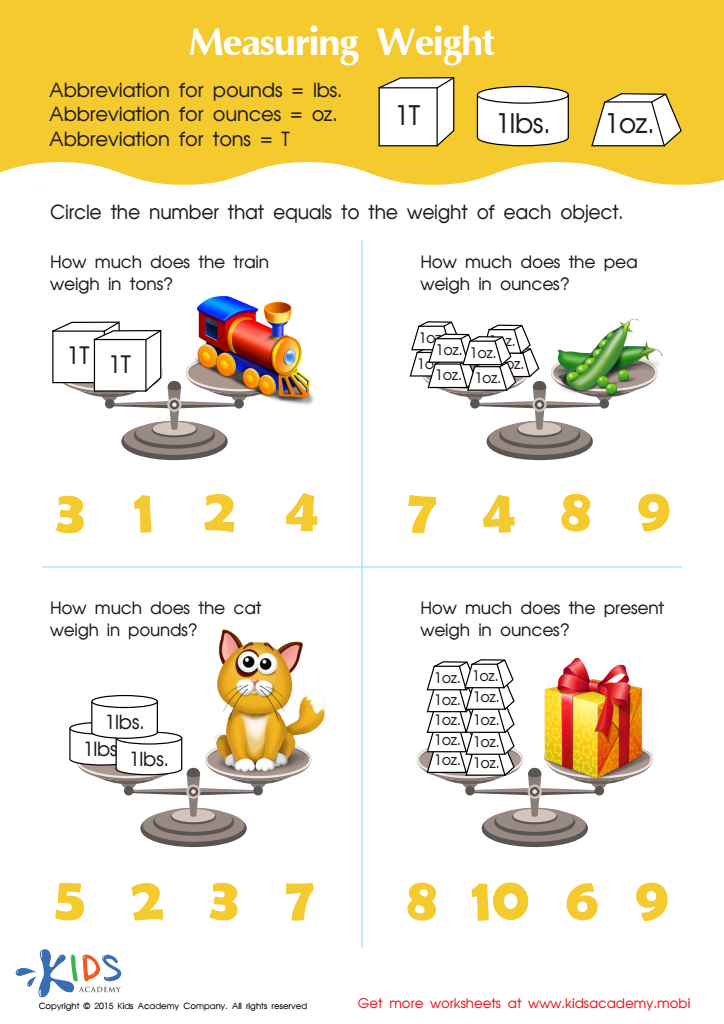
Measuring Weight in Ounces, Pounds and Tons Worksheet
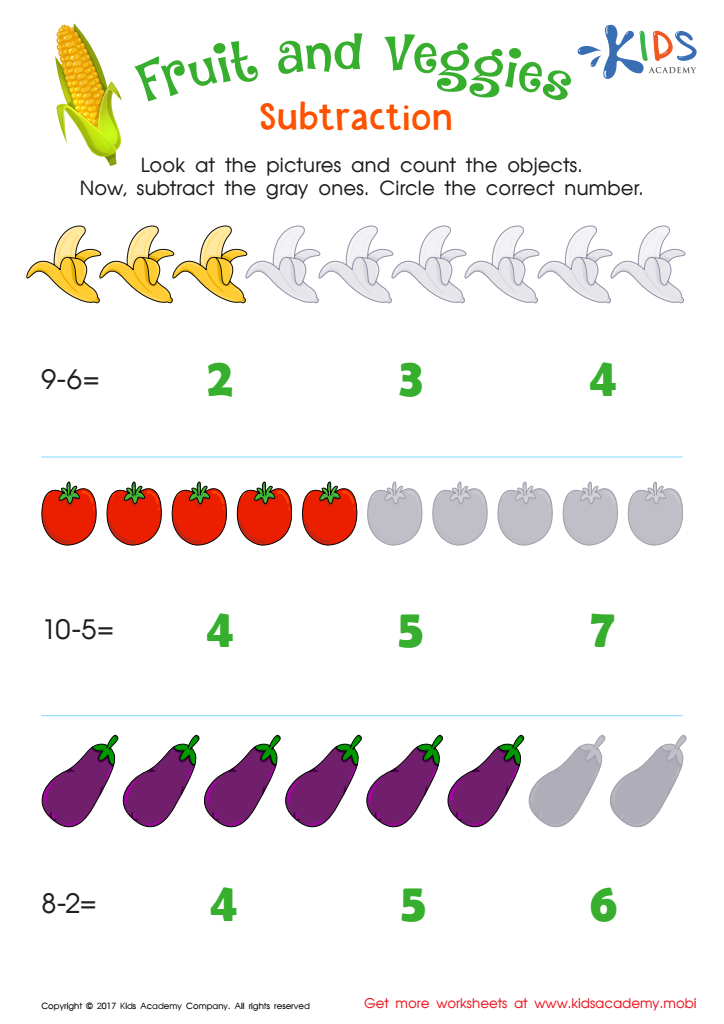
Fruit and Veggies Subtraction Worksheet






Parents and teachers should care about practical math application for 3-year-olds because it lays a crucial foundation for cognitive development and future academic success. Early exposure to math helps young children develop essential problem-solving skills and logical thinking abilities. When math concepts are integrated into everyday activities like counting objects during play, sorting toys by shape or color, or recognizing numbers in their environment, children begin to see math as a natural and enjoyable part of their world.
Incorporating practical math applications can also improve a child's confidence and curiosity toward learning. Games and activities that involve numbers, patterns, and measurements make math tangible and relevant, reducing any potential anxiety children may feel toward the subject as they grow older. Early math skills are predictive of later academic achievement, not just in mathematics but also in literacy and language development.
Moreover, practical math application fosters important social skills. When children engage in math-based play with peers or adults, they practice taking turns, following rules, and communicating their ideas, which are critical for building healthy relationships.
In summary, by prioritizing practical math application for 3-year-olds, parents and teachers are setting children up for a lifetime of positive attitudes towards learning, both in mathematics and beyond.








