Visual Learning Word Problems Worksheets for 3-Year-Olds
5 filtered results
-
From - To
Discover engaging Visual Learning Word Problems Worksheets designed specifically for 3-year-olds! These fun, interactive worksheets help young learners develop essential math skills through vivid illustrations and relatable scenarios. As children navigate age-appropriate word problems, they enhance critical thinking and comprehension while enjoying a playful learning experience. Tailored for early development, each worksheet encourages visual recognition and problem-solving abilities, making math both accessible and enjoyable. Whether at home or in the classroom, our resources offer the perfect blend of learning and fun. Explore our collection now to foster a love for math in your little one!
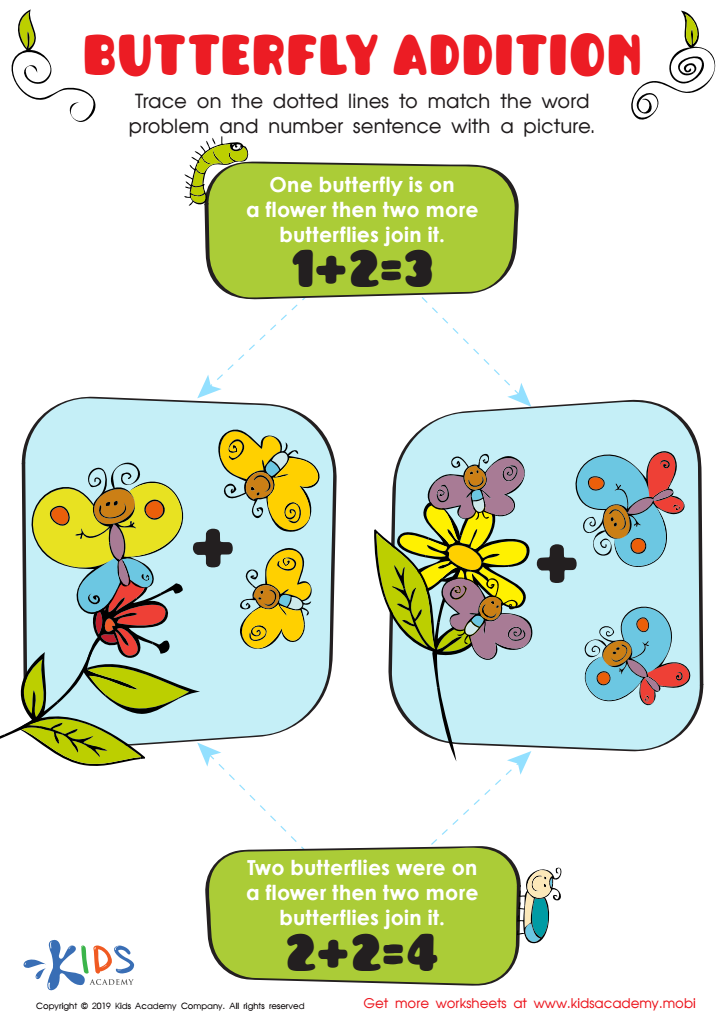
Butterfly Addition Worksheet
 Assign to My Students
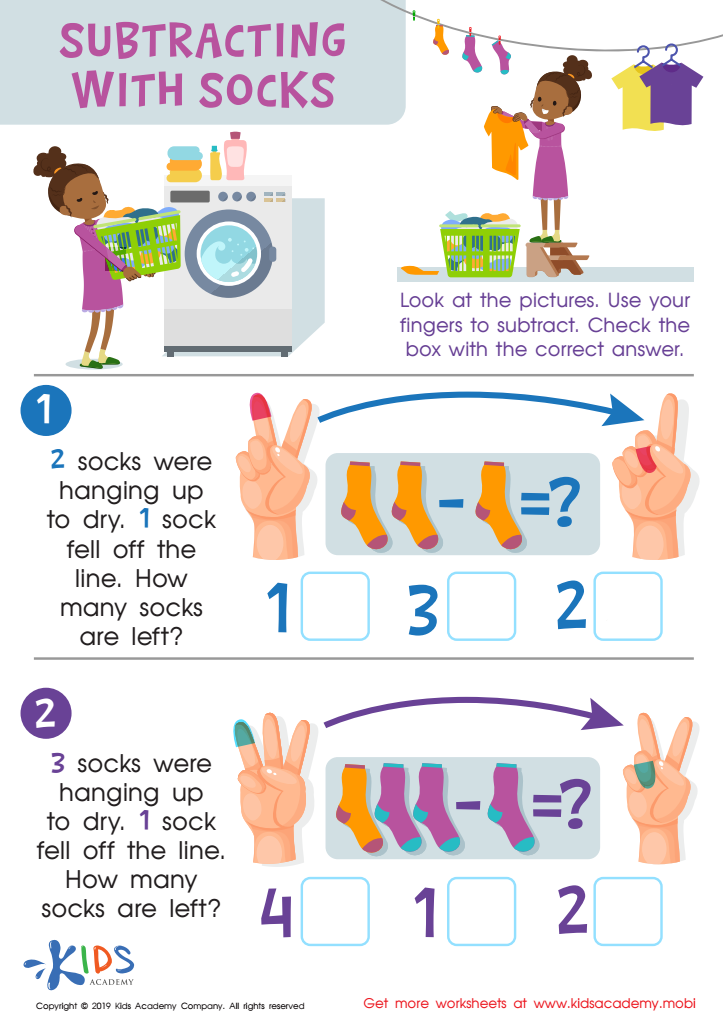
Subtracting Socks Worksheet
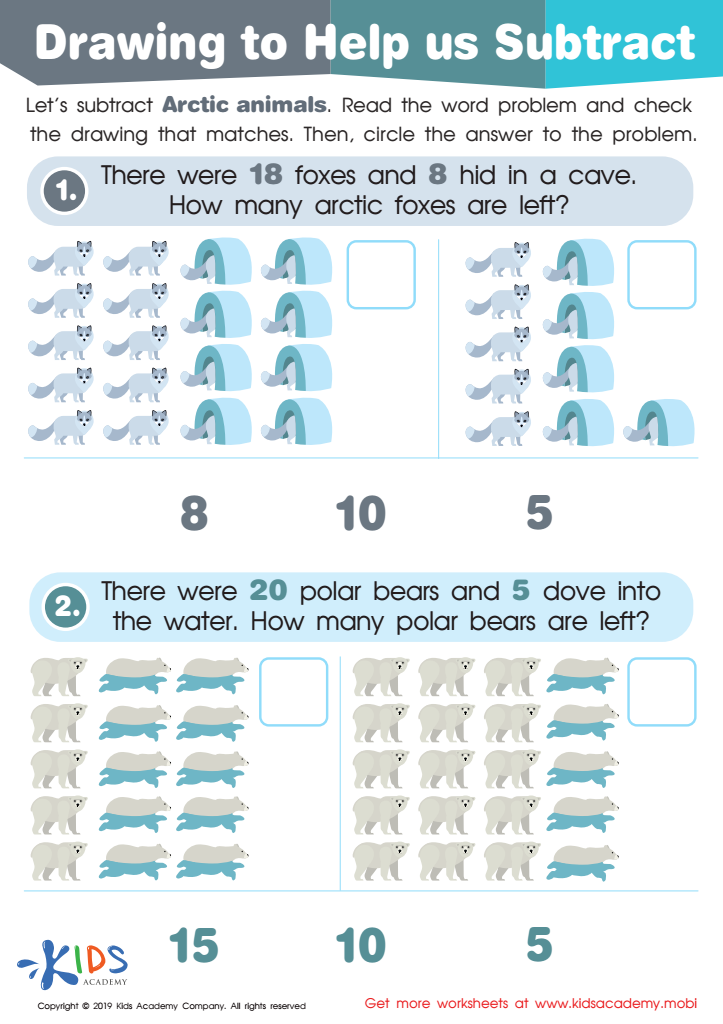
Drawing to Help Us Subtract Worksheet
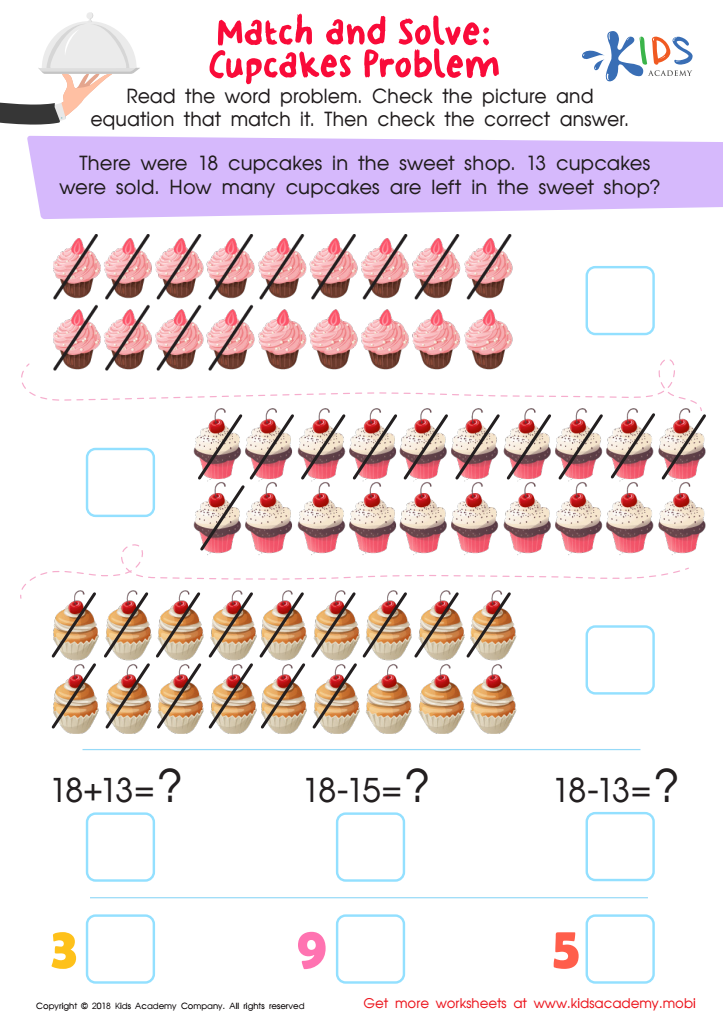
Match and Solve: Cupcakes Problem Worksheet
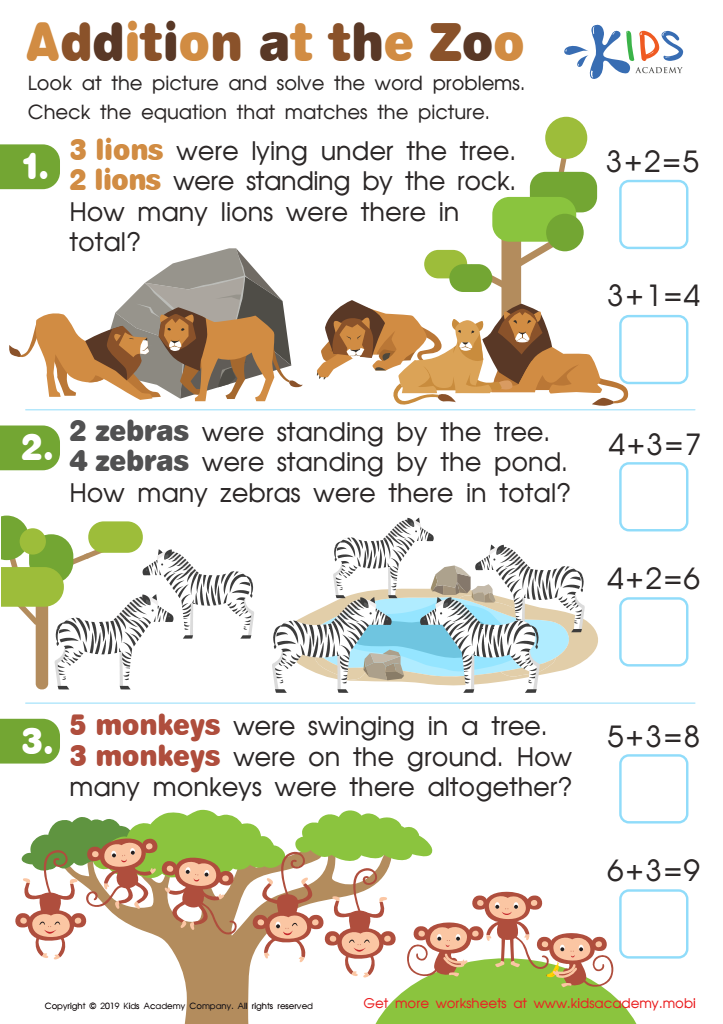
Addition at the Zoo Worksheet








Visual learning word problems are essential for the cognitive and emotional development of 3-year-olds, making it crucial for parents and teachers to prioritize them. At this age, children are naturally curious and eager to understand the world around them. Visual learning engages their senses, helping them grasp complex concepts through imagery and relatable scenarios.
Word problems presented visually stimulate critical thinking and problem-solving skills, encouraging children to analyze situations. They learn to associate numbers and actions with real-life contexts, promoting literacy and numeracy simultaneously. This method empowers them to express thoughts and ideas, fostering language development and vocabulary expansion.
Moreover, visual learning accommodates various learning styles. Some children may struggle with abstract concepts but flourish with concrete visuals, maintaining their interest and motivation. When they successfully solve word problems, it boosts their confidence and creates a love for learning.
Involving parents and teachers in this process promotes collaboration and reinforces the concepts learned at school and home. Investing time in visual learning word problems nurtures foundational skills, creating a strong base for future academic success and lifelong learning. By focusing on these critical early experiences, adults can help children unlock their potential and navigate challenges effectively.








