
Sight word recognition Reading Worksheets for 3-Year-Olds
5 filtered results
Difficulty Level
Grade
Age
-
From - To
Subject
Activity
Standards
Enhance your child's early reading skills with our engaging Sight Word Recognition Worksheets designed specifically for 3-year-olds. These worksheets focus on introducing essential sight words through fun, interactive activities tailored to young learners. From simple word tracing to colorful illustrations, each sheet aims to make learning enjoyable and effective. Our resources promote vocabulary development, reading fluency, and confidence in recognizing commonly used words. Perfect for at-home learning or preschool activities, these worksheets help lay a solid foundation for literacy. Start your child's reading journey today with our vibrant and engaging sight word recognition materials! Perfect for parents and educators.
Favorites
With answer key
Interactive
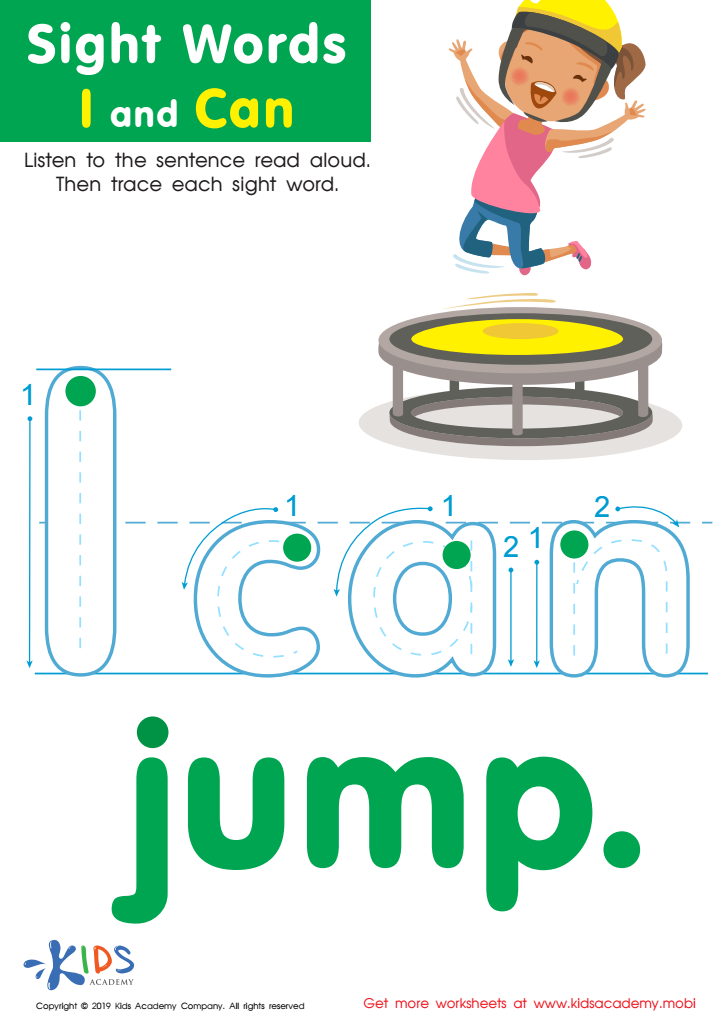
Sight Words I Can Worksheet
Emerging readers can build confidence and improve reading skills with this free worksheet! They'll trace the lines to complete the "I Can" phrase then use the picture clue to decode the last word. This activity encourages reading and writing, and is empowering for kids as they explore all the things they can do!
Sight Words I Can Worksheet
Worksheet
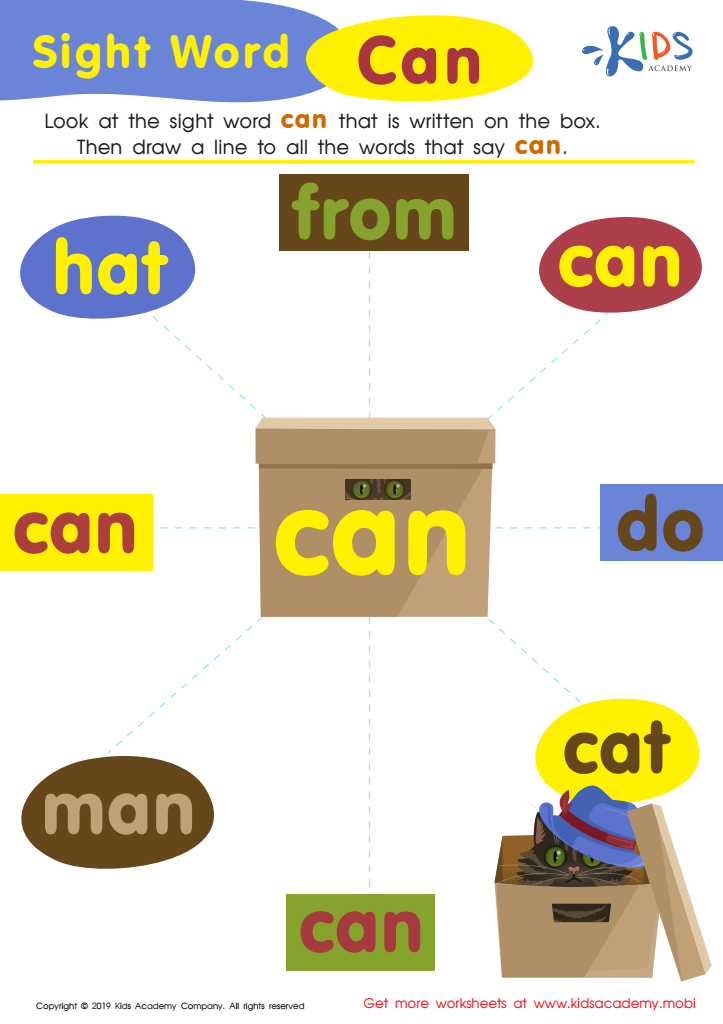
Sight Word Can Worksheet
Learning sight words is key for strong readers. Kids with large word bases find reading simpler, since they don't have to decode words they already know. This free worksheet uses the word 'can' to help kids improve their visual discrimination and refine motor skills, while providing pictures to help them along.
Sight Word Can Worksheet
Worksheet
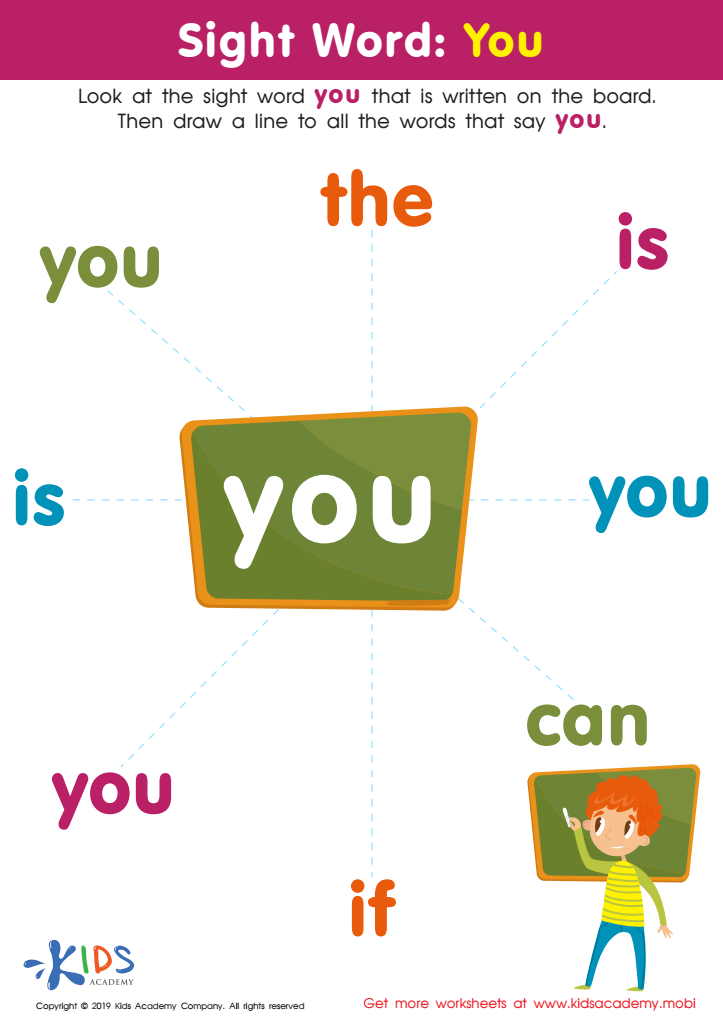
Sight Word You Worksheet
This free worksheet features the word 'you' and helps beginning readers practice visual-discriminatory skills. Using traceable lines and different colored words, it's an easy way to reinforce their identification of the word and build fluency.
Sight Word You Worksheet
Worksheet
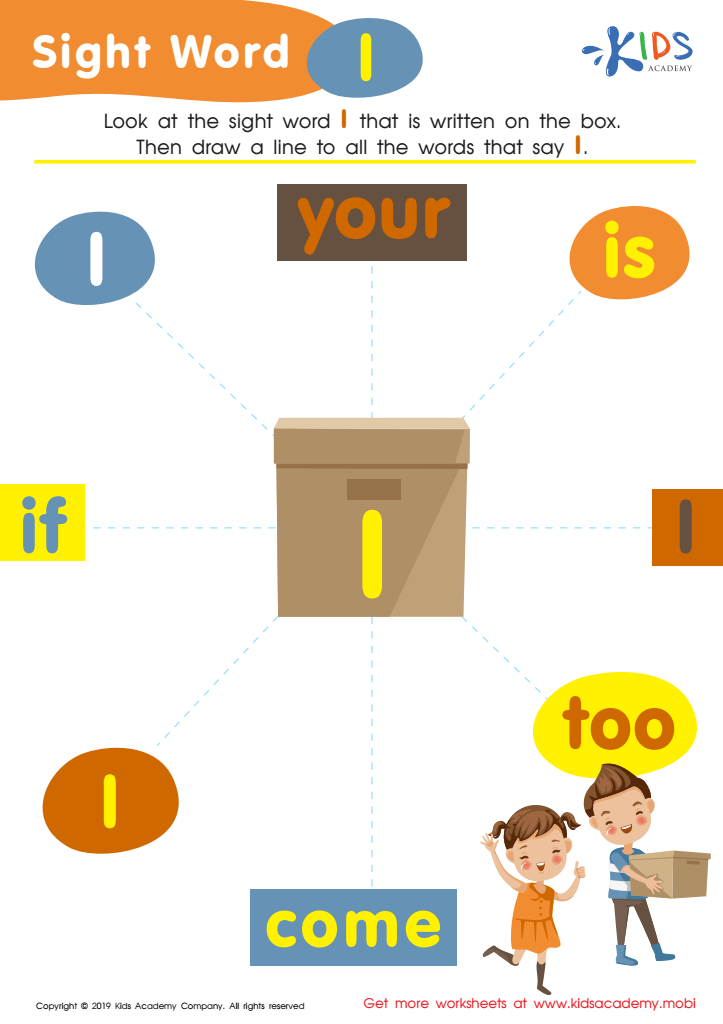
Sight Word I Worksheet
Recognizing the sight word 'I' is harder than it looks! When kids are learning to read, they understand 'I' by its sound, not as a word. This free worksheet gives them practice with 'I', letting them work on their fine motor skills too. They'll join 'I' to shapes containing the same letter. It's a great way to give kids confidence in their reading skills!
Sight Word I Worksheet
Worksheet
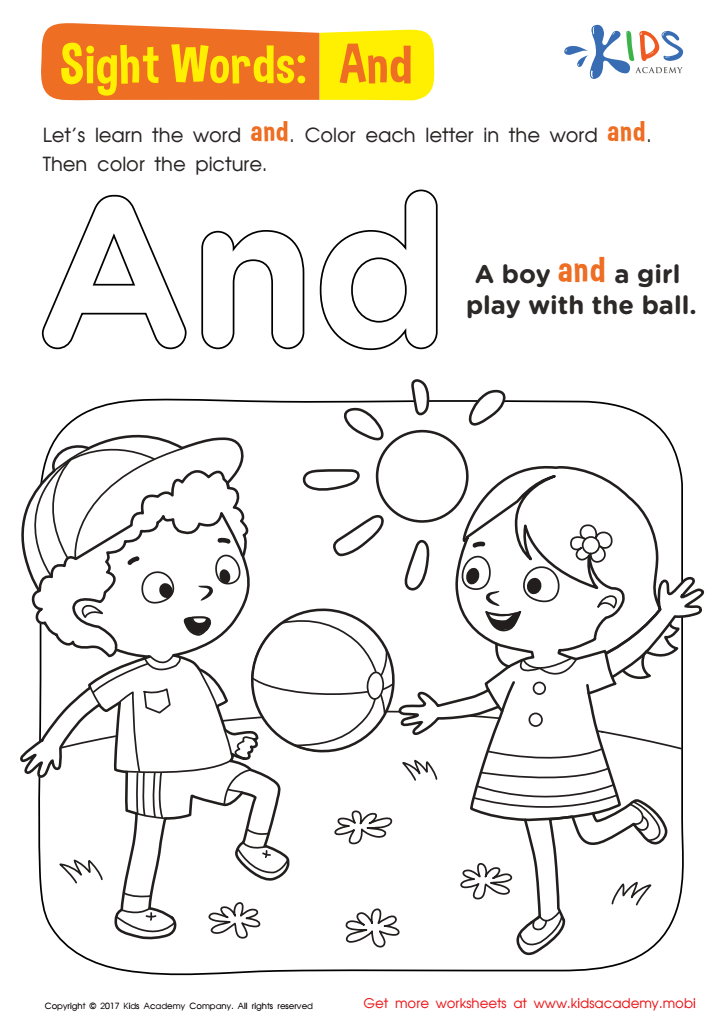
And Worksheet Sight Words Worksheet
Help your child get a jumpstart on reading with sight words! Print out this fun worksheet and get your child to read the sentence. Point out the word "and", then color the word and enjoy the rest of the scene! It's a great way to introduce sight words and get their early reading skills going!
Download (PDF)
 Assign to My Students
Assign to My Students
And Worksheet Sight Words Worksheet
Worksheet
Join Kids Academy for Free
Who is primarily going to use this learning content?





Parents and teachers should prioritize sight word recognition for 3-year-olds because it serves as a foundational skill in early literacy development. Sight words are common, high-frequency words that children often encounter in reading. Recognizing these words by sight, rather than phonetic decoding, allows young learners to read more fluently and with greater comprehension. Early exposure to sight words can significantly enhance a child's confidence in reading, making them more enthusiastic and willing to engage with books.
At this age, the brain is highly receptive to language acquisition, making it an ideal time for introducing sight words. Engaging children with playful activities and interactive games centered around sight words can foster a positive learning environment. Moreover, enhancing a child's vocabulary and reading skills at this stage can have long-term educational benefits, setting the tone for a successful academic journey.
Additionally, parents and teachers can further enhance the child’s language skills by integrating sight words into daily interactions, thus reinforcing their learning in a fun and meaningful way. By emphasizing sight word recognition, caregivers contribute significantly to a child's literacy foundation, ultimately promoting a love for reading that can last a lifetime.








