Analytical skills Reading Comprehension Worksheets for 3-Year-Olds
5 filtered results
-
From - To
Unlock your preschooler's potential with our engaging Analytical Skills Reading Comprehension Worksheets specially designed for 3-year-olds. At Kids Academy, our printable worksheets offer a fun, interactive way to develop your child's critical thinking and comprehension abilities. These expertly crafted activities focus on nurturing analytical skills while making learning an enjoyable adventure. Perfect for early learners, our worksheets align with your child's developmental stage, providing age-appropriate challenges. Support your little one’s reading journey and build a strong foundation for future academic success with Kids Academy’s learning resources!
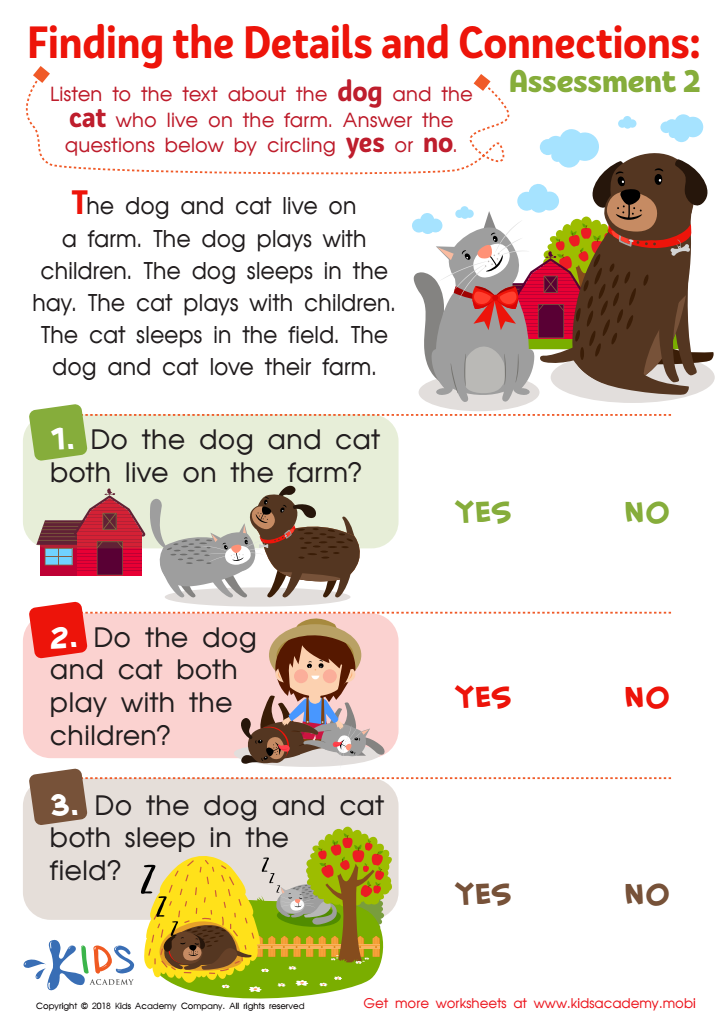
Finding the Details and Connections: Assessment 2 Worksheet
 Assign to My Students
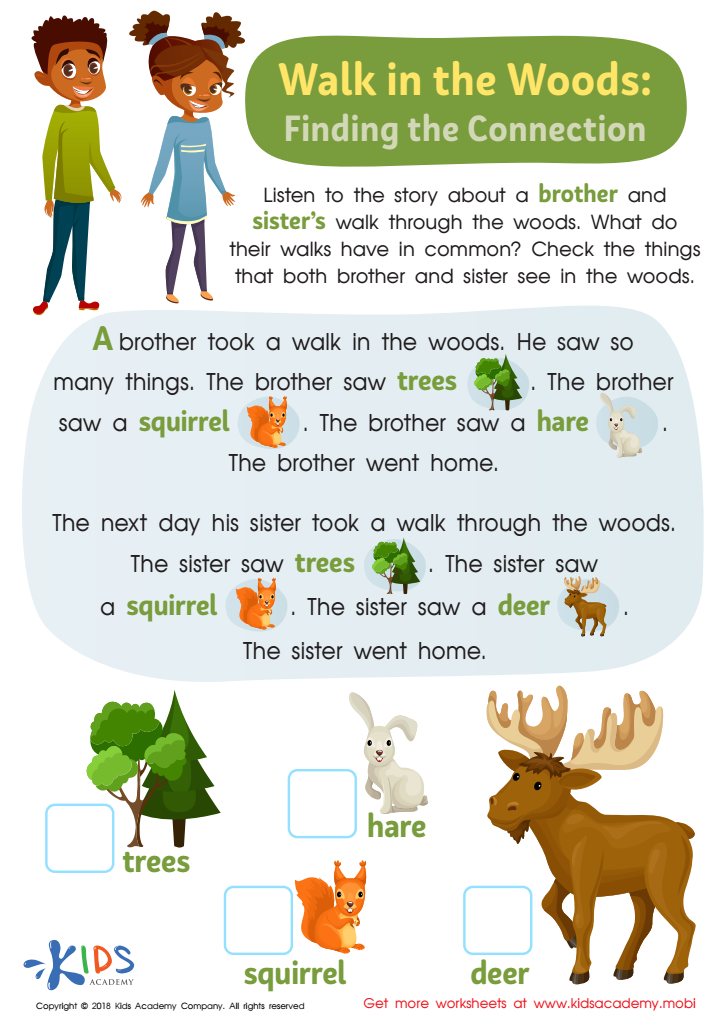
Walk In the Woods: Finding Connections Worksheet
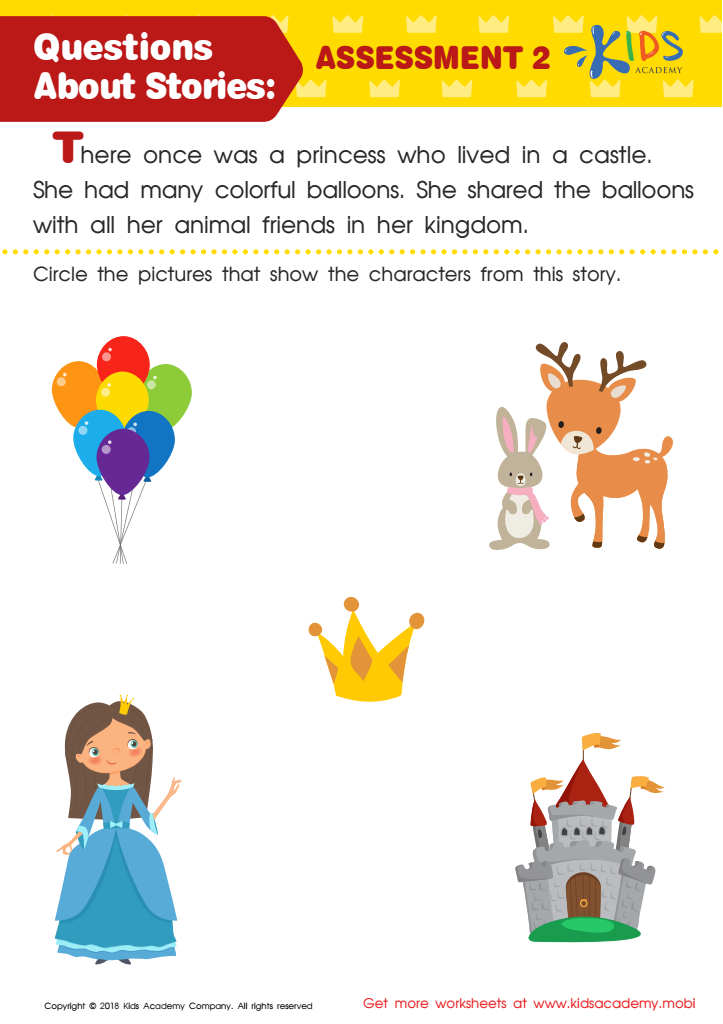
Questions About Stories: Assessment 2 Worksheet
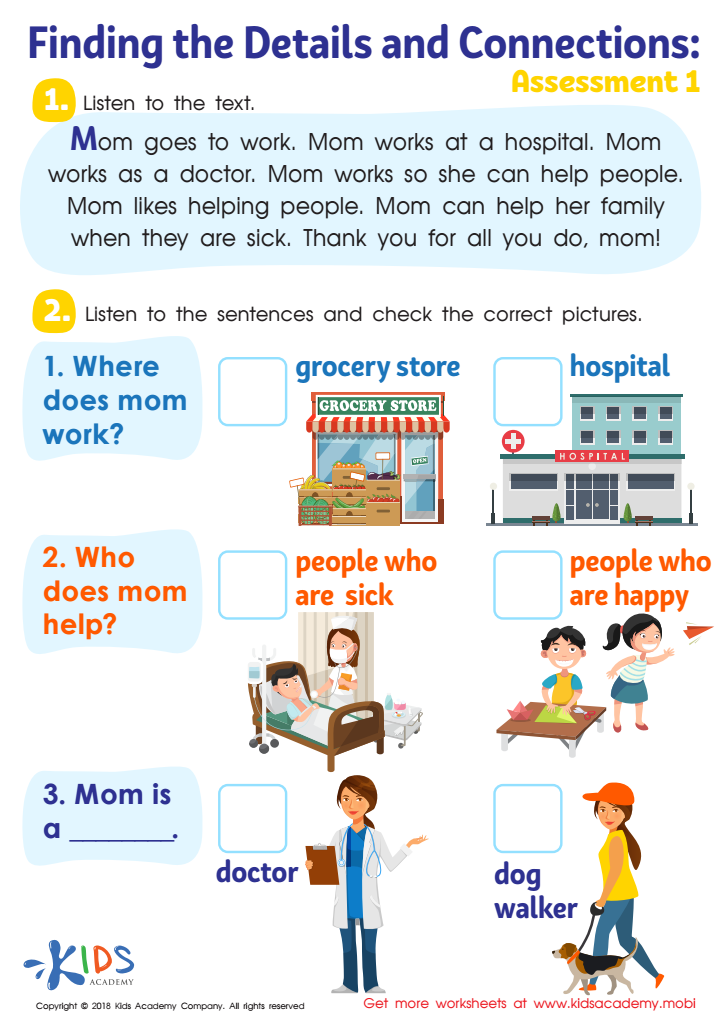
Finding the Details and Connections: Assessment 1 Worksheet

Questions About Stories: Assessment 1 Worksheet







At three years old, children are in a critical stage of brain development, making it an optimal time to foster skills that lay the groundwork for future learning. Analytical skills and reading comprehension are crucial components of this early-stage education. When parents and teachers cultivate these abilities, they prepare children to become adept problem-solvers and independent thinkers.
Analytical skills help children break down information into smaller parts for better understanding. These skills enable them to recognize patterns, make connections, and solve problems, which are essential in navigating both academic and everyday life situations. Introducing analytical thinking at this young age helps children develop a mindset that seeks to understand how and why things work, laying the groundwork for critical thinking.
Reading comprehension, on the other hand, introduces children to the world of language and knowledge. Understanding stories and information read to them builds vocabulary, improves listening skills, and enhances memory. By asking questions about the story or encouraging children to predict what happens next, adults stimulate cognitive growth.
Adults who nurture these skills in young children can help bolster their confidence and curiosity. Engaging in activities that develop analytical thinking and reading comprehension not only supports academic success but also contributes to the child's overall cognitive, social, and emotional development.








