
Matching skills Science Worksheets for 3-Year-Olds
3 filtered results
Difficulty Level
Grade
Age
-
From - To
Subject
Activity
Standards
Enhance your child's early learning experience with our Matching Skills Science Worksheets for 3-Year-Olds! Designed to encourage cognitive development, these engaging worksheets help little ones recognize and pair items based on science themes. With vibrant illustrations and age-appropriate activities, kids will explore various scientific concepts while developing essential matching skills. Perfect for home or classroom use, these worksheets make learning fun and interactive. Encourage curiosity and nurture your child's love for science as they engage with familiar objects, animals, and plants. Get started today and watch their confidence and understanding grow through hands-on learning opportunities! Ideal for early childhood development.
Favorites
With answer key
Interactive
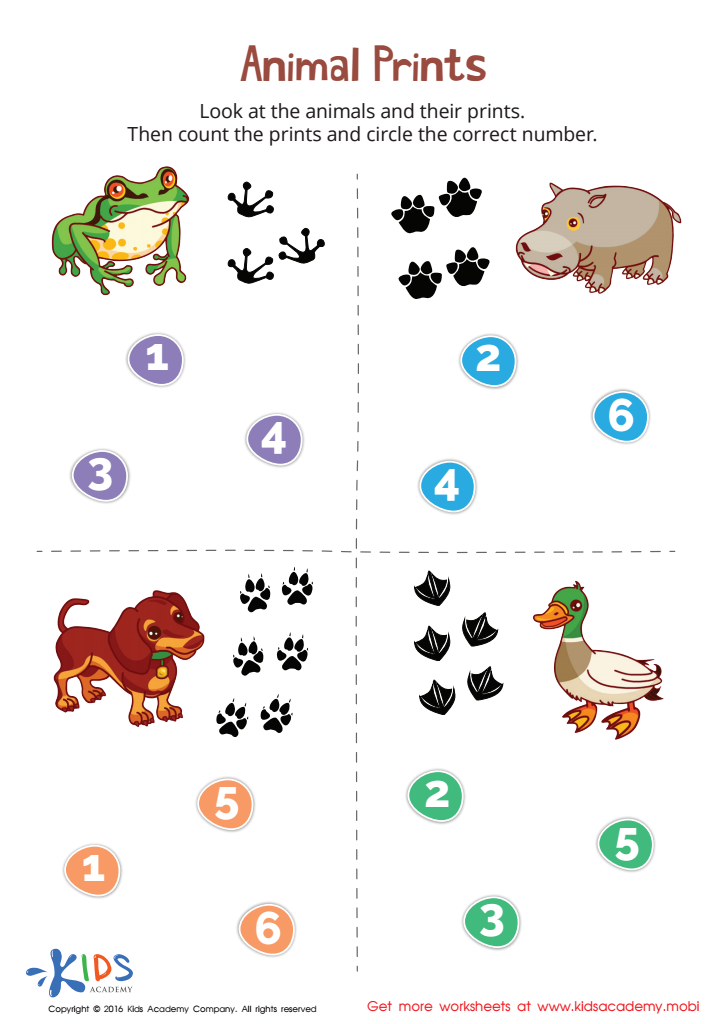
Animal Prints Match-Up Worksheet
Help your little learner build early math skills with this fun animal paw prints worksheet. With it, they'll count, recognize numbers, and learn about the animals that make the paw prints. Talk to them about the prints and ask them to count. They'll love exploring and learning about the different animals, all while sharpening essential math skills!
Animal Prints Match-Up Worksheet
Worksheet
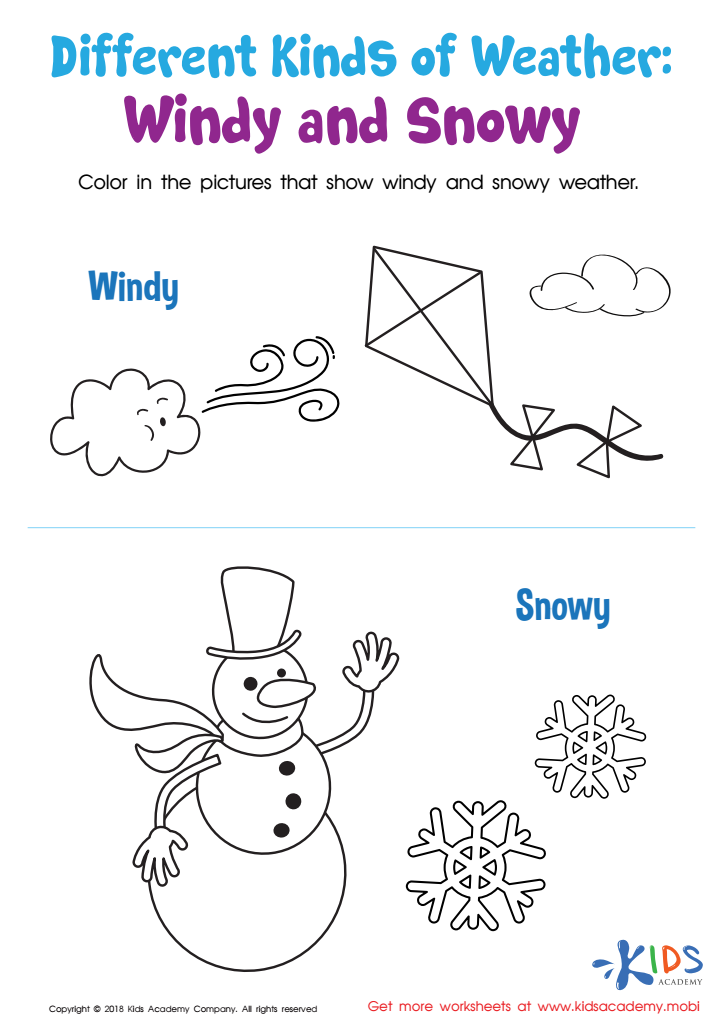
Different Kinds of Weather: Windy and Snowy Worksheet
Invite your little learner to practice their fine motor skills and learn about nature with this fun and charming PDF worksheet! Reinforce weather patterns and examine their environment as they color, giving them a foundation for understanding how weather affects them. No matter the weather, your learner will have a blast!
Download (PDF)
 Assign to My Students
Assign to My Students
Different Kinds of Weather: Windy and Snowy Worksheet
Worksheet
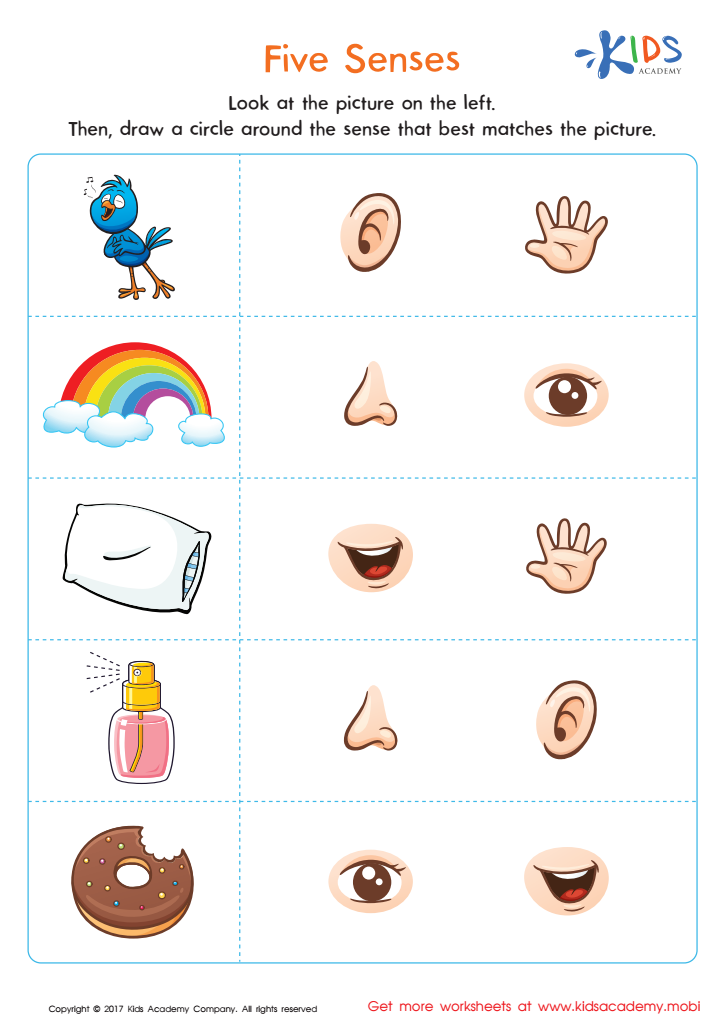
Five Senses Printable
For an easy way to jumpstart your child's critical thinking and introduce the five senses, print our free worksheets! These are great for reviewing each sense and practicing critical thinking skills. Work with your child and discuss each image. After completing the worksheet, find objects around the house so they can quiz themselves!
Five Senses Printable
Worksheet
Join Kids Academy for Free
Who is primarily going to use this learning content?


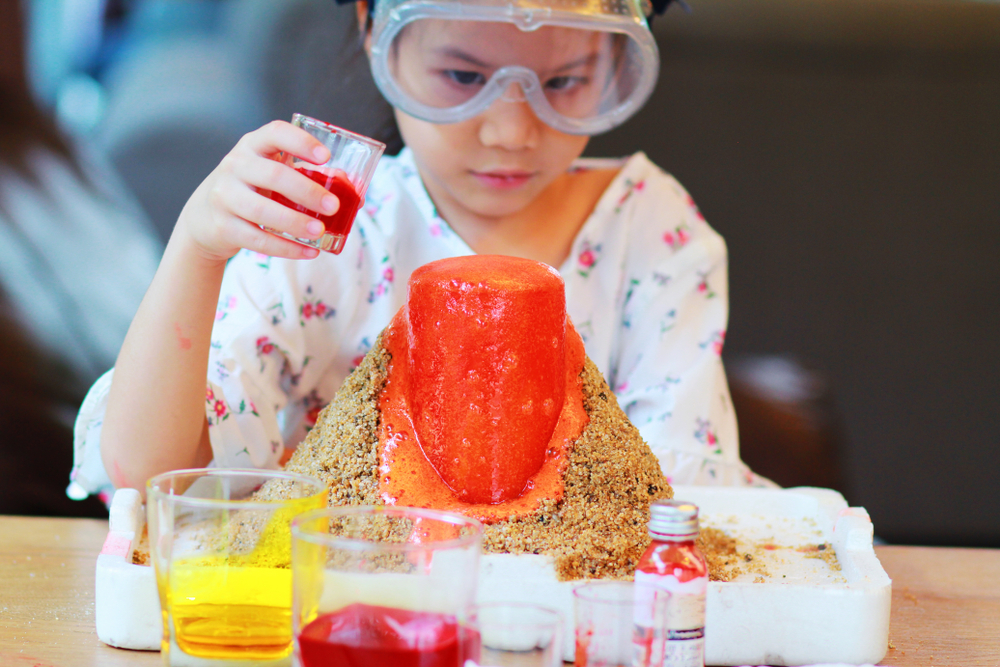





Matching skills in science for three-year-olds play a crucial role in early childhood development and learning. Engaging children in activities that promote matching supports cognitive and language development, helping them make connections between concepts, objects, and their environment. When children match items, they enhance their ability to recognize similarities and differences, a foundational skill critical in all areas of learning.
Parents and teachers should prioritize these skills because they help foster curiosity and observational skills, encouraging young learners to explore the world around them. Science-based matching activities, such as sorting leaves, identifying animal patterns, or pairing shapes, provide hands-on experiences that deepen understanding. Such activities can spark interest in science, promoting critical thinking and problem-solving.
Furthermore, developing matching skills contributes to social development. Collaborative matching games allow children to share ideas, communicate effectively, and work together toward common goals, thus enhancing their social interactions.
In summary, integrating matching skills in science instruction equals fun, interactive learning that prepares children for more complex tasks in the future while laying a solid foundation for lifelong learning and inquiry. By focusing on these skills, parents and teachers help nurture well-rounded, curious, and engaged learners who are ready to explore and thrive.







