Alphabet Recognition ABC Order Worksheets for Ages 4-5
11 filtered results
Difficulty Level
Grade
Age
-
From - To
Subject
Activity
Standards
Help your little learners master the alphabet with our fun and engaging Alphabet Recognition ABC Order Worksheets tailored for ages 4-5! These worksheets provide a playful approach to learning, enabling children to familiarize themselves with letter names, sounds, and proper order. With colorful illustrations and interactive exercises, children will enjoy activities designed to enhance their alphabet recognition skills. Perfect for preschool and kindergarten environments, these worksheets are ideal for developing foundational language skills and boosting confidence in young learners. Explore endless opportunities for fun learning as your child embarks on their alphabet adventure today!
Favorites
With answer key
Interactive
Letter A Tracing Page
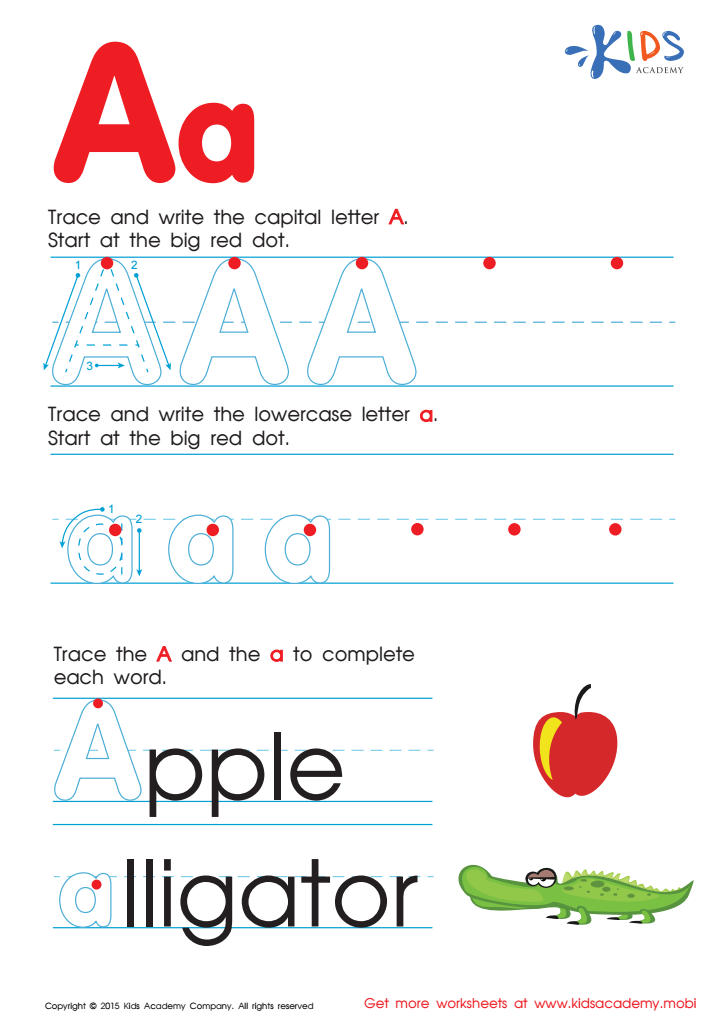
Trace and write the letter "A"! Start with the big red dot, then do the capital and lowercase versions. Then write it again with two words - apple and alligator. Download more tracing worksheets at Kids Academy.
 Assign to My Students
Letter A Tracing Page
Worksheet

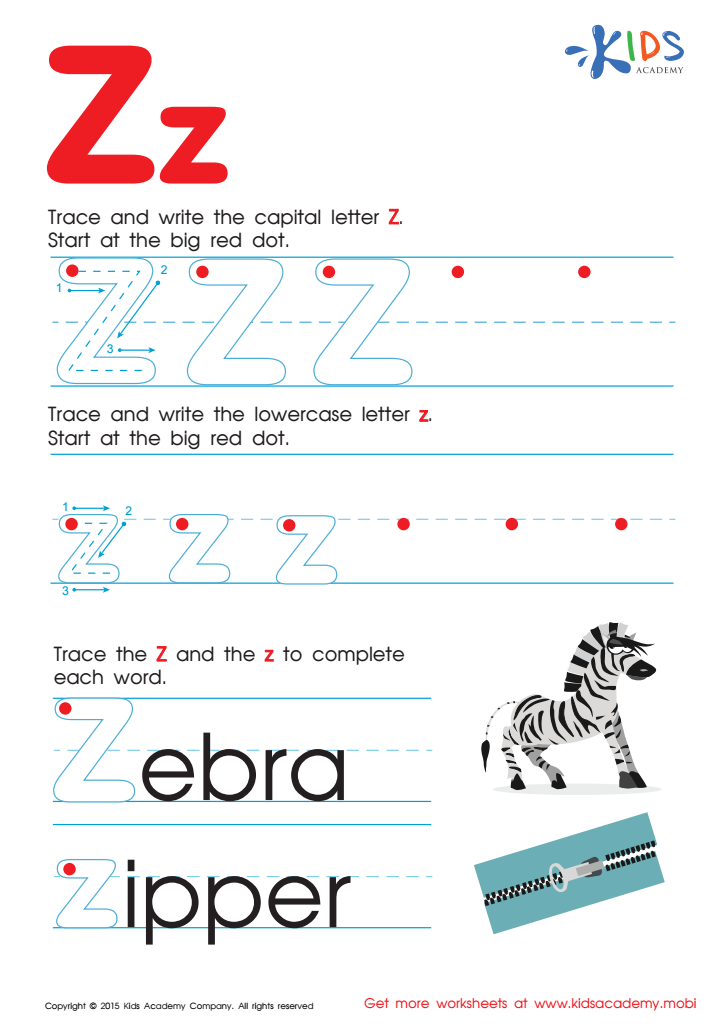
Letter Z Tracing Page
Trace and write capital "Z" and lowercase "z". Complete words "zebra" and "zipper". Be attentive and have fun! (80 words)
Letter Z Tracing Page
Worksheet
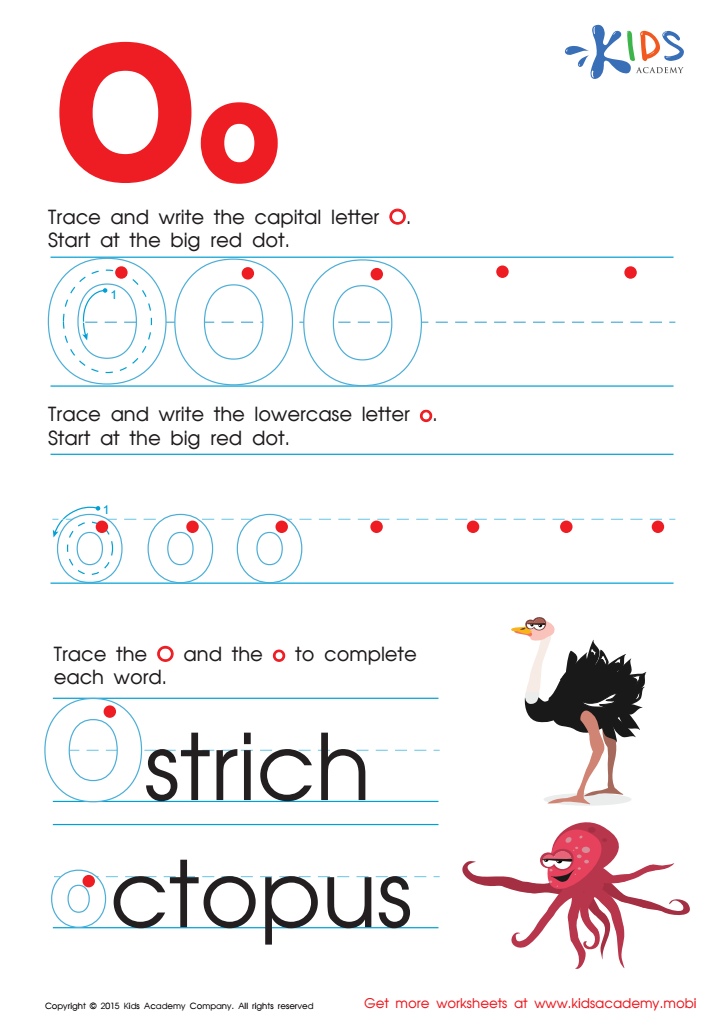
Letter O Tracing Page
Practice writing the letter "O" with our new worksheet. Trace and write the letter several times, starting at the red dot. First do the uppercase letter, then the lowercase. Use the pictures to complete the words "Ostrich" and "octopus". Kids Academy offers more fun alphabet worksheets.
Letter O Tracing Page
Worksheet
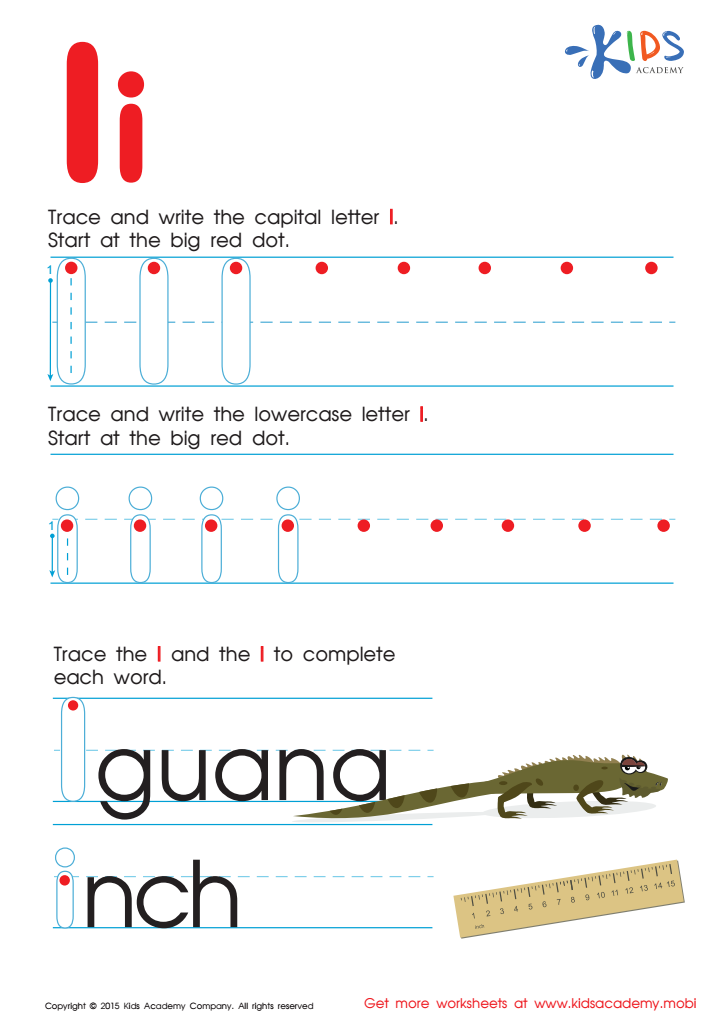
Letter I Tracing Page
Trace and write "I" uppercase and lowercase. An iguana's tail looks like the uppercase "I" and the lowercase "i" is as small as an inch. Make learning fun with Kids Academy worksheets.
Letter I Tracing Page
Worksheet
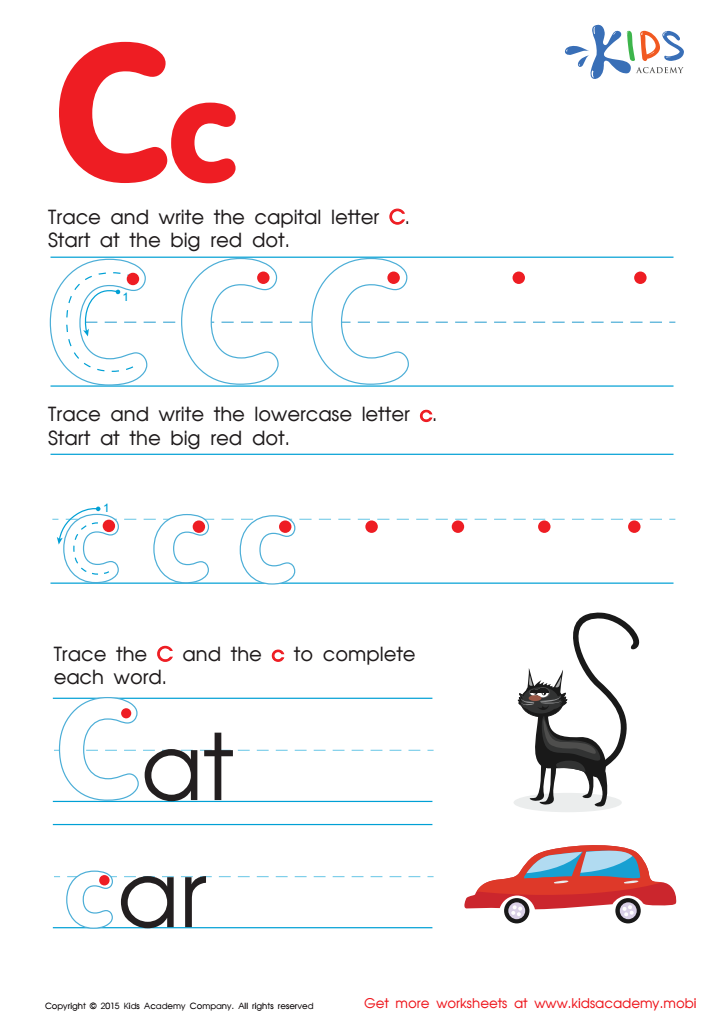
Letter C Tracing Page
Trace and write the letter 'C'! Put the pencil at the red dot then follow the lines – the capital letter first then the lowercase one. Cats love it and so will you! Get more free printables to practice tracing and writing.
Letter C Tracing Page
Worksheet
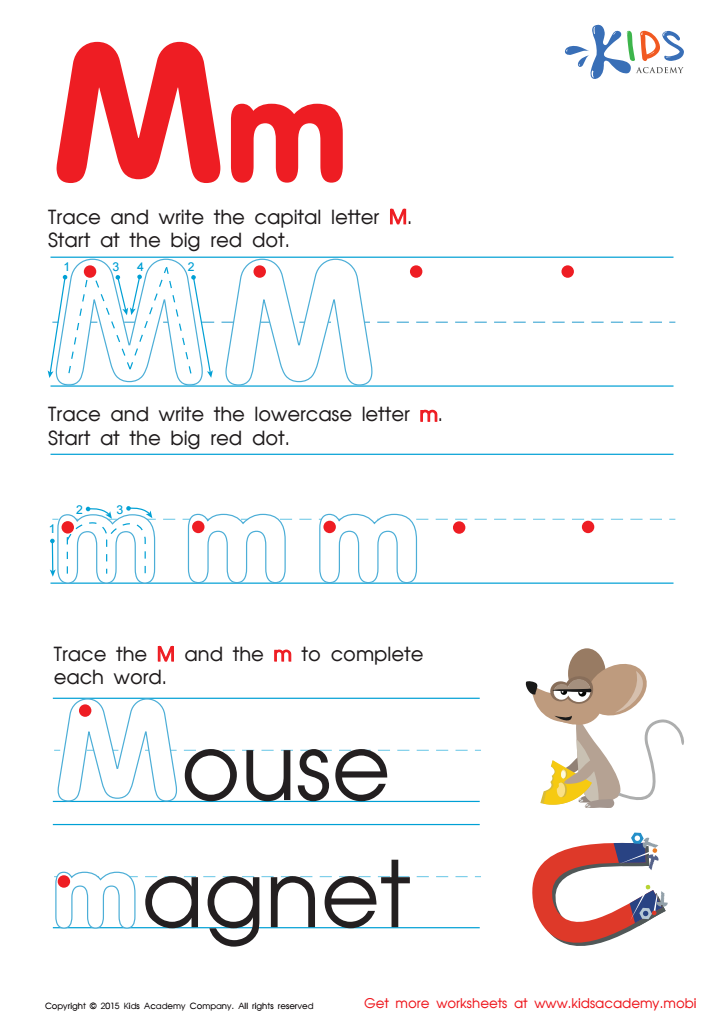
Letter M Tracing Page
Trace and write the letter "M" to help kids learn the alphabet. Start at the red dot and practice several times. Trace the capital letter first, then move on to the lowercase. Complete words like "mouse" and "magnet" in the further exercise. Get more free printables here.
Letter M Tracing Page
Worksheet
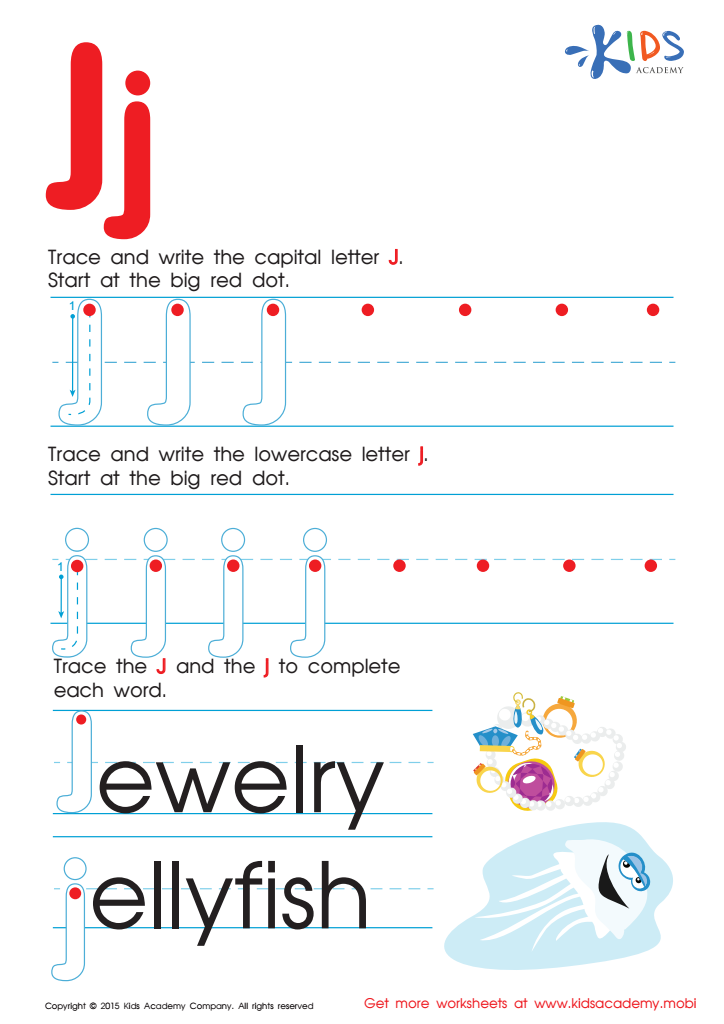
Letter J Tracing Page
Trace and write the letter "J" with our ABC worksheet - start at the big red dot! Have fun completing words like jewelry, jellyfish and more. Check out our kindergarten activities for more alphabet practice.
Letter J Tracing Page
Worksheet
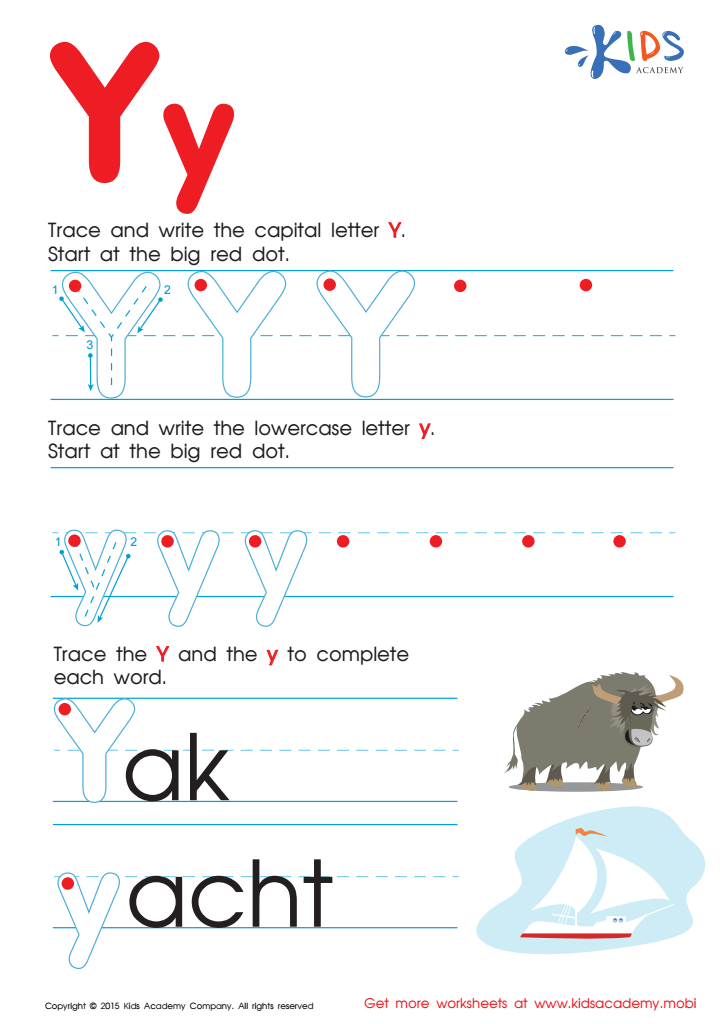
Letter Y Tracing Page
Trace the capital letter "Y" on the red dot, then trace and write the lowercase letter. Complete the words to help the Yak walk and the yacht swim. More worksheets at Kids Academy.
Letter Y Tracing Page
Worksheet
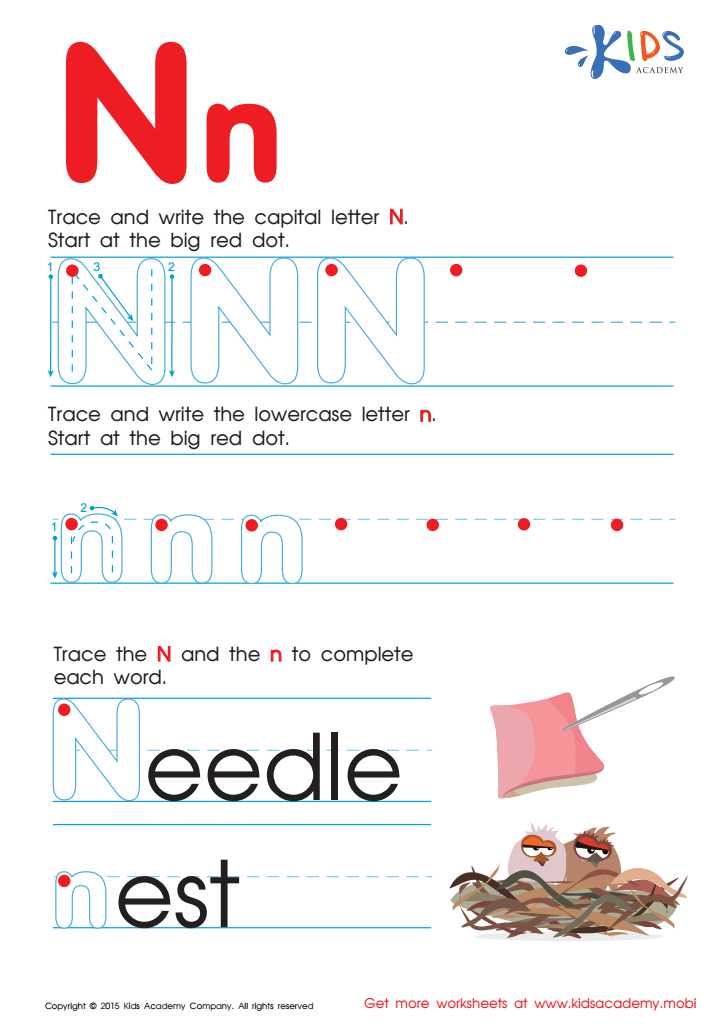
Letter N Tracing Page
Trace and write capital "N" and lowercase "n" several times. Then try forming words like "needle" and "nest". Master letter writing with Kids Academy's collection of ABC worksheets for kindergarten.
Letter N Tracing Page
Worksheet
Letter B Tracing Page
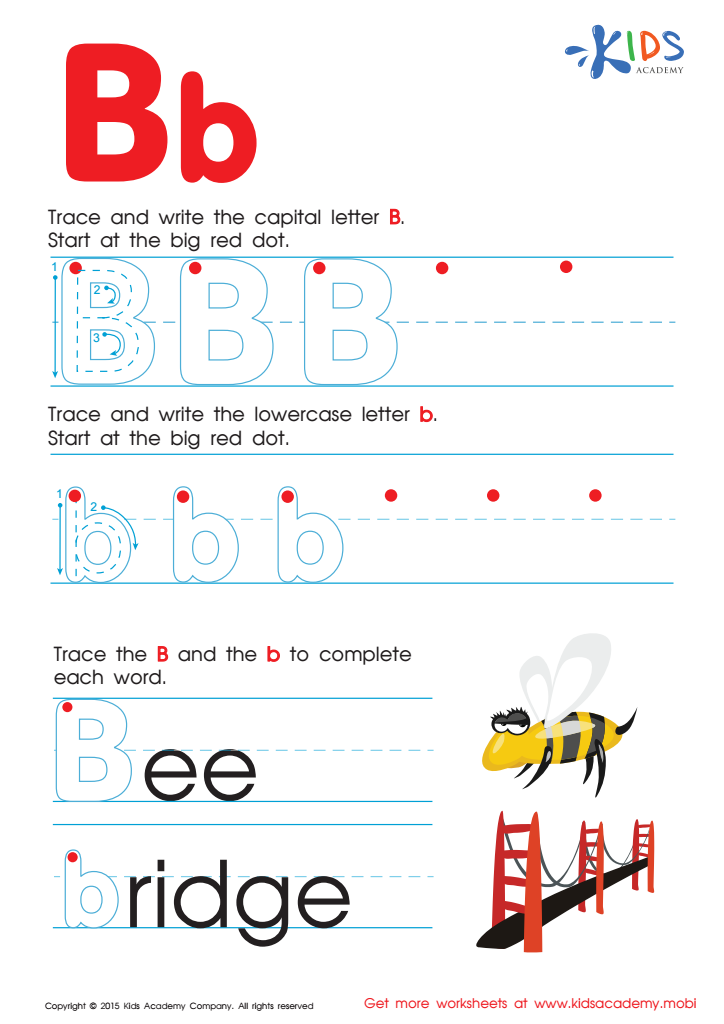
Ready to learn the Alphabet? Put your pencil on the red dot and trace & write both capital & lowercase "B". Then have a look at the pictures. Catch the bee, cross the bridge & write the letters to complete the words. More ABC worksheets for kindergarten available!
Letter B Tracing Page
Worksheet
Letter E Tracing Page
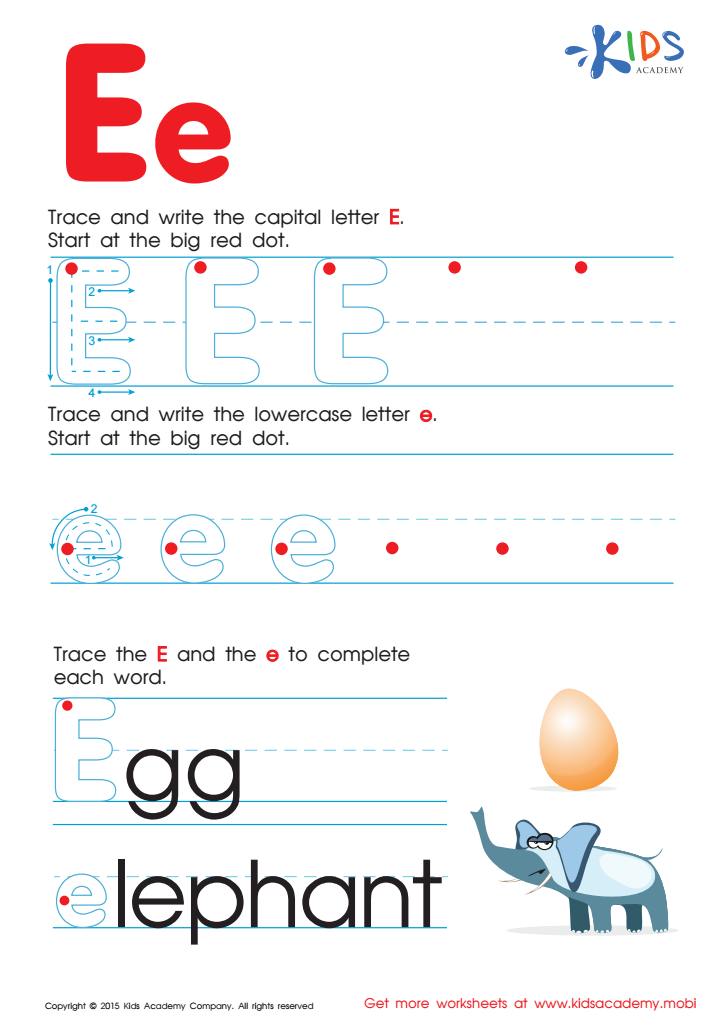
Trace and write the uppercase and lowercase "E" starting at the big red dot. Complete words to perfect letter writing. Egg and Elephant must be written carefully. More alphabet worksheets for kindergarten are available for download to spend more time with your children learning.
Letter E Tracing Page
Worksheet
Join Kids Academy for Free
Who is primarily going to use this learning content?







Alphabet recognition and understanding ABC order are fundamental skills for children aged 4-5, laying the groundwork for literacy and cognitive development. Recognizing letters is essential for reading and writing; it helps kids understand that letters symbolize sounds, forming the foundation of phonics. When children can identify letters, they begin to connect them with sounds, ultimately enabling them to decode words. This skill becomes the bedrock for their entire reading journey.
Additionally, teaching children the ABC order enhances their organizational skills and fosters a sense of sequence. Understanding that letters have a specific arrangement supports not only literacy but also improves their ability to categorize and retrieve information, making tasks like locating a favorite book or asking for specific items easier.
For parents and teachers, focusing on these skills encourages engagement in learning during formative years. Incorporating games, songs, and interactive activities makes the process enjoyable, motivating children to explore language. Furthermore, solid early literacy skills are linked to greater academic success in later years, promoting higher self-esteem and confidence in a child’s abilities. Thus, investing time in alphabet recognition and order is crucial for ensuring children are equipped for future educational challenges.