Sound identification Elementary Phonics Worksheets for Ages 4-5
4 filtered results
-
From - To
Unlock the world of phonics with our engaging Sound Identification Worksheets designed specifically for ages 4-5. These printable worksheets make learning fun while helping young learners recognize and differentiate sounds associated with letters and words. Each activity is carefully crafted to enhance phonemic awareness, a crucial skill for early reading development. Children will enjoy colorful illustrations and interactive exercises that encourage visual and auditory learning. With a variety of activities, from matching sounds to identifying letters, our worksheets foster a strong foundation in phonics. Set your child on the path to reading success with these invaluable resources! Perfect for at-home or classroom use.
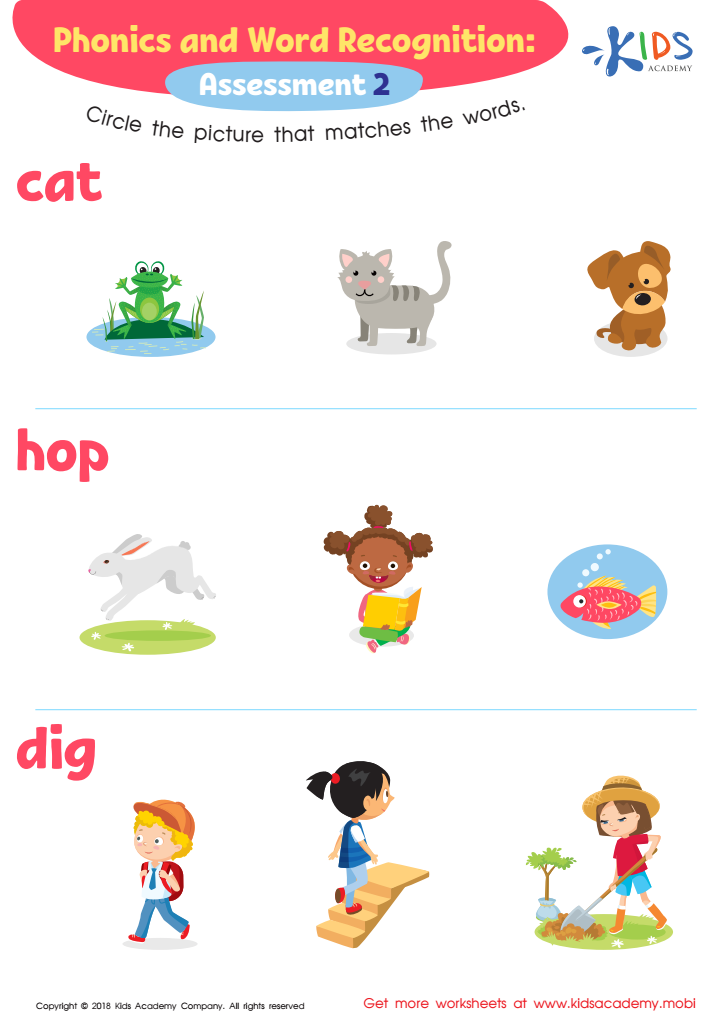
Phonological Awareness: Assessment 2 ELA Worksheet
 Assign to My Students
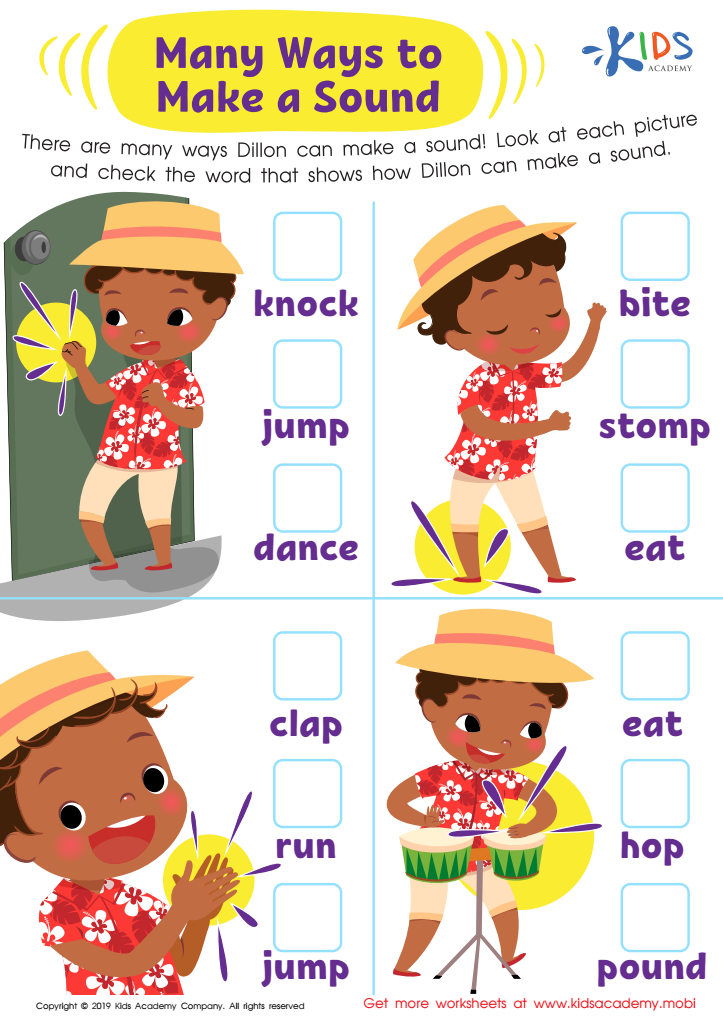
Many Ways to Make a Sound Worksheet
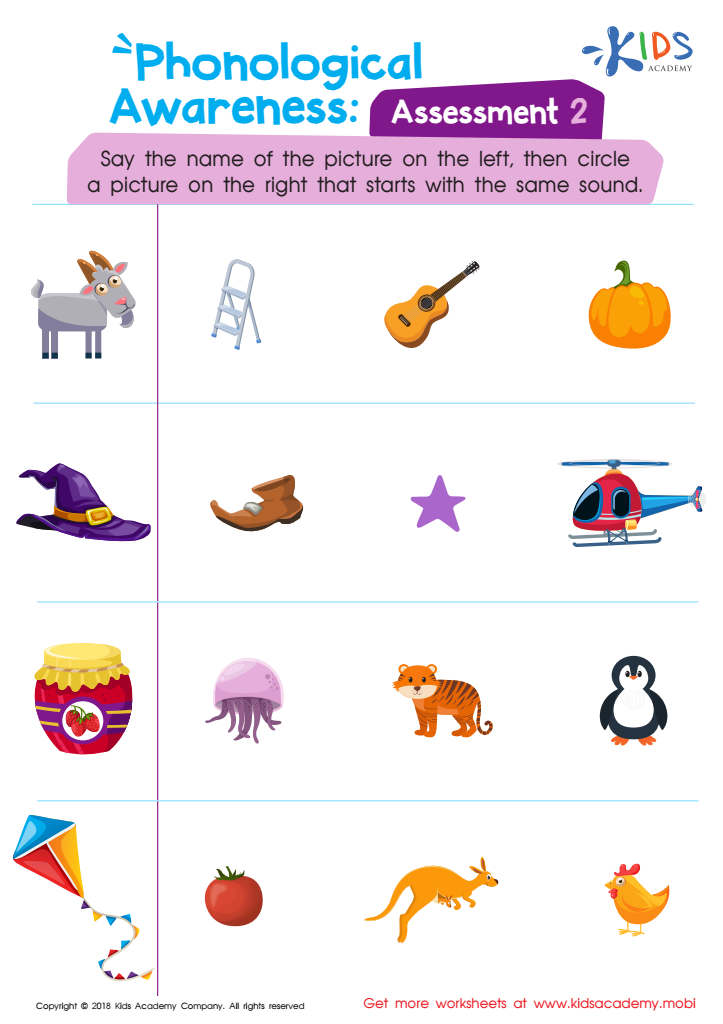
Phonological Awareness: Assessment 2 Worksheet
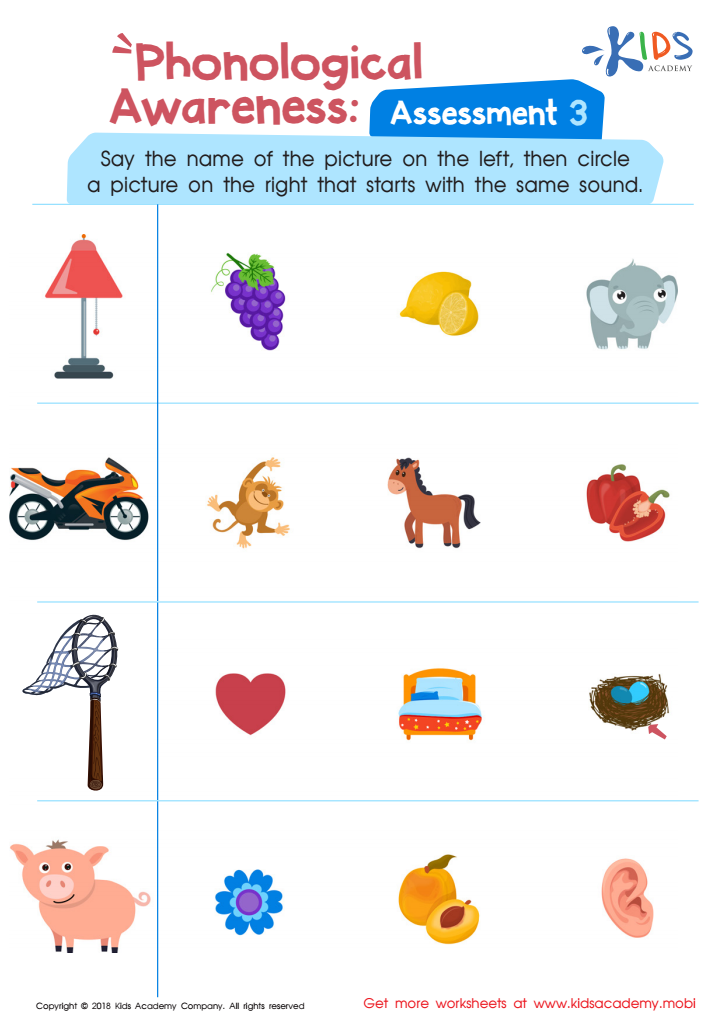
Phonological Awareness: Assessment 3 Worksheet




Sound identification is a foundational skill in early literacy that significantly impacts a child's reading and writing abilities. For children aged 4-5, mastering phonics—specifically sound identification—augments their capacity to decode words, comprehend text, and express themselves through writing. Sound identification involves recognizing individual sounds (phonemes) in words, which lays the groundwork for blending sounds into words, a crucial step in reading fluency.
When parents and teachers prioritize phonics in early education, they enhance a child's phonemic awareness, which has been linked to higher reading skills in later years. Sound identification fosters confidence as children learn to tackle new words independently, reducing the likelihood of frustration associated with reading challenges.
Moreover, developed phonemic awareness promotes effective communication skills, which are vital in both academic and social settings. Engaging children in sound identification through fun games and activities can make learning enjoyable and interactive.
Ultimately, by supporting sound identification and phonics at this critical stage, parents and teachers make a long-lasting impact on a child's educational journey, equipping them with essential skills for future learning success. Investing time and resources in this area is a proactive step toward building a strong literacy foundation for every child.







