Vocabulary development Elementary Phonics Worksheets for Ages 4-5
3 filtered results
-
From - To
Enhance your child's early reading skills with our "Vocabulary Development Elementary Phonics Worksheets" designed for ages 4-5. Our engaging and interactive worksheets focus on letter recognition, sound blending, and word formation, helping young learners expand their vocabulary effortlessly. These expertly crafted activities foster a love for reading and build a strong foundation in phonics, essential for future academic success. With playful illustrations and step-by-step guidance, our worksheets make learning fun and effective. Perfect for both classroom and home use, Kids Academy worksheets are your ideal resource for developing essential early literacy skills in a captivating and accessible way. Start exploring today!
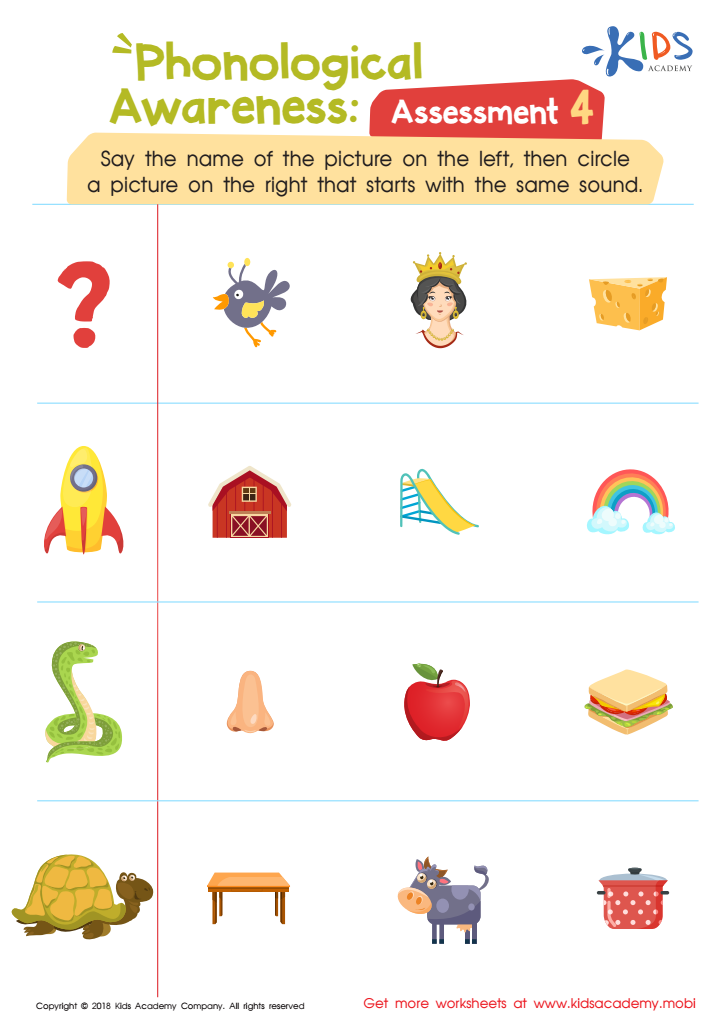
Phonological Awareness: Assessment 4 Worksheet
 Assign to My Students
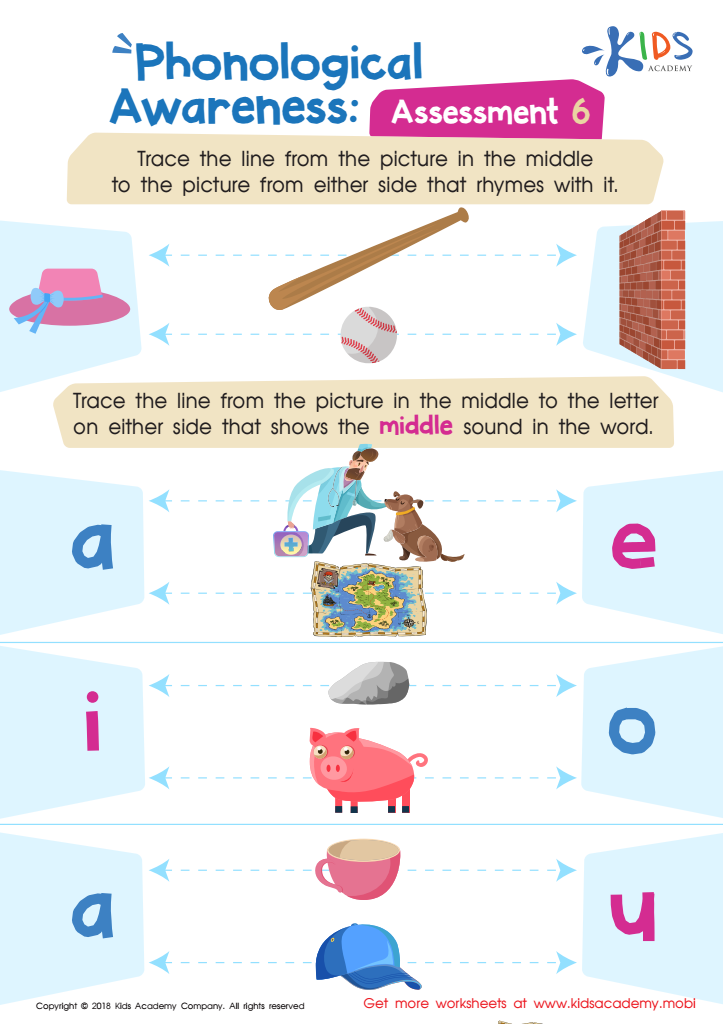
Phonological Awareness: Assessment 6 Worksheet
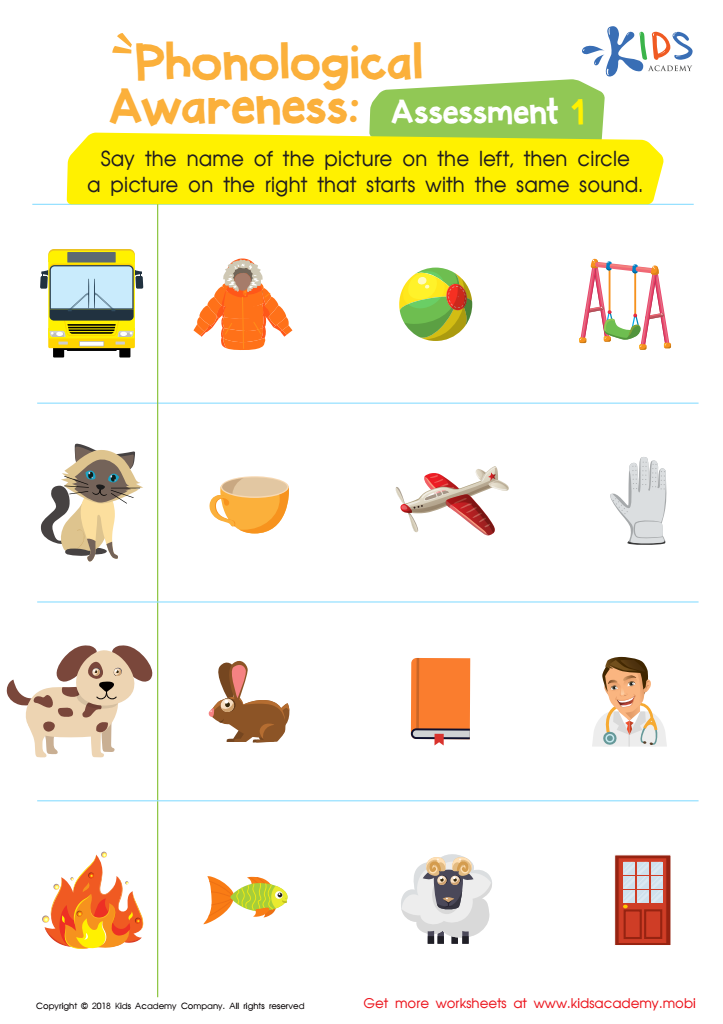
Phonological Awareness: Assessment 1 Worksheet




Vocabulary development and elementary phonics are foundational components of early literacy, crucial for children aged 4-5. At this stage, young minds are highly receptive, capable of astonishing growth in language acquisition and cognitive processing. Effective vocabulary development enriches a child’s ability to express thoughts, understand stories, and engage in conversations, building critical communication skills. A robust vocabulary is essential for reading comprehension, allowing children to make sense of both spoken and written language, fostering a love for reading.
Elementary phonics, on the other hand, is the building block for decoding words. Children who grasp phonics can identify sounds associated with individual letters and letter combinations, enabling them to read new words independently. Phonics instruction bridges the gap between spoken language and written text, promoting confidence in early readers and setting the stage for future academic success.
For teachers and parents, engaging children in activities that enhance vocabulary and phonics awareness—such as reading aloud, playing word games, and phonics exercises—lays a concrete foundation for later literacy skills. Investing time and effort in these early years ensures that children develop strong reading abilities, which are critical for lifelong learning, academic achievement, and effective communication. Therefore, prioritizing vocabulary and phonics at ages 4-5 equips children with the essential tools for their educational journey and beyond.







