
Alphabetical understanding Alphabet Worksheets for Ages 4-5
3 filtered results
Difficulty Level
Grade
Age
-
From - To
Subject
Activity
Standards
Boost your child's early literacy skills with our "Alphabetical Understanding Alphabet Worksheets for Ages 4-5." Designed by educational experts, these fun and engaging worksheets help young learners recognize letters and their sequences in the alphabet. Perfect for preschoolers and kindergartners, each activity strengthens alphabetical awareness, fine motor skills, and early reading abilities. With vivid visuals and interactive exercises, our printable worksheets transform learning the alphabet into an enjoyable adventure. Give your child the foundational skills they need to succeed in reading and writing. Explore our collection today and watch your child thrive in their alphabetical journey!
Favorites
With answer key
Interactive
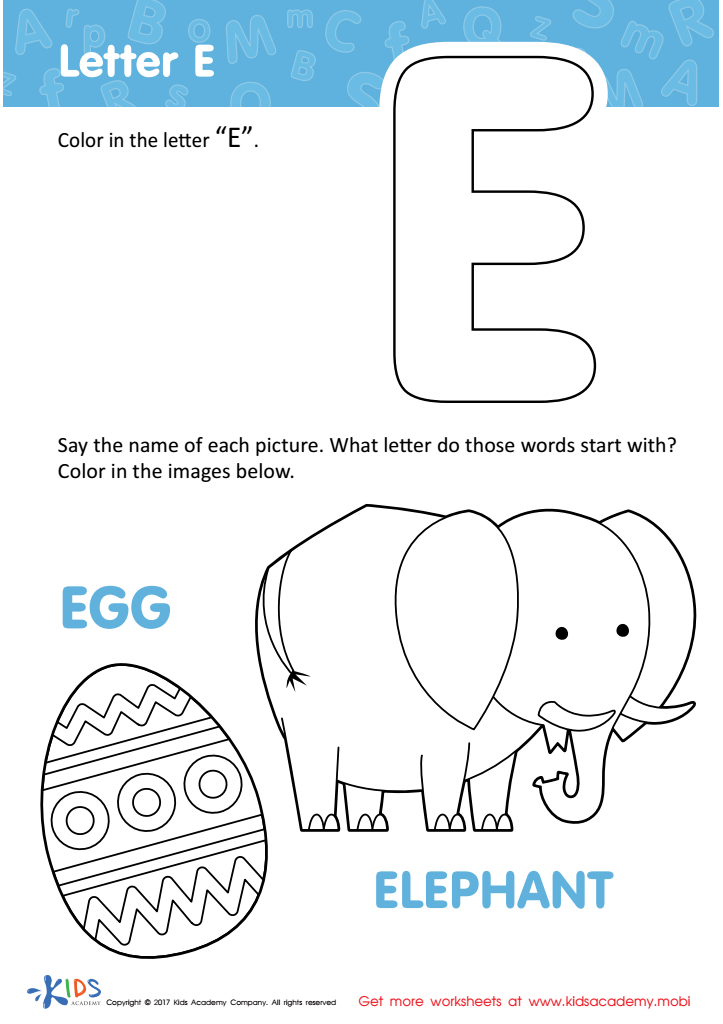
Letter E Coloring Sheet
Coloring pages are great for teaching kids the alphabet and words! This "E" page features a cute elephant and Easter egg. Kids will love it and learn the letter "E" at the same time. 80 words
Download (PDF)
 Assign to My Students
Assign to My Students
Letter E Coloring Sheet
Worksheet
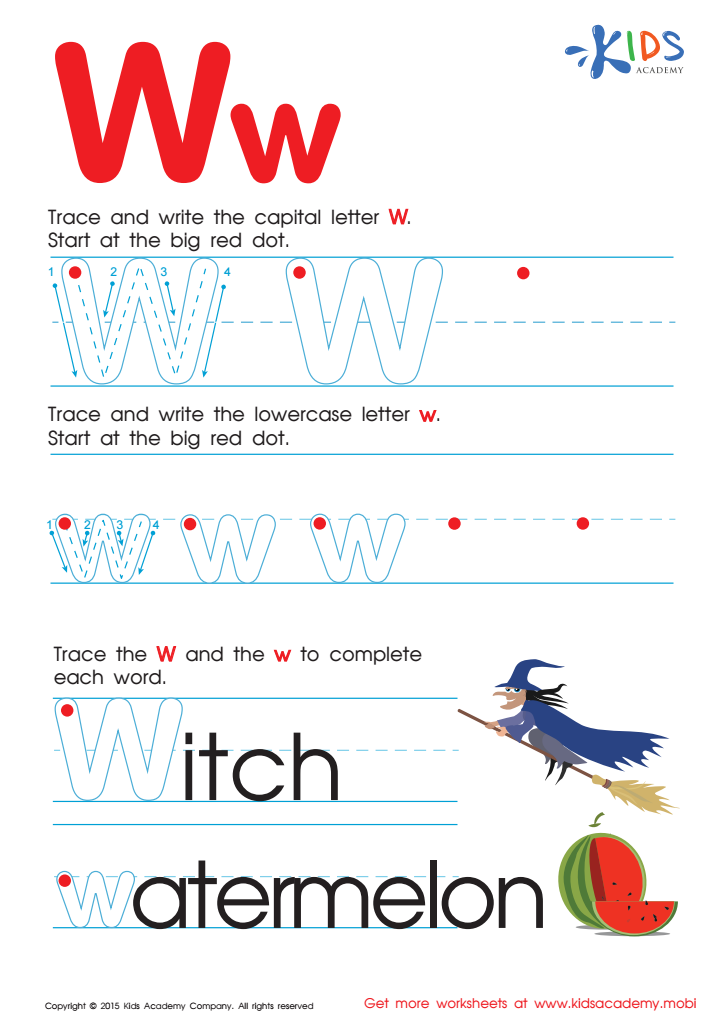
Letter W Tracing Page
Trace and write the capital and lowercase letter W with this free letter tracing worksheet by Kids Academy. Complete the words "Witch" (capital) and "watermelon" (lowercase). Check out our other kindergarten alphabet worksheets!
Letter W Tracing Page
Worksheet
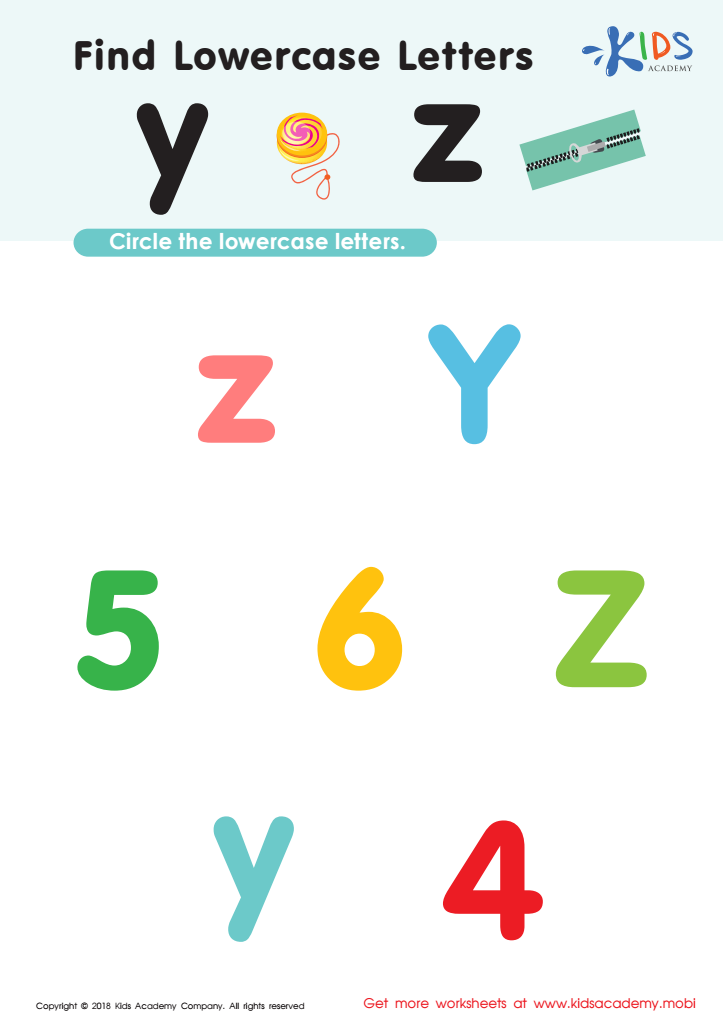
Find Lowercase Letters y z Worksheet
Help your kid learn the alphabet. Before they can move on to words and reading, they must first know the lower and uppercase letters. Show them how to find the letters y and z in this worksheet, which is filled with uppercase letters and numbers. Together, find and circle them.
Find Lowercase Letters y z Worksheet
Worksheet
Join Kids Academy for Free
Who is primarily going to use this learning content?



.jpg)



Alphabetical understanding forms the bedrock of early literacy, making it crucial for parents and teachers to focus on this foundational skill with children aged 4-5. At this formative age, children are like sponges, rapidly absorbing information from their surroundings. Introducing them to the alphabet helps establish their understanding of letters, the building blocks of language. Recognizing and being able to recite the alphabet fluently enhances their ability to decode words, a skill essential for reading and writing proficiency.
Moreover, early exposure to alphabetical concepts prepares children for kindergarten, where they'll encounter activities involving letter recognition and phonemic awareness. These are key predictors of subsequent reading success. An engaging, playful approach, using songs, books, and games, makes learning alphabet fun and memorable, fostering a lifelong love for reading.
For teachers, prioritizing alphabetical learning helps identify early signs of reading difficulties, enabling timely interventions. For parents, it creates an essential home-school connection, turning everyday experiences into teaching moments and reinforcing classroom learning.
In conclusion, nurturing alphabetical understanding in 4–5-year-old children equips them with critical literacy tools, improves academic readiness, and supports a smooth transition into formal schooling, laying a solid foundation for their educational journey.







