Lowercase letter writing Alphabet Worksheets for Ages 4-5
3 filtered results
-
From - To
Our "Lowercase Letter Writing Alphabet Worksheets for Ages 4-5" are designed to make learning fun and engaging for young children. These worksheets provide a creative and interactive way for preschoolers to practice writing lowercase letters. Each sheet features traceable letters, colorful illustrations, and engaging activities that help develop fine motor skills, letter recognition, and early writing proficiency. Ideal for classroom use or at-home learning, these worksheets give young learners the head start they need to master the alphabet confidently. Help your child unlock the world of literacy with our expertly crafted lowercase letter writing resources.
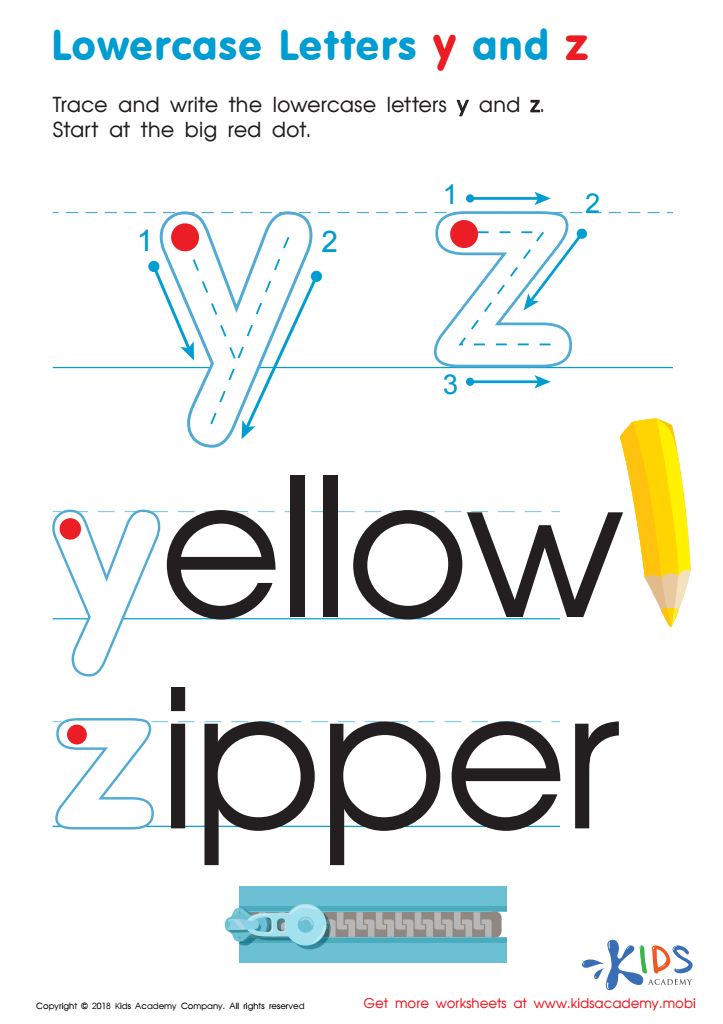
Lowercase Letters y z Worksheet
 Assign to My Students
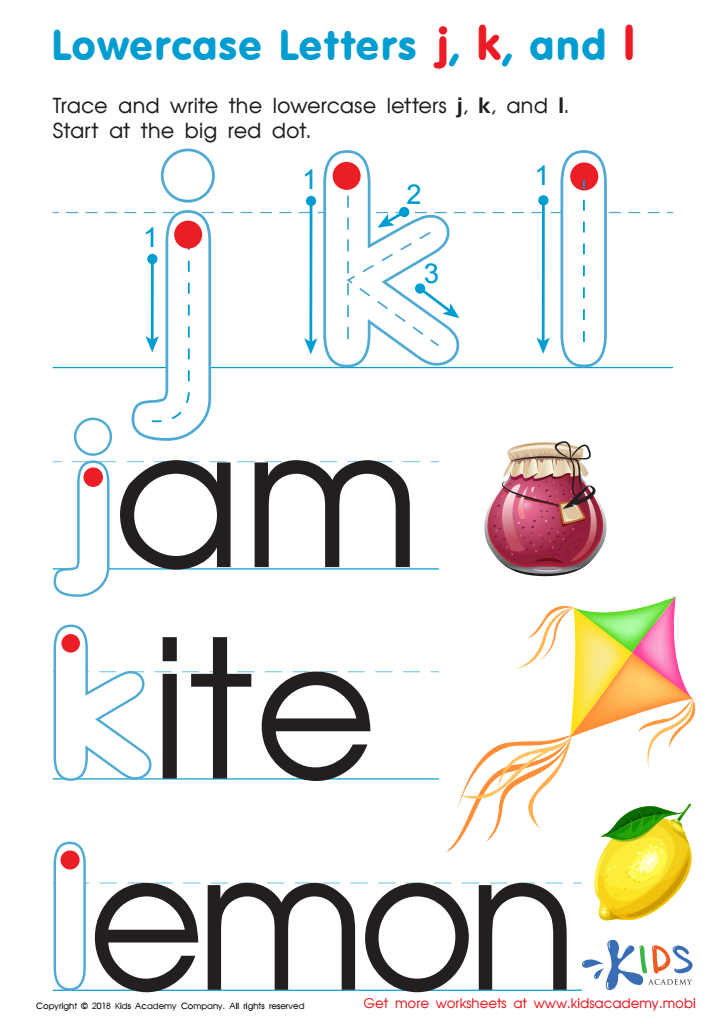
Lowercase Letters j k l Worksheet

Lowercase Letters m n o Worksheet






Teaching lowercase letter writing to children ages 4-5 is crucial for several reasons:
Foundational Skills: Early handwriting instruction helps children develop fine motor skills, which are essential for more complex tasks like tying shoes or using utensils. Forming letters requires precision and coordination that contribute to overall motor development.
Reading Readiness: Most books, signs, and written communication primarily use lowercase letters. Familiarity with these shapes enhances a child’s ability to recognize words and develop reading skills. This familiarity supports phonemic awareness, which is knowing the sounds that letters make—a crucial step in learning to read.
Confidence Building: Mastering lowercase letters early gives children a sense of accomplishment and boosts their confidence. This encourages a positive attitude toward learning other skills like reading and math.
Consistency: Early exposure ensures that children become adept at the continuity required to maintain writing flow. Consistency in letter formation translates to better legibility, helping teachers and parents easily understand the child’s written communication.
Foundation for Higher Learning: Lowercase letters are ubiquitous in written language, and early mastery sets the stage for more complex literacy tasks. Proficiency in lowercase letter writing equips children with the tools needed for elementary school and beyond, laying the groundwork for academic success.
By focusing on lowercase letter writing, parents and teachers foster essential skills that profoundly impact a child's long-term educational journey.







