
Matching skills Alphabet Worksheets for Ages 4-5
3 filtered results
Difficulty Level
Grade
Age
-
From - To
Subject
Activity
Standards
Boost your child's letter recognition and early literacy with our Matching Skills Alphabet Worksheets for ages 4-5! Designed by educational experts, these engaging worksheets help young learners master the alphabet in a fun and interactive way. Each activity focuses on matching letters to pictures and words, enhancing essential pre-reading skills. Perfect for preschoolers and kindergartners, our printable worksheets are a fantastic resource for parents and teachers alike. With colorful visuals and age-appropriate challenges, Kids Academy ensures your child builds a strong foundation in reading while enjoying the learning journey. Download, print, and watch your child’s confidence soar!
Favorites
With answer key
Interactive
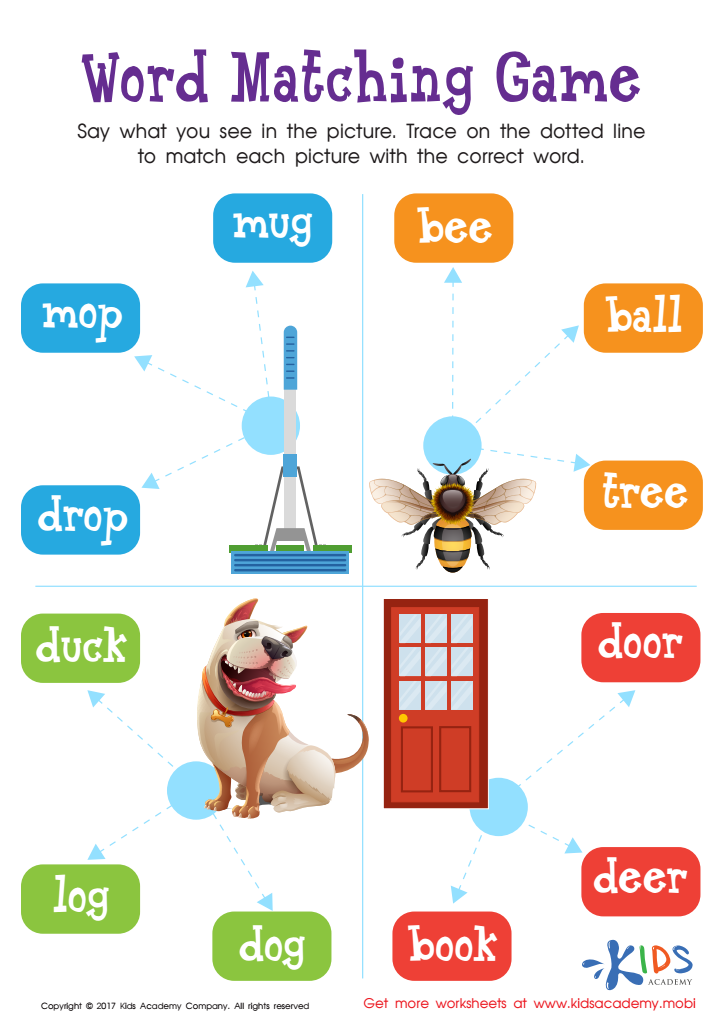
Word Matching Game Worksheet
Help your early reader develop prereading skills with this fun matching worksheet! Visual cues help them learn sight words, decode words in word families, and identify phonetic patterns. They'll practice discerning sounds past initial consonants while saying the name of the picture and finding the matching word - and reading at the same time!
 Assign to My Students
Word Matching Game Worksheet
Worksheet
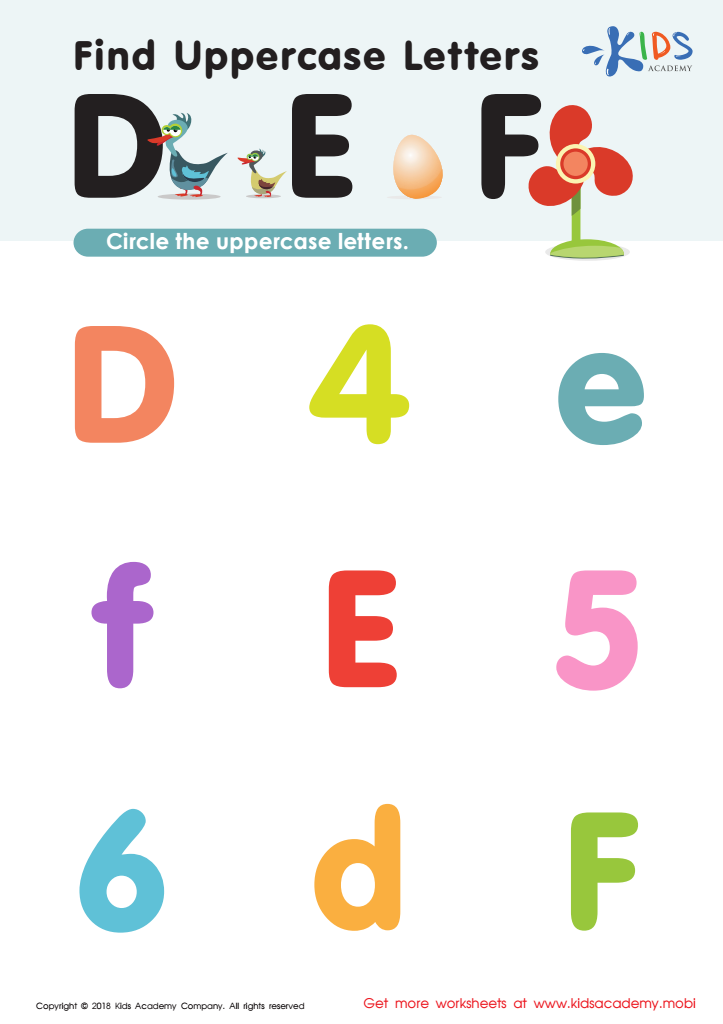
Find Uppercase Letters D, E, and F Worksheet
Follow the duckling and mom to find the capital letters D, E and F on this fun alphabet worksheet! Kids learn to read and recognize letters, while differentiating them from numbers. For extra challenge, don't let the numbers fool them. The pictures above remind them of each letter's sound. Have fun and get letter-savvy!
Find Uppercase Letters D, E, and F Worksheet
Worksheet
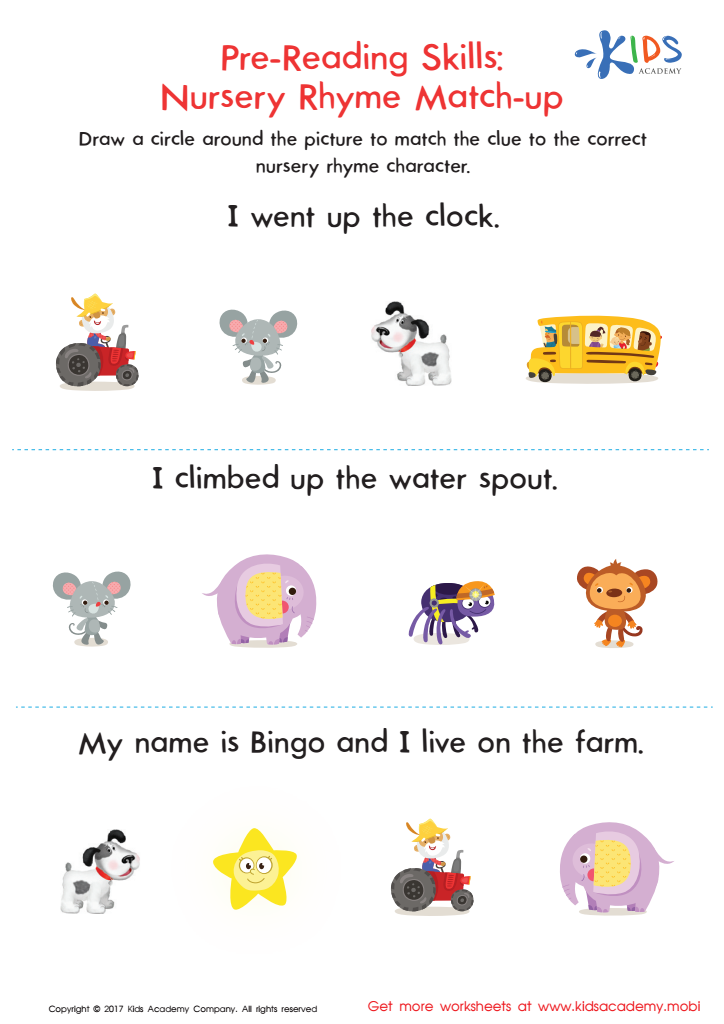
Nursery Rhyme Match–Up Worksheet
This worksheet helps kids build pre-reading skills using stories they know and love! By connecting with prior knowledge, kids can develop ideas about characters and set the stage for reading strategies.
Nursery Rhyme Match–Up Worksheet
Worksheet
Join Kids Academy for Free
Who is primarily going to use this learning content?


.jpg)





Matching skills and alphabet knowledge are critical components in early childhood education, especially for children aged 4-5. At this developmental stage, young learners are rapidly absorbing new information and are highly receptive to foundational skills that will support their future academic success.
Matching skills help children develop their visual discrimination abilities, which are crucial for recognizing letters and shapes, and distinguishing between them. This skill is a precursor to reading and writing, as it enables children to identify and differentiate between the various letters of the alphabet. Participating in matching activities enhances cognitive development, improving memory and concentration, which are vital for learning in a more structured school environment.
Furthermore, alphabet knowledge is the cornerstone of literacy. Familiarity with letter names, sounds, and shapes lays the groundwork for phonemic awareness, which is the ability to hear, identify, and manipulate phonemes. This skill is essential for decoding words when learning to read. Early exposure to the alphabet prepares children for reading instruction by kindergarten, fostering a love for reading and writing as they start to recognize words and patterns in their environment.
By supporting the development of matching skills and alphabet knowledge, parents and teachers are equipping children with the tools they need for academic achievement and lifelong learning, while also nurturing their natural curiosity and enthusiasm for education.







