Reading skills development Alphabet Worksheets for Ages 4-5
5 filtered results
-
From - To
Nurture your child's reading skills with our engaging "Reading Skills Development: Alphabet Worksheets for Ages 4-5". These beautifully crafted worksheets are designed to make learning the alphabet fun and interactive for preschoolers. With a variety of activities, including letter tracing, matching, and coloring, children enhance their letter recognition, phonics, and early reading abilities. Our worksheets not only promote literacy but also support fine motor skills and cognitive development. Ideal for both classroom use and home learning, our printable resources foster a love for reading from an early age, setting the foundation for your child's future academic success.
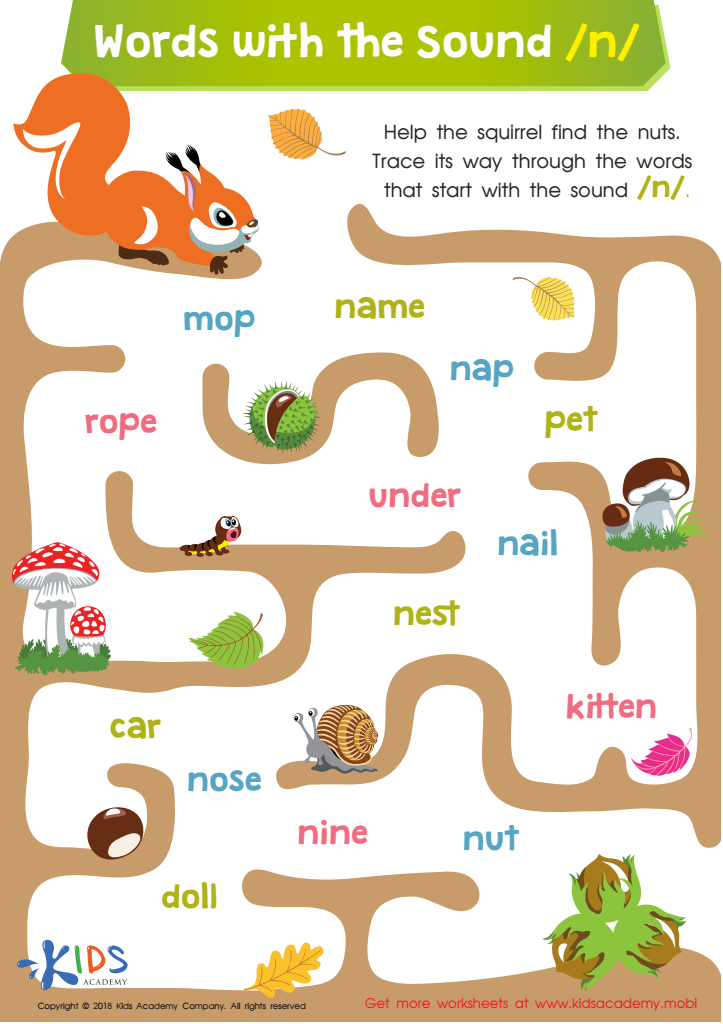
Words with Sound N Reading Worksheet
 Assign to My Students
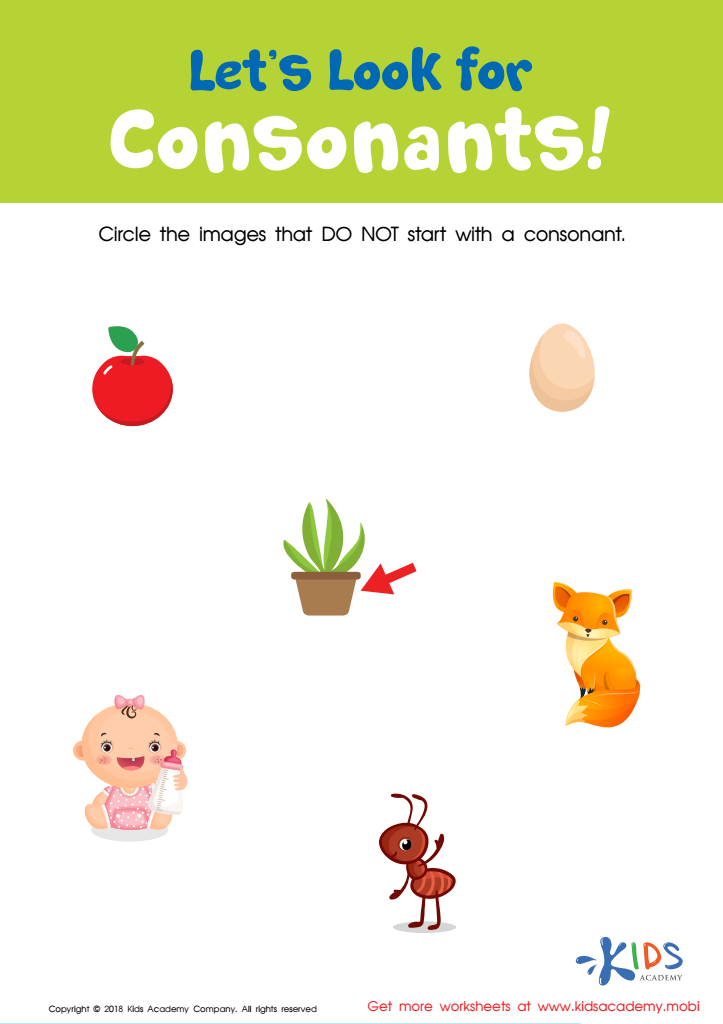
Let's Look for Consonants Worksheet
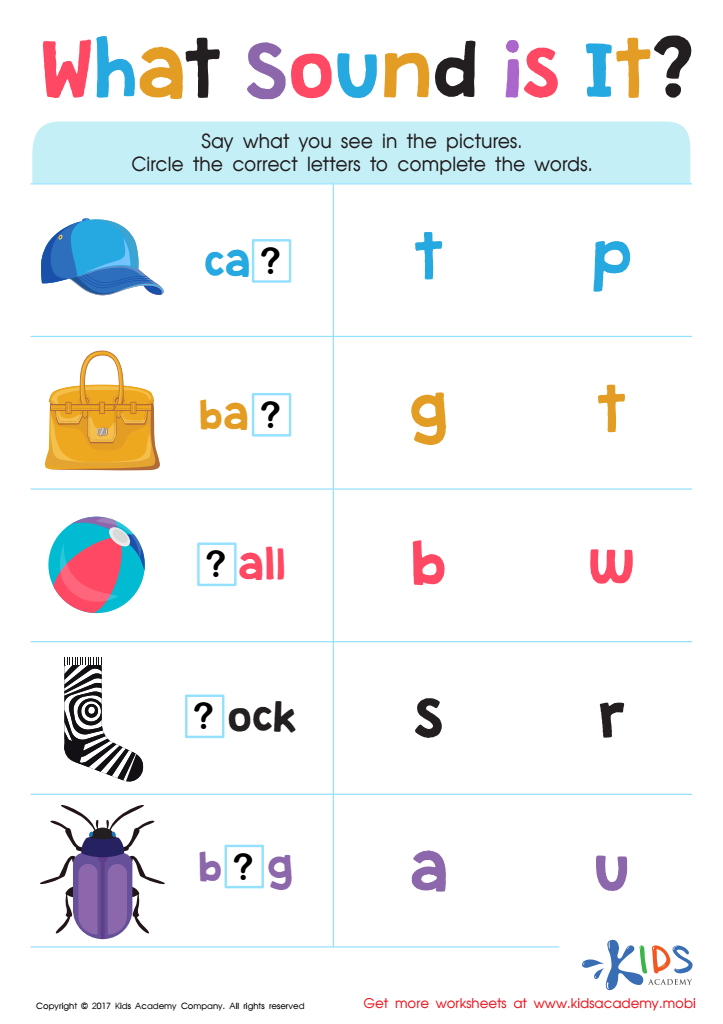
What Sound Is it? Worksheet
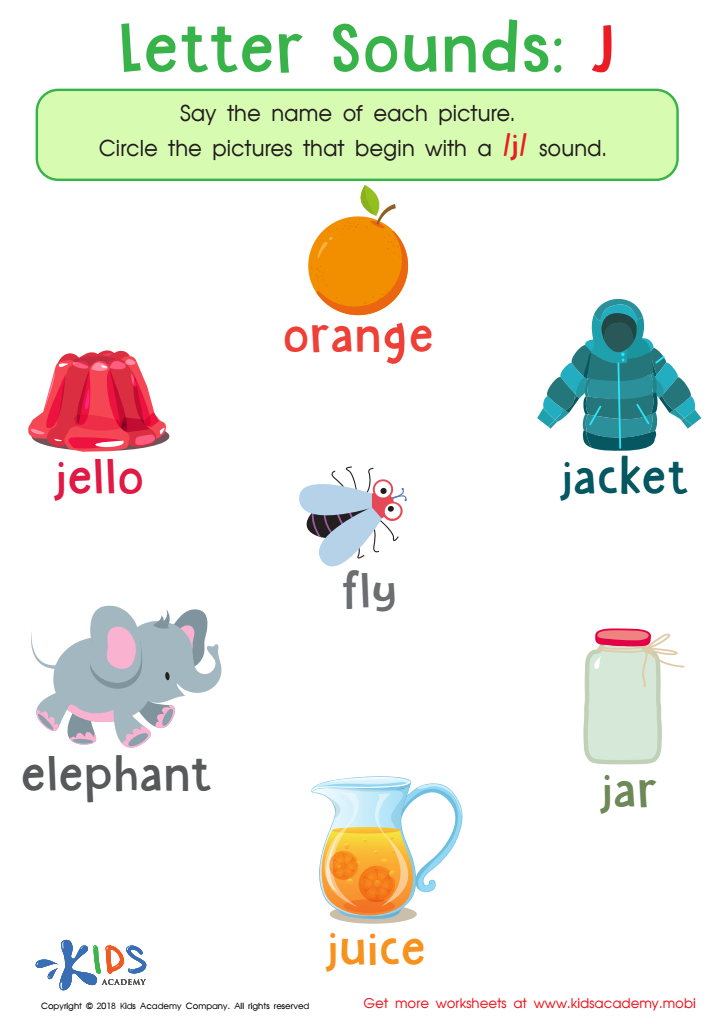
Letter Sounds: J Printable Worksheet
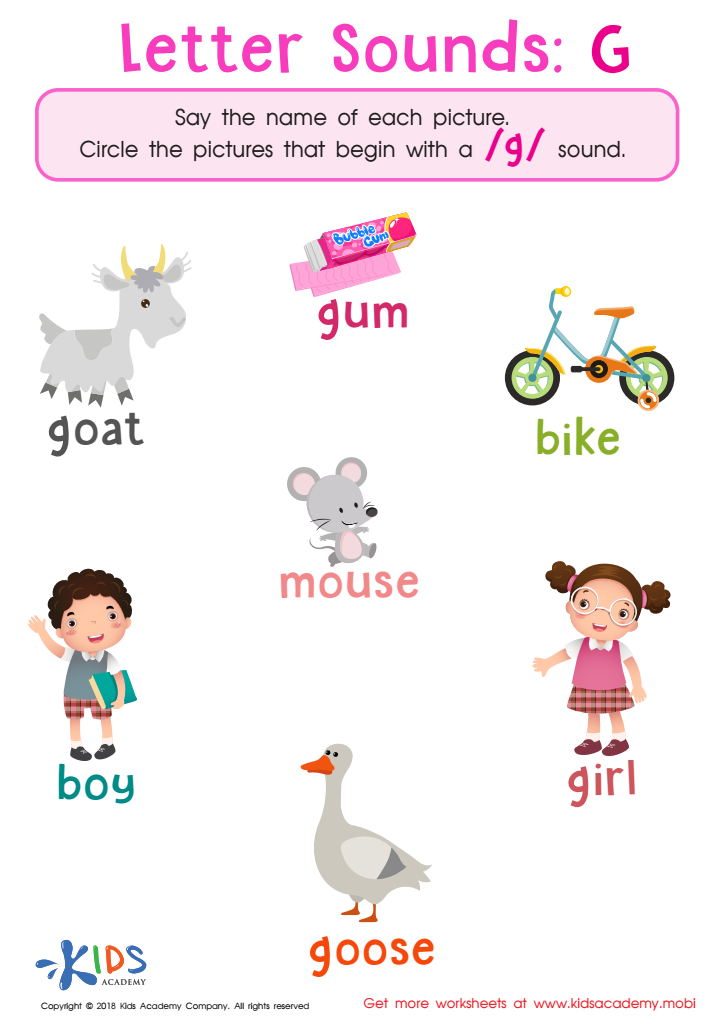
Letter G Sounds Worksheet





Developing reading skills in children aged 4-5 is crucial for their future academic success and overall development. At this age, children's brains are highly receptive to learning, and their ability to understand and manipulate language is rapidly expanding. By fostering reading skills and alphabet knowledge early on, parents and teachers lay a solid foundation for lifelong learning.
Reading skills help children decode words, understand stories, and express their thoughts clearly. Early exposure to the alphabet helps children recognize letters, learn their sounds (phonics), and ultimately, blend these sounds to form words. This, in turn, boosts their vocabulary, comprehension, and ability to communicate effectively.
Moreover, early reading and alphabet knowledge can enhance cognitive skills such as memory, attention, and problem-solving. It also promotes creativity and imagination as children explore new worlds through books. These skills are not only beneficial for their academic journey but also for their everyday interactions and emotional development.
Furthermore, fostering a love for reading at an early age encourages a positive attitude towards learning, curiosity, and a lifelong habit of seeking knowledge. By investing time in developing reading skills and alphabet knowledge in children aged 4-5, parents and teachers can significantly impact their academic performance, social skills, and overall intellectual growth.







