Alphabet familiarity Letter Recognition Worksheets for Ages 4-5
7 filtered results
-
From - To
Enhance your child's learning journey with our engaging Alphabet Familiarity Letter Recognition Worksheets, specially designed for ages 4-5. These worksheets provide a fun and interactive way for young learners to recognize, identify, and associate letters with sounds. Each activity fosters early literacy skills, helping children build a strong foundation for reading and writing. With colorful illustrations and varied exercises, kids will enjoy mastering the alphabet while improving their fine motor skills. Perfect for home or classroom use, these worksheets support engaging educational development in an enjoyable manner. Start building confidence in your child's literacy today!
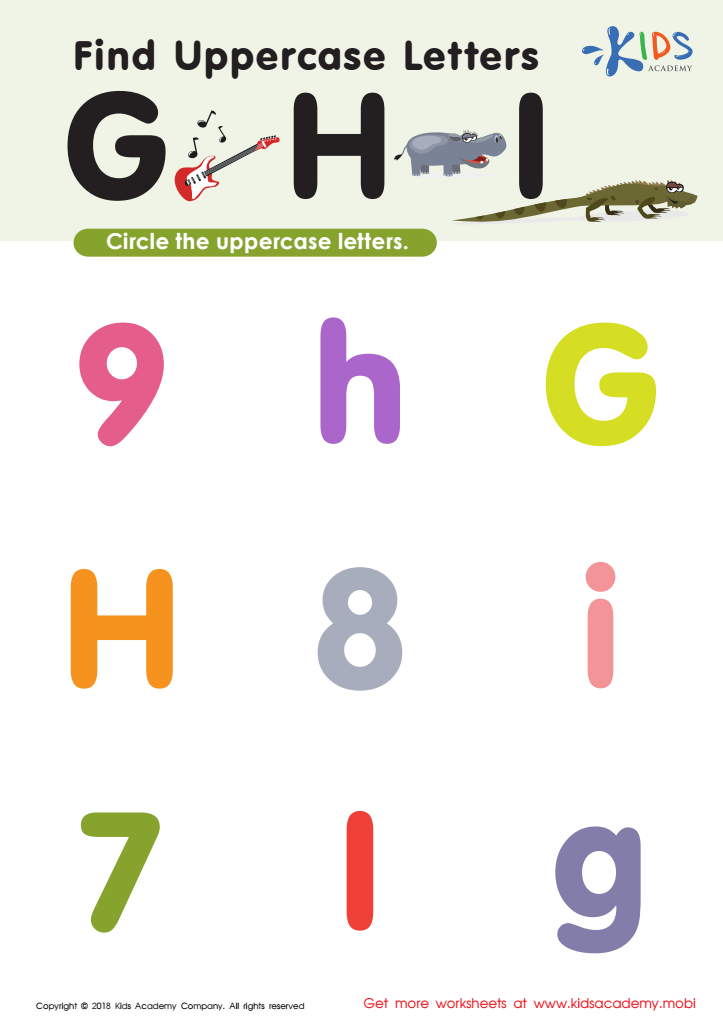
Find Uppercase Letters G, H, and I Worksheet
 Assign to My Students
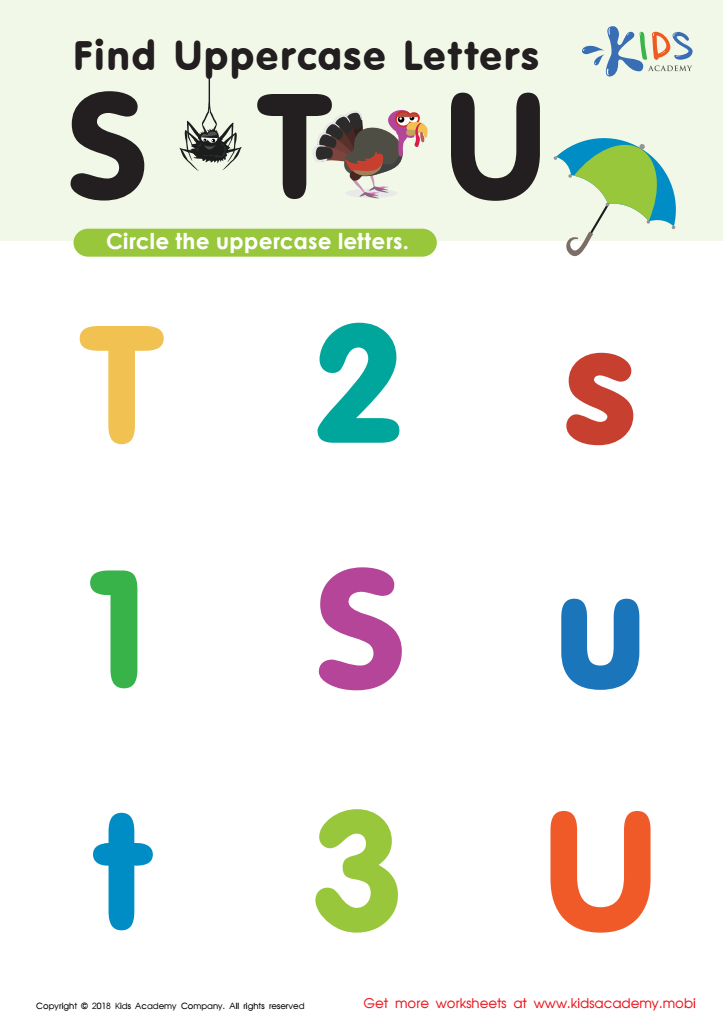
Find Uppercase Letters Worksheet
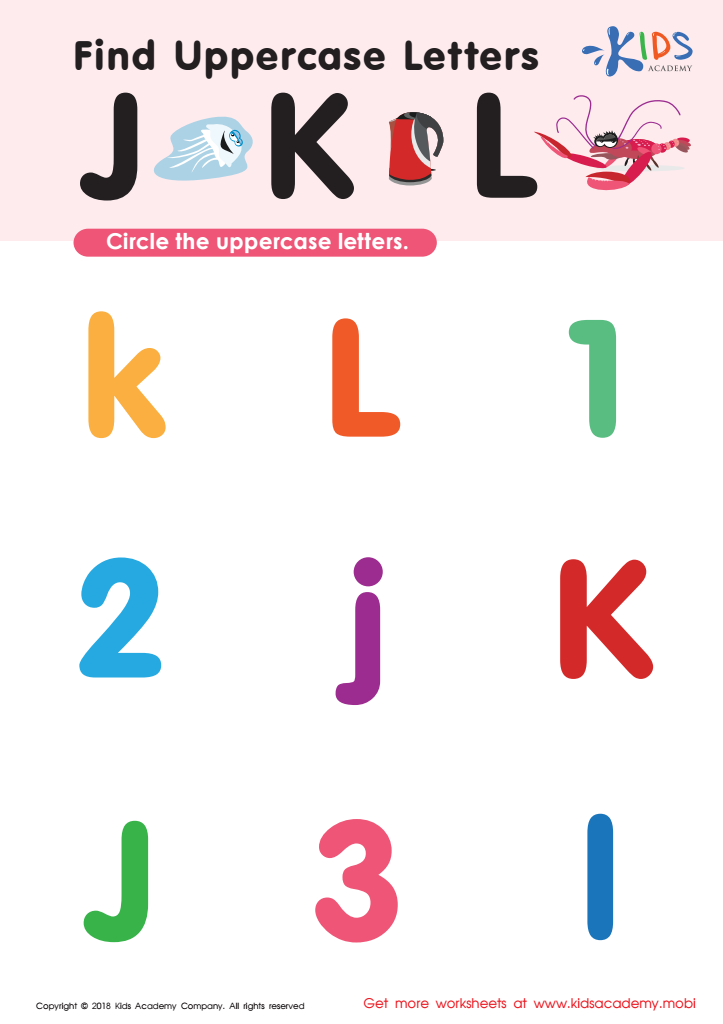
Find Uppercase Letters J, K, and L Worksheet
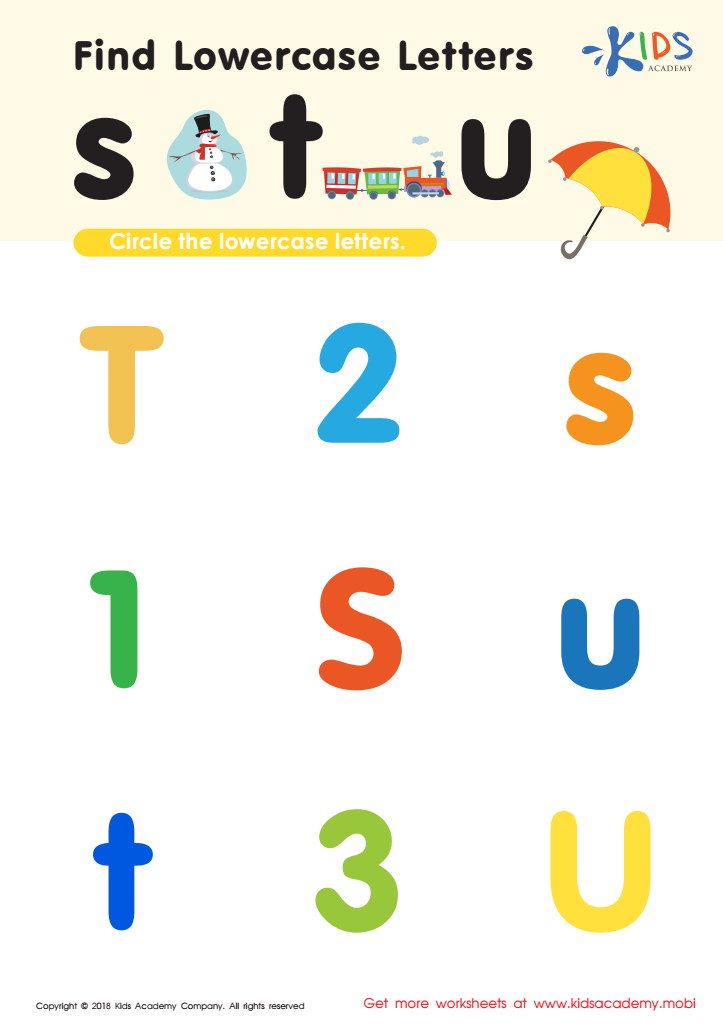
Find lowercase Letters s t u Worksheet
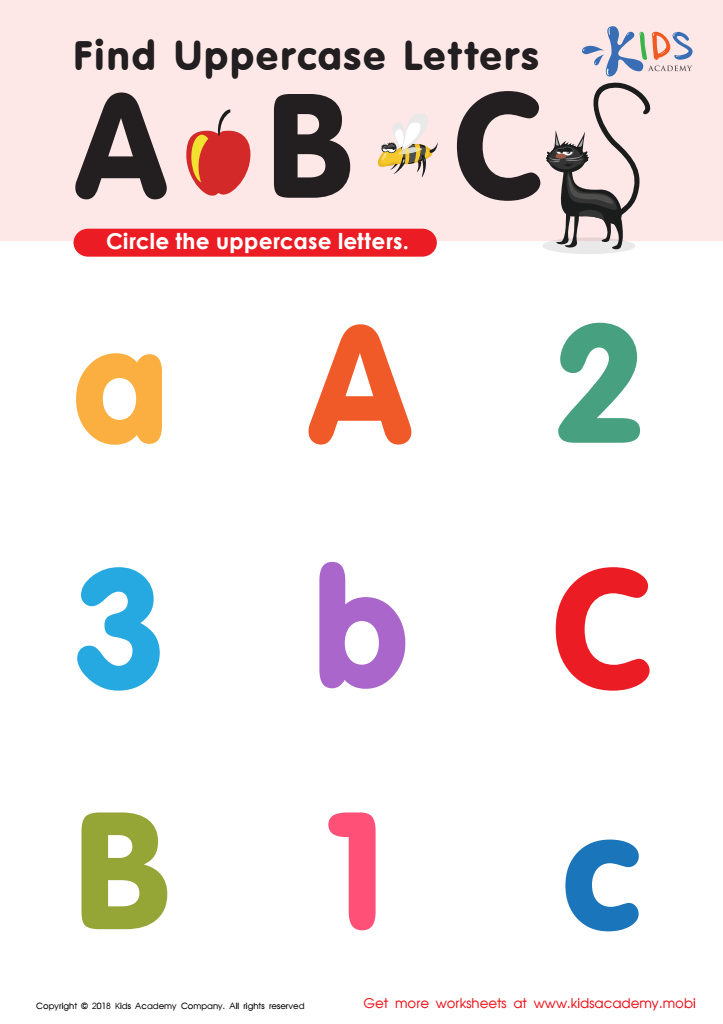
Find Uppercase Letters A, B, and C Worksheet
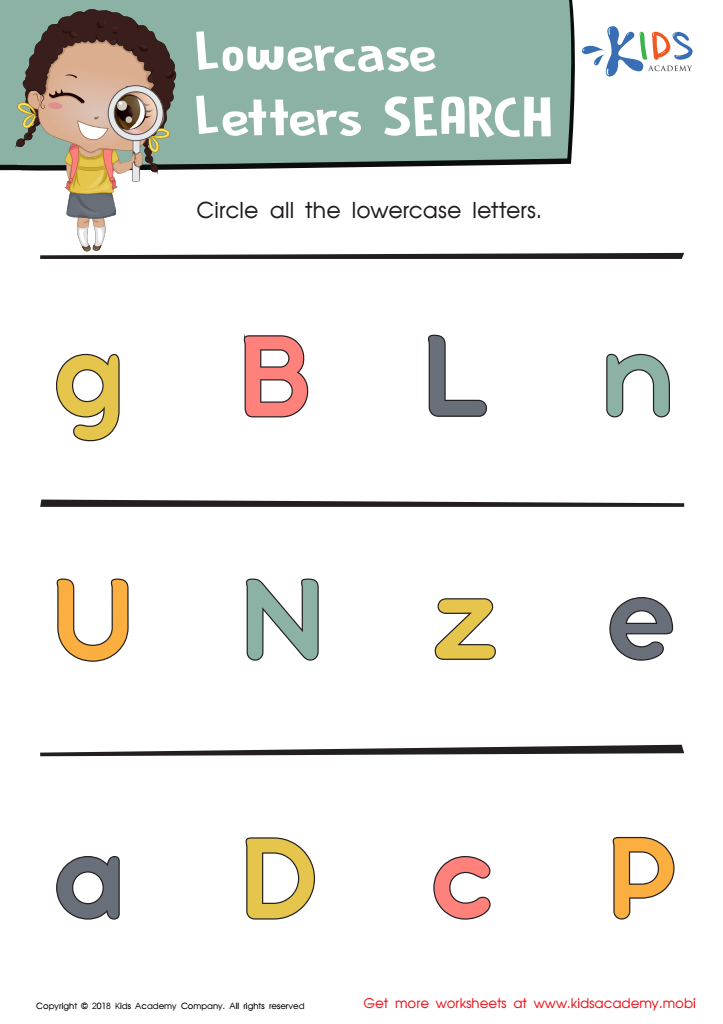
Lowercase Letters Search: Assessment Worksheet
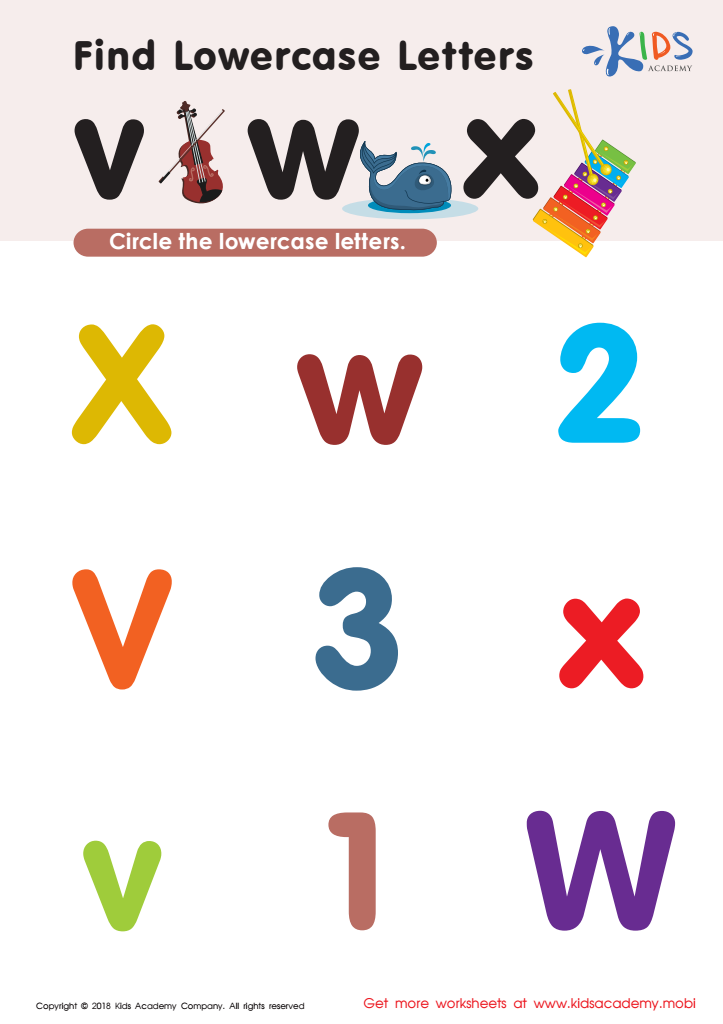
Find Lowercase Letters v w x Worksheet








Alphabet familiarity and letter recognition are fundamental building blocks for young children’s literacy development and overall educational success. For children aged 4 to 5, understanding letters lays the groundwork for reading and writing skills. When parents and teachers emphasize alphabet familiarity, they enable children to recognize letters in various contexts, leading to improved phonemic awareness—an essential skill for decoding words.
By nurturing an environment rich in letters through activities like alphabet games, reading aloud, and interactive stories, caregivers can significantly boost children's engagement and interest in literacy. Furthermore, early letter recognition fosters children's confidence, giving them the tools to express themselves through writing and vocabulary improvement as they progress.
Additionally, letter recognition is linked to cognitive development, enhancing memory, attention span, and critical thinking. When children recognize letters, they are more likely to develop a love for reading, often drawing connections between letters, sounds, and their meanings.
Ultimately, focusing on alphabet familiarity prepares children for future academic challenges, encouraging lifelong learning habits. By supporting and reinforcing these essential skills, parents and teachers play a pivotal role in shaping children’s educational journeys, ensuring they are equipped for success as they enter primary school and beyond.







