
Letter formation Letter Recognition Worksheets for Ages 4-5
5 filtered results
Difficulty Level
Grade
Age
-
From - To
Subject
Activity
Standards
Unlock the joy of learning with our "Letter Formation Letter Recognition Worksheets for Ages 4-5." Perfectly designed for young children, these engaging worksheets help your little ones master the basics of alphabet recognition and letter formation. Featuring fun activities and colorful illustrations, our worksheets make learning enjoyable and effective. Each worksheet is crafted to enhance fine motor skills, support handwriting practice, and build a strong foundation in early literacy. Give your child a head start in reading and writing with our educational tools that promote confidence and academic success.
Favorites
With answer key
Interactive
Letter A Tracing Page
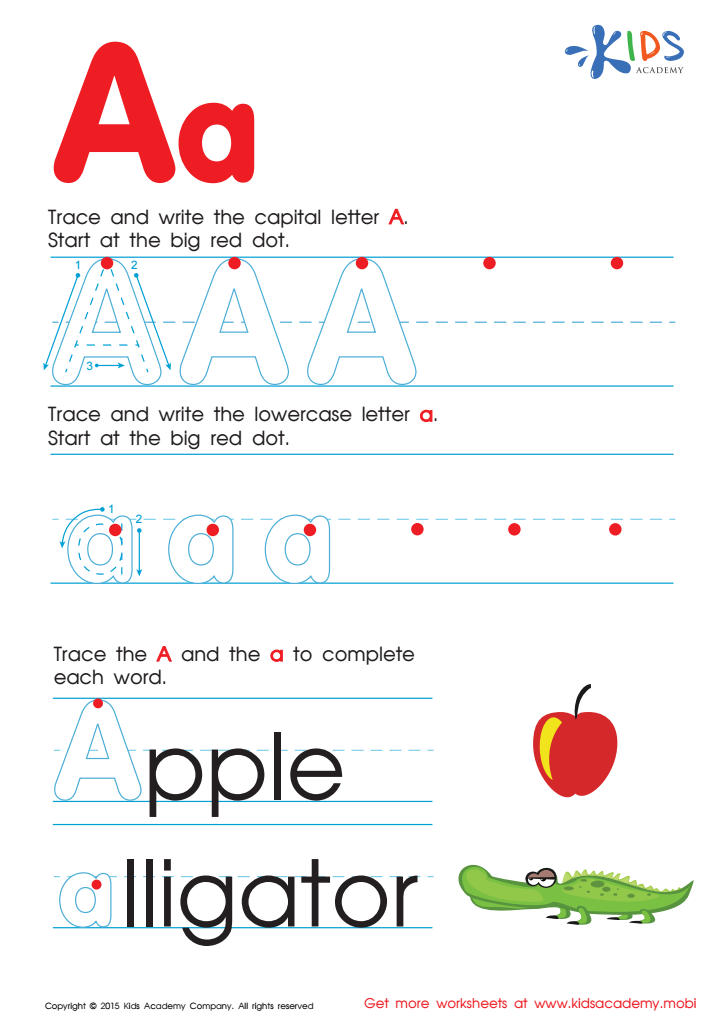
Trace and write the letter "A"! Start with the big red dot, then do the capital and lowercase versions. Then write it again with two words - apple and alligator. Download more tracing worksheets at Kids Academy.
Letter A Tracing Page
Worksheet
Letter P Tracing Page
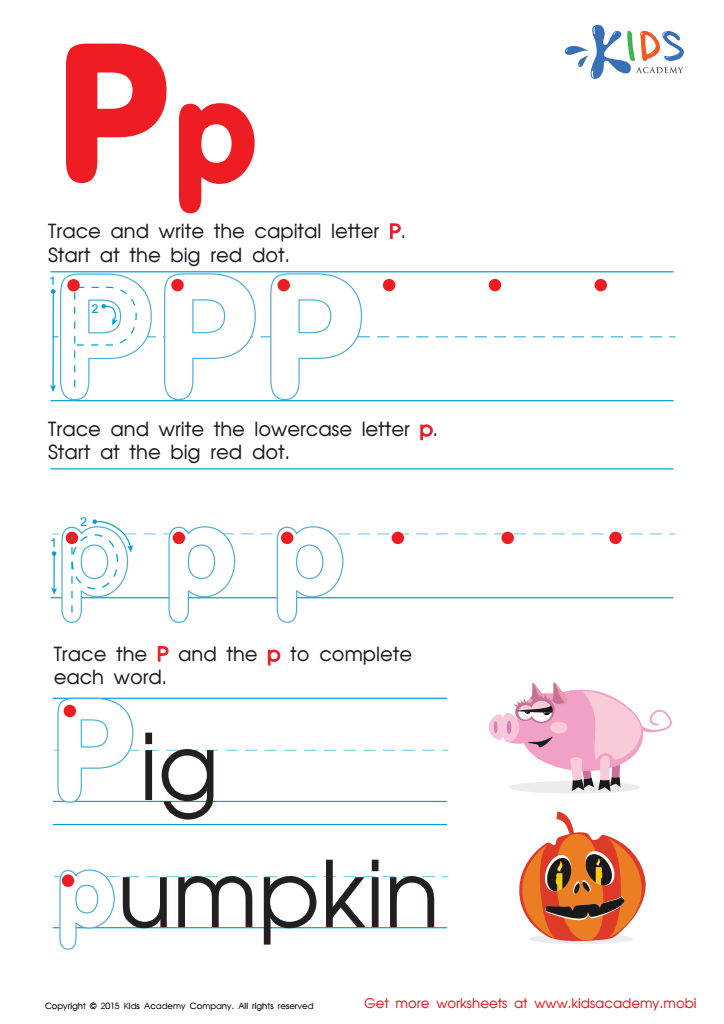
Trace the lines from the red dot to learn to write "P"! Then practice this letter with the fun activities: complete the word "Pig" and "Pumpkin". Check out Kids Academy to get more free ABC worksheets.
Letter P Tracing Page
Worksheet
Letter G Tracing Page
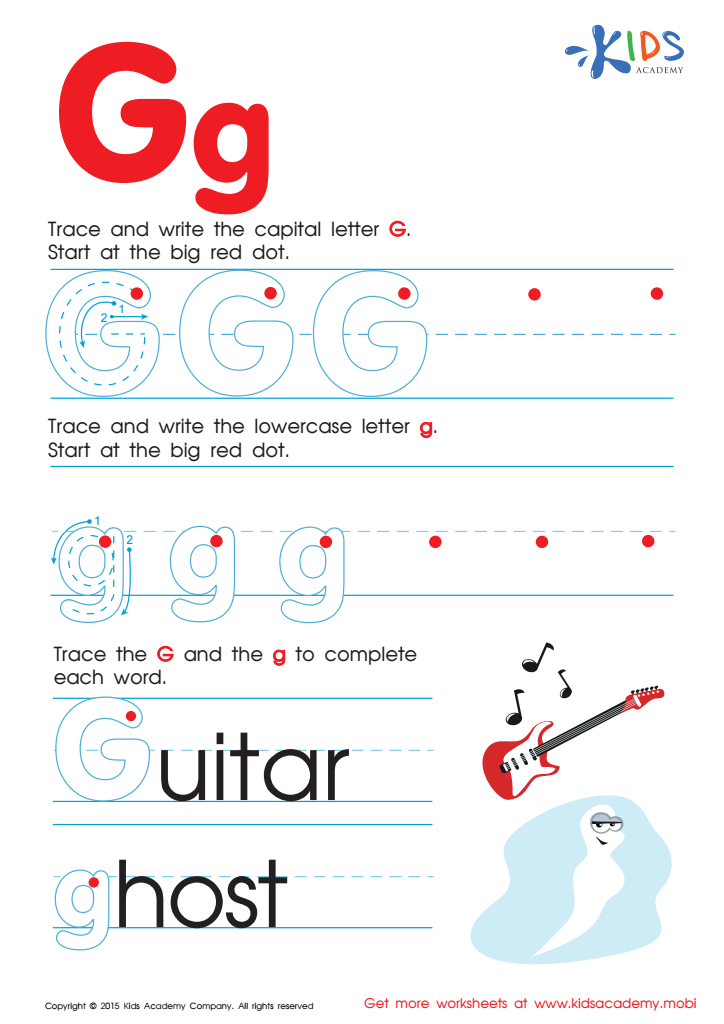
Get ready to trace the letter "G" – with a big red spot as the starting point, trace the lines and watch the letter appear. Uppercase and lowercase letters are both easy and fun to write. Give it a go and finish the word "go". Play the guitar and say "hello" to a funny ghost!
Letter G Tracing Page
Worksheet
Letters W–Z Tracing Worksheet
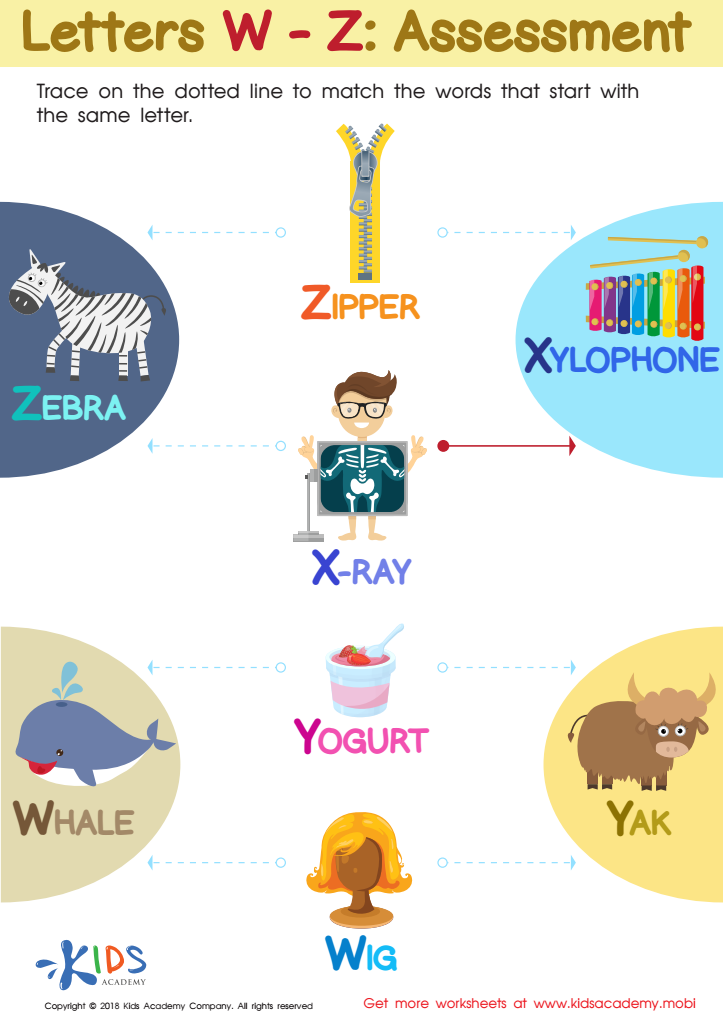
Kids will draw a line between words that start with the same letter, like 'Zipper' and 'Zebra', or 'Xylophone'. This worksheet strengthens their reading and letter W-Z recognition skills. Children can sound out each word to figure out the correct match, boosting their confidence in letter sounds.
Letters W–Z Tracing Worksheet
Worksheet
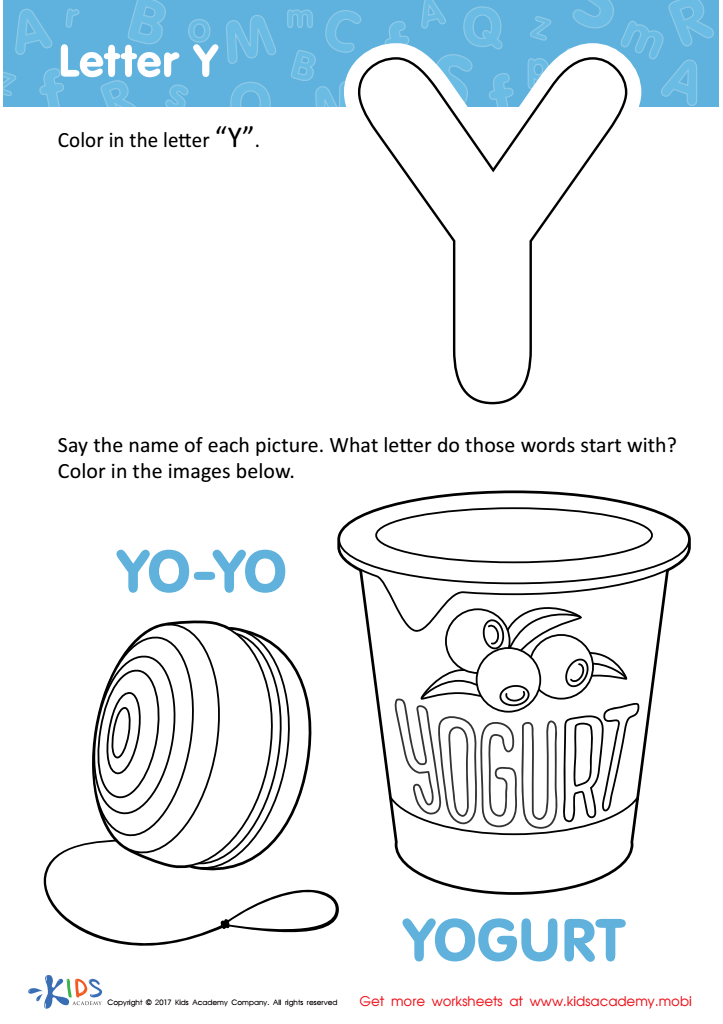
Letter Y Coloring Sheet
Let's celebrate letter "Y"! Here's a fun coloring page that'll help your child learn this end-of-the alphabet letter. It's packed with familiar objects that'll help build their art and literacy skills. So let's say "Yay"!
Download (PDF)
 Assign to My Students
Assign to My Students
Letter Y Coloring Sheet
Worksheet
Join Kids Academy for Free
Who is primarily going to use this learning content?








Letter formation and letter recognition are fundamental building blocks in a child's early literacy development, typically ages 4-5. Parents and teachers play crucial roles in nurturing these skills. Proper letter formation teaches children how to write letters correctly, which ensures legible handwriting. This aspect of literacy also helps develop fine motor skills and hand-eye coordination, ultimately aiding children in more complex tasks that require precise hand movements.
Letter recognition is equally important because it forms the basis for reading and writing proficiency. When children recognize letters, they begin to understand that letters represent specific sounds—a skill that is critical for phonemic awareness. This understanding helps children decode words while reading and segment phonemes when spelling, laying a sturdy foundation for fluent reading and effective writing.
Moreover, early mastery in these areas builds confidence. As children correctly form and recognize letters, they experience a sense of accomplishment, which fosters a positive attitude towards learning. Additionally, early intervention in these skill areas can prevent future academic difficulties and ensure a smooth transition from kindergarten to elementary school.
In summary, attention to letter formation and letter recognition at ages 4-5 is essential for developing functional literacy skills, enhancing fine motor abilities, and cultivating a lifelong love of learning.







