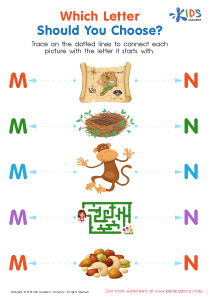
Lowercase identification Lowercase/Small Letters Worksheets for Ages 4-5
5 filtered results
-
From - To
Introduce young learners to the alphabet with our engaging Lowercase Letters Worksheets, designed for ages 4-5. These educational exercises help children identify and practice forming lowercase letters, enhancing letter recognition, fine motor skills, and early reading abilities. Each worksheet features fun activities like tracing, matching, and coloring to keep young minds engaged and motivated. Crafted by education experts, our worksheets align with early learning standards, ensuring a strong foundation for future literacy success. Perfect for parents and teachers, these printable resources make learning the alphabet both enjoyable and effective. Explore today and give your child a head start!
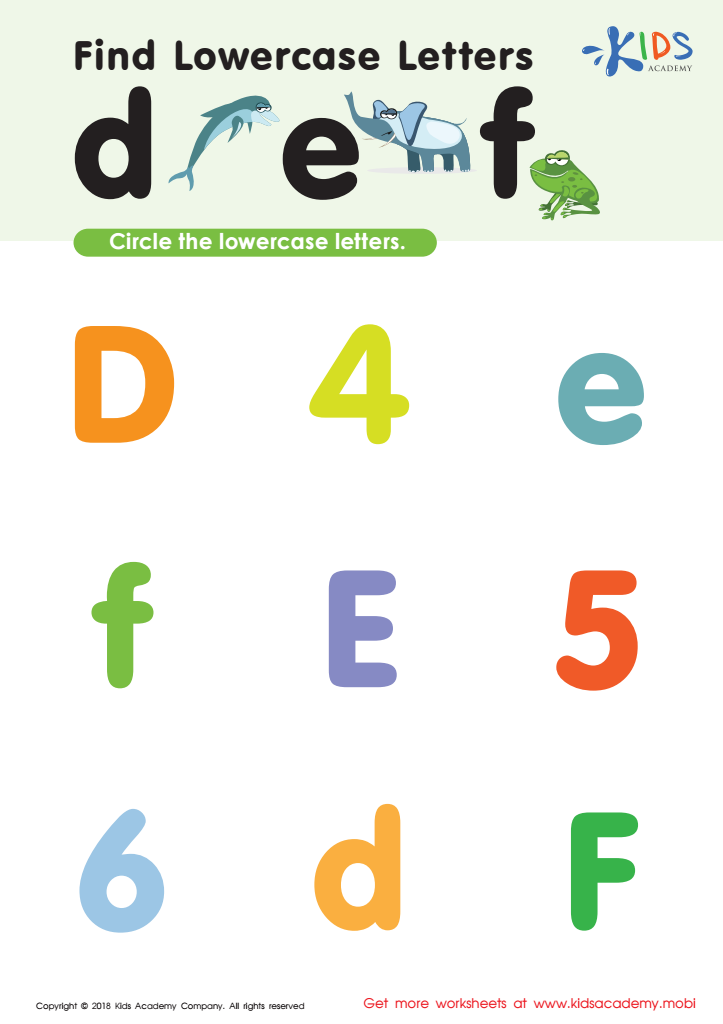
Find Lowercase Letters d e f Worksheet
 Assign to My Students
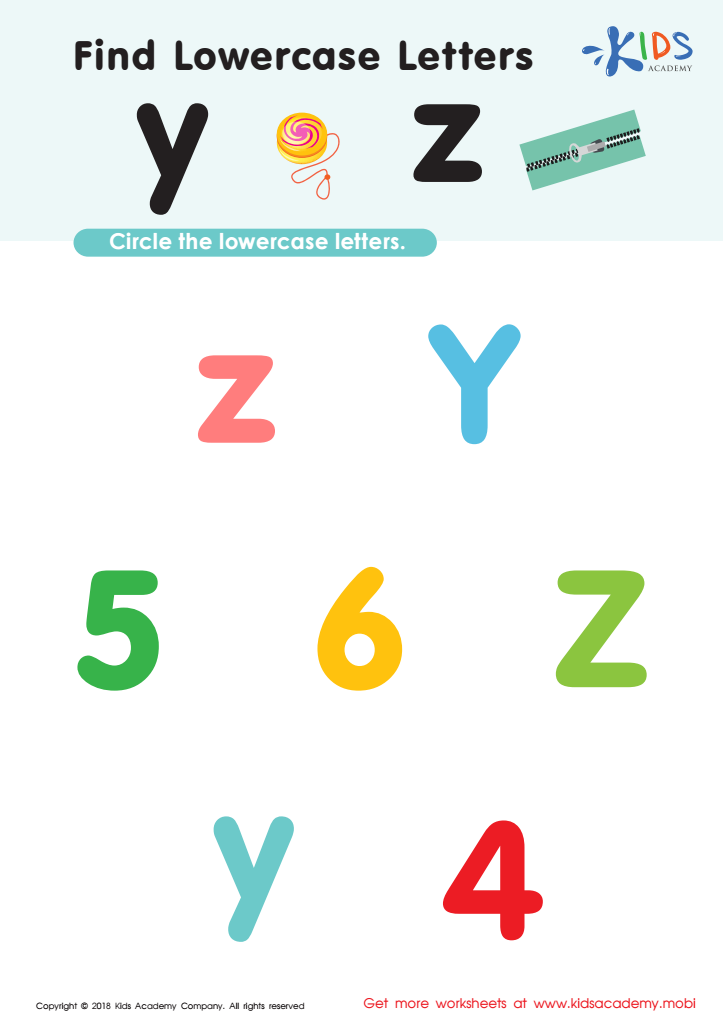
Find Lowercase Letters y z Worksheet
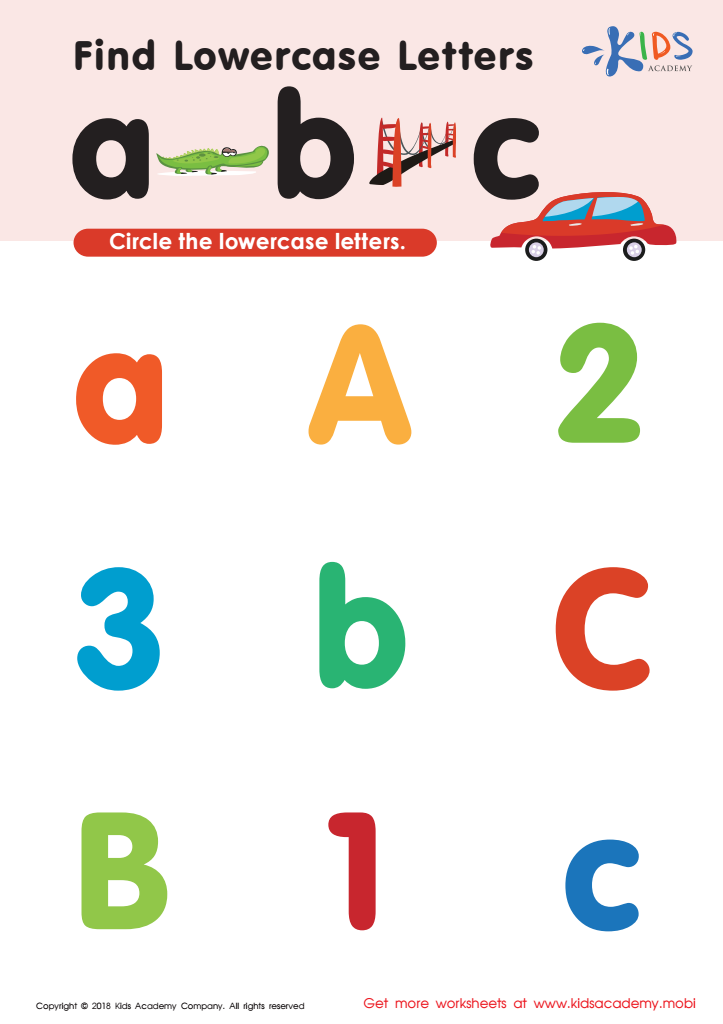
Find lowercase letters a b c Worksheet
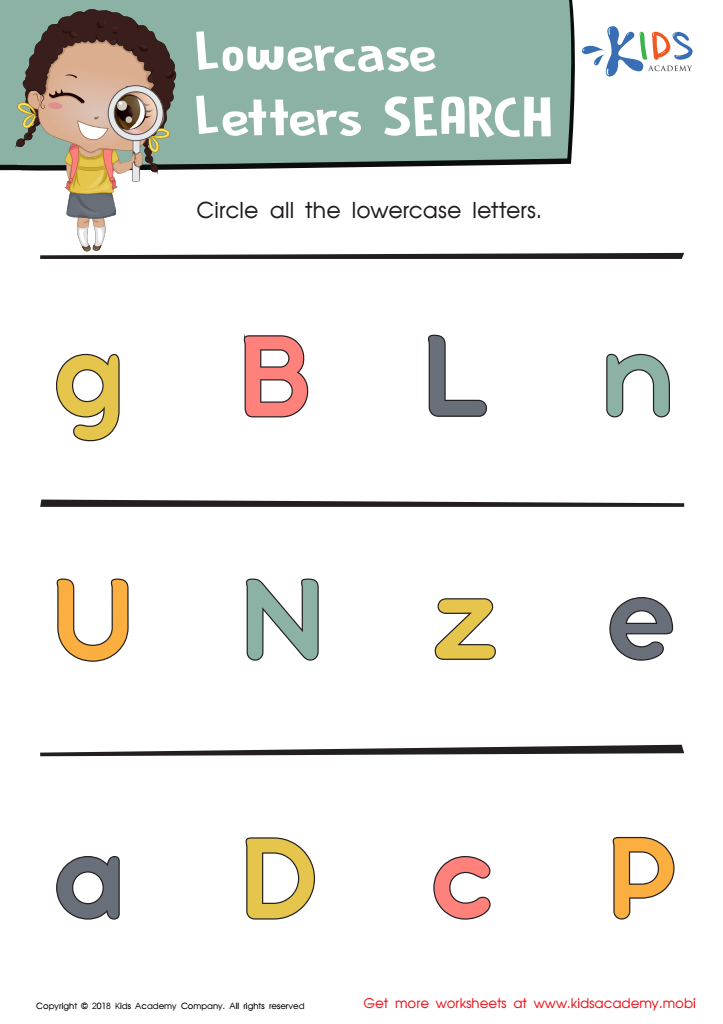
Lowercase Letters Search: Assessment Worksheet
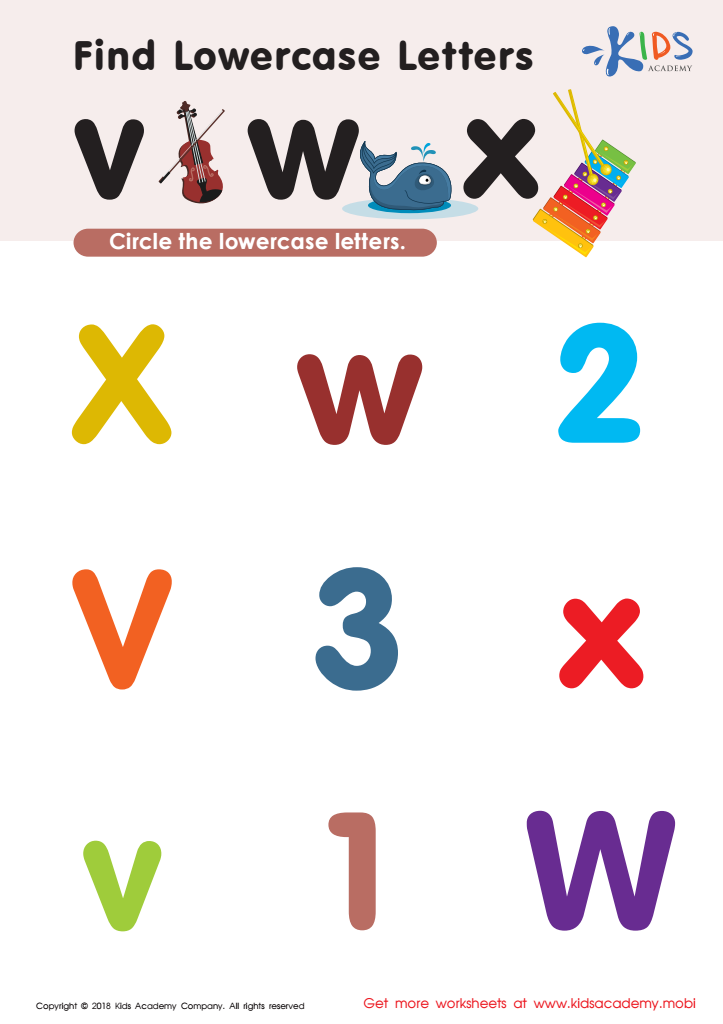
Find Lowercase Letters v w x Worksheet


Learning to identify lowercase letters is crucial for children aged 4-5 as it lays the foundation for their literacy development. Lowercase letters make up the majority of text children will encounter in books, signs, and handwritten notes. Early proficiency in recognizing these letters enhances reading fluency and comprehension, which are critical skills for academic success.
For parents and teachers, focusing on lowercase identification at this age supports a smooth transition to more advanced reading and writing stages. When children can easily distinguish between lowercase letters, they are better equipped to form simple words, decode new vocabulary, and understand sentence structures. This early literacy skill boosts their confidence and encourages a positive attitude towards learning.
Additionally, familiarity with lowercase letters aids in the consistency of classroom instruction. Since most educational materials and primary curriculums predominantly use lowercase text, children who grasp this concept early are better able to engage with the content, participate in learning activities, and follow instructions. Therefore, giving attention to lowercase letter identification helps ensure children are well-prepared for their educational journey, building a strong foundation for future learning and academic excellence.