Letter-sound correlation Phonics Worksheets for Ages 4-5
6 filtered results
-
From - To
Discover our engaging Letter-Sound Correlation Phonics Worksheets designed specifically for ages 4-5! These interactive worksheets are perfect for helping young learners understand the relationship between letters and their corresponding sounds, laying a strong foundation for reading and writing. With colorful illustrations and age-appropriate activities, children will enjoy practicing their phonics skills while enhancing their vocabulary and comprehension. Each worksheet promotes active learning through fun exercises that keep kids motivated and eager to explore the world of letters. Equip your child with essential literacy skills and watch them flourish as they develop confidence in their reading journey! Start learning today!
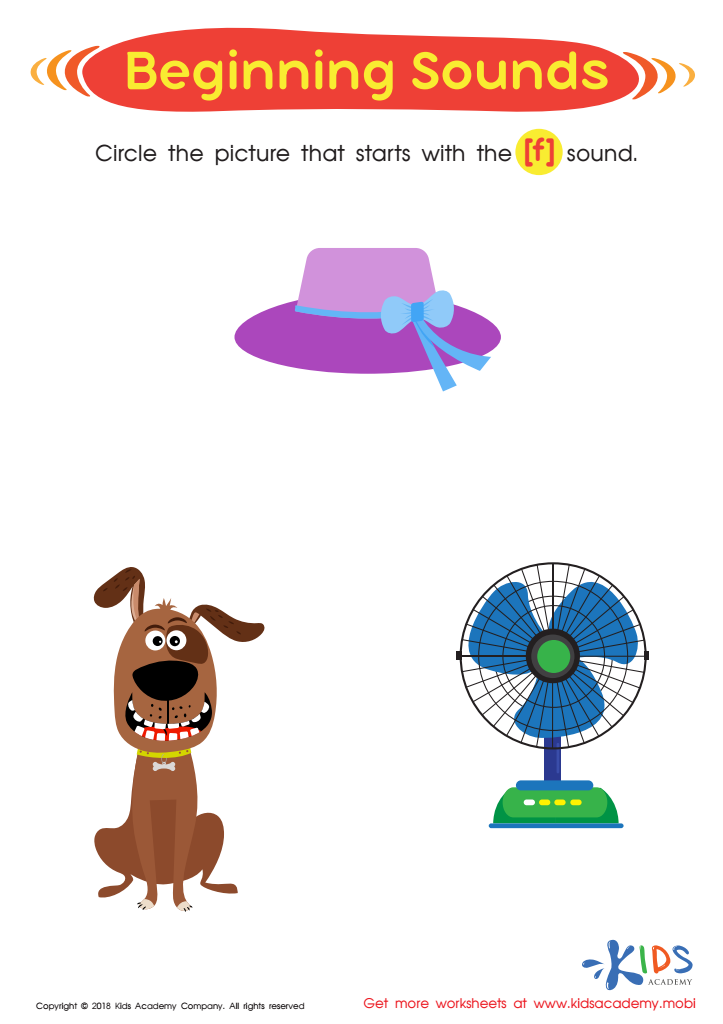
Beginning Sounds Assessment Printable
 Assign to My Students
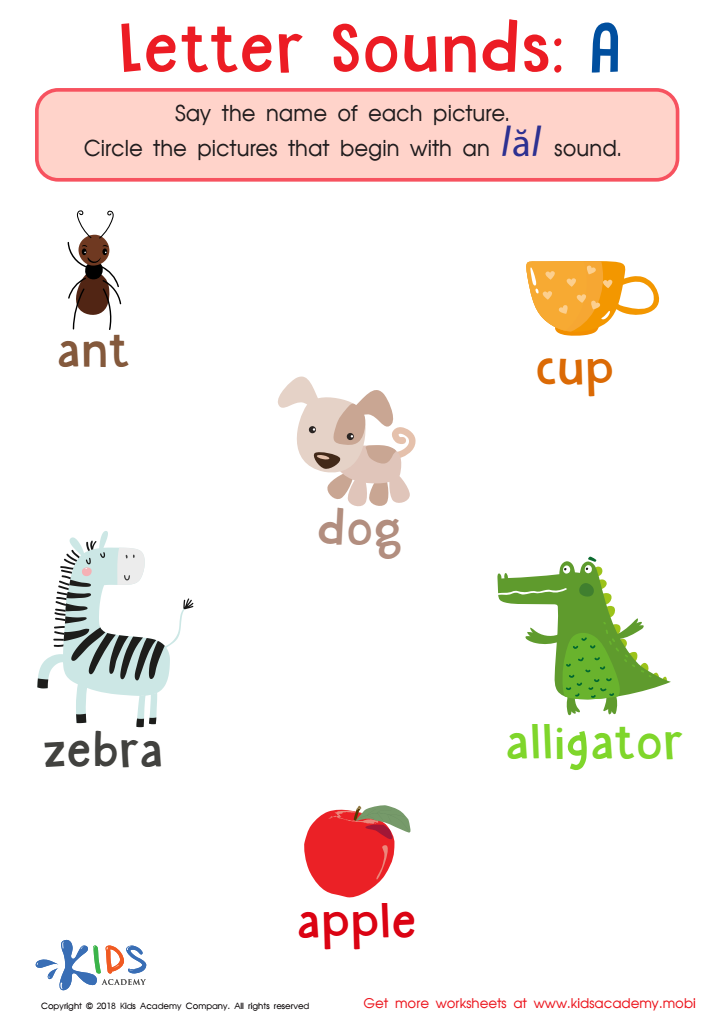
Letter A Sounds Worksheet
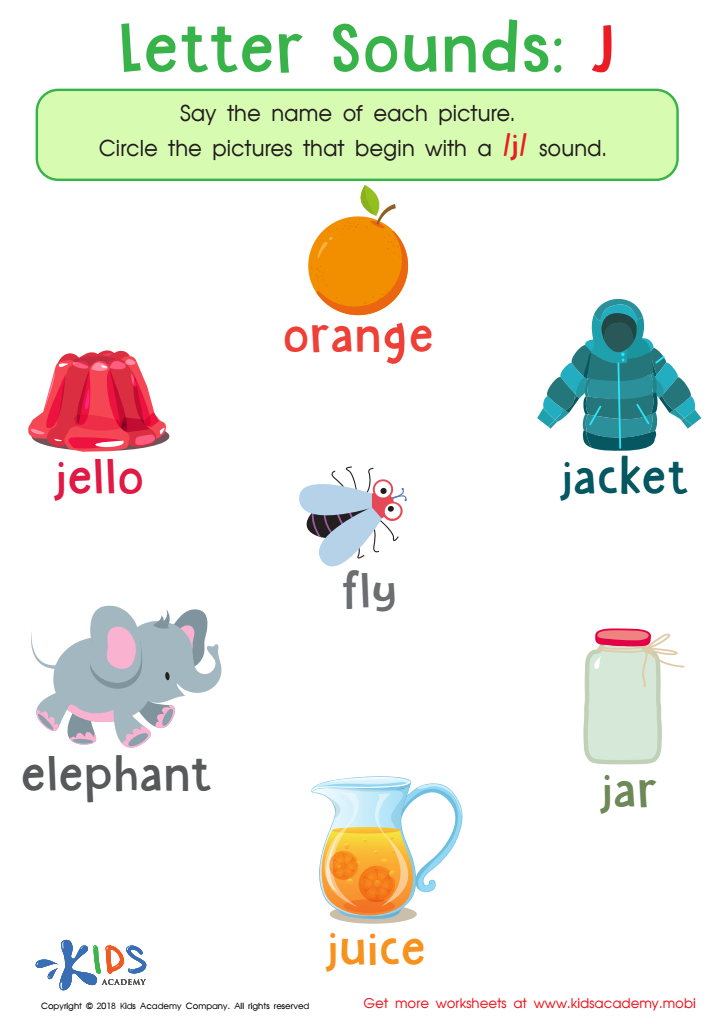
Letter Sounds: J Printable Worksheet
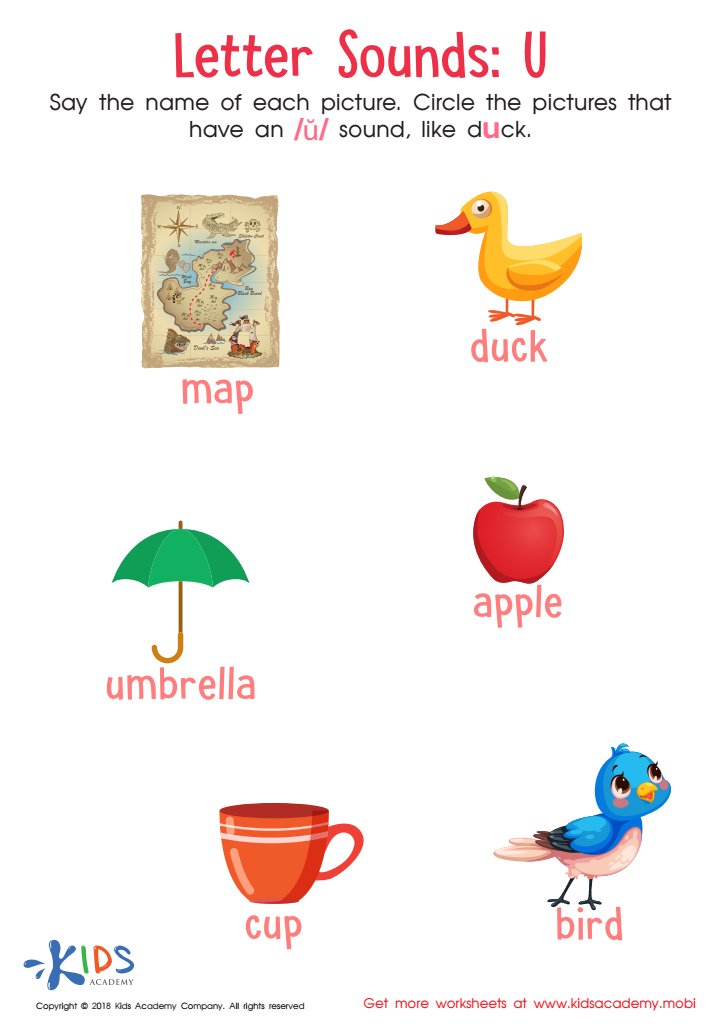
Letter U Sounds Worksheet
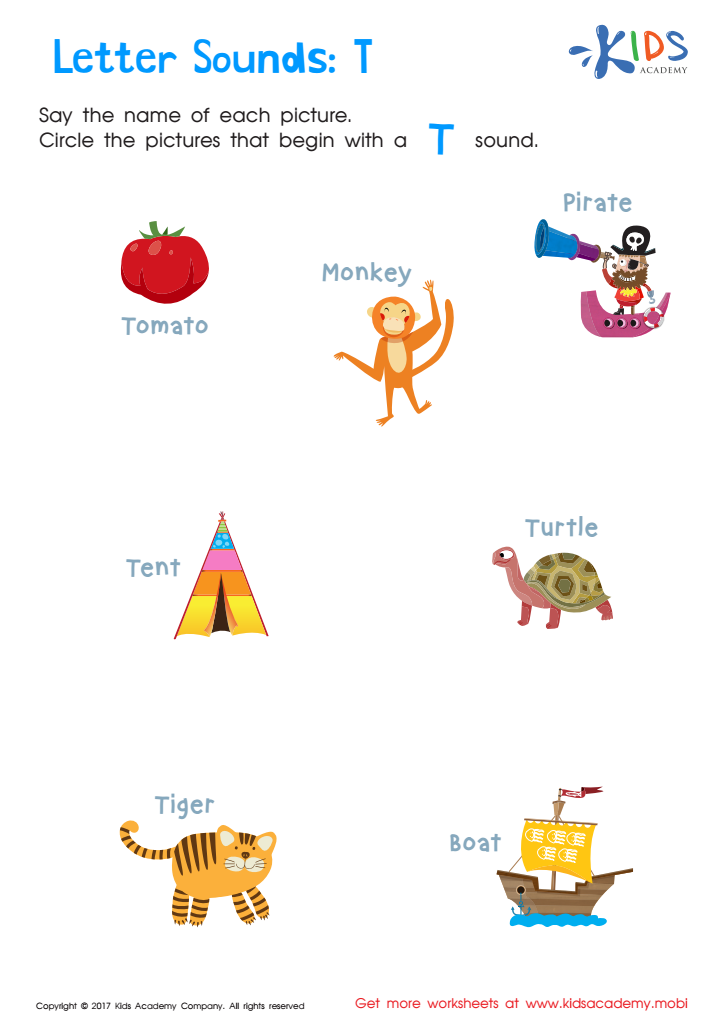
Letter T Sounds Worksheet
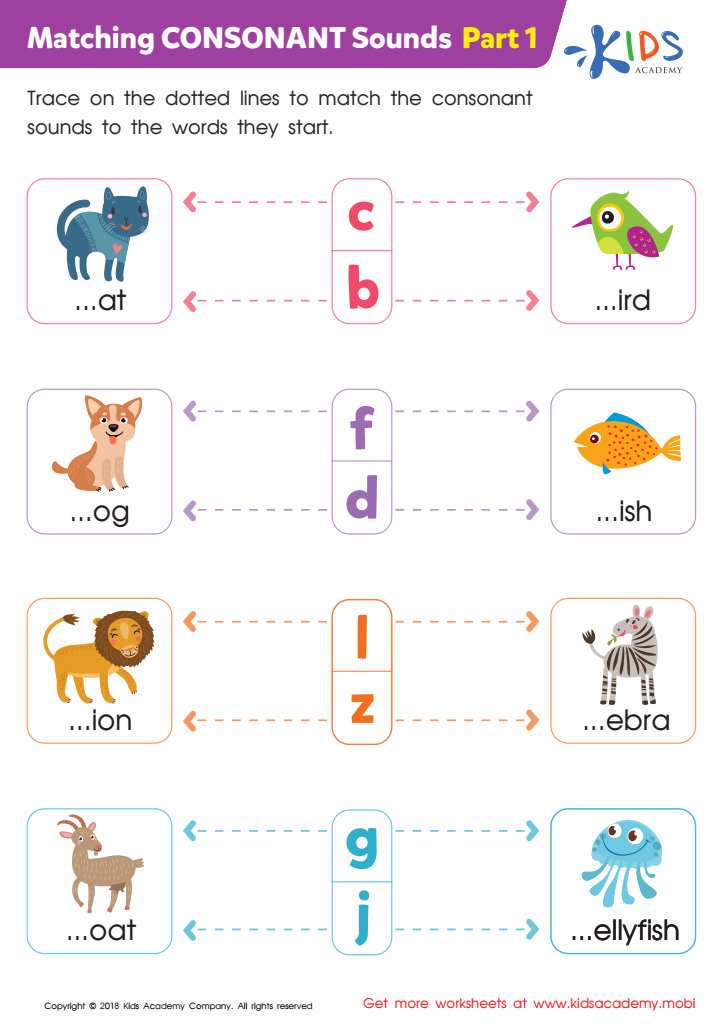
Matching Consonant Sounds: Part 1 Worksheet








Parents and teachers should prioritize phonics, particularly letter-sound correlation, for children aged 4-5 because it lays the foundation for reading and writing skills. At this age, children are eager to learn and naturally curious about language. Introducing them to the connection between letters and their corresponding sounds helps them decode words, enabling them to read independently and confidently.
Phonics is crucial for language development, as it enhances children’s understanding of how letters form sounds, which in turn creates words. Strengthening this skill can boost literacy skills, supporting their comprehension and vocabulary growth. Early literacy education fosters a love of reading, increases academic performance as children progress through school, and promotes overall cognitive development.
Moreover, phonics helps support students with varying learning styles, providing clear, systematic methods for learning. Engaging in phonics activities can be fun and interactive, making learning enjoyable. Additionally, strengthening early reading skills allows children to participate more actively in classroom discussions and group activities, enhancing their social skills and building confidence.
In conclusion, parents and teachers should care about phonics as it equips young learners with essential tools for future academic success and encourages a lifelong passion for reading.







