
Reading proficiency Phonics Worksheets for Ages 4-5
3 filtered results
Difficulty Level
Grade
Age
-
From - To
Subject
Activity
Standards
Boost your child's reading journey with our Reading Proficiency Phonics Worksheets tailored for ages 4-5. Carefully designed to build a solid foundation in phonics, these engaging activities help young learners recognize letters, sounds, and simple word patterns. Each worksheet is crafted to enhance phonemic awareness, improve letter-sound correspondence, and elevate early reading skills in a fun and interactive manner. Perfect for preschoolers and kindergarteners, these printable worksheets offer varied and stimulating exercises that make learning enjoyable, fostering a love for reading from an early age. Equip your child with the essential skills for reading success today!
Favorites
With answer key
Interactive
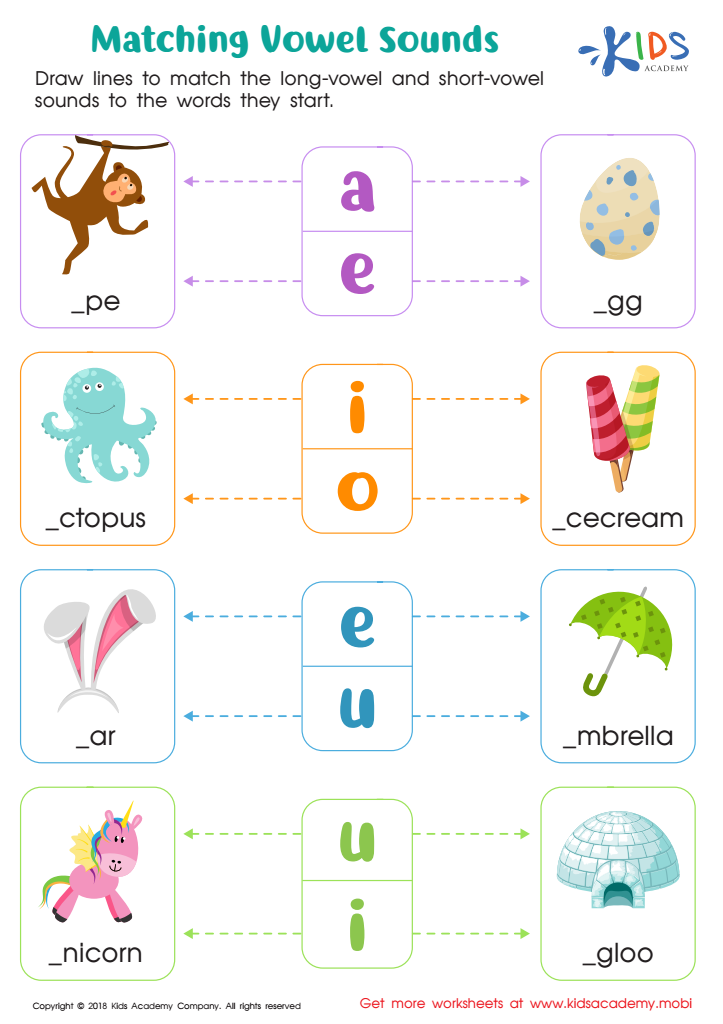
Matching Vowel Sounds Worksheet
Teach your child phonics with a fun worksheet! Ask your child to name a vowel sound and listen if it's long or short. Differentiating between long and short vowel sounds can be tricky, but this matching worksheet makes it easy for kids to understand. Have fun and master phonics - the worksheet will help them understand the difference between long and short vowel sounds!
Matching Vowel Sounds Worksheet
Worksheet
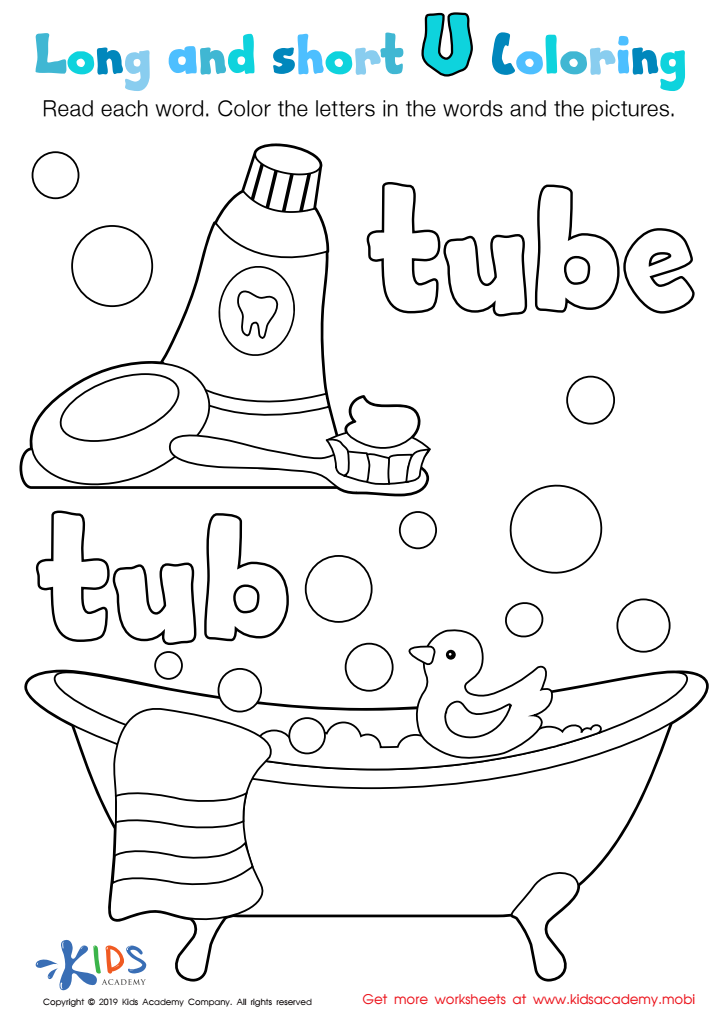
Long and Short U Worksheet
Revised: Spice up your lesson on long and short vowels with this fun printout! Kids read the words "tube" and "tub," then reinforce the sound by coloring in the words and pictures. It's a great way to make phonics class enjoyable!
Download (PDF)
 Assign to My Students
Assign to My Students
Long and Short U Worksheet
Worksheet
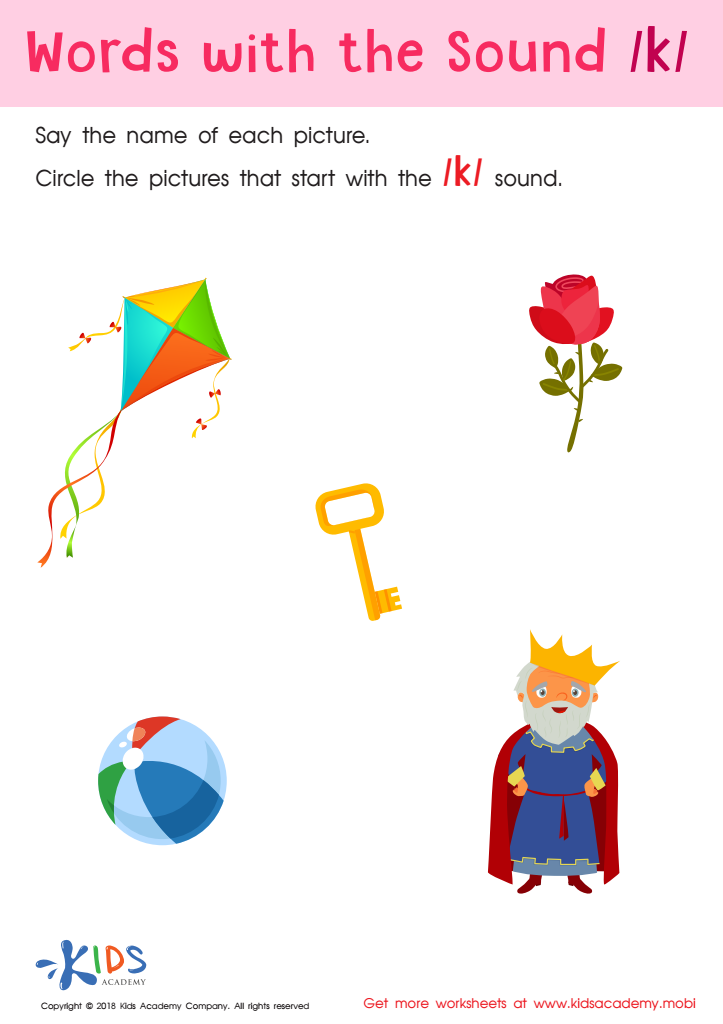
Words with sound k Reading Worksheet
Help your preschooler master the hard "k" sound with this fun worksheet from Kids Academy! Ask your child to say each picture aloud and circle only the pictures that start with "k". This early reading exercise will boost phonics skills and is sure to be loved by your little learner!
Words with sound k Reading Worksheet
Worksheet
Join Kids Academy for Free
Who is primarily going to use this learning content?








Parents and teachers should deeply care about reading proficiency phonics for children aged 4-5 because it lays the critical foundation for lifelong literacy and academic success. Phonics, the relationship between letters and their sounds, is a fundamental aspect of early reading instruction. Mastering phonics enables young children to decode new words independently, fostering a sense of confidence and interest in reading.
At this formative age, children's brains are incredibly receptive to learning language patterns. Introducing phonics early helps them understand the systematic nature of reading, which is vital for developing skills in spelling, comprehension, and vocabulary. With strong phonemic awareness, children are better prepared to tackle complex text as they progress through their education.
Moreover, the ability to read fluently is intrinsically linked to overall academic performance. Children who are proficient readers tend to excel in all subjects, as reading skills are required to understand math problems, follow instructions in science, and comprehend historical texts. The benefits extend beyond academics; reading proficiency is crucial for effective communication and critical thinking, which are valuable life skills.
In essence, investing time and effort into developing reading proficiency through phonics at an early age equips children with the tools they need for future success, making it an essential focus for parents and educators.







