Reading comprehension Short Vowels Worksheets for Ages 4-5
4 filtered results
-
From - To
Explore our Reading Comprehension Short Vowels Worksheets designed specifically for children aged 4-5! These engaging and interactive activities promote early literacy skills by focusing on short vowel sounds essential for reading success. Each worksheet features colorful illustrations and age-appropriate exercises that help develop phonemic awareness, improve vocabulary, and enhance comprehension skills. Children will enjoy identifying short vowel sounds in words, matching pictures to words, and participating in fun reading activities that foster a love for learning. Perfect for parents and teachers, our worksheets can be easily printed and used at home or in the classroom to give young learners a solid reading foundation!
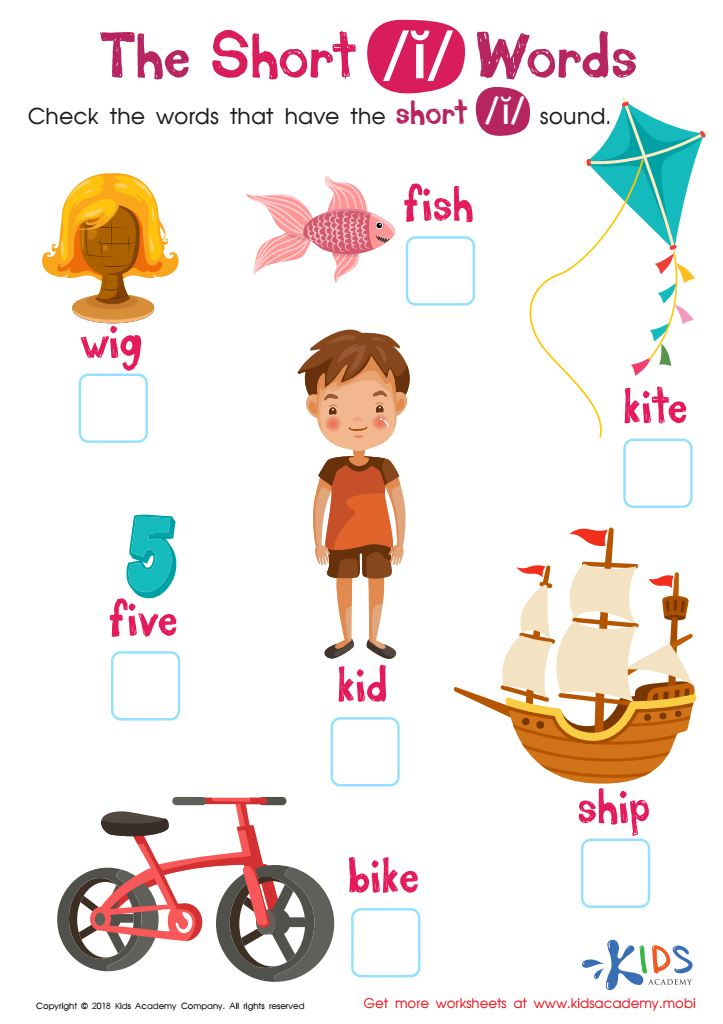
The Short I Words Reading Worksheet
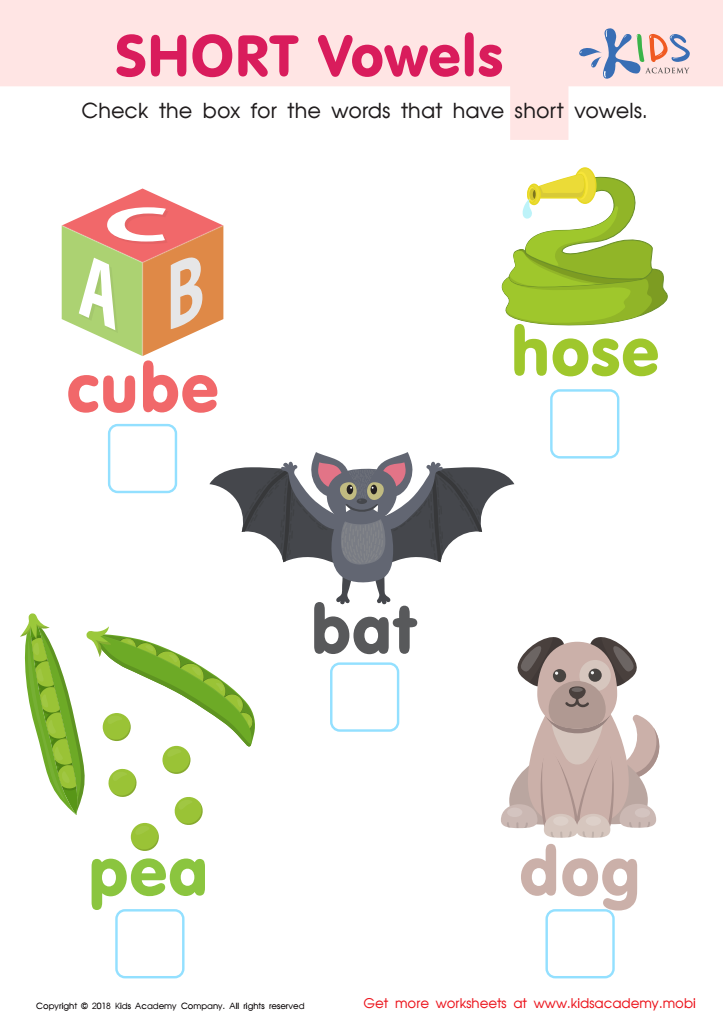
short vowels Worksheet
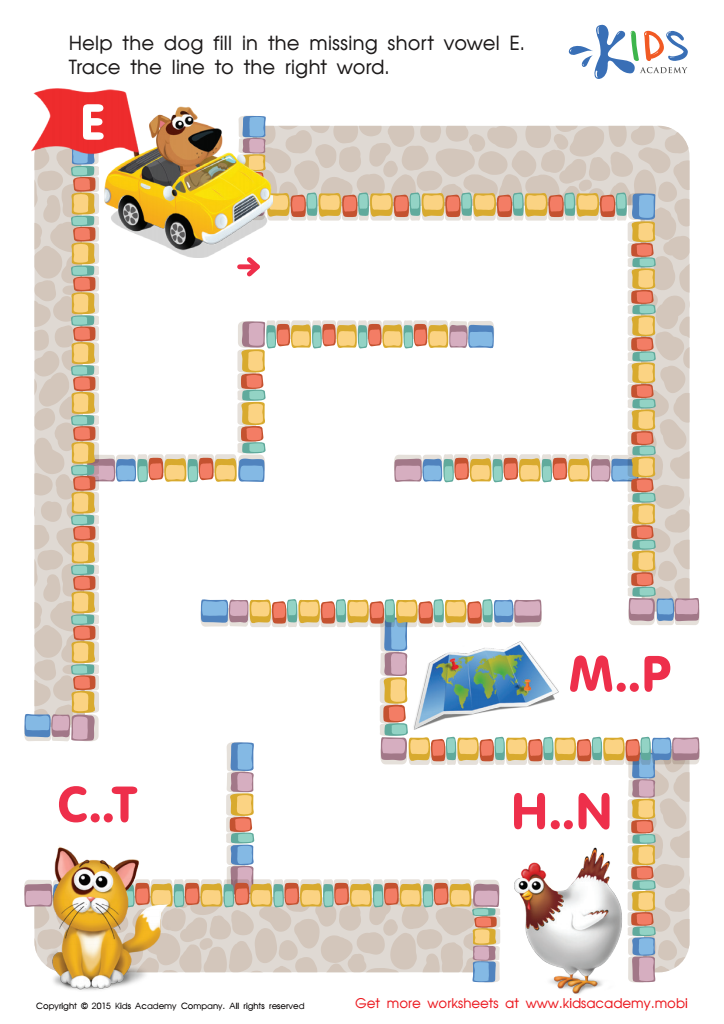
Short Vowel Sound E Worksheet

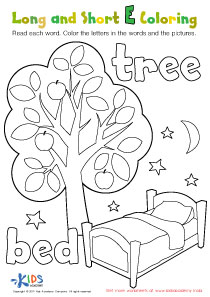
Long and Short E Worksheet
 Assign to My Students



Reading comprehension involving short vowels is crucial for children ages 4-5, as it lays the foundational skills necessary for literacy development. During this formative age, kids are not only beginning to recognize letters, but they are also starting to understand how these letters combine to form sounds and words. Short vowels are often among the first phonemes children learn, making them essential for building vocabulary.
When parents and teachers emphasize short vowels, they help children enhance their decoding skills, enabling them to read and comprehend simple texts. Proficiency in short vowel sounds aids in developing word recognition and fluency, fostering a love for reading as children progress to more complex texts.
Moreover, mastery of short vowels leads to improved spelling skills and the ability to form sentences, significantly contributing to a child's communication abilities. Engaging with short vowel sounds through playful activities and songs captures the attention of young learners, making the process enjoyable and effective.
By acknowledging the importance of reading comprehension and short vowels, parents and teachers play a crucial role in preparing children for academic success and lifelong learning. Fostering these skills early sets the stage for a brighter future in literacy and beyond.