Fine motor skills development Tracing Letters Worksheets for Ages 4-5
3 filtered results
-
From - To
Enhance your child's fine motor skills with our printable Tracing Letters Worksheets, specially designed for ages 4-5. These engaging worksheets offer little learners a fun and interactive way to practice letter formation while developing essential hand-eye coordination and dexterity. Each worksheet is tailored to promote confidence in writing, helping preschoolers master their ABCs through entertaining activities. By tracing letters, children will not only improve their fine motor skills, but also lay a strong foundation for future literacy. Discover a treasure trove of innovative resources that make learning both enjoyable and effective as your child embarks on their exciting writing journey!
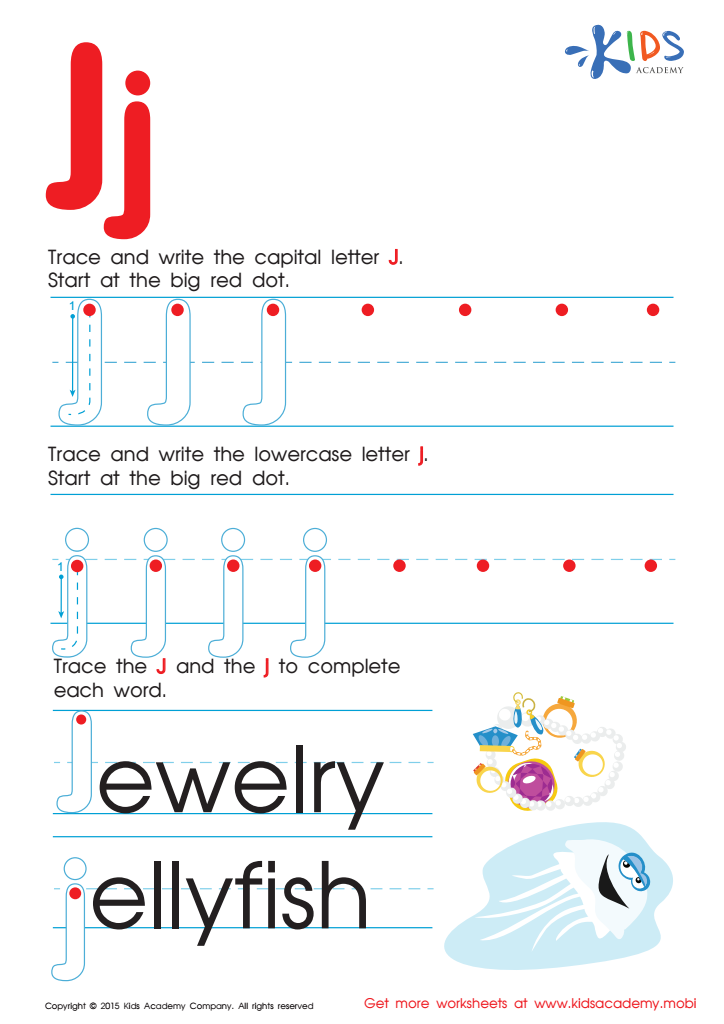
Letter J Tracing Page
 Assign to My Students
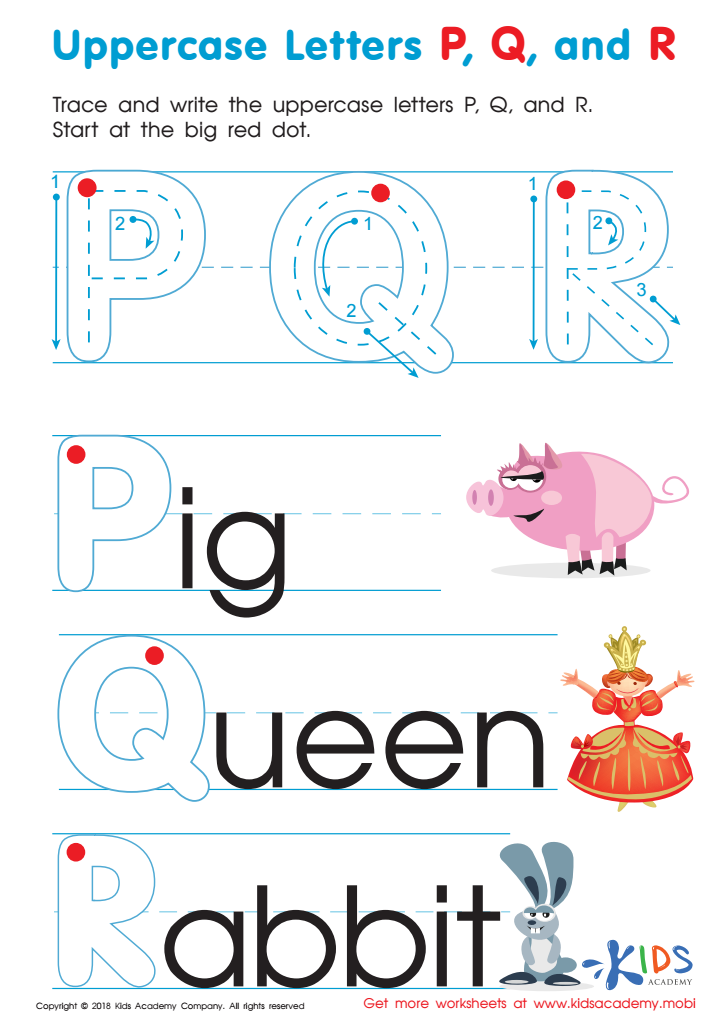
Uppercase Letters P, Q, and R Worksheet
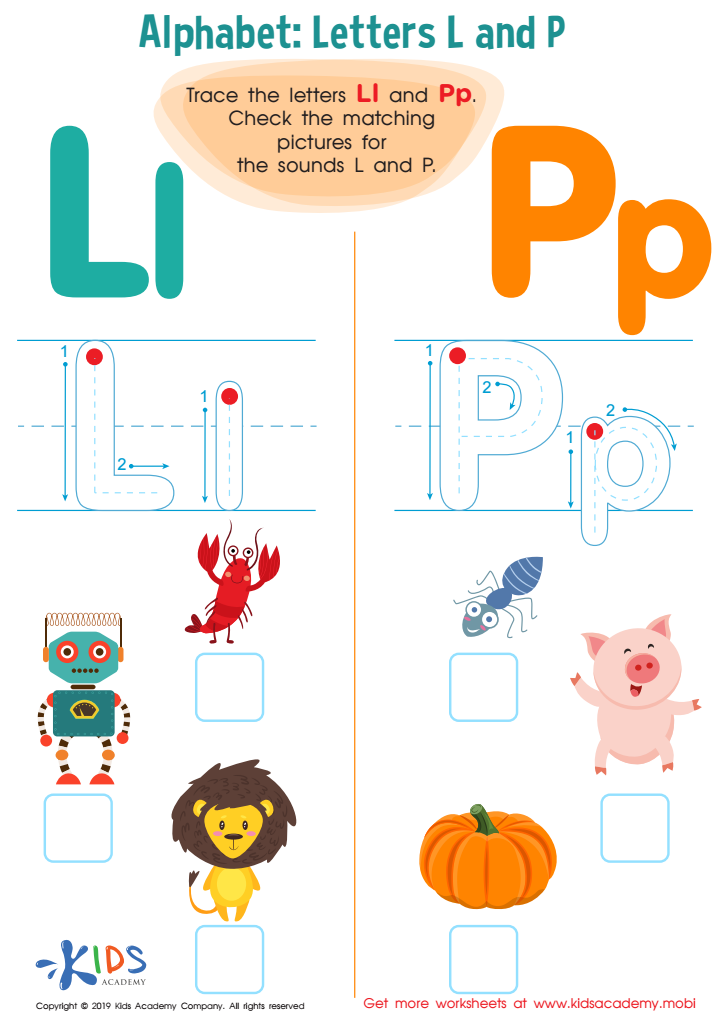
Letter L and P Tracing Worksheet







Fine motor skills are crucial for young children's overall development, particularly for ages 4-5, as these skills form the foundation for many essential activities that they will encounter throughout their lives. Tracing letters is an excellent practice to help nurture these capabilities.
First, it enhances hand-eye coordination, which is vital for a variety of daily tasks, from writing and cutting with scissors to dressing and personal grooming. By focusing on tracing letters, children learn to control their hand movements with precision, improving their dexterity.
Moreover, tracing letters promotes literacy development. As children become more familiar with the shapes and forms of letters, they start to recognize them in words, laying the groundwork for reading and writing skills in the future.
Additionally, the process of tracing helps build concentration and focus, skills essential for academic success. It provides an engaging and fun way for children to practice these skills, making learning enjoyable.
Finally, enhancing fine motor skills through tracing fosters a sense of achievement and confidence in children. Parents and teachers who encourage this development support not only academic readiness but also overall dexterity, which will benefit children in various real-world situations.








