Letter recognition Tracing Letters Worksheets for Ages 4-5 - Page 2
26 filtered results
-
From - To
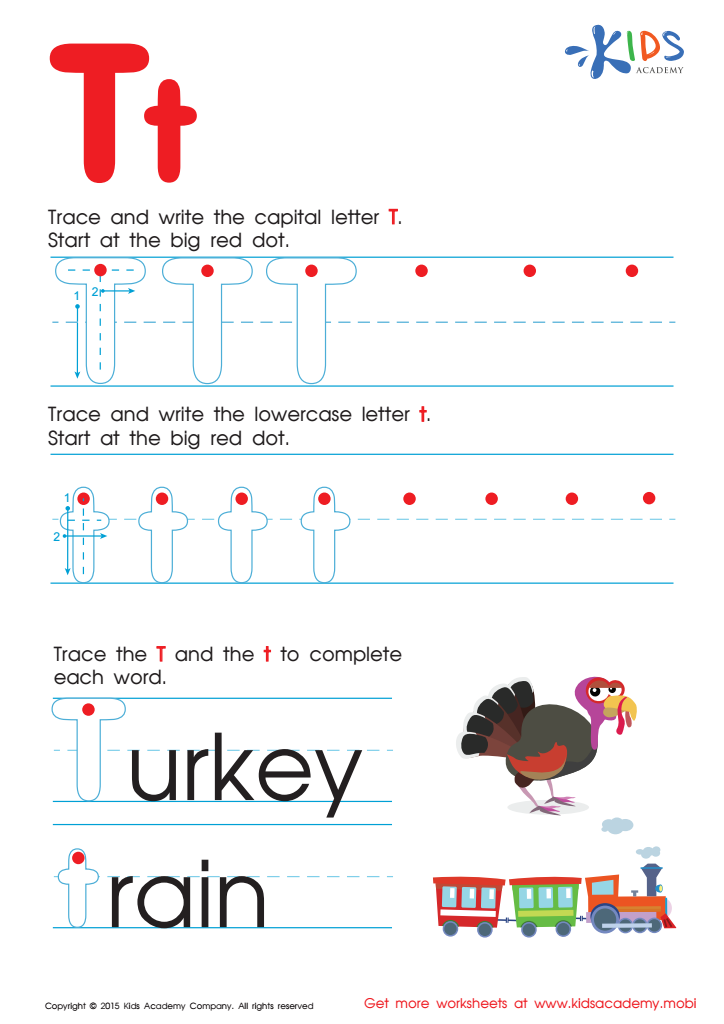
Letter T Tracing Page
 Assign to My Students

Letter D Tracing Page








Letter recognition and tracing are vital early literacy skills for children aged 4-5. This stage is crucial as it lays the foundation for reading and writing competency. During these formative years, children learn to identify letters, which helps them understand that letters are symbols representing sounds, a key concept in phonics.
When parents and teachers focus on letter recognition, they boost children's confidence in recognizing letters in various contexts, such as in books, signs, and digital media. Tracing letters reinforces fine motor skills as children practice hand-eye coordination and develop the muscle memory needed for writing. This skill not only impacts their handwriting but also contributes to their overall academic success in years to come.
Furthermore, engaging with letter tracing can be a fun and interactive way to foster a love for learning. Parents can encourage this through games, activities, and crafts at home. Teachers can incorporate tracing into classroom routines to make learning engaging and collaborative. Ultimately, by prioritizing letter recognition and tracing, educators and parents equip children with essential tools that enhance their literacy skills, encouraging a lifelong love for reading and writing. Therefore, investing time in this area can yield incredible benefits for children's educational journeys.








