Lowercase letter writing Tracing Letters Worksheets for Ages 4-5
3 filtered results
-
From - To
Help your preschooler master lowercase handwriting with our Lowercase Letter Writing Tracing Worksheets for Ages 4-5. These hands-on printables provide engaging, traceable letters perfectly tailored for little learners. Designed to enhance fine motor skills and letter recognition, our worksheets feature fun, themed exercises and playful illustrations that motivate children to practice and succeed. Ideal for home or classroom use, these educational resources foster early literacy skills in a fun and interactive way. Visit our site to download and print a variety of worksheets, and watch your child's confidence and writing abilities grow!
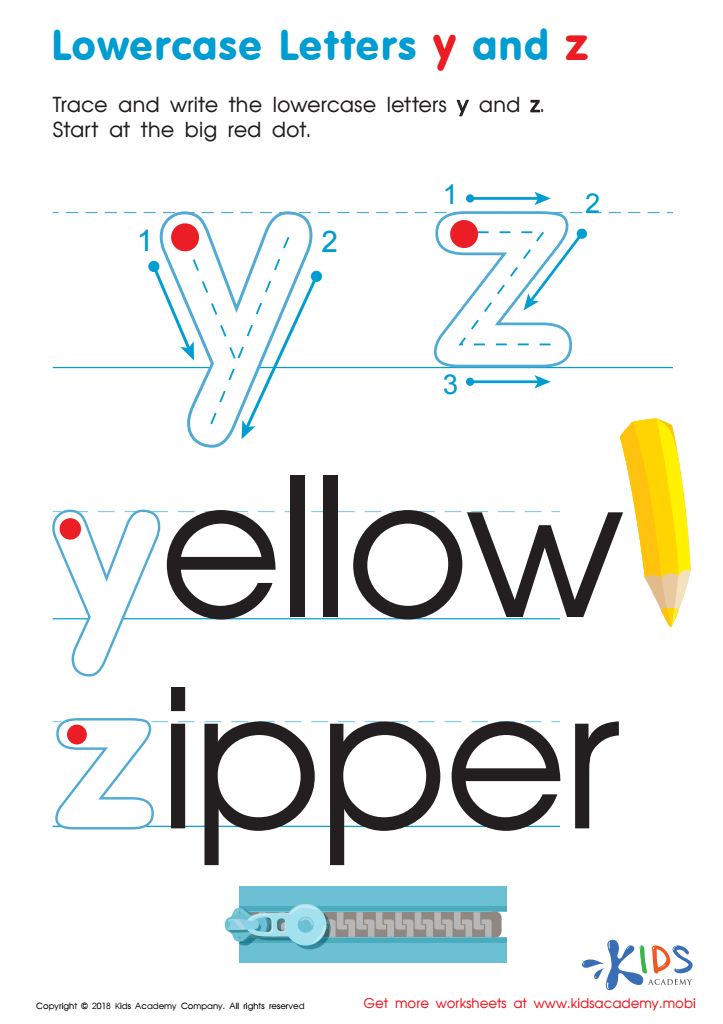
Lowercase Letters y z Worksheet
 Assign to My Students

Lowercase Letters j k l Worksheet

Lowercase Letters m n o Worksheet







Parents and teachers should pay special attention to lowercase letter writing and tracing activities for children ages 4-5 because this foundational skill sets the stage for future academic success. At this critical developmental stage, young children are honing their fine motor skills, which are essential for writing legibly and efficiently. Tracing letters helps them develop the necessary hand-eye coordination, dexterity, and control.
Writing in lowercase is particularly important because most of the text they will encounter in books, magazines, and digital content predominantly features lowercase letters. Early familiarity with these shapes ensures kids can recognize and write them comfortably, enhancing their reading fluency. Tracing also reinforces letter recognition by helping children learn the distinctive shapes and sequences of each character, which is crucial for reading readiness and phonics.
Moreover, these tracing activities build persistence, attention to detail, and fine motor precision, which are beneficial skills in other areas like drawing, playing musical instruments, and daily self-care tasks. Lastly, early success in writing fosters confidence and a positive attitude towards learning, encouraging children to engage more enthusiastically in other educational activities. Therefore, giving children ample opportunities to practice lowercase tracing around ages 4-5 is a meaningful step in their overall cognitive and academic development.








