Visual discrimination skills Upper & Lowercase Letters Worksheets for Ages 4-5
4 filtered results
-
From - To
Enhance your child's visual discrimination skills with our engaging Upper & Lowercase Letters Worksheets, designed specifically for ages 4-5. These fun and interactive worksheets help young learners identify and differentiate between uppercase and lowercase letters, crucial for early literacy development. As children complete each activity, they’ll improve their attention to detail and sharpen their recognition abilities. Our thoughtfully crafted materials support a vibrant learning experience while fostering essential skills that lay the foundation for reading and writing. Promote confidence and success in your child's educational journey with these essential resources that make learning enjoyable and effective! Explore our collection today!

Find Uppercase Letters A, B, and C Worksheet
 Assign to My Students



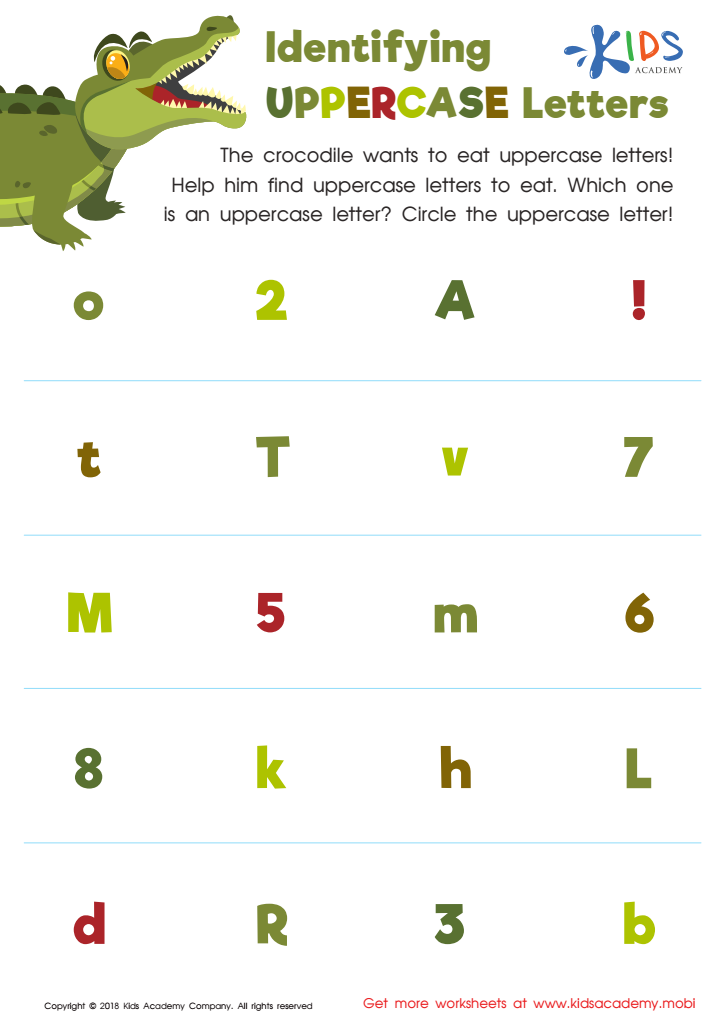
Identifying Uppercase Letters Worksheet
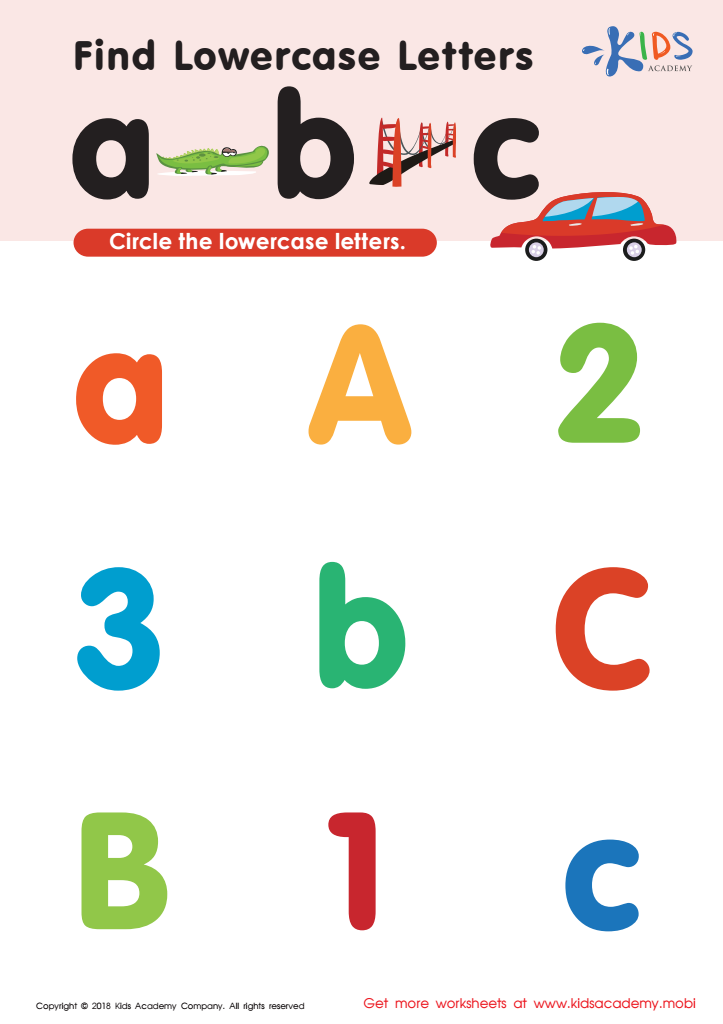
Find lowercase letters a b c Worksheet

Find Lowercase Letters v w x Worksheet






Visual discrimination skills involve the ability to notice and interpret differences and similarities in visual elements. For children aged 4-5, these skills are crucial, particularly when it comes to recognizing and differentiating between upper and lowercase letters. As they begin their reading and writing journeys, the ability to distinguish between similar-looking letters, such as b and d, or p and q, is foundational.
When parents and teachers focus on developing these skills, they lay the groundwork for successful literacy acquisition. Children who struggle with visual discrimination may encounter difficulties in reading, spelling, and writing, often leading to frustration and a lack of confidence. Enhanced visual discrimination can lead to improved word recognition, fluency, and overall academic performance.
Moreover, actively engaging in activities that cultivate these skills fosters critical thinking and problem-solving abilities, essential components of early childhood development. By integrating fun and interactive games, such as letter matching exercises and puzzles, parents and teachers can reinforce visual discrimination while promoting a love for learning. This foundational skill not only aids literacy but also strengthens the child's cognitive abilities, ultimately benefiting various aspects of their educational journey. Supporting visual discrimination skills is essential for a well-rounded and successful early learning experience.







