Word identification Vowels Worksheets for Ages 4-5
3 filtered results
-
From - To
Discover our engaging Word Identification Vowels Worksheets designed for kids aged 4-5! These interactive resources support early literacy skills by helping young learners recognize and identify vowel sounds within words. Through fun activities and colorful illustrations, children will enhance their understanding of vowels, boosting their reading and phonics skills. Perfect for at-home learning or classroom use, these worksheets cultivate curiosity and make learning enjoyable. Encourage your child's language development with our thoughtfully crafted exercises that promote early word recognition and strengthen their foundation for future reading success. Start their reading journey today with these essential vocal identification tools!
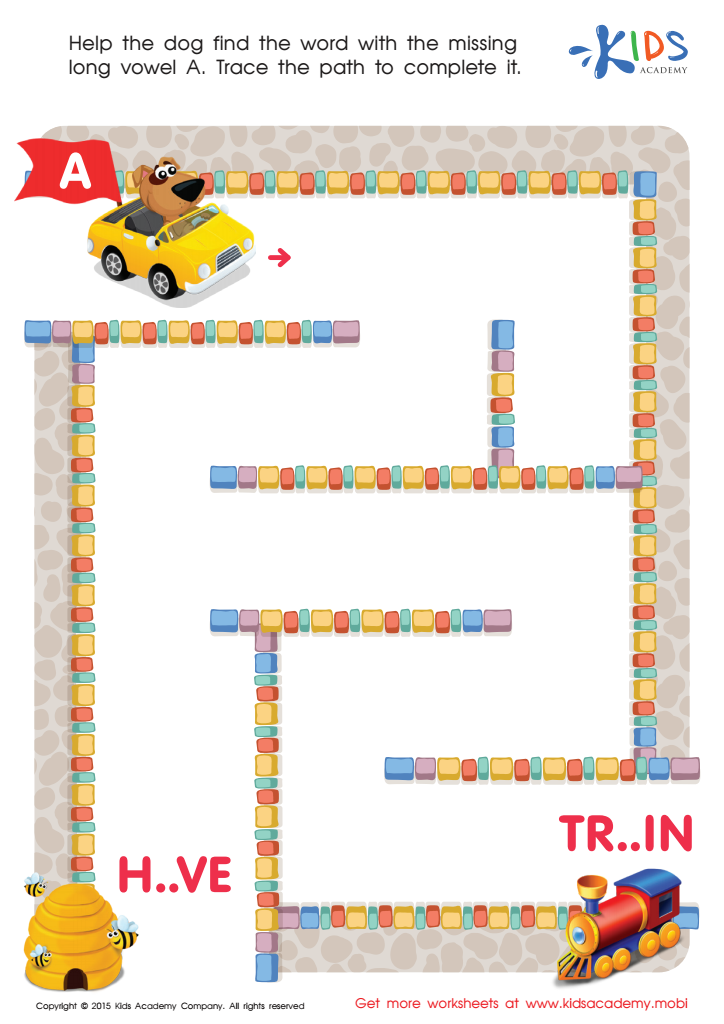
Long Vowel Sound A Worksheet
 Assign to My Students
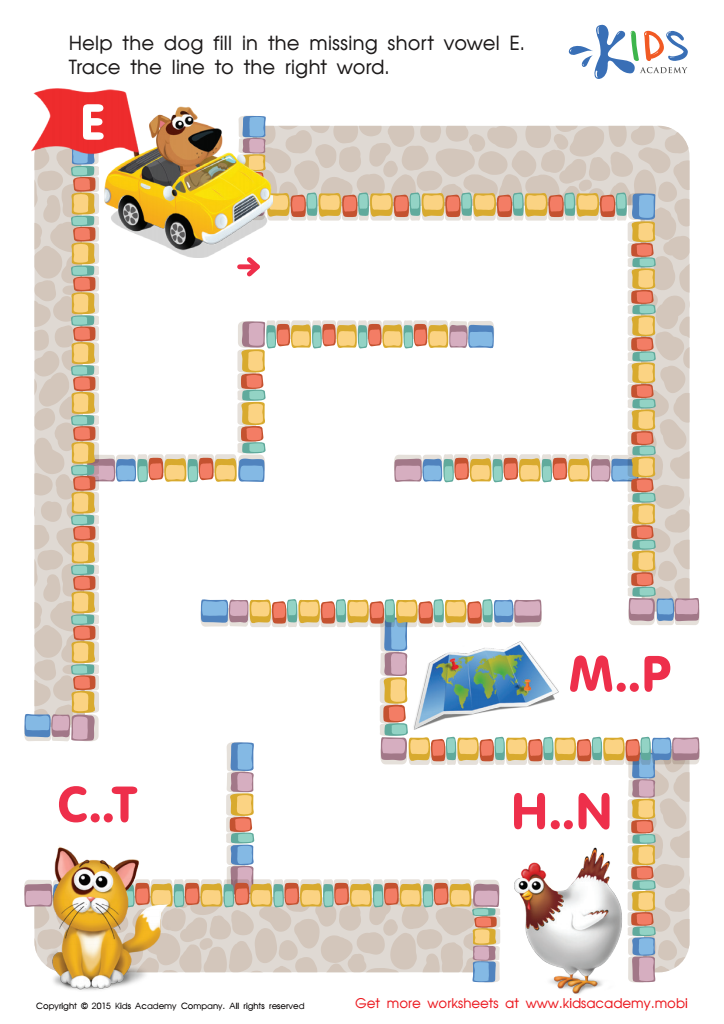
Short Vowel Sound E Worksheet
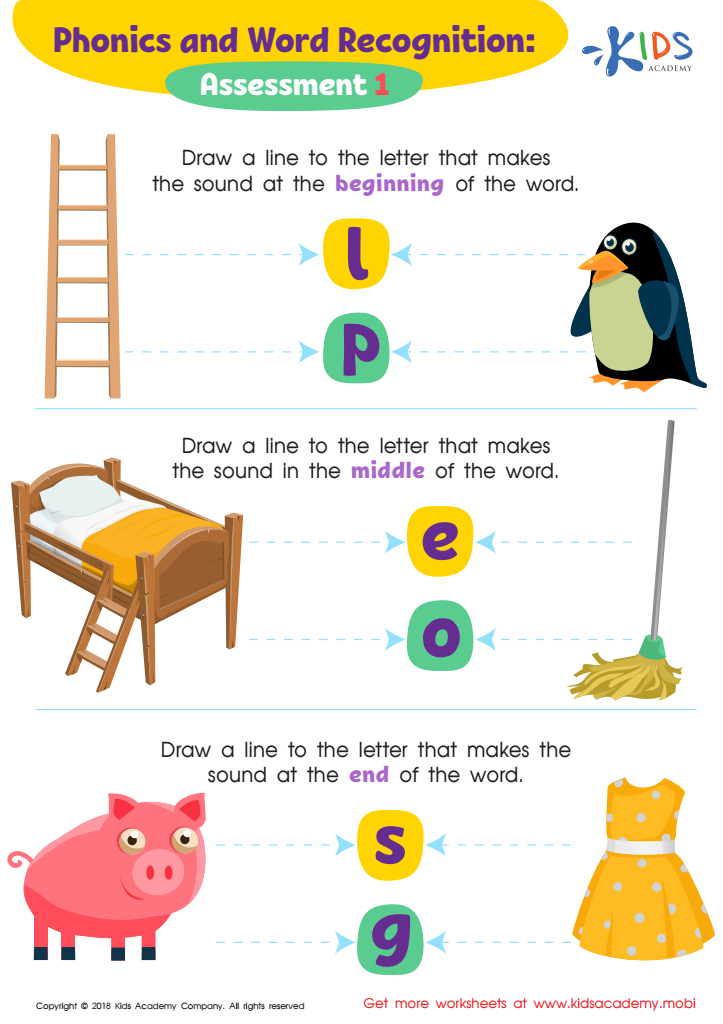
Phonics and Word Recognition: Assessment 1 ELA Worksheet





Word identification, particularly focusing on vowels, is a crucial literacy skill for children ages 4-5. At this developmental stage, recognizing and understanding vowels lays the foundational groundwork for reading fluency and comprehension, enabling young learners to decode words accurately.
Firstly, vowels are key components in almost every word, making their mastery essential for effective reading. Kids who learn to identify vowels early can formulate sounds that guide them toward reading simple words, allowing for greater confidence and engagement with texts.
Additionally, focusing on vowels enhances phonemic awareness—an understanding of how sounds correspond to letters. This skill is vital for developing spelling abilities and supporting overall literacy progression. When children can identify vowels, it contributes to their ability to articulate sounds clearly and develop language skills, which are important for communication.
Moreover, learning vowels helps in building a love for reading, as it enables children to tackle books independently. Teachers and parents should prioritize vowel recognition as it paves the pathway to stronger literacy skills, positively impacting academic success and igniting a lifelong passion for reading and learning in their children. Investing time in this aspect of early education is beneficial not just for immediate reading practice but also for future academic growth.







