Letter Tracing Practice English for Beginners Worksheets for Ages 4-5
3 filtered results
-
From - To
Discover our Letter Tracing Practice English for Beginners Worksheets, crafted specifically for children aged 4-5. These engaging worksheets help young learners master the basics of English by tracing letters, enhancing fine motor skills, and fostering early writing confidence. Our age-appropriate exercises are designed to make learning fun and interactive, ensuring a solid foundation in letter recognition and handwriting. Perfect for parents and educators aiming to nurture early literacy in kids, these printable worksheets provide structured yet enjoyable practice tailored to young, curious minds. Set your child on a successful path with our expertly designed tracing activities!
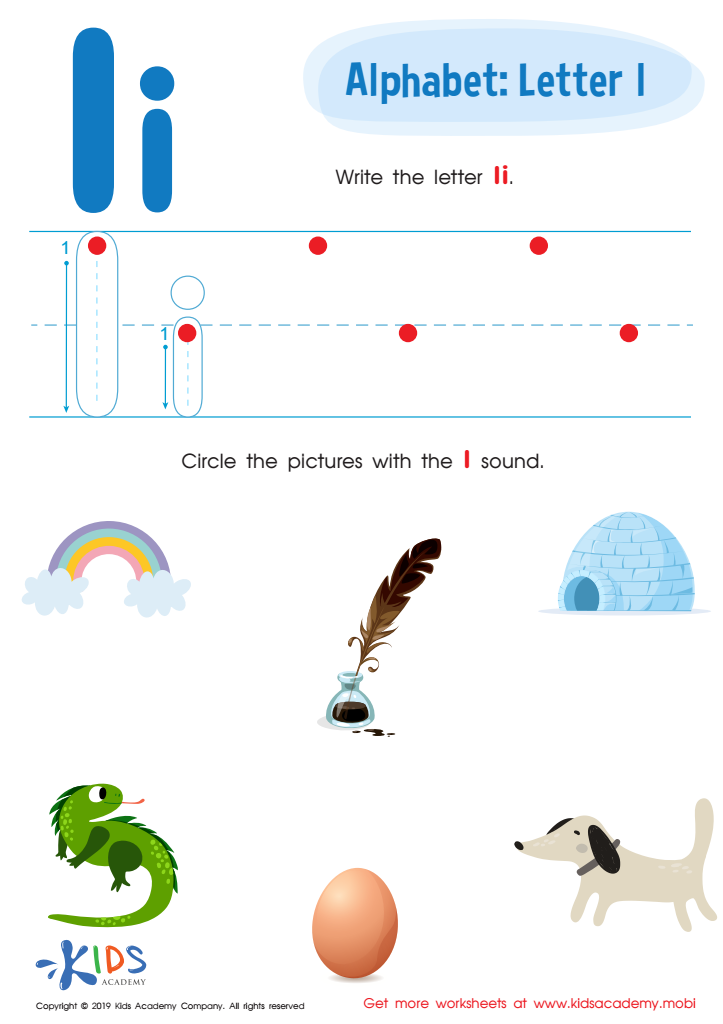
Letter I Tracing Worksheet
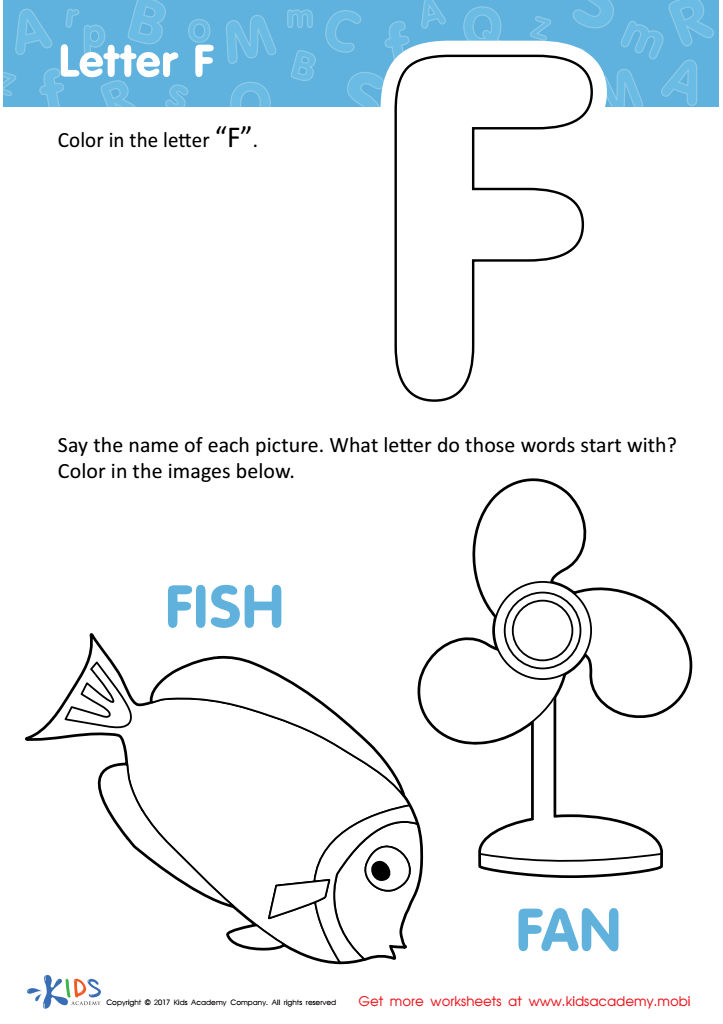
Letter F Coloring Sheet
 Assign to My Students
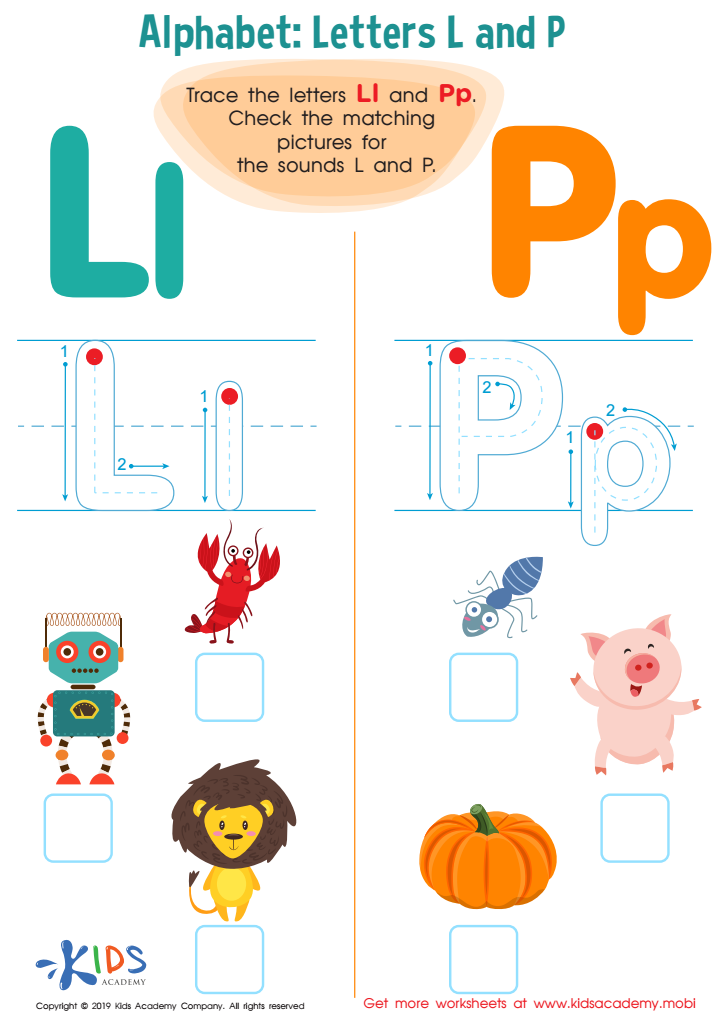
Letter L and P Tracing Worksheet





Letter tracing practice is foundational in helping young children, especially those aged 4-5, develop crucial early literacy skills. At this age, children are at a critical developmental stage where they are just beginning to understand the relationship between written letters and sounds. By engaging in letter tracing activities, they can physically practice the shapes and forms of the alphabet, which helps in solidifying their recognition and memorization of each letter.
For parents and teachers, it is important to encourage this practice because it supports several aspects of a child’s growth. First, it enhances fine motor skills necessary for writing. Holding a pencil and controlling its movements to follow letter patterns can strengthen hand muscles and improve coordination. Second, regular practice with letter tracing enhances cognitive development by reinforcing the connection between visual and physical learning. This multisensory approach is essential for young brains to absorb and retain new information.
Furthermore, early exposure to letter tracing can lay a strong foundation for future reading and writing skills. It instills confidence in children as they begin to decode and construct words, allowing for a smoother transition to more complex literacy tasks. Encouraging letter tracing ensures that children are equipped with the basic skills that underpin all subsequent learning, fostering a lifelong love for reading and writing.