
Addition up to 5 Worksheets for Ages 4-5
4 filtered results
Difficulty Level
Grade
Age
-
From - To
Subject
Activity
Standards
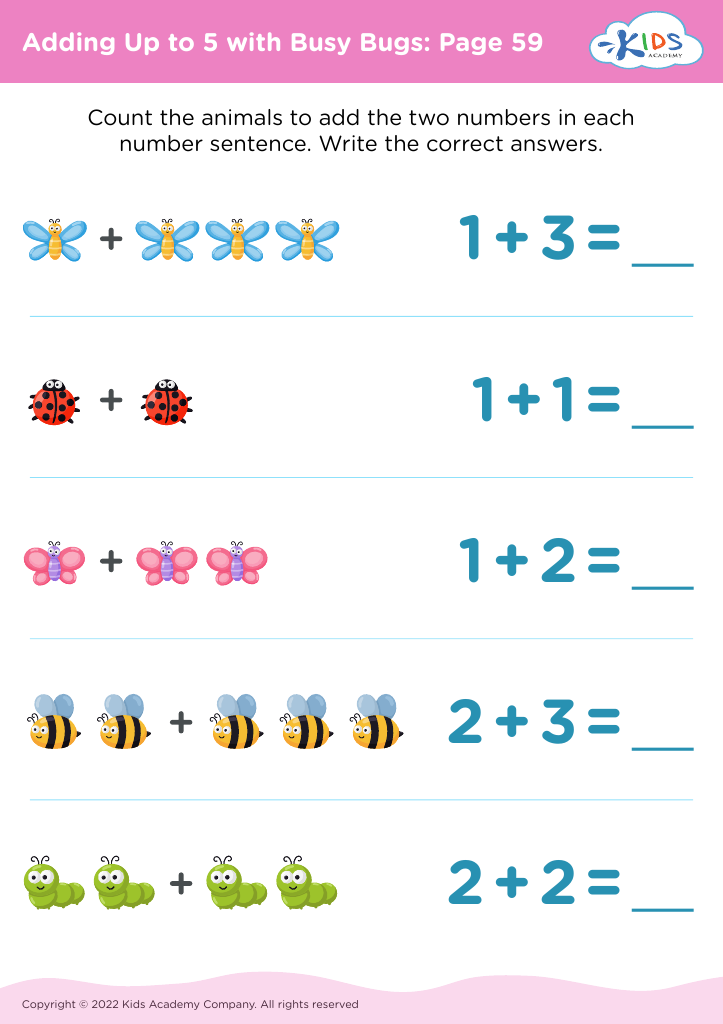
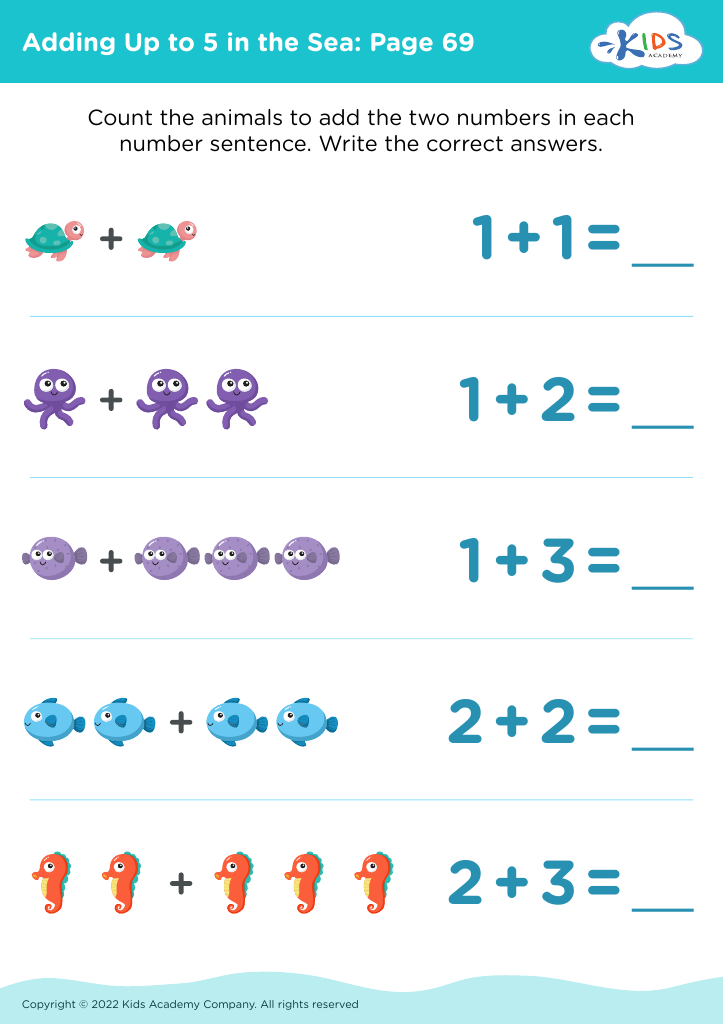
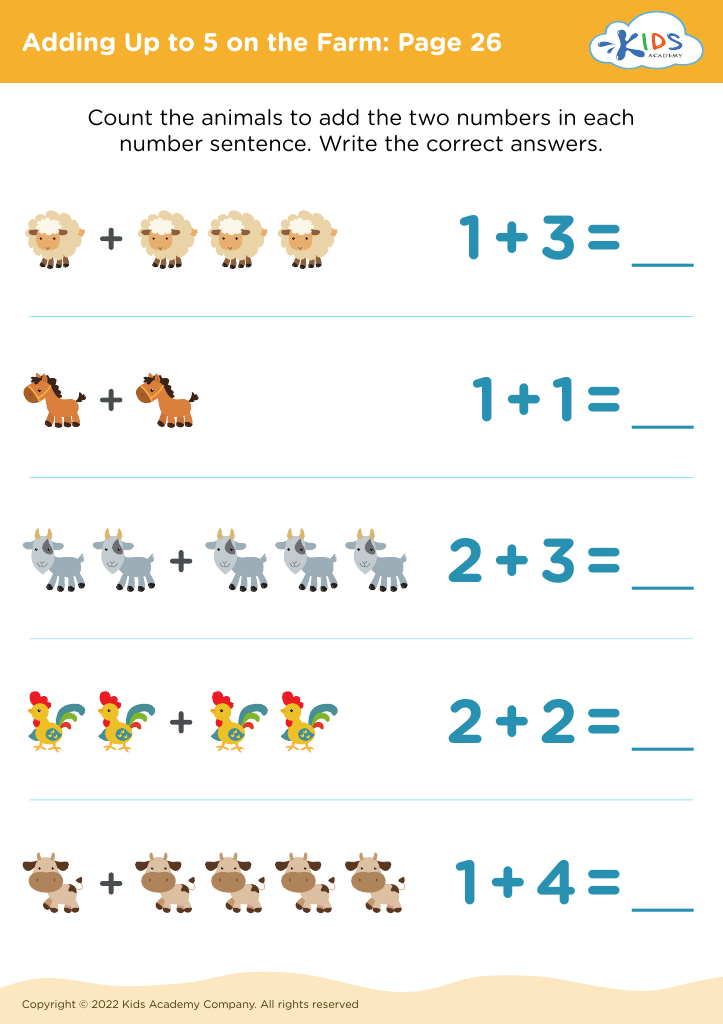
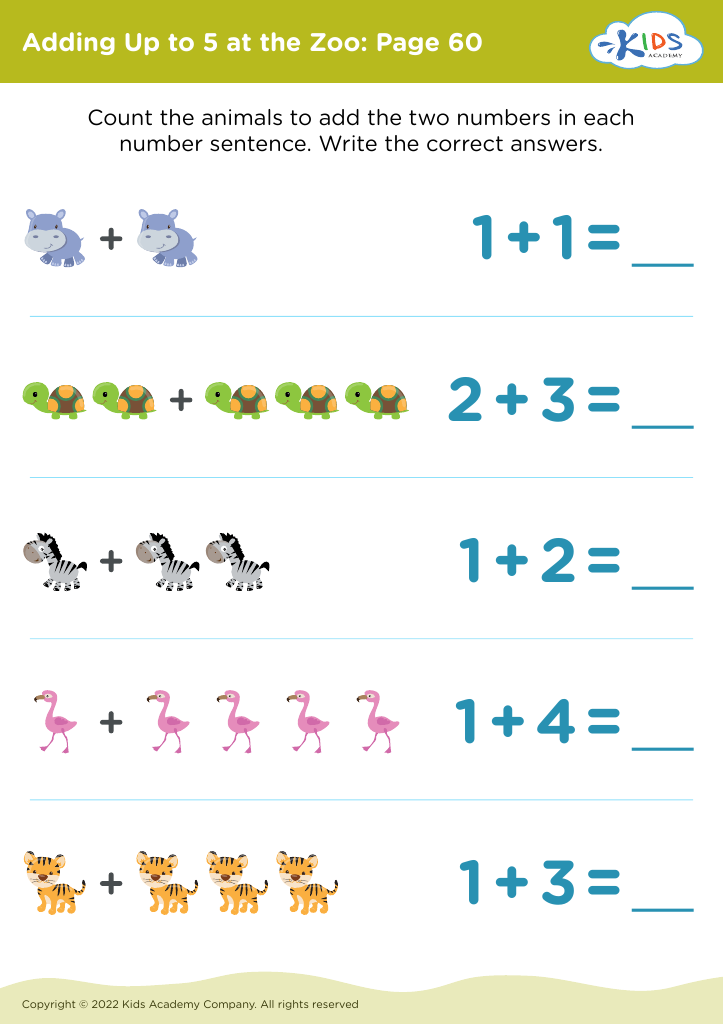
Welcome to our collection of Addition up to 5 Worksheets designed specifically for children ages 4-5! These engaging and interactive worksheets provide the perfect introduction to basic addition concepts, helping young learners build a solid foundation in early math skills. With colorful illustrations and fun activities, kids will enjoy practicing addition through simple problems that reinforce number recognition and counting. Ideal for both classroom use and at-home learning, these worksheets support early childhood education by making math enjoyable and accessible. Download and print your free worksheets today to support your child's mathematical journey and encourage a love for learning!
Favorites
With answer key
Interactive
Join Kids Academy for Free
Who is primarily going to use this learning content?







Parents and teachers should care about teaching addition up to 5 to children ages 4-5 for several important reasons. First, this foundational skill promotes early numeracy, which is crucial for mathematical confidence and competency. By mastering basic addition, children develop a strong understanding of numbers and how they relate to one another, setting the stage for more advanced math concepts in future learning.
Additionally, early exposure to addition helps enhance critical thinking and problem-solving skills. When children practice adding small numbers, they learn to recognize patterns and make connections, which are essential cognitive skills in all areas of learning. Furthermore, engaging in fun and interactive math activities promotes social skills, as children often collaborate and communicate with their peers during learning exercises.
Incorporating addition into daily routines, such as counting toys or using snacks as counting tools, makes math relatable and enjoyable. This positive experience fosters a love for learning and reduces math anxiety. By prioritizing basic addition skills, parents and teachers are not only equipping children with essential academic tools but also nurturing a lifelong confidence in their abilities to conquer math-related challenges later on.








