Animal recognition Worksheets for Ages 4-5 - Page 5
116 filtered results
-
From - To
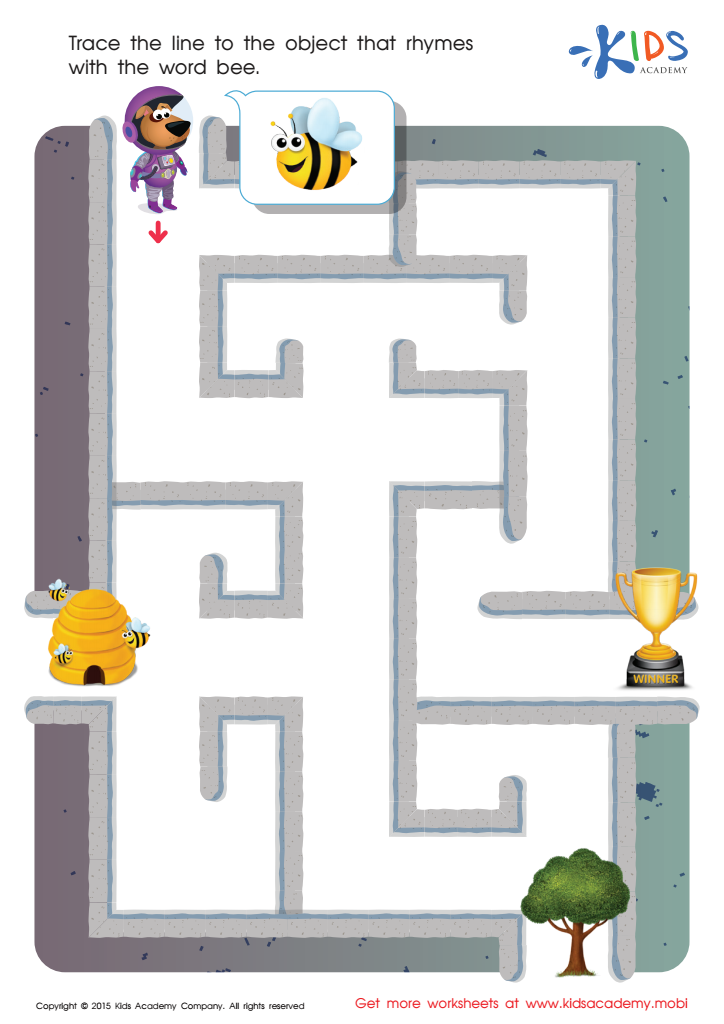
Bee Rhyming Words Worksheet
 Assign to My Students
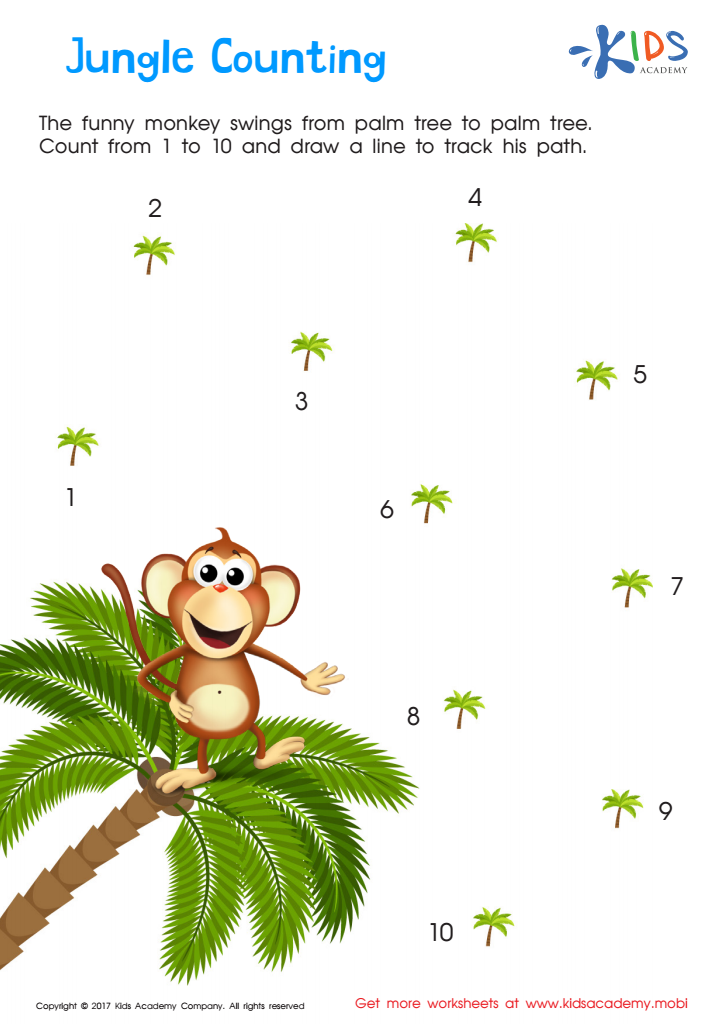
Jungle Counting Connect Dots Worksheet
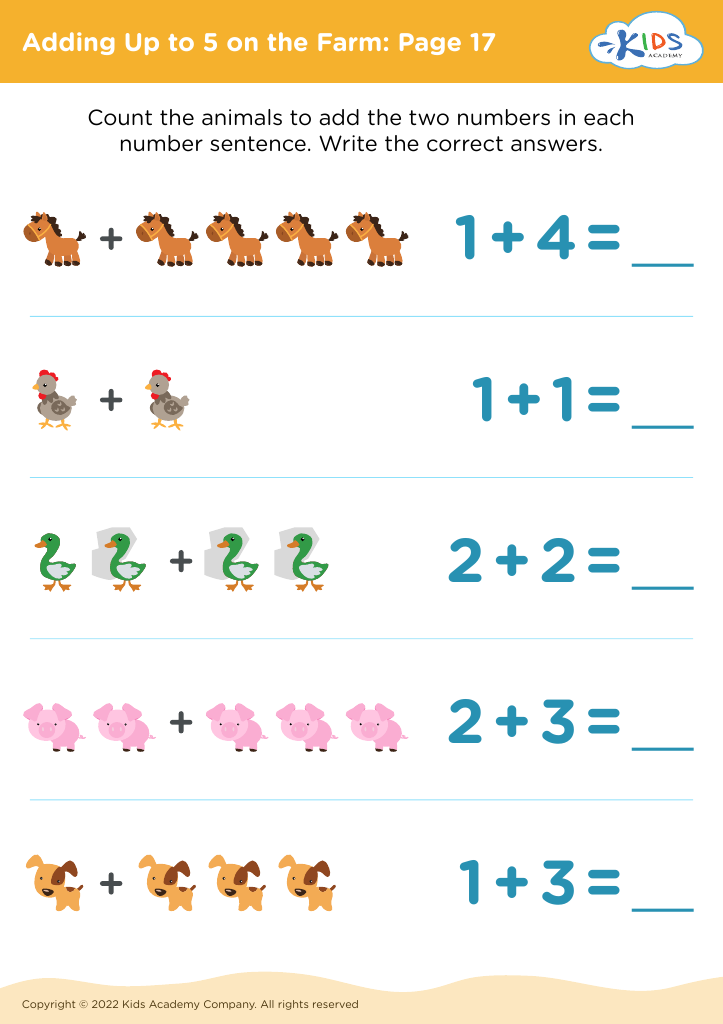
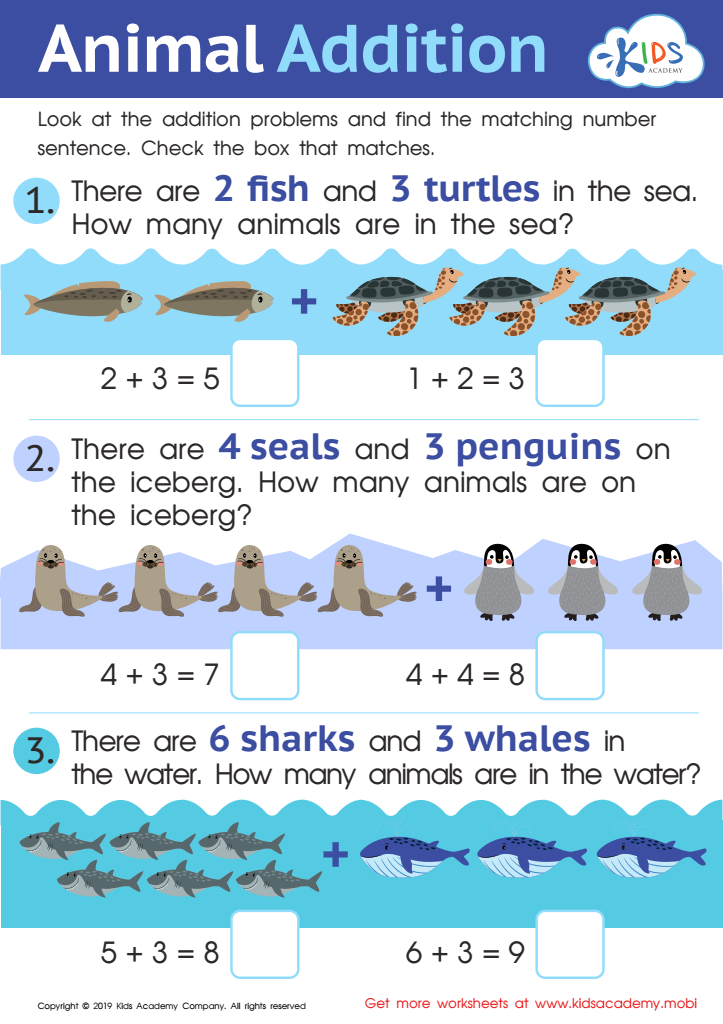
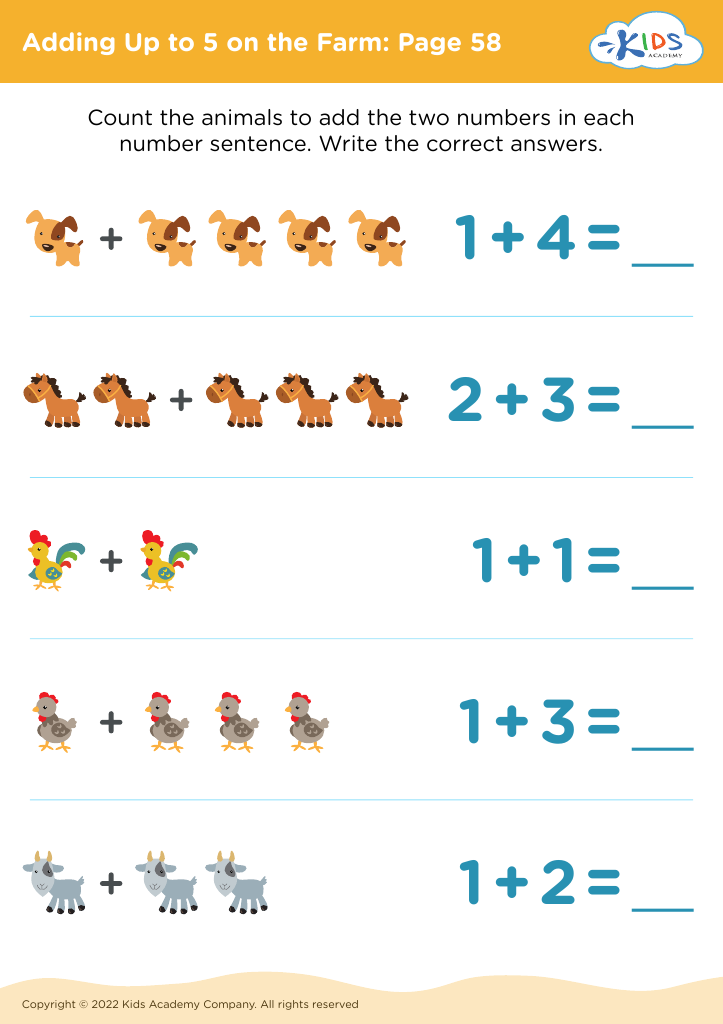
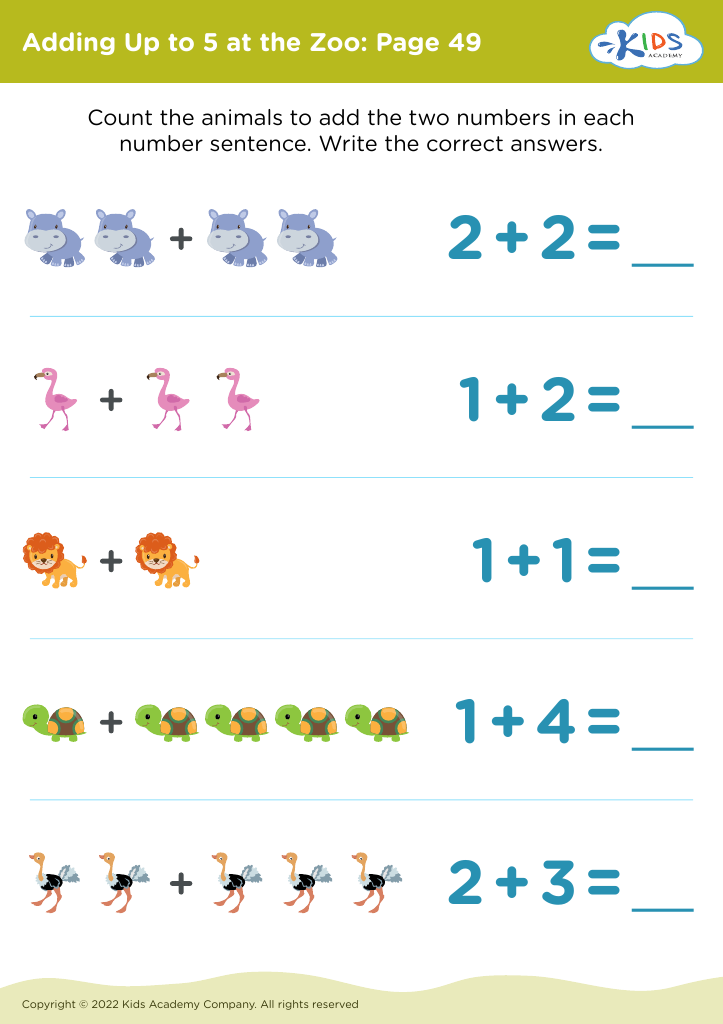
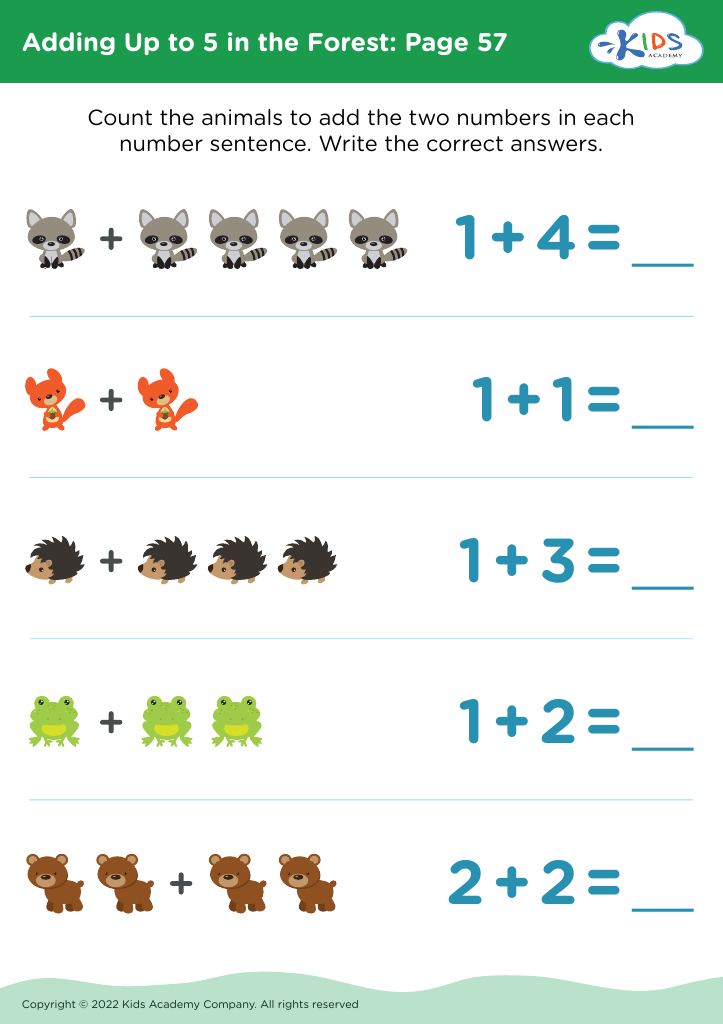
Animal Addition Worksheet
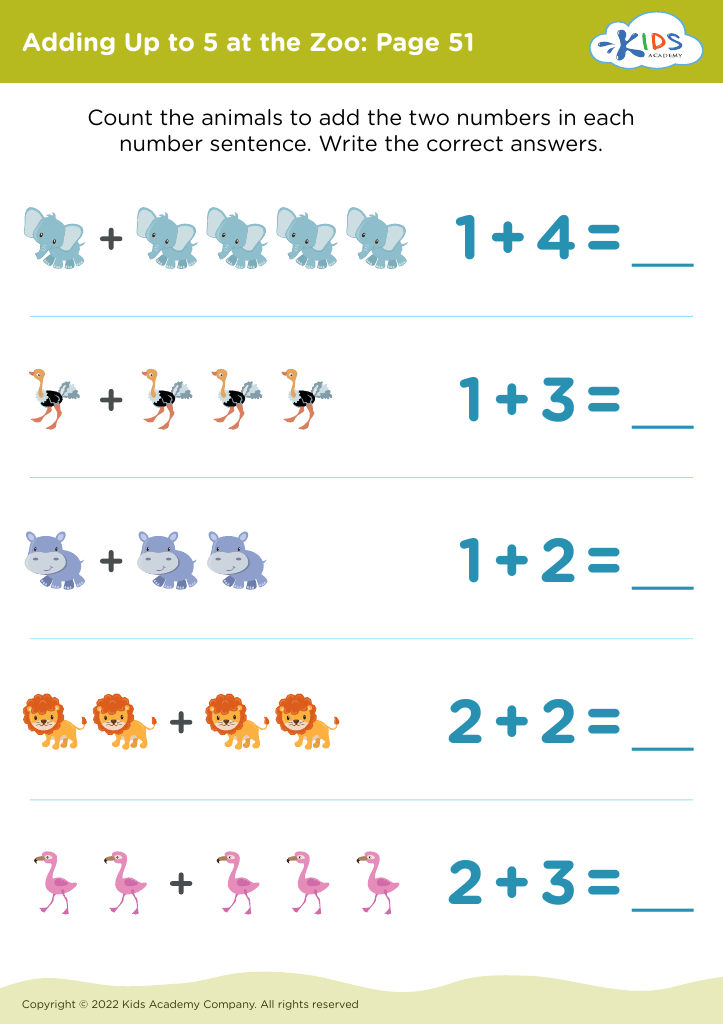
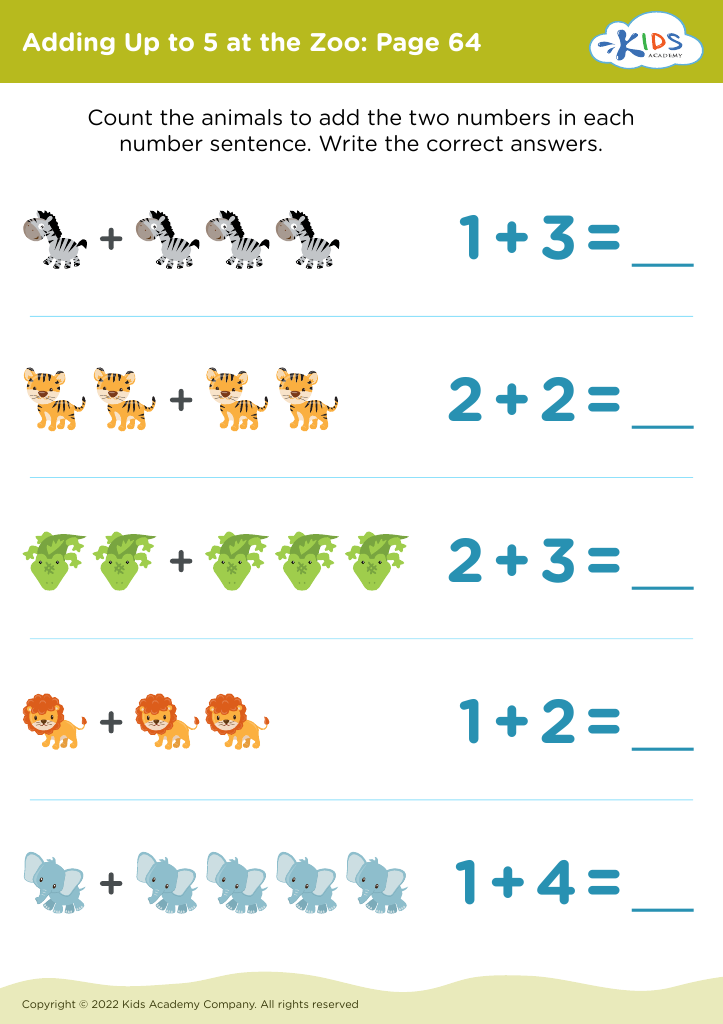
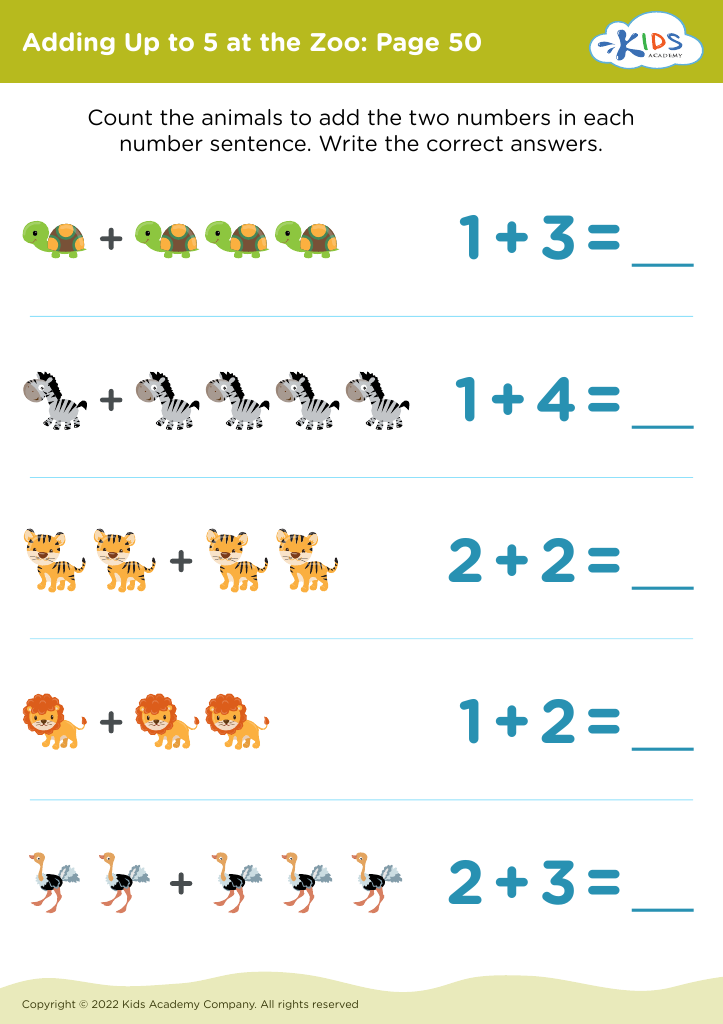
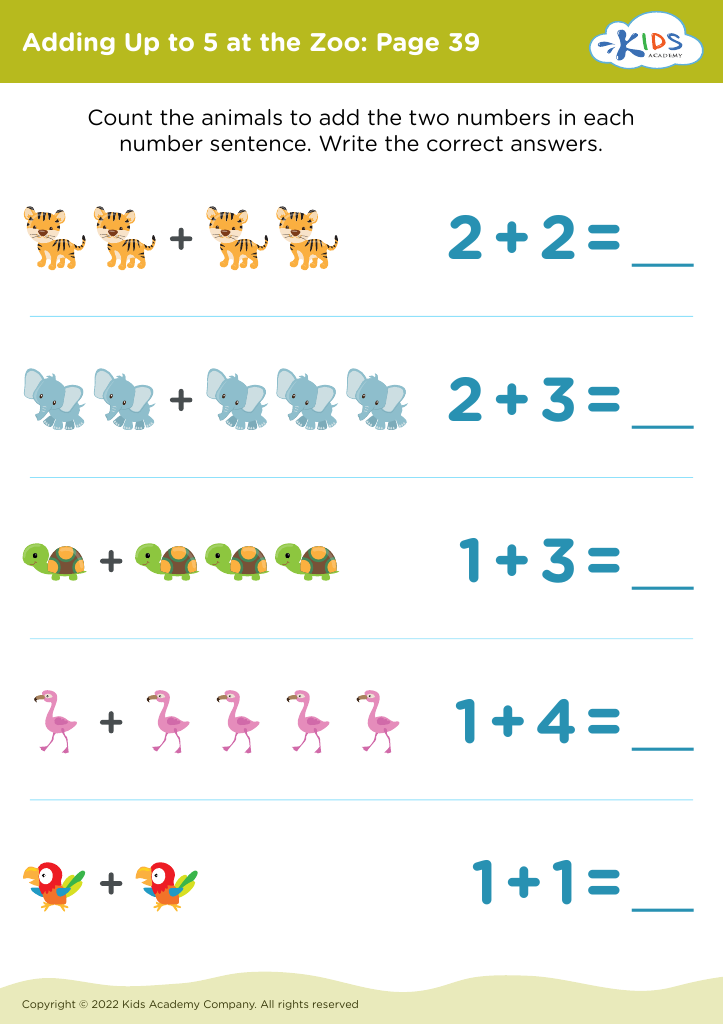
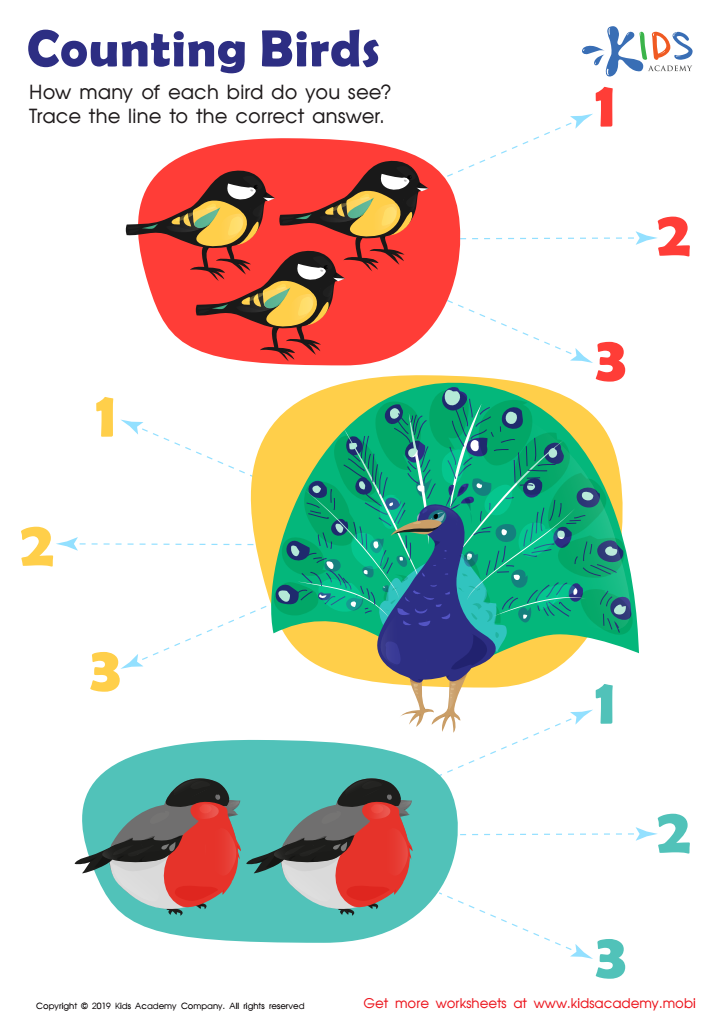
Counting Birds Worksheet
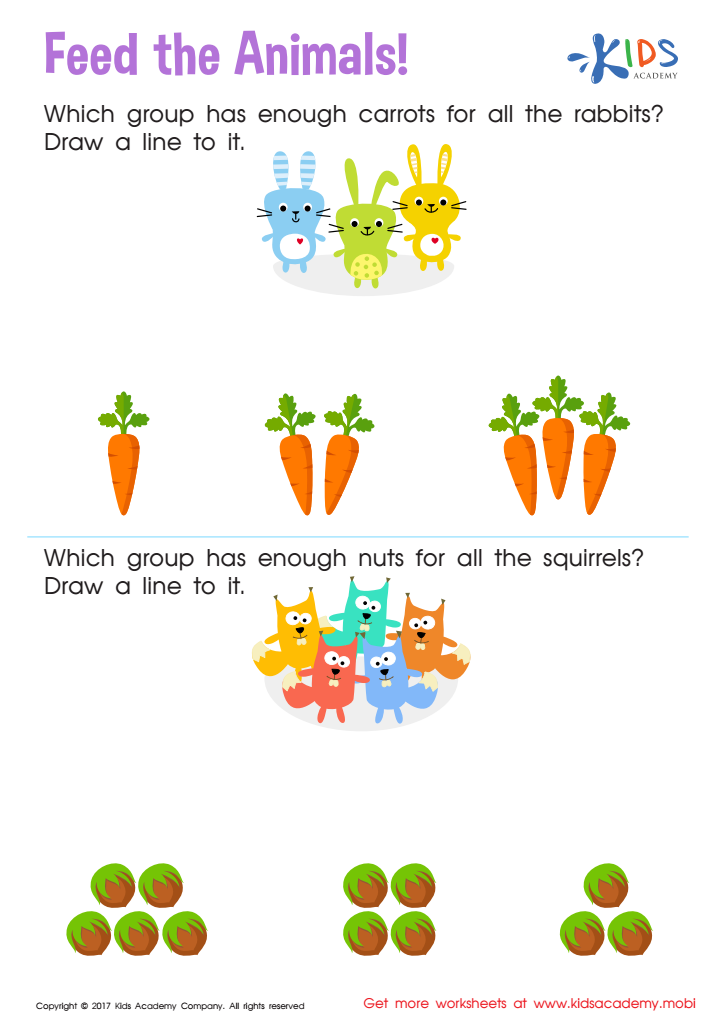
Count and Match: Feed the Animals Worksheet
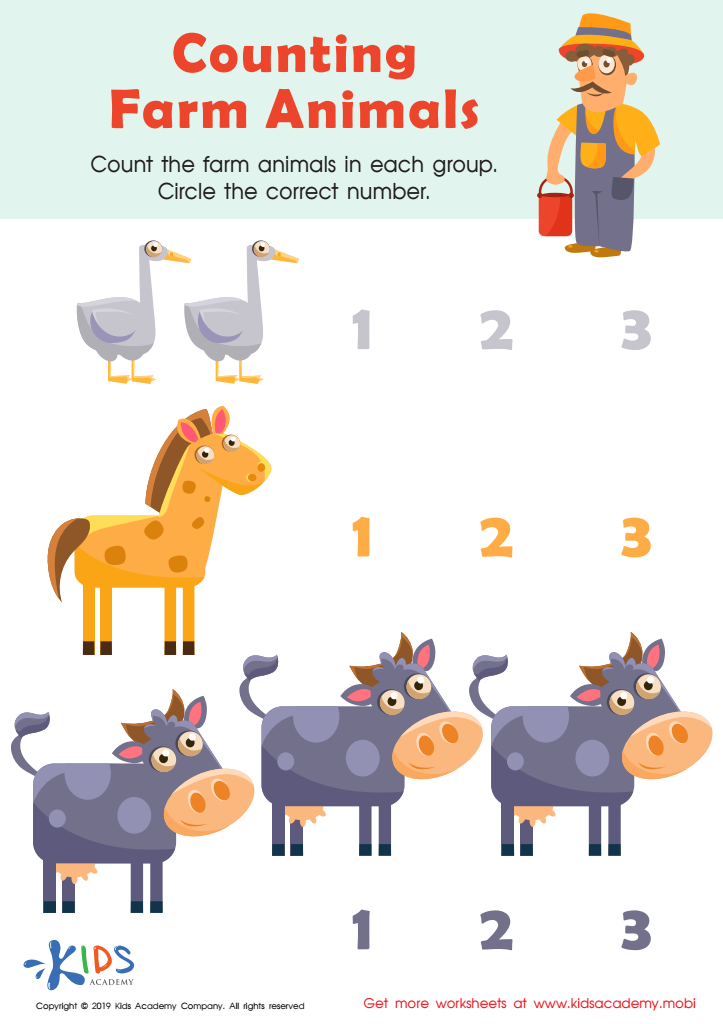
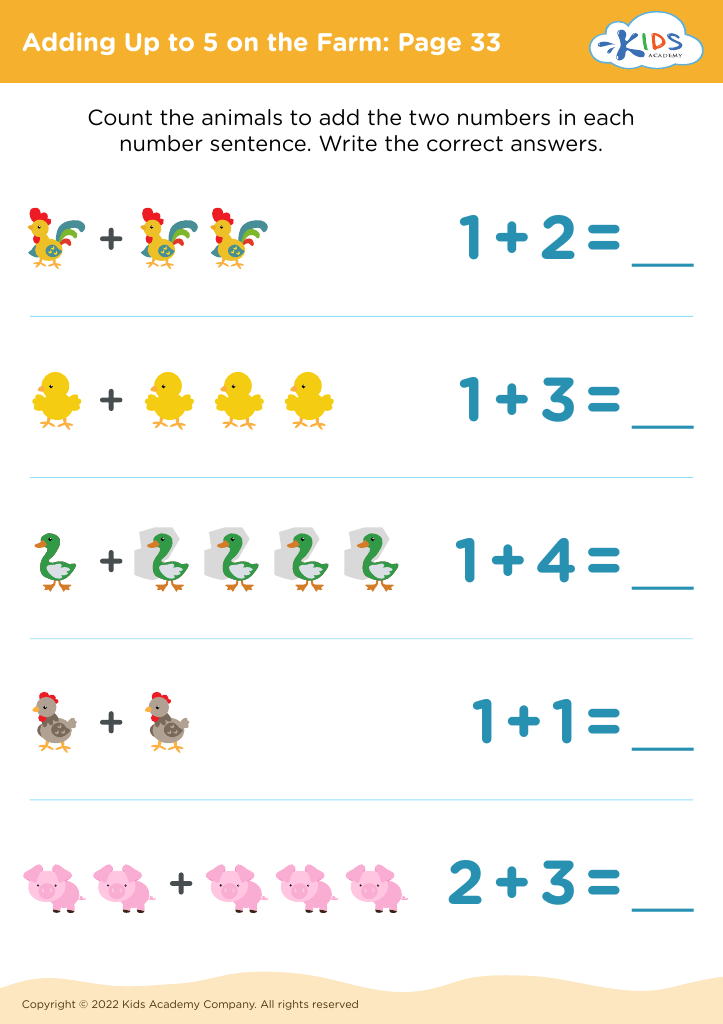
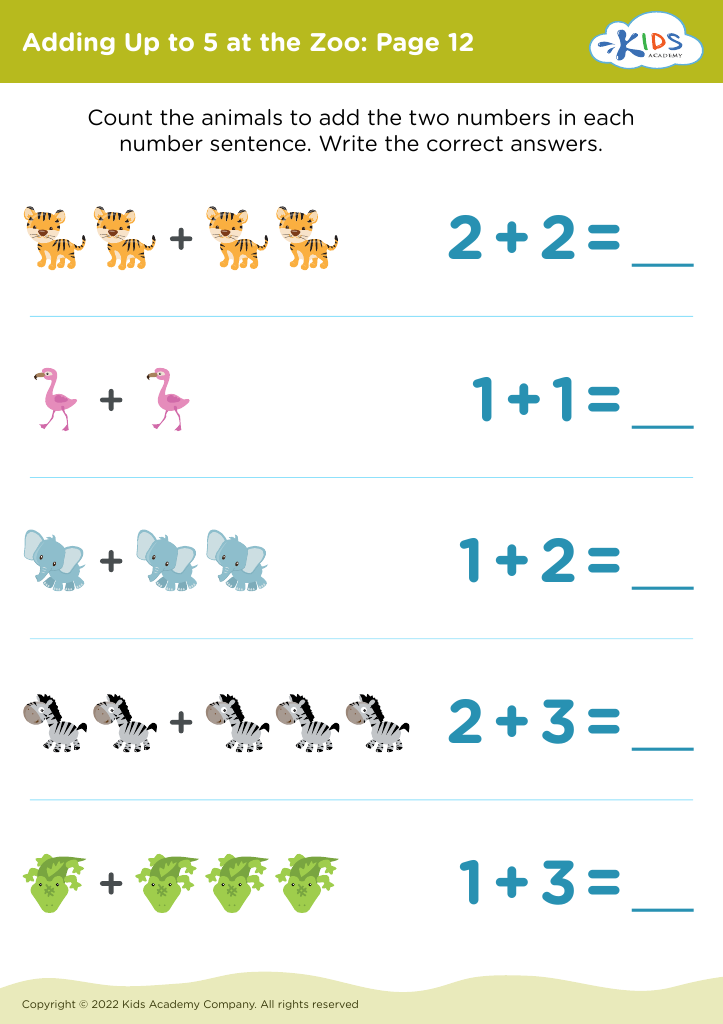
Counting Farm Animals Worksheet








Animal recognition is a crucial aspect of early childhood education that significantly benefits the development of children aged 4-5. First, recognizing animals ignites curiosity and fosters a love for nature, leading to enhanced observational skills. As children identify different species, they learn about diversity in the animal kingdom, promoting inclusivity and appreciation for all living beings.
Moreover, animal recognition can bolster vocabulary and language development. When teachers and parents introduce animals through books, games, or real-life experiences, children learn the corresponding names, characteristics, and sounds, enriching their language skills.
Additionally, understanding animals contributes to critical thinking and cognitive skills. Children begin to form connections between animals and their habitats, diets, and behaviors, nurturing a basic understanding of ecosystems.
Socially, recognizing animals can spur interest in sharing and collaborative play. Group activities centered around animals, like storytelling or animal-themed crafts, encourage teamwork and communication among peers.
Finally, animal recognition allows for lessons on empathy and care for living creatures, instilling values that promote respect for all forms of life. Overall, fostering animal recognition in young children not only enhances their cognitive, social, and emotional skills but also sets the foundation for responsible citizenship.








