Comparing lengths Worksheets for Ages 4-5
3 filtered results
-
From - To
Welcome to our "Comparing Lengths Worksheets" designed specifically for children aged 4-5! These engaging worksheets aim to introduce young learners to the concept of length through fun and interactive exercises. Through colorful visuals and age-appropriate activities, kids will practice comparing items, identifying longer and shorter objects, and developing essential measurement skills. Our resources are perfect for reinforcing classroom lessons or providing valuable at-home learning experiences. Foster your child's critical thinking and observation skills while making learning enjoyable. Explore our collection and watch your little ones become confident in comparing lengths as they embark on this exciting educational journey!
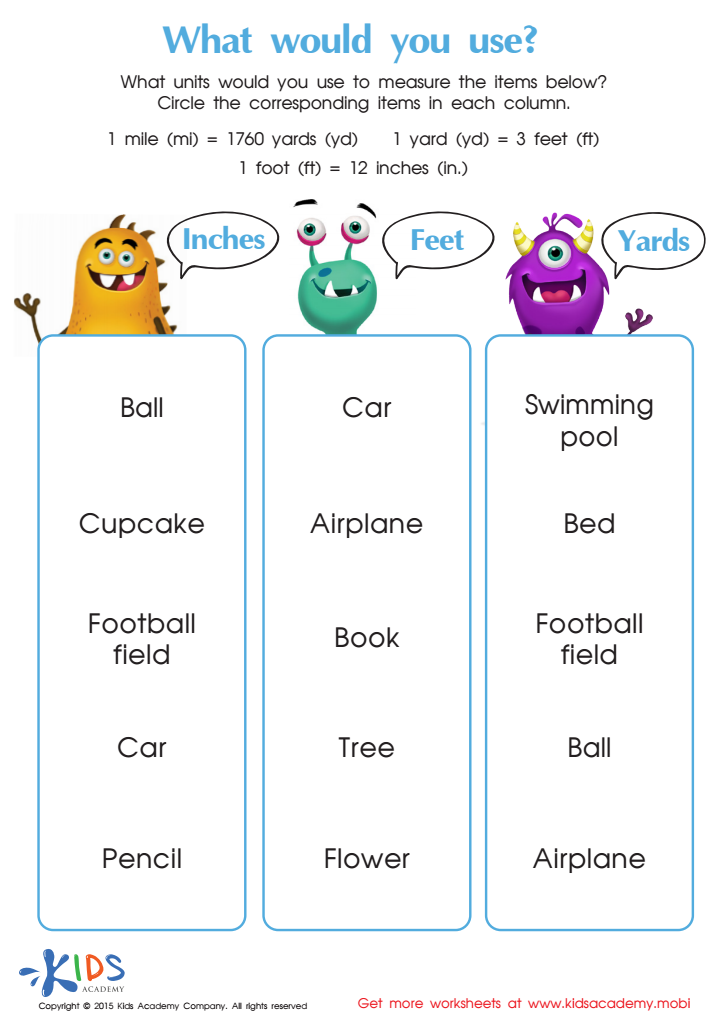
Learning about measuring objects in inches, feet and yards Worksheet
 Assign to My Students
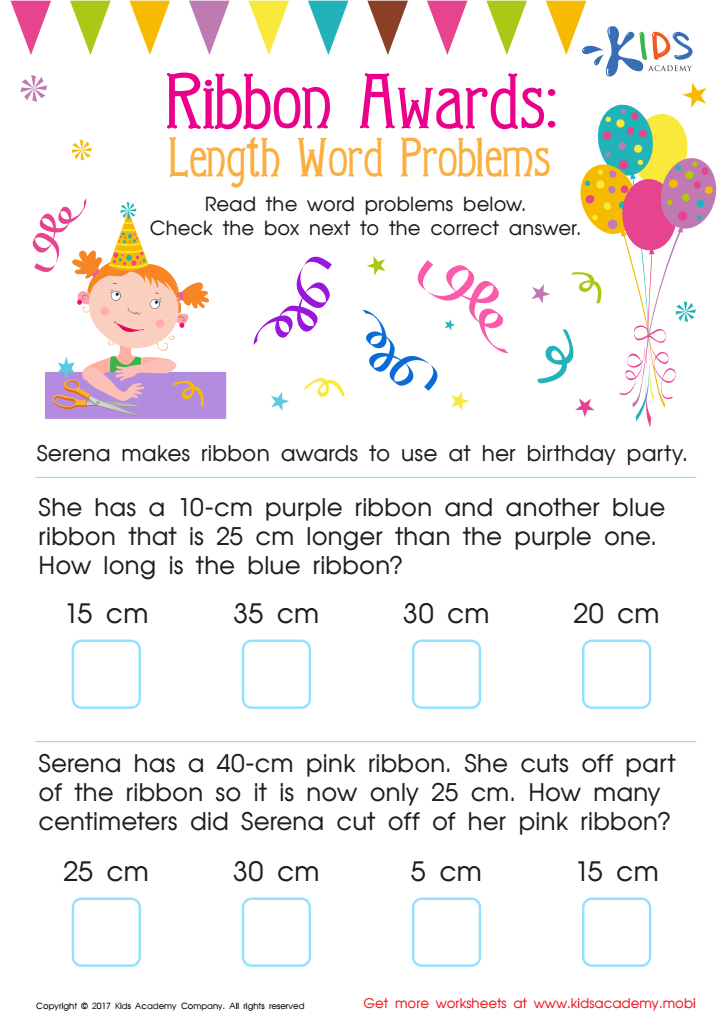
Length Word Problems Worksheet
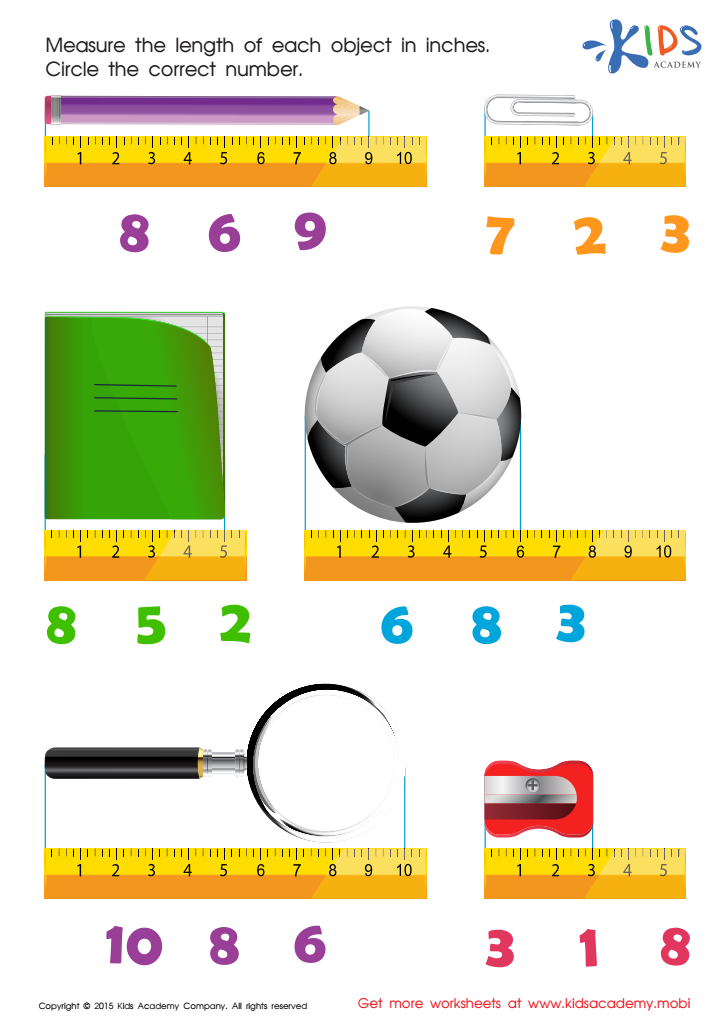
Learning measuring objects in inches Worksheet







Comparing lengths is a foundational skill for young children, particularly for ages 4-5, and it's crucial for both parents and teachers to prioritize this concept. At this age, children are naturally curious about their surroundings and eager to explore their environment. Teaching them to compare lengths not only enhances their understanding of measurement but also helps in developing their critical thinking and problem-solving abilities.
When children learn to compare lengths, they engage in hands-on activities that foster motor skills and spatial awareness. For example, using everyday objects, they can measure and discuss which is longer or shorter, laying the groundwork for more complex math concepts in the future.
Furthermore, these activities promote language development as children learn to use comparative vocabulary such as "longer," "shorter," and "taller," fostering their communication skills. It's also a perfect opportunity for parents and teachers to instill basic mathematical thinking in a fun and interactive way.
Additionally, by emphasizing concepts of comparison, children begin to understand their world, recognizing patterns and relationships between objects. This early learning experience enriches their cognitive development and prepares them for future academic challenges, underscoring the importance of incorporating length comparisons into everyday learning.








