Number counting Worksheets for Ages 4-5
3 filtered results
-
From - To
Welcome to our Number Counting Worksheets for Ages 4-5! Designed to enhance early math skills, these engaging worksheets make learning to count fun and interactive. Children will encounter colorful visuals and playful activities that capture their interest while teaching fundamental number recognition and counting techniques. Each worksheet reinforces essential skills, preparing them for kindergarten and beyond. With various exercises suitable for different learning styles, your child will develop confidence in their counting abilities. Explore our collection today to spark excitement in math and support your child's educational journey with creative, hands-on activities. Let’s make counting enjoyable together!
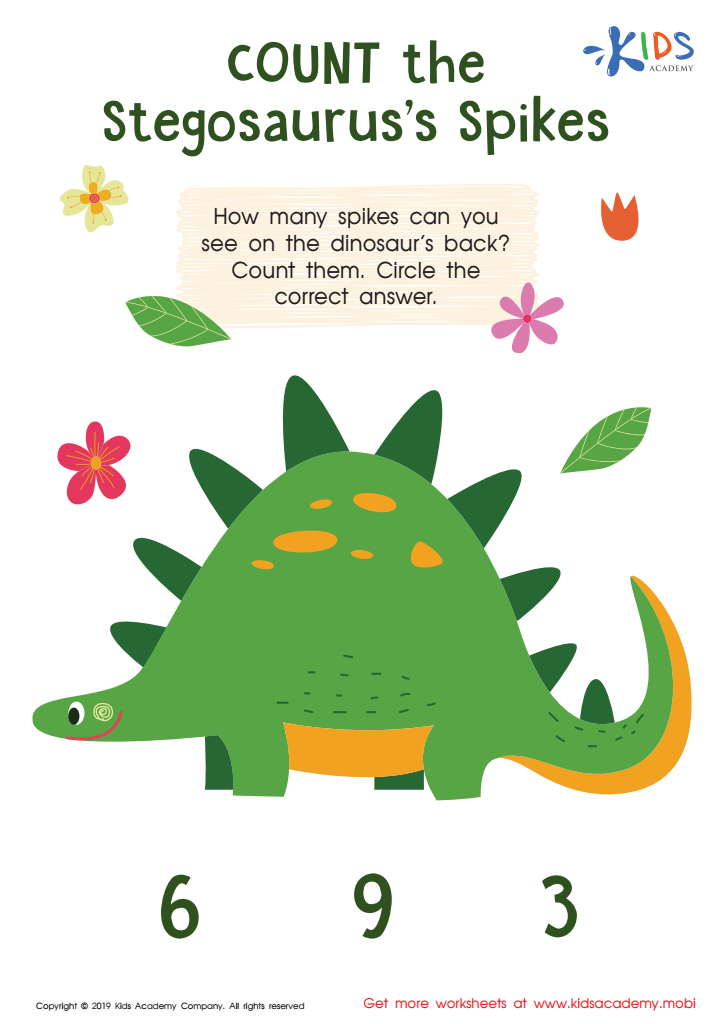
Count the Stegosaurus's Spikes Worksheet
 Assign to My Students
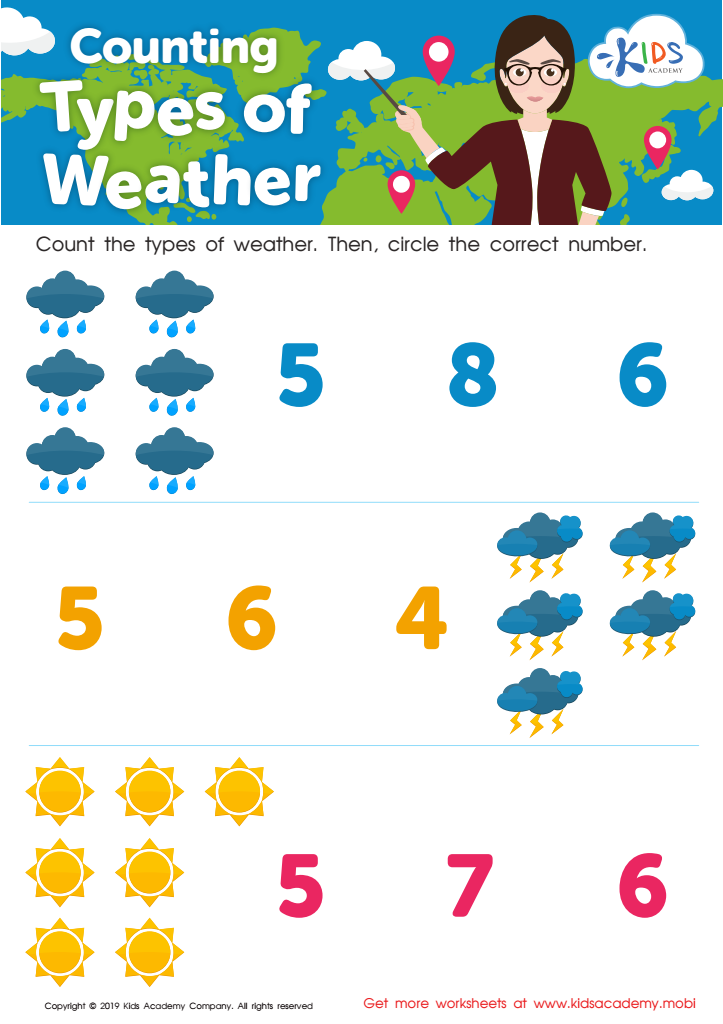
Counting Types of Weather Worksheet



.jpg)



Counting is a fundamental skill that lays the groundwork for a child’s future mathematical understanding. For children aged 4-5, mastering counting helps in developing cognitive skills, language abilities, and fine motor skills. When parents and teachers promote counting, they provide an interactive way for children to explore and understand the world around them.
Firstly, counting enhances cognitive development as it encourages children to recognize patterns, understand quantities, and develop critical thinking skills. These early mathematical experiences create a secure foundation for more advanced concepts taught in later grades.
Additionally, counting can bolster language development, as children learn to associate numbers with words, fostering their vocabulary and communication skills. When engaging in counting activities, young children also develop fine motor skills, especially when using manipulatives like blocks or counting beads.
Moreover, counting promotes social skills through group activities and games, helping children learn to share, cooperate, and take turns. By caring about counting, parents and teachers actively support holistic development, making learning fun and meaningful. As a result, early counting experiences not only contribute to academic success but also to personal and social growth, making it essential for caregivers to prioritize these learning opportunities.








