Pattern identification Worksheets for Ages 4-5
4 filtered results
-
From - To
Welcome to our engaging Pattern Identification Worksheets for ages 4-5! These worksheets are designed to enhance children's early math skills through fun and interactive activities. Kids will explore and identify patterns using vibrant illustrations and age-appropriate exercises that make learning enjoyable. Our materials help developing critical thinking and problem-solving abilities while boosting confidence in their pattern recognition skills. Perfect for both classroom and home use, these worksheets align with early childhood education standards, ensuring a solid foundation for future mathematical understanding. Dive into our collection today to help your child recognize patterns and develop essential cognitive abilities!
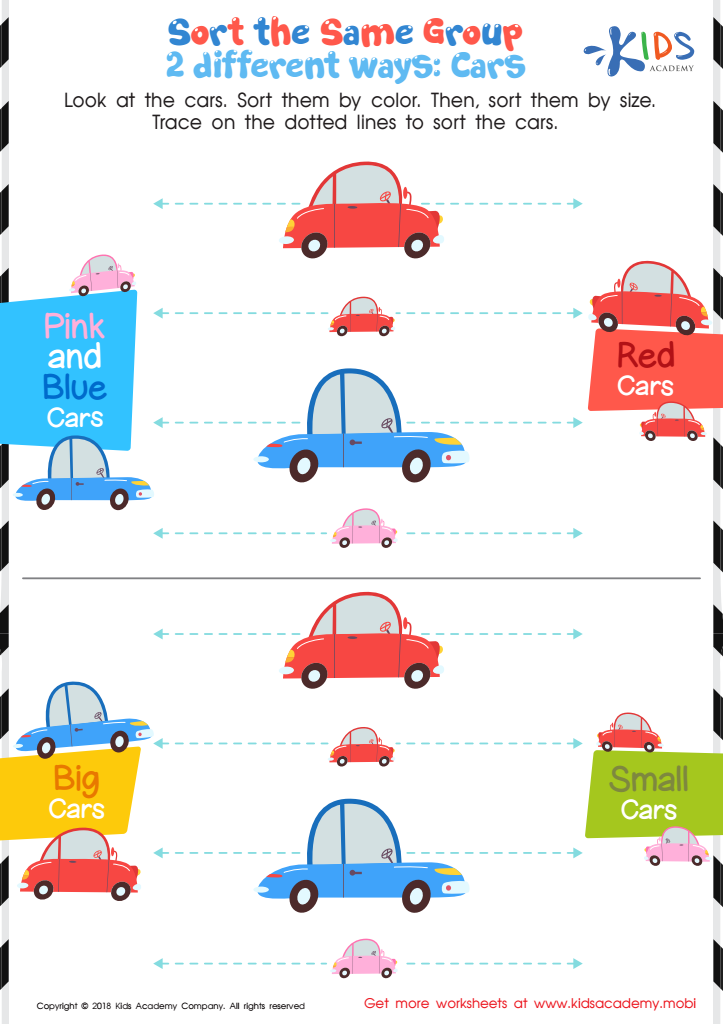
Sort the Same Group 2 Different Ways: Cars Worksheet
 Assign to My Students
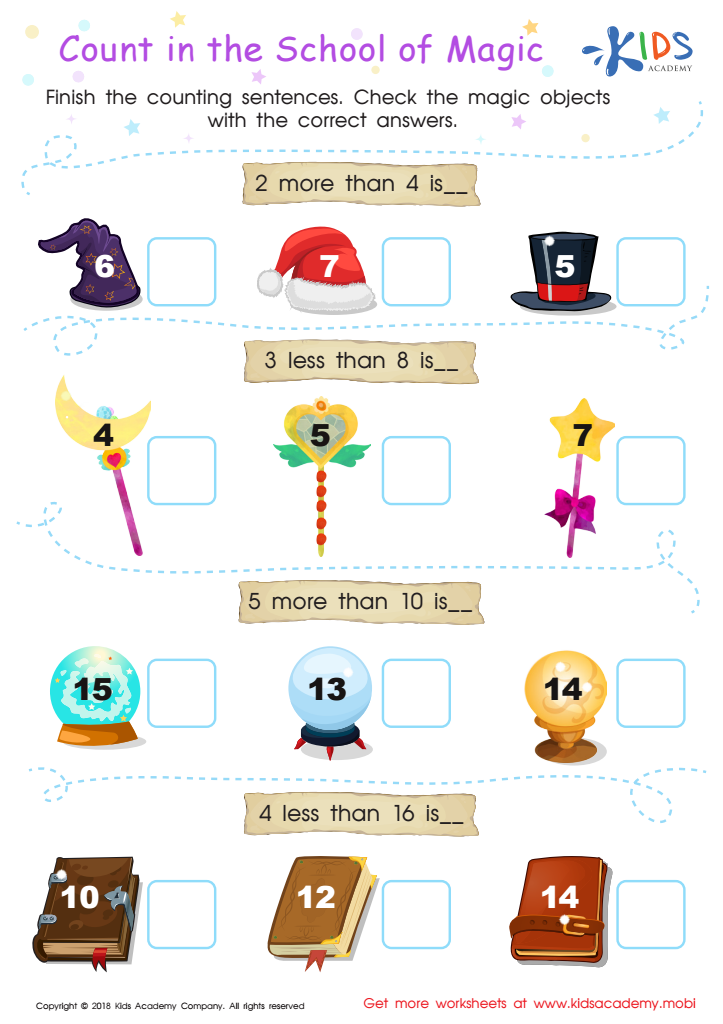
Count in the School of Magic Worksheet
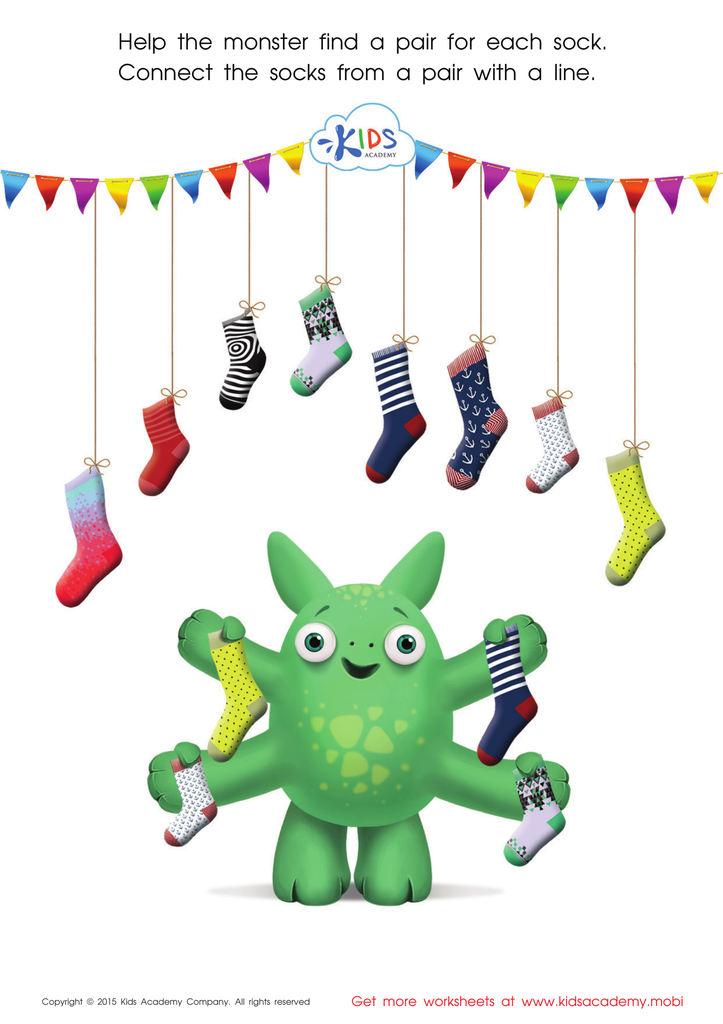
Math Matching Pairs Game: Monsterв's Socks Worksheet
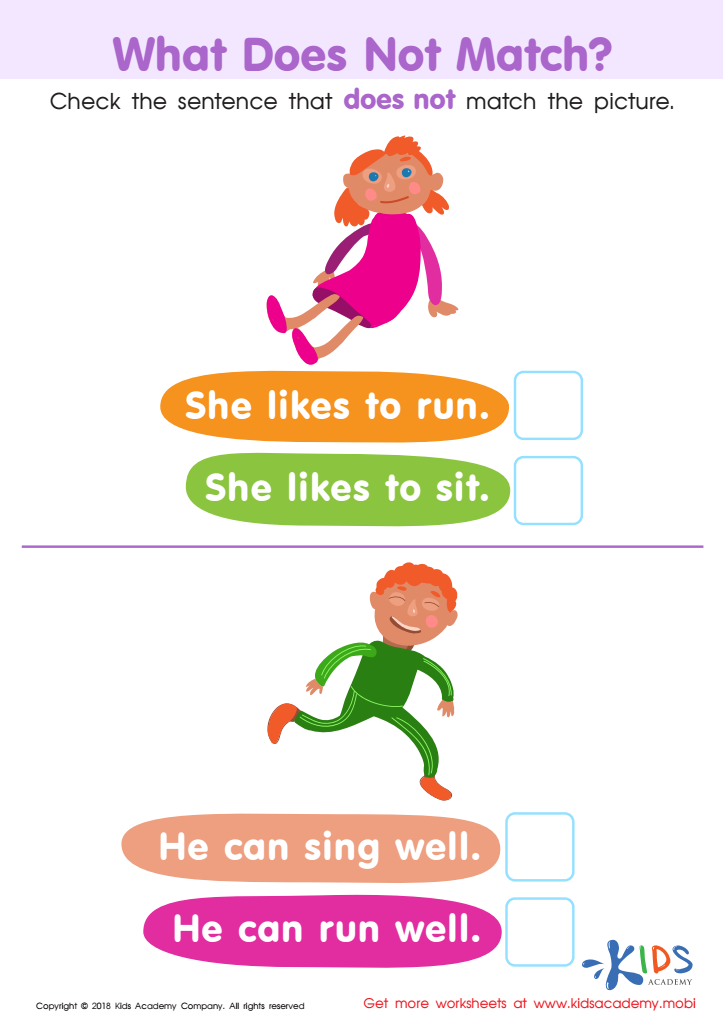
What Does Not Match? Worksheet








Pattern identification is a crucial skill for children aged 4-5, laying the foundation for critical thinking and cognitive development. As they recognize and create patterns, children enhance their mathematical understanding, fostering early skills in counting, sequencing, and problem-solving. This ability helps them make sense of the world, from noticing patterns in nature to recognizing rhythms in music.
For parents and teachers, emphasizing pattern identification encourages curiosity and exploration. It nurtures observational skills, allowing children to connect concepts across various domains, such as colors, shapes, and sounds. This holistic understanding contributes to cognitive development, improving both analytical skills and creativity.
Moreover, when children engage in pattern-related activities, they often experience significant social interaction and collaboration, building confidence and communication skills. These monumental experiences in early education not only help children in future learning environments, but also in life.
By recognizing patterns, children cultivate resilience and critical thinking, essential traits for navigating challenges later in life. Therefore, parents and teachers should prioritize engaging activities like sorting games, rhythmic clapping, and art projects. This investment in early skill development supports lifelong learning and adaptability in an ever-changing world.








