Plant identification Worksheets for Ages 4-5
3 filtered results
-
From - To
Nurture young botanists with our "Plant Identification Worksheets for Ages 4-5". These engaging and colorful worksheets are designed to help little learners recognize common plants and flowers. Crafted with age-appropriate activities, they enhance observation skills, vocabulary, and a love for nature. From matching leaves to identifying flower types, each worksheet combines fun illustrations with simple tasks that captivate young minds. Perfect for preschoolers and kindergarteners, our plant identification worksheets offer a delightful and educational way to explore the natural world. Ideal for both classroom and home use, let your children embark on a botanical adventure today!
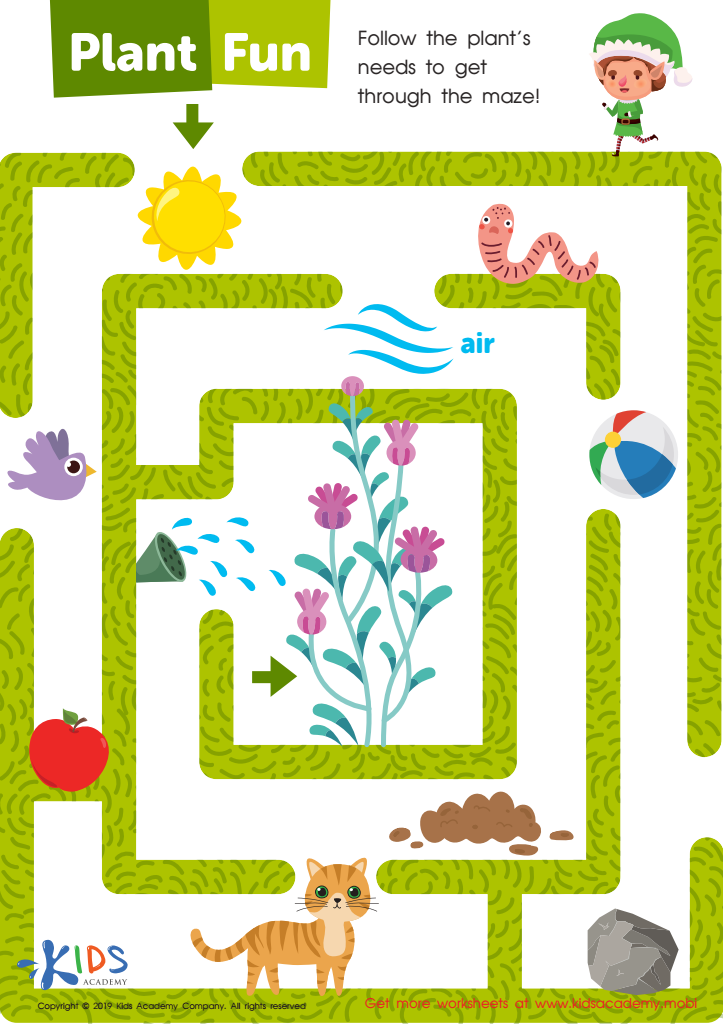
Plant Fun Worksheet
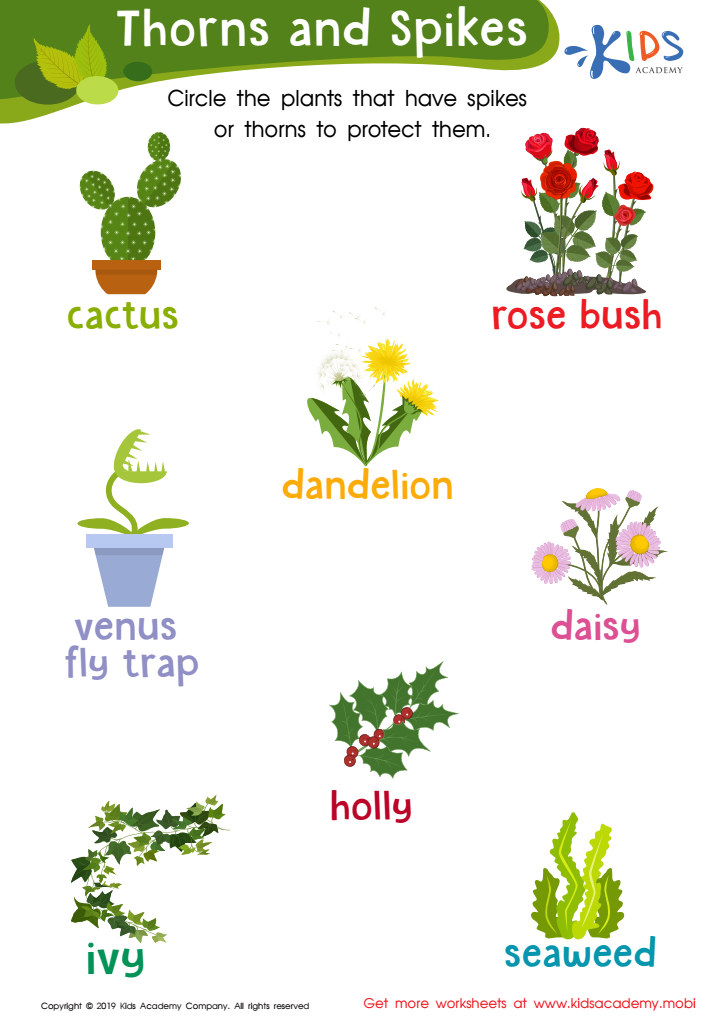
Thorns and Spikes Worksheet
Jungle Plants Worksheet
 Assign to My Students


.jpg)





Plant identification is invaluable for children aged 4-5 as it lays the foundation for a lifelong appreciation of nature. At this developmental stage, young minds are highly curious and impressionable, making it the perfect time to introduce them to the wonders of the natural world. Learning to identify plants helps in fostering environmental awareness and stewardship from an early age, teaching children about the importance of biodiversity and the roles various plants play in ecosystems.
From a cognitive perspective, plant identification enhances observational skills, attention to detail, and memory. Discussing plants encourages vocabulary expansion and development of descriptive language, as children learn names, colors, shapes, and functions of different plants. This activity can also sharpen their categorization skills, aiding in understanding and organizing information.
Additionally, engaging with nature through plant identification provides physical benefits. Exploring parks or gardens increases outdoor time, promoting physical health and motor skills through activities like walking, bending, and reaching. Emotionally, it offers a sense of wonder and tranquility, reducing stress and fostering a positive, peaceful mindset.
Teachers and parents play a crucial role by guiding these explorations, creating memorable, educational experiences that nurture a child’s curiosity and respect for nature. These early experiences often spark lasting interests, cultivating future generations of environmentally conscious individuals.








