
Real-life application Worksheets for Ages 4-5
4 filtered results
Difficulty Level
Grade
Age
-
From - To
Subject
Activity
Standards
Discover our "Real-life Application Worksheets for Ages 4-5," designed to bridge the gap between classroom learning and everyday life. These thoughtfully crafted worksheets engage young learners in practical scenarios, helping them develop essential skills like counting, sorting, and problem-solving. From grocery shopping and cooking to identifying community helpers, each activity fosters critical thinking and creativity. Our worksheets encourage discussion and interaction, allowing parents and educators to reinforce lessons in a fun, contextual way. Ideal for both classroom settings and at-home learning, these resources support early childhood development and inspire curiosity about the world around them. Empower your child's learning today!
Favorites
With answer key
Interactive
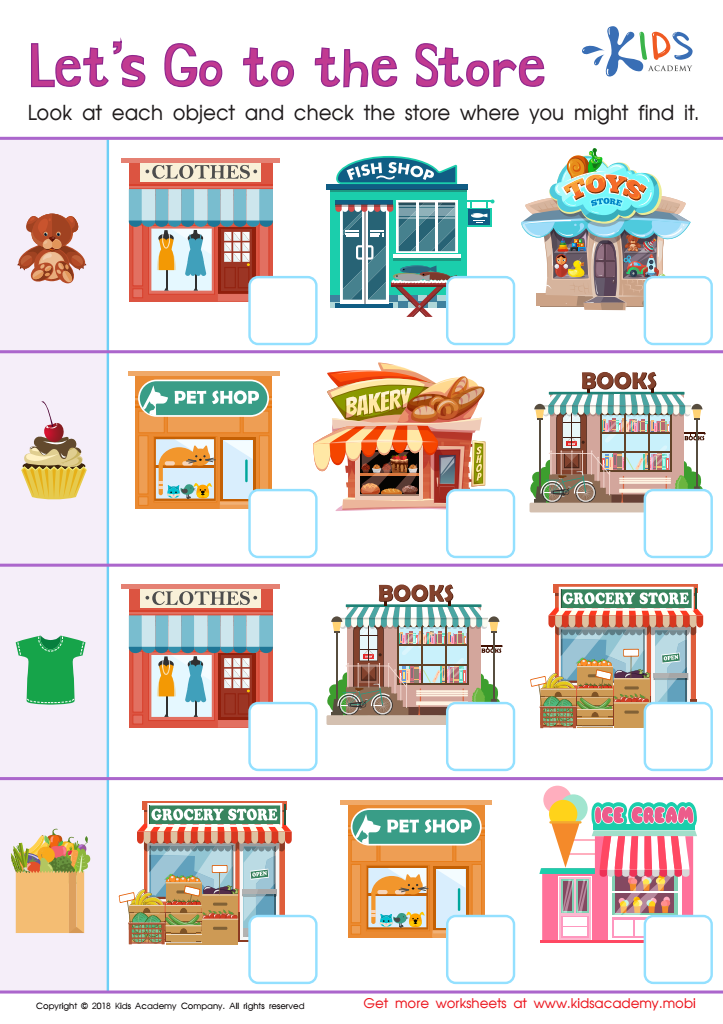
Let's Go to the Store! Worksheet
Take your kids along for errands and shopping. Ask them to identify items on this worksheet and the store where you'd buy them. See how much attention they were paying! Have fun and find out with this fun worksheet.
 Assign to My Students
Let's Go to the Store! Worksheet
Worksheet
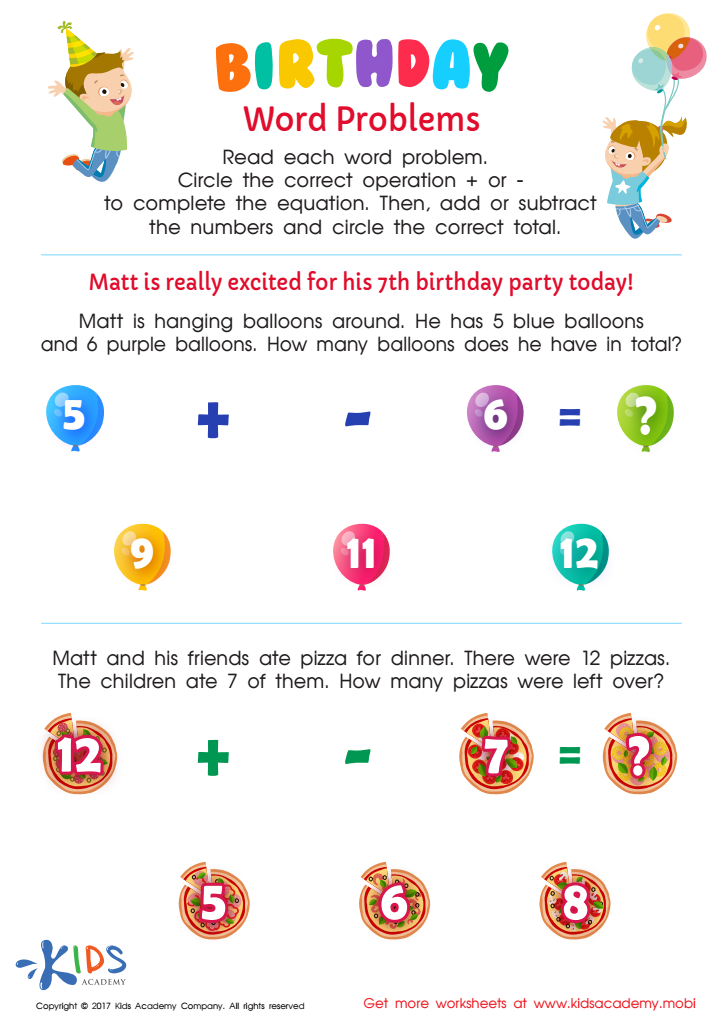
Birthday Word Problems Substraction Worksheet
This worksheet, Birthday Word Problems, is a great way to improve your child's math and literacy skills. It features tricky subtraction equations based on a birthday celebration - perfect for kids who love birthdays!
Birthday Word Problems Substraction Worksheet
Worksheet
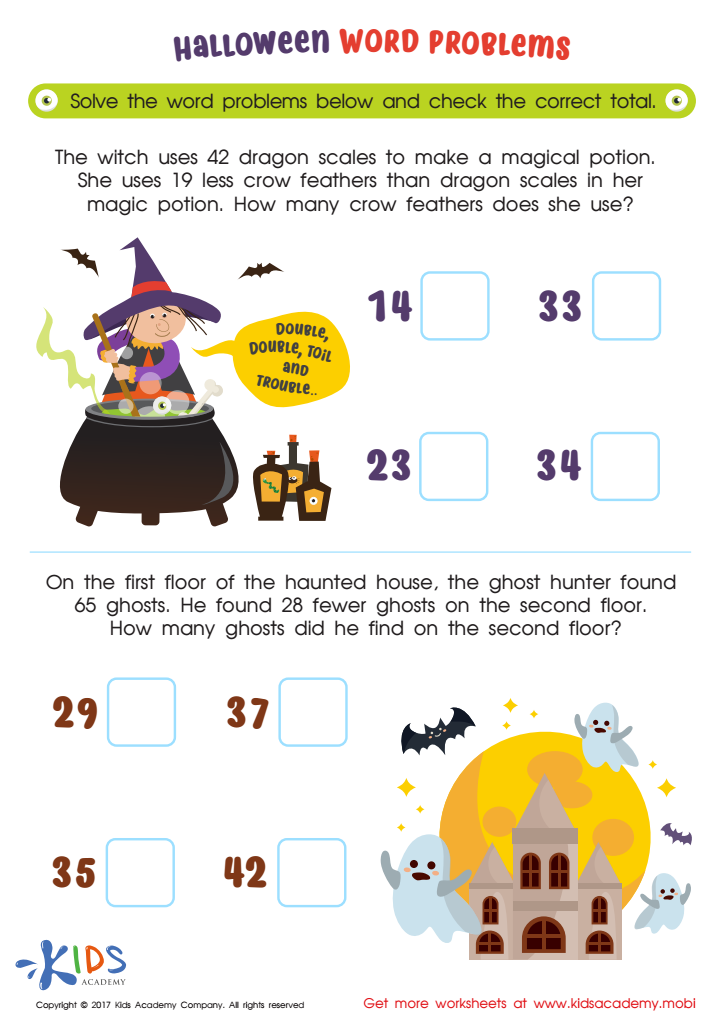
Halloween Word Problems Printable
Ghosts, witches, and other spooky characters make these problems exciting and interactive. Get ready to have some math fun!
Halloween Word Problems Printable
Worksheet
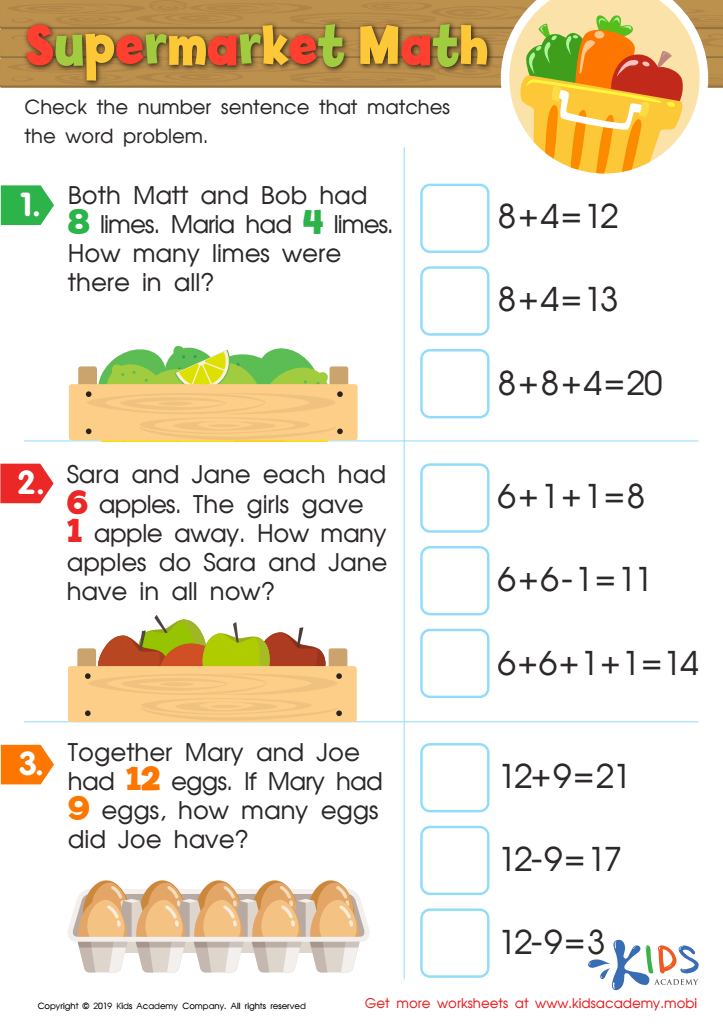
Supermarket Math Worksheet
Take your kids to the supermarket and ask what they're looking forward to buying. Help them solve the three questions in the worksheet by interpreting each one into an equation, then choose the right answer.
Supermarket Math Worksheet
Worksheet
Join Kids Academy for Free
Who is primarily going to use this learning content?








Real-life application is crucial for the development of children aged 4-5, as it helps bridge the gap between theoretical concepts and everyday experiences. At this age, children are highly curious and eager to understand their world, making it essential for parents and teachers to engage them in meaningful activities. Real-life applications facilitate hands-on learning, allowing children to explore concepts like counting, measuring, and problem-solving within contexts they can relate to, such as cooking, shopping, or gardening.
When children see how their learning connects to real life, it enhances their comprehension and retention of information. For example, sorting objects during play helps reinforce mathematical skills while teaching about categories and organization. Additionally, real-life applications foster critical thinking and creativity, encouraging kids to ask questions, experiment, and find solutions.
Moreover, engaging children in everyday tasks cultivates essential social skills, as they often interact with peers and adults, learning cooperation and communication. This holistic approach not only prepares children academically but also supports their emotional and social development. By integrating real-life applications into learning experiences, parents and teachers can create a dynamic and relevant educational environment that nurtures lifelong learners.








