Sound Association Worksheets for Ages 4-5 - Page 2
27 filtered results
-
From - To
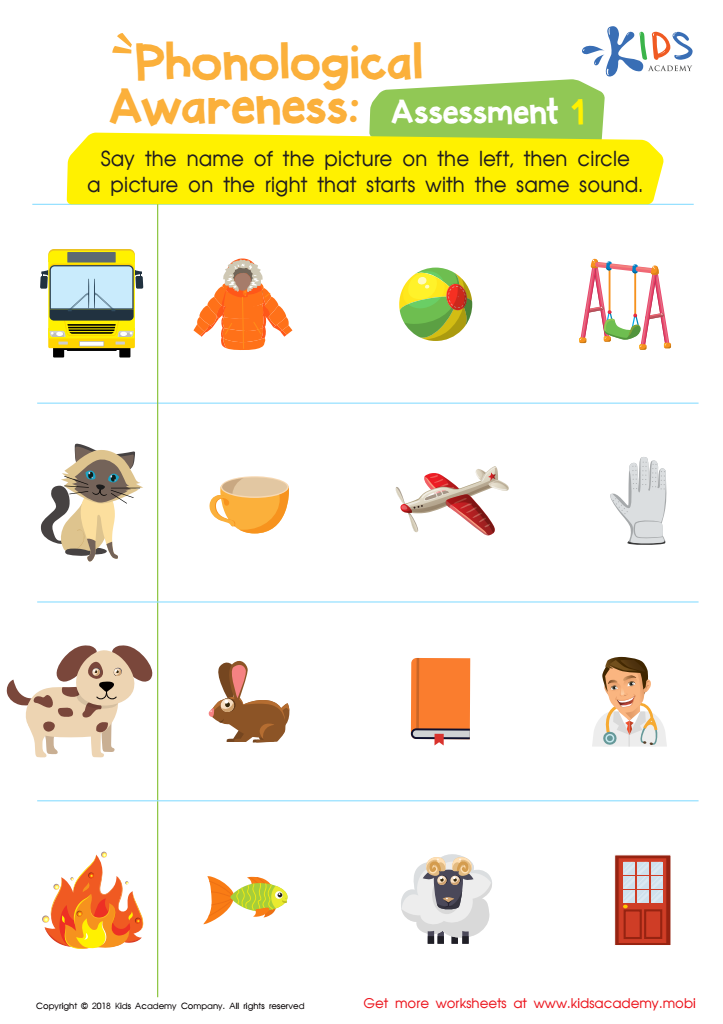
Phonological Awareness: Assessment 1 Worksheet
 Assign to My Students
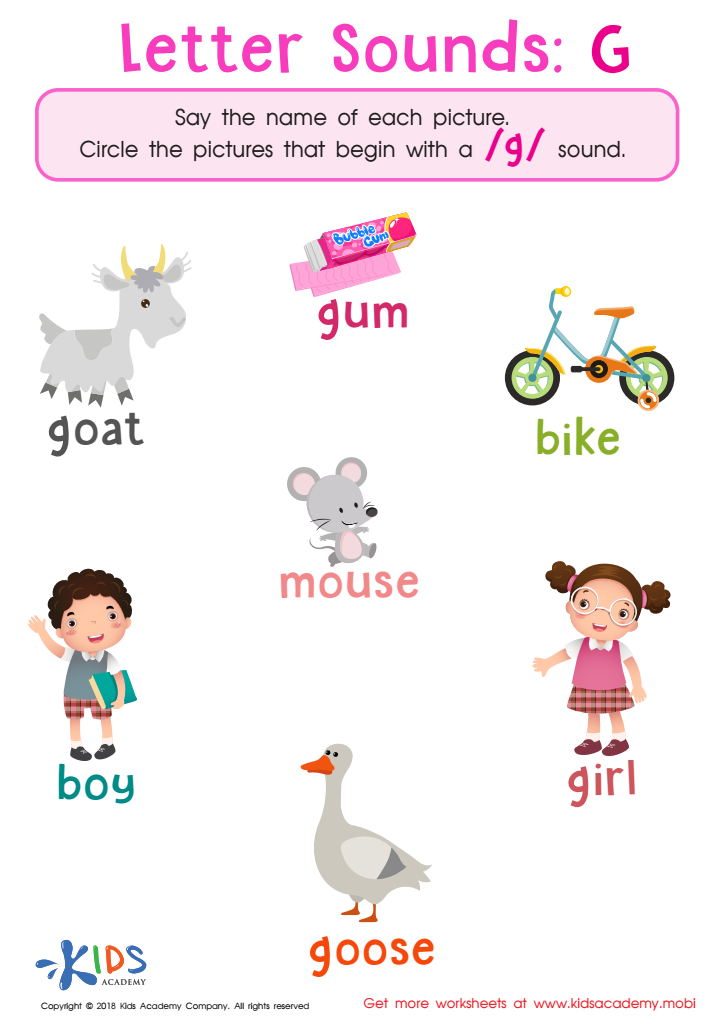
Letter G Sounds Worksheet
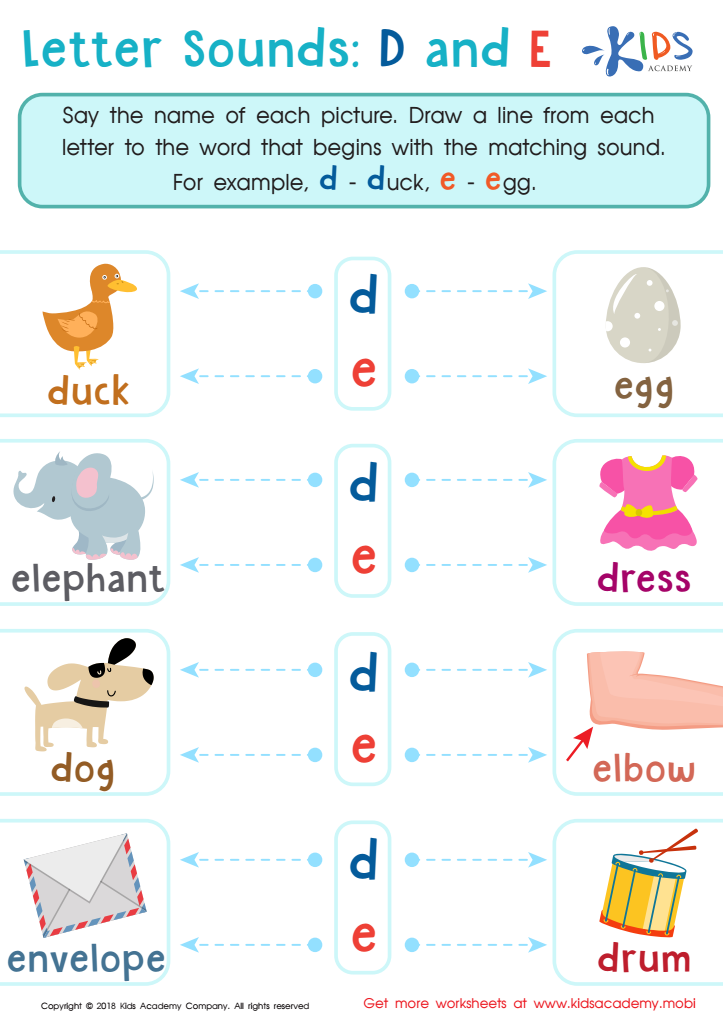
Letter D and E Sounds Worksheet







Sound association at ages 4-5 is crucial for early language development and literacy skills. During this stage, children begin to make connections between sounds and their corresponding letters, which lays the foundation for reading and writing. When parents and teachers emphasize sound association, they empower children with the phonemic awareness necessary for decoding words, enhancing their ability to read independently.
Additionally, engaging with sound association promotes listening skills, which are important for effective communication. Activities like rhyming, alliteration, and sound-matching games not only make learning fun but also help children recognize patterns in language. This focuses children on auditory processing, which is essential not just for literacy but also for overall cognitive development.
Furthermore, when children develop a strong grasp of sound association early on, they experience greater confidence in their reading abilities, setting the stage for future academic success. By prioritizing this skill, parents and teachers ensure that children are not only prepared for formal education but also equipped to express themselves clearly and responsibly in various contexts. In sum, fostering sound association at this young age creates resilient learners ready to tackle new challenges.








