Sound-letter correlation Worksheets for Ages 4-5
4 filtered results
-
From - To
Discover our engaging Sound-Letter Correlation Worksheets designed specifically for ages 4 to 5! These interactive activities empower young learners to connect sounds with the corresponding letters, laying a strong foundation for early literacy. Each worksheet features colorful illustrations and fun exercises, making learning enjoyable and effective. Children will practice identifying sounds, matching them to letters, and reinforcing their phonemic awareness through playful exercises. Our resources are perfect for parents and educators looking to enhance reading skills in an entertaining way. Start your child's learning journey with our carefully crafted worksheets today, helping them gain confidence in recognizing letters and sounds effortlessly!
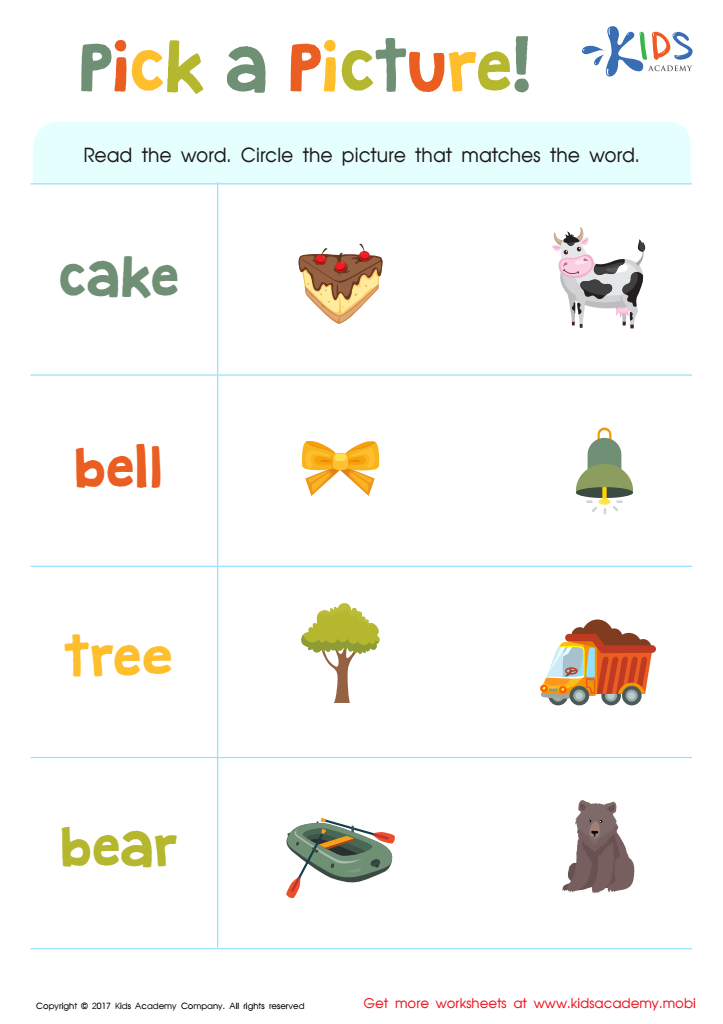
Pick a Picture Word Recognition Worksheet
 Assign to My Students
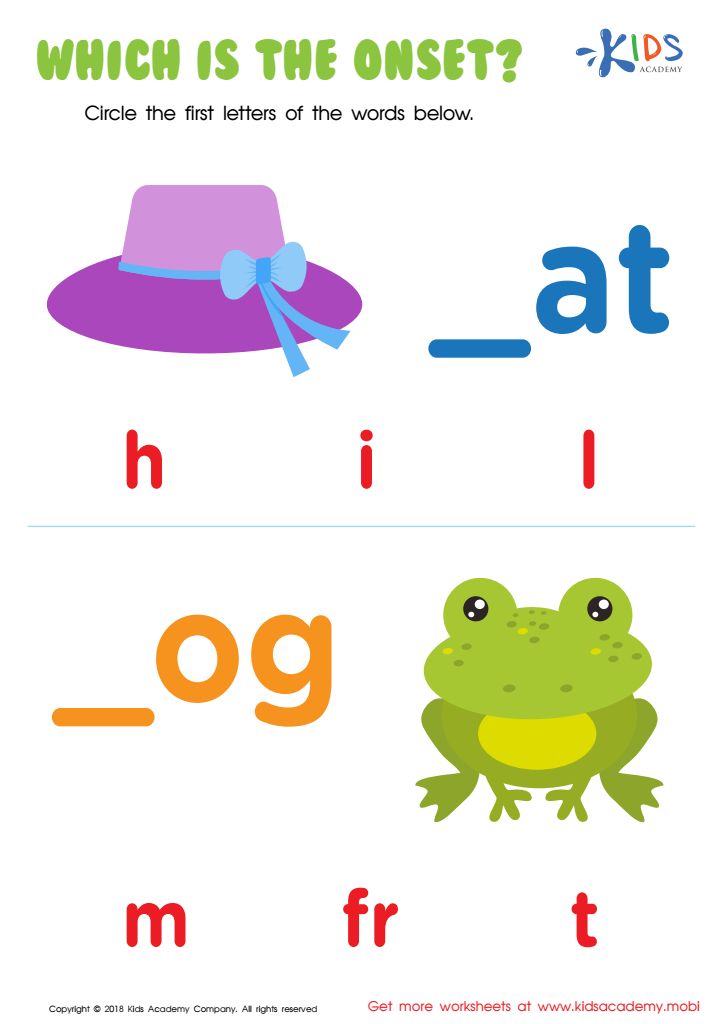
Which Is the Onset? Worksheet
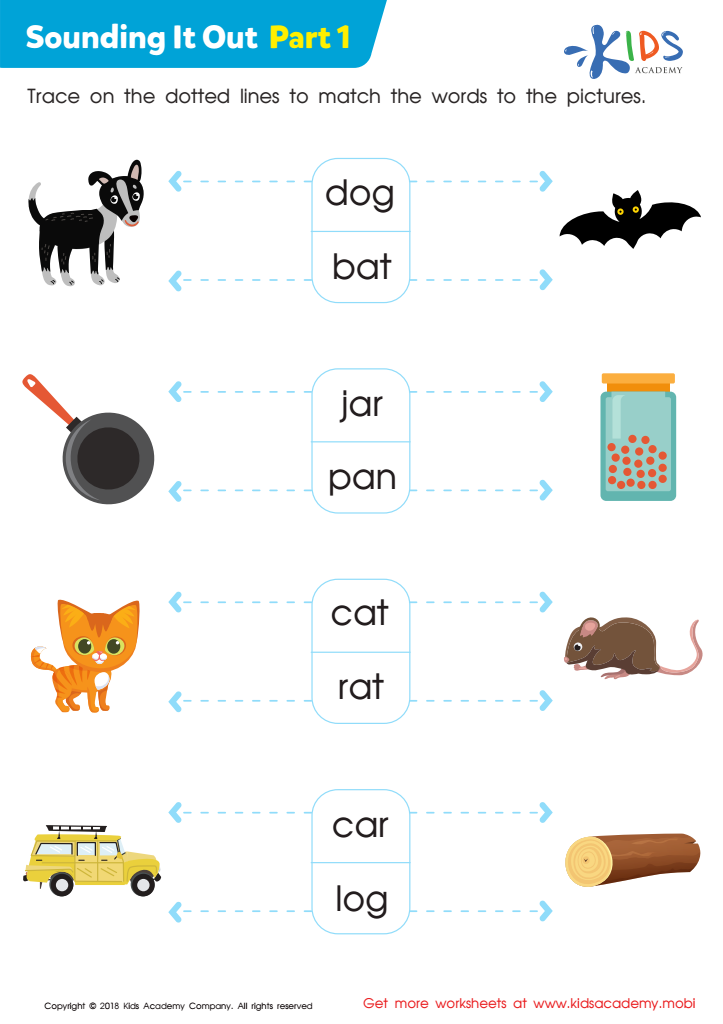
Sounding it Out: Part 1 Worksheet
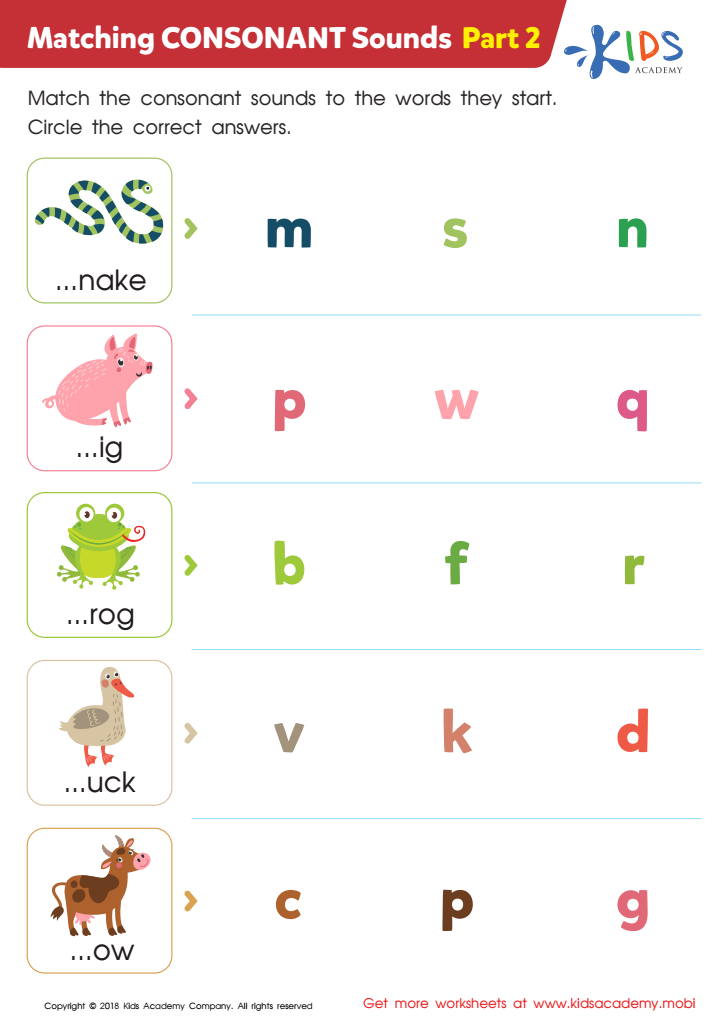
Matching Consonant Sounds: Part 2 Worksheet





%20(1).jpg)

Sound-letter correlation, or phonemic awareness, is crucial for children ages 4-5 as it forms the foundation for literacy development. At this early stage, children begin to investigate the relationship between sounds they hear in spoken language and the letters that represent those sounds in writing. Understanding this correlation helps them recognize that words are made up of individual sounds, making reading and spelling more approachable.
Parents and teachers should prioritize sound-letter correlation because it significantly impacts a child's ability to decode words and develop reading fluency. When children grasp that letters and combinations of letters correspond to specific sounds, they gain confidence in their ability to read independently. This understanding facilitates not only reading but also writing, as children learn to spell words phonetically.
Furthermore, fostering strong sound-letter correlation skills helps children build vocabulary and improve listening skills, which are essential for effective communication. Engaging children in fun, interactive activities focused on sounds and letters—such as rhymes, songs, and games—can make learning enjoyable and foster a love for reading. In essence, nurturing these foundational skills equips children with the tools they need for academic success and lifelong literacy. Parents and teachers play a vital role in supporting and enhancing this learning process.








