Syllable identification Worksheets for Ages 4-5
3 filtered results
-
From - To
Enhance your child's early literacy skills with our Syllable Identification Worksheets for ages 4-5. These engaging, colorful worksheets are designed to make learning fun and easy, helping young learners break down words into syllables. With a variety of exercises including clapping, coloring, and matching, children will quickly grasp the concept of syllables, paving the way for improved reading and pronunciation skills. Perfect for at-home or classroom use, these worksheets are a valuable resource for parents and educators aiming to give kids a strong foundation in language arts. Download yours today and watch your child's confidence soar!
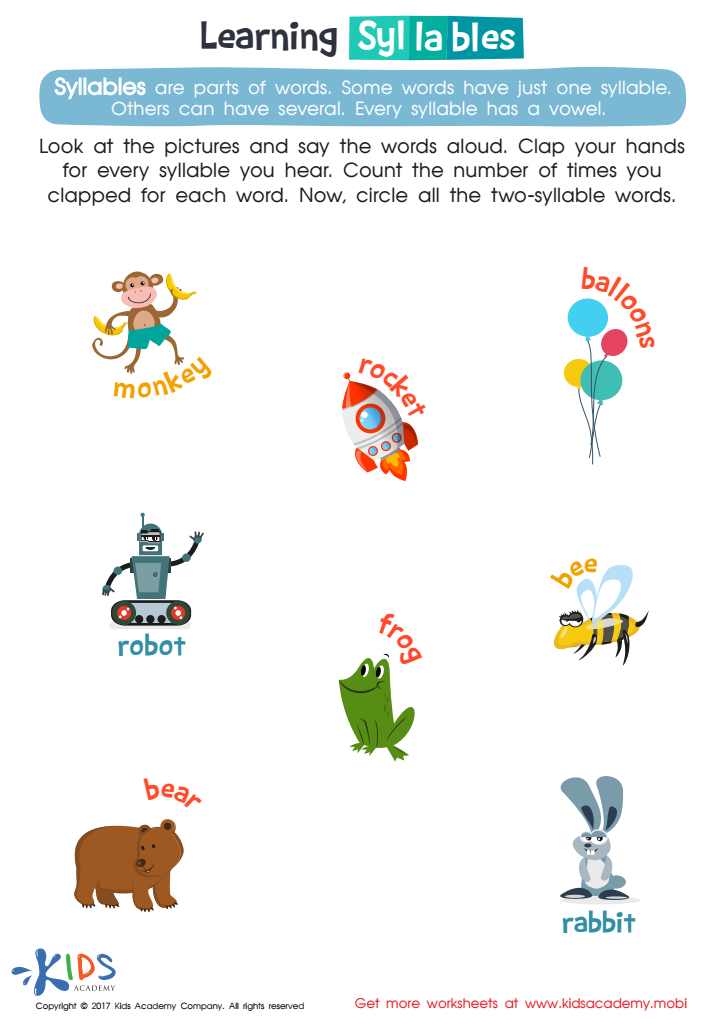
Learning Syllables Word Structure Worksheet
 Assign to My Students
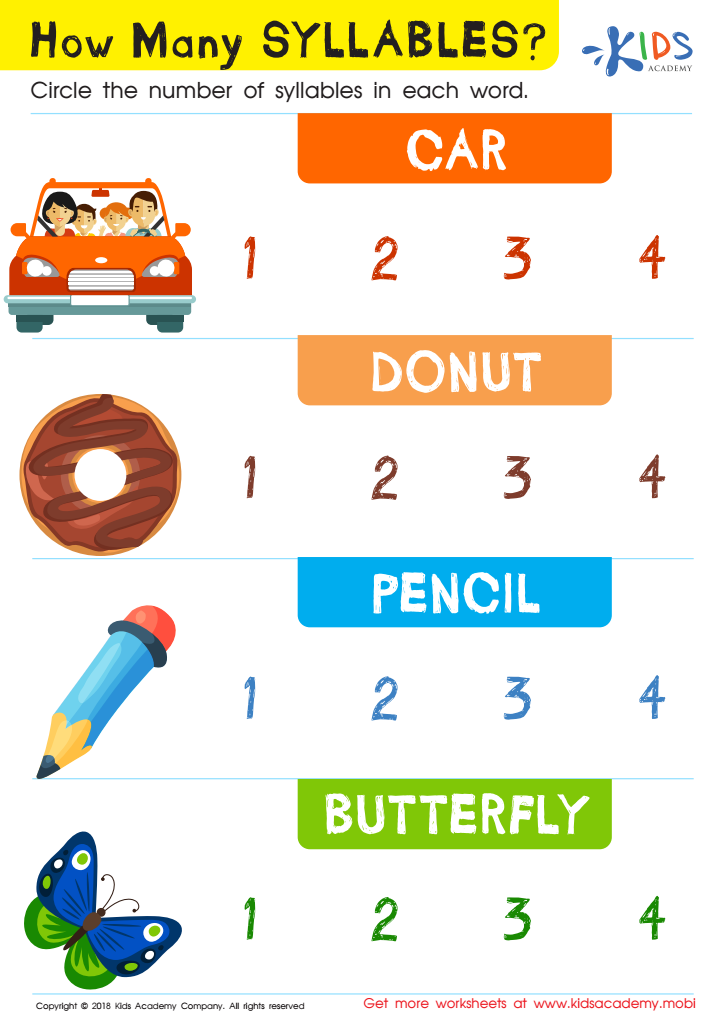
How Many Syllables? Worksheet
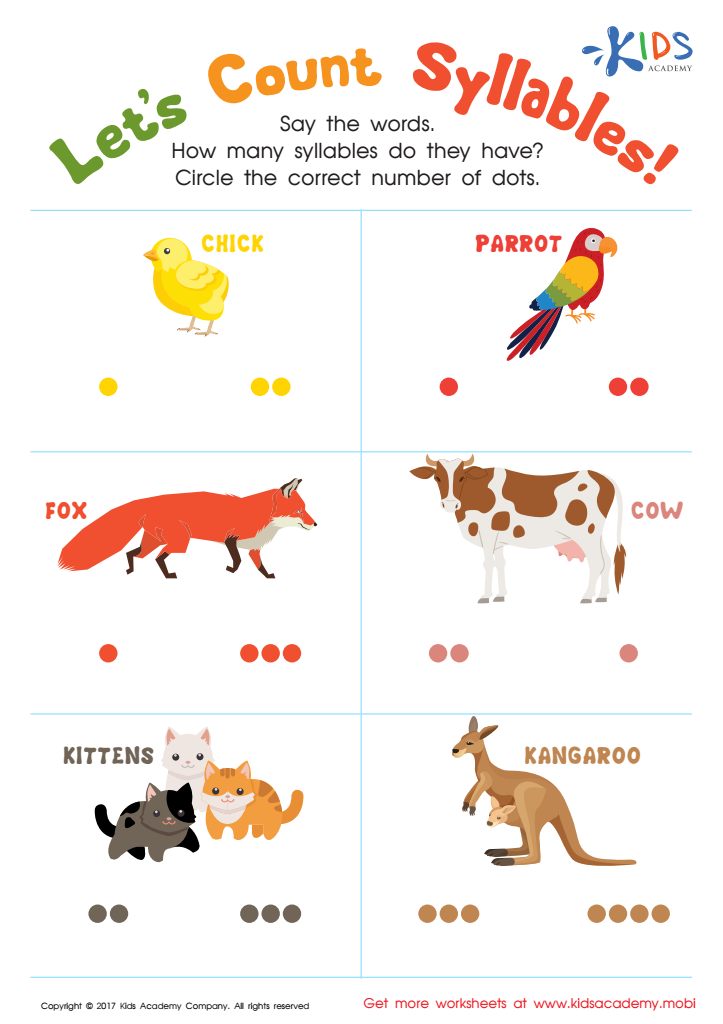
Lets Count Syllables Worksheet







Syllable identification is a critical skill that parents and teachers should focus on for children ages 4-5, as it lays the foundation for successful reading and writing. At this early age, children's brains exhibit a high capacity for language learning. Understanding syllables helps in phonemic awareness, which is recognizing and manipulating sounds in words. This skill directly influences the ability to decode words when reading.
By breaking down words into smaller, manageable units (syllables), children gain better insight into how words are constructed. This knowledge enables them to approximate spellings and develop pronunciation skills, pivotal for language development. Furthermore, syllable identification supports vocabulary expansion. When children encounter new, longer words, they can break them into syllables, making the words less intimidating and easier to comprehend.
Additionally, early syllable awareness aids in enhancing listening skills and auditory discrimination. Kindergarten curricula often incorporate rhyming and clapping out syllables, making learning interactive and engaging.
In essence, focusing on syllable identification equips children with tools that are essential for literacy. Investing time in teaching this skill can provide substantial benefits, leading to more competent and confident readers. Consequently, fostering these abilities during the formative years is vital for a child's academic success and self-esteem.








