
Understanding adjectives Worksheets for Ages 4-5
3 filtered results
Difficulty Level
Grade
Age
-
From - To
Subject
Activity
Standards
Welcome to our "Understanding Adjectives Worksheets for Ages 4-5"! This engaging collection of worksheets is designed to help young learners recognize and grasp the concept of adjectives. Through fun activities, children will explore descriptive words, enhancing their vocabulary and language skills. Each worksheet offers age-appropriate exercises that encourage kids to identify adjectives in sentences and use them to describe everyday objects, fostering their creativity and critical thinking. Ideal for classroom or home learning, these worksheets make grammar enjoyable and accessible for preschoolers. Start your child's journey towards language mastery with our captivating and interactive adjective resources today!
Favorites
With answer key
Interactive
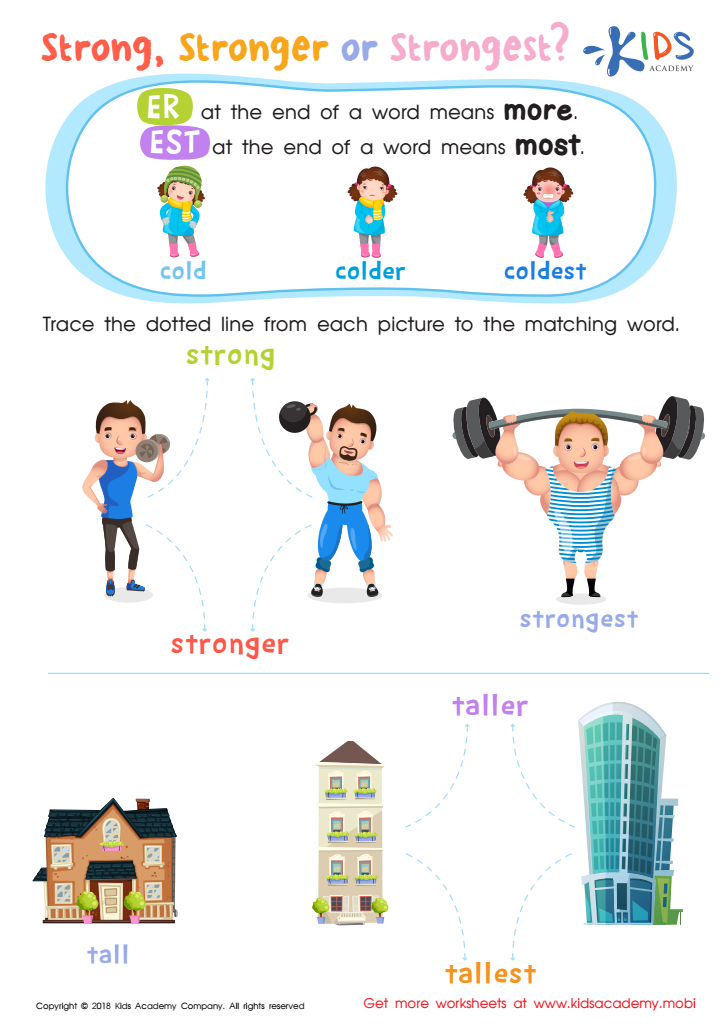
Strong or Stronger? Worksheet
Help your child understand the concept of size gradients with a fun worksheet. Explain to them that adding "-er" to words means "more" and "-est" means "most". Point to the pictures and have your little one trace the dotted line to the corresponding words to learn the concept of highest and lowest.
 Assign to My Students
Strong or Stronger? Worksheet
Worksheet
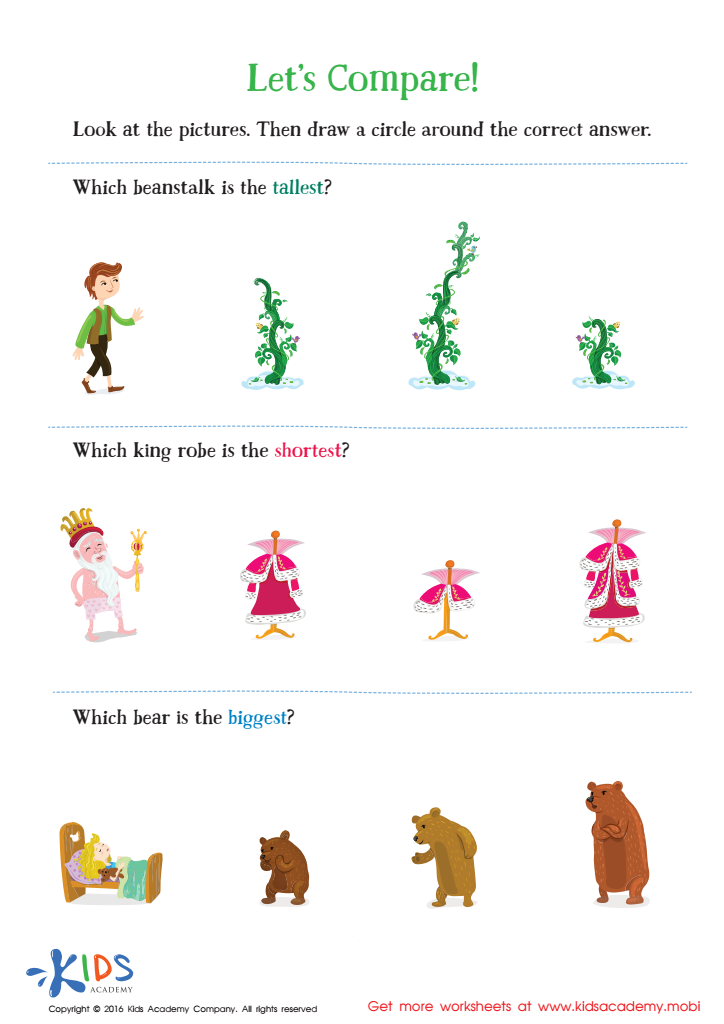
Fairy Tale Worksheet: Let's Compare
Preschoolers need to recognize different sizes of objects. This worksheet combines fun fairy tales with size practice, helping them read, problem solve, and sort through pictures. Your child will love the images and be eager to complete it. Enhance their learning by talking about the tales to build comprehension.
Fairy Tale Worksheet: Let's Compare
Worksheet
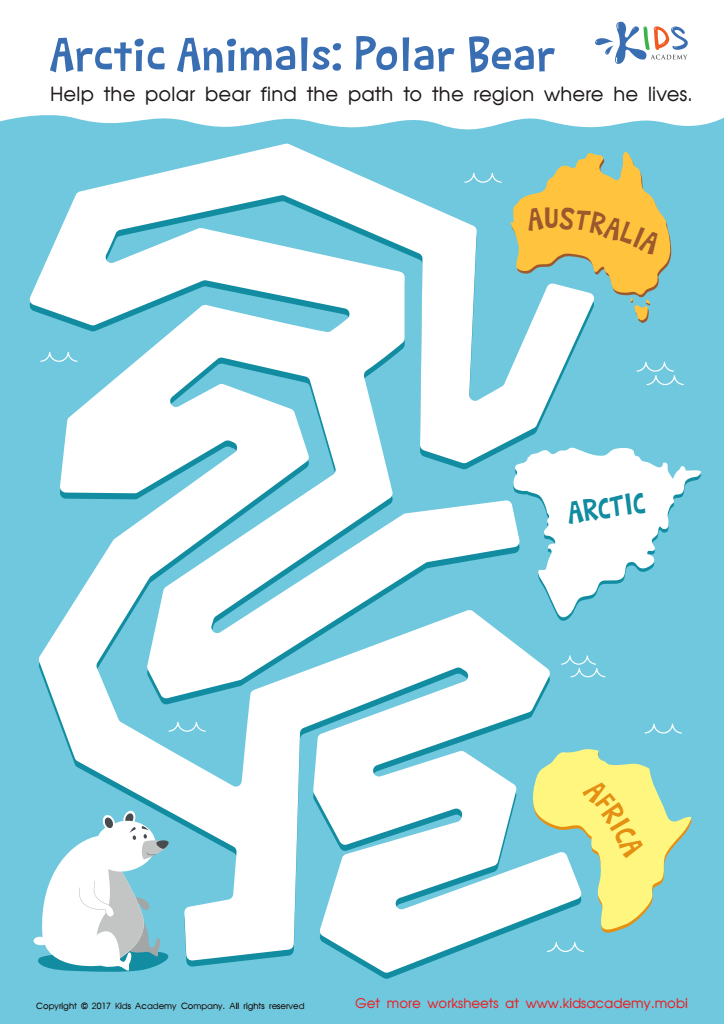
Arctic Animals: Polar Bear Worksheet
Oh no! Our polar bear friend is lost! Let's help him find his way back to the arctic with this fun worksheet. It reinforces science and social studies and kids will learn about the climate and habitats of different continents. They'll also develop logical reasoning skills! You can enrich the experience by looking up pictures of real polar bears after the worksheet is complete.
Arctic Animals: Polar Bear Worksheet
Worksheet
Join Kids Academy for Free
Who is primarily going to use this learning content?




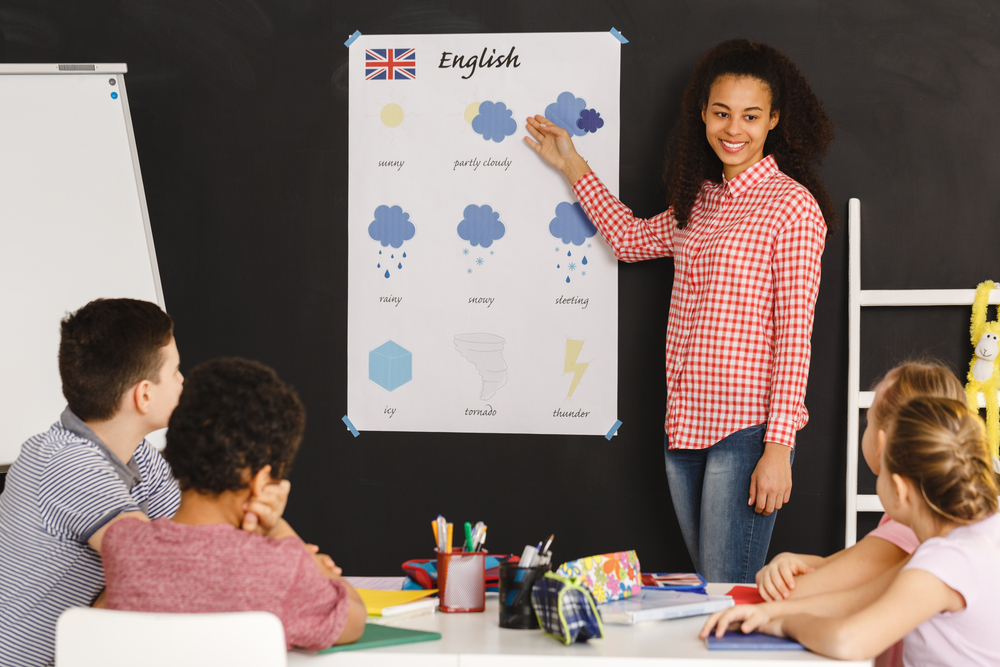


Understanding adjectives is crucial for children aged 4-5 as it plays a foundational role in language development and communication skills. At this stage, children begin to explore the world around them, and adjectives provide essential tools for expressing their observations and feelings. When children learn adjectives, they enhance their ability to describe objects, people, and experiences, leading to richer vocabulary and improved storytelling skills.
Parents and teachers should prioritize teaching adjectives because they help children differentiate between different qualities and characteristics. For instance, when a child learns to differentiate between "big" and "small," they develop critical thinking skills that encourage visual and auditory processing. This understanding fosters independence as children become more articulate with their thoughts and emotions.
Moreover, the incorporation of adjectives in daily interactions assists with early literacy development. By describing items during play or reading stories, children not only grasp the meaning but also engage in imaginative language use. Overall, understanding adjectives aids in social interactions, cognitive growth, and communicative clarity, laying a strong foundation for lifelong learning and effective communication. Engaging young learners with adjectives can create a vibrant learning environment and fuel their natural curiosity.








