Understanding citizenship Worksheets for Ages 4-5
4 filtered results
-
From - To
Welcome to our “Understanding Citizenship Worksheets for Ages 4-5”! Designed for young learners, these engaging worksheets introduce essential concepts of citizenship in a fun and accessible way. Children will explore ideas of belonging, community, and responsibility through colorful activities and interactive tasks. With a focus on skills such as sharing, cooperation, and understanding rules, these resources foster early social development. Perfect for home or classroom use, our worksheets encourage thoughtful discussions about friendship and respect. Help your little ones learn the value of citizenship while enhancing literacy and critical thinking skills. Start instilling important values today!
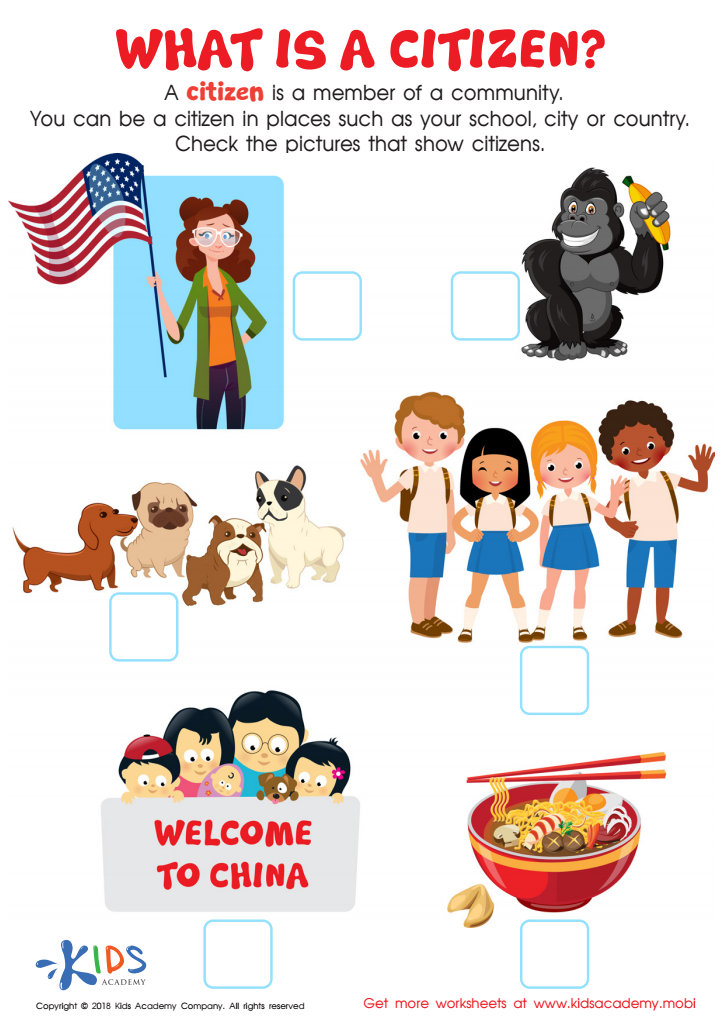
What is a Citizen? Worksheet
 Assign to My Students
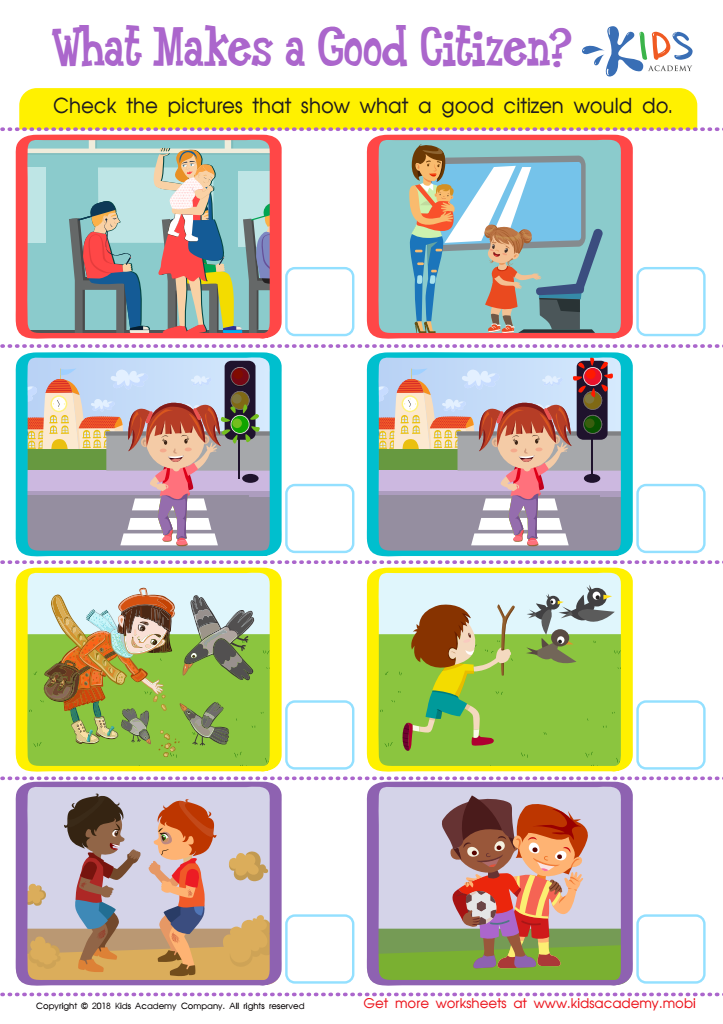
What Makes a Good Citizen? Worksheet
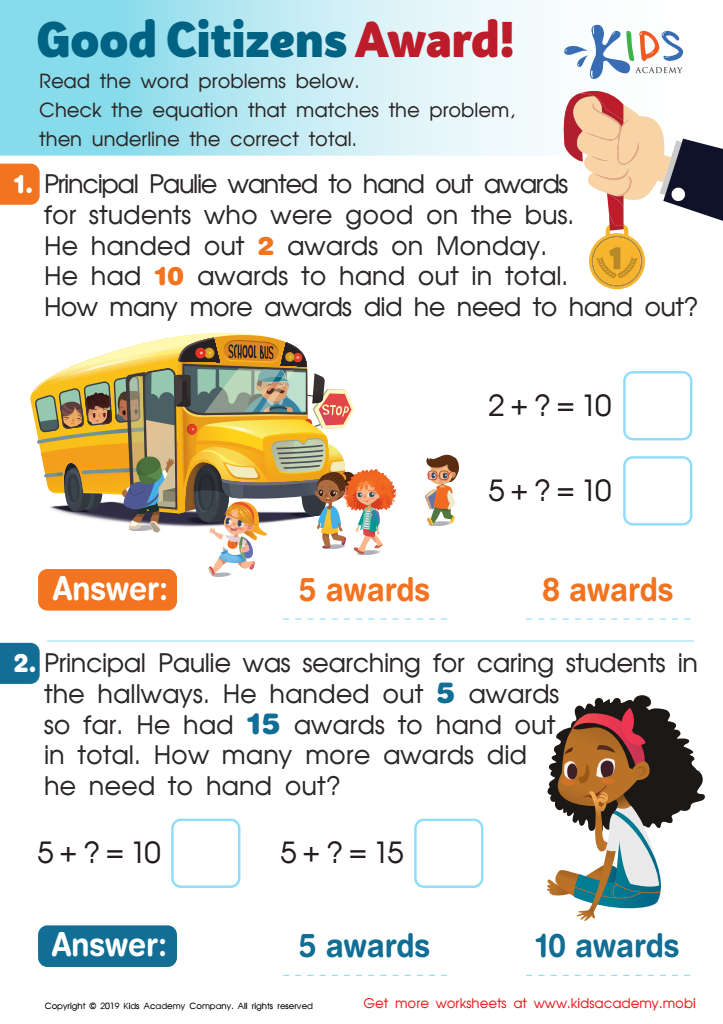
Good Citizens Award! Worksheet
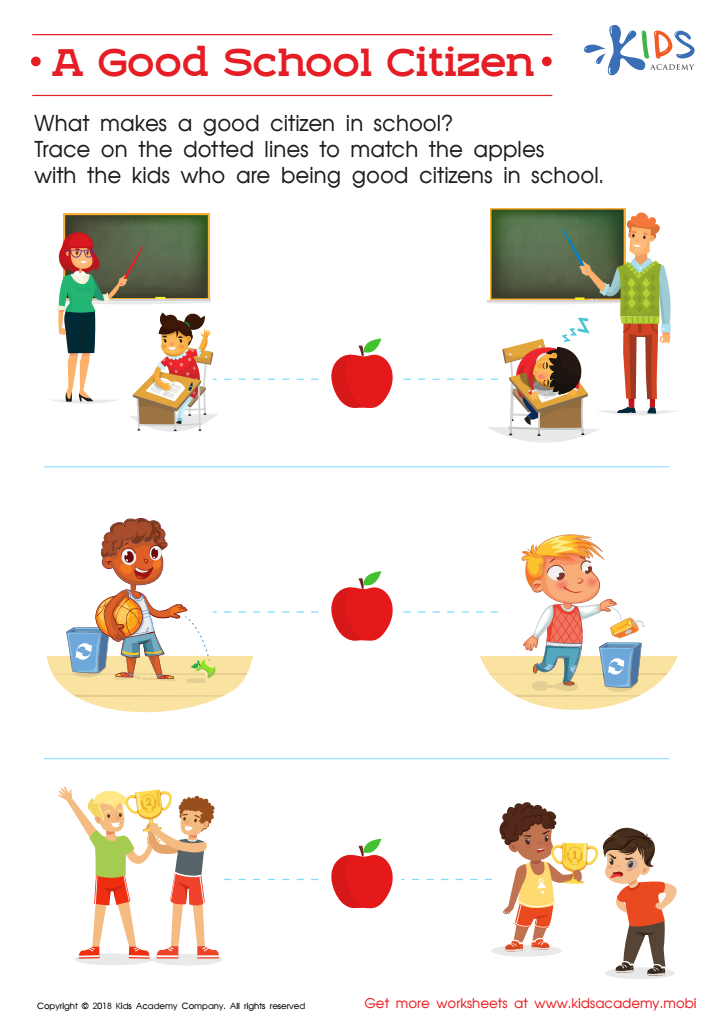
A Good School Citizen Worksheet






Understanding citizenship is crucial for children aged 4-5 because it lays the foundation for their values, social skills, and sense of belonging. At this developmental stage, young children are beginning to form their identities and understand their place in the world. Teaching them about citizenship helps them grasp the concepts of community, responsibilities, and respect for others.
Engaging young learners in discussions about citizenship cultivates empathy and cooperation. They learn the importance of sharing, following rules, and treating others with kindness, which contributes to a positive classroom and community environment. By exploring their roles as family and community members, children develop a sense of belonging, which is essential for emotional development.
Moreover, early education on citizenship can inspire children's curiosity about diverse cultures, traditions, and perspectives. This awareness fosters inclusivity and prepares them for future interactions in a multicultural society.
Parents and teachers play a pivotal role in guiding these discussions, helping children understand the bigger picture of being a responsible and active member of society. By nurturing these concepts in young minds, we empower future generations to become engaged, compassionate citizens who contribute positively to their communities.








