Understanding currency Worksheets for Ages 4-5
5 filtered results
-
From - To
Welcome to our "Understanding Currency Worksheets for Ages 4-5," designed to introduce young learners to the basics of money. These engaging and colorful worksheets help children recognize different coins and bills, enhancing their counting and money management skills. Through fun activities, including matching coins with their values, identifying money through pictures, and interactive practice, kids develop a foundational understanding of currency. Our resources promote early mathematical skills while keeping the learning experience enjoyable and accessible. Perfect for preschool and kindergarten classrooms or home learning, these worksheets will equip your little ones with essential financial literacy skills in a playful way!
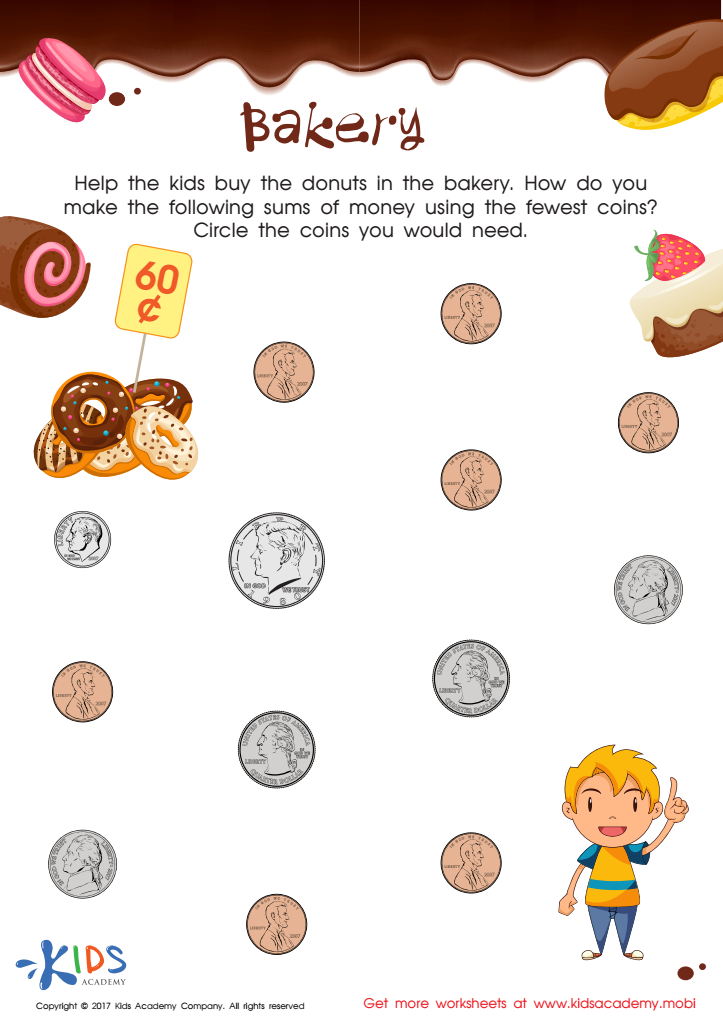
Counting Coins Worksheet
 Assign to My Students
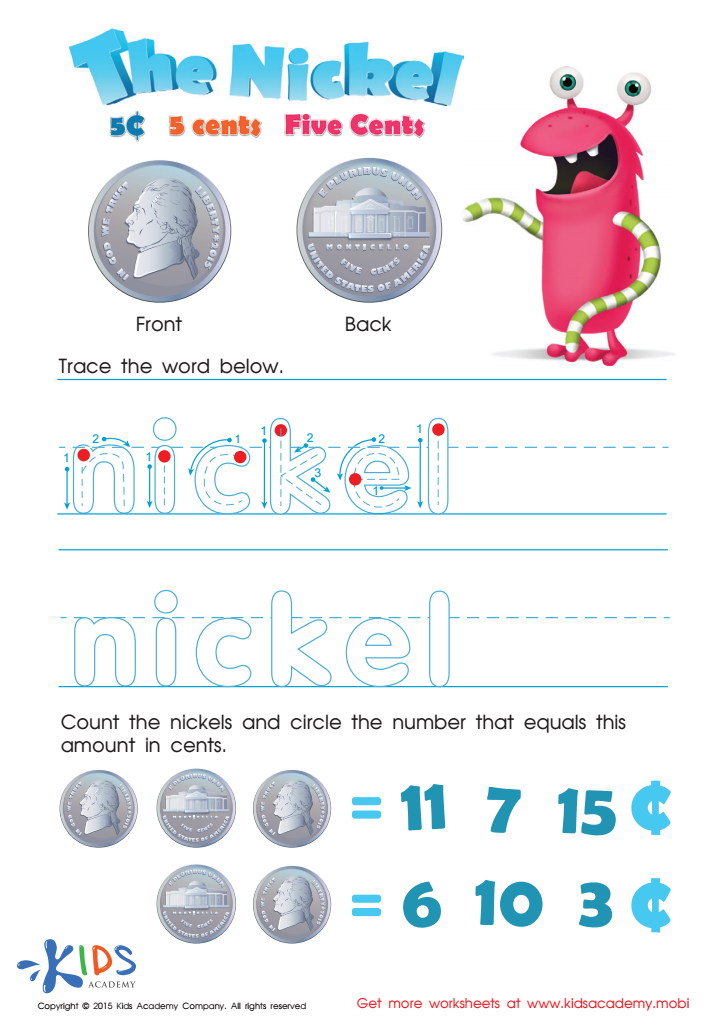
Five Cents or the Nickel Money Worksheet
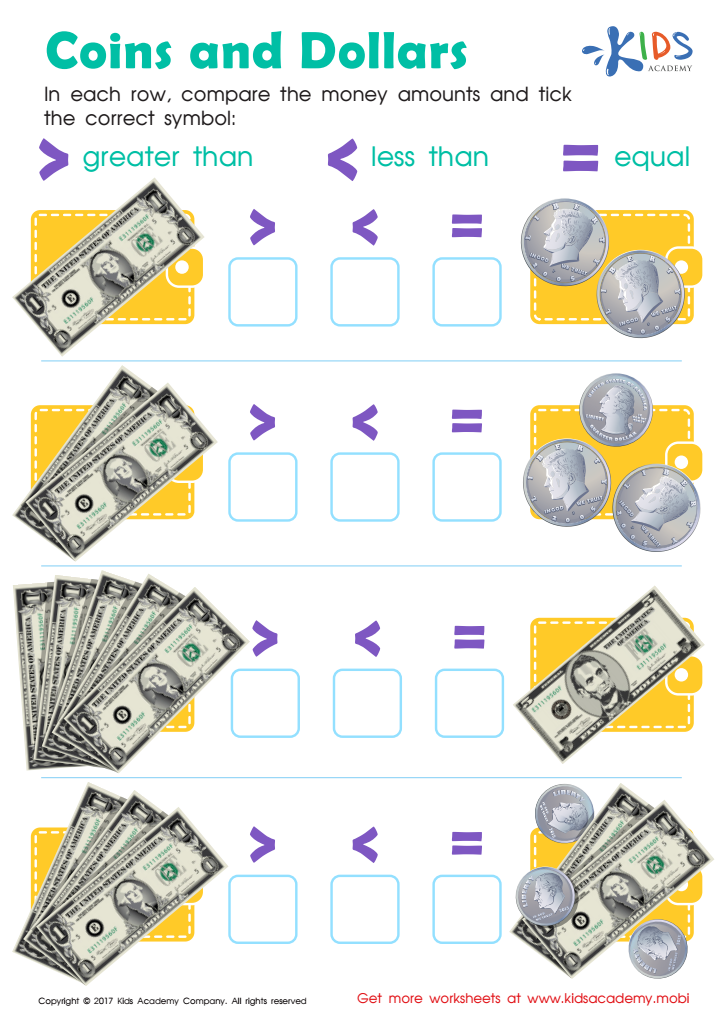
Money: Coins Dollars Printable
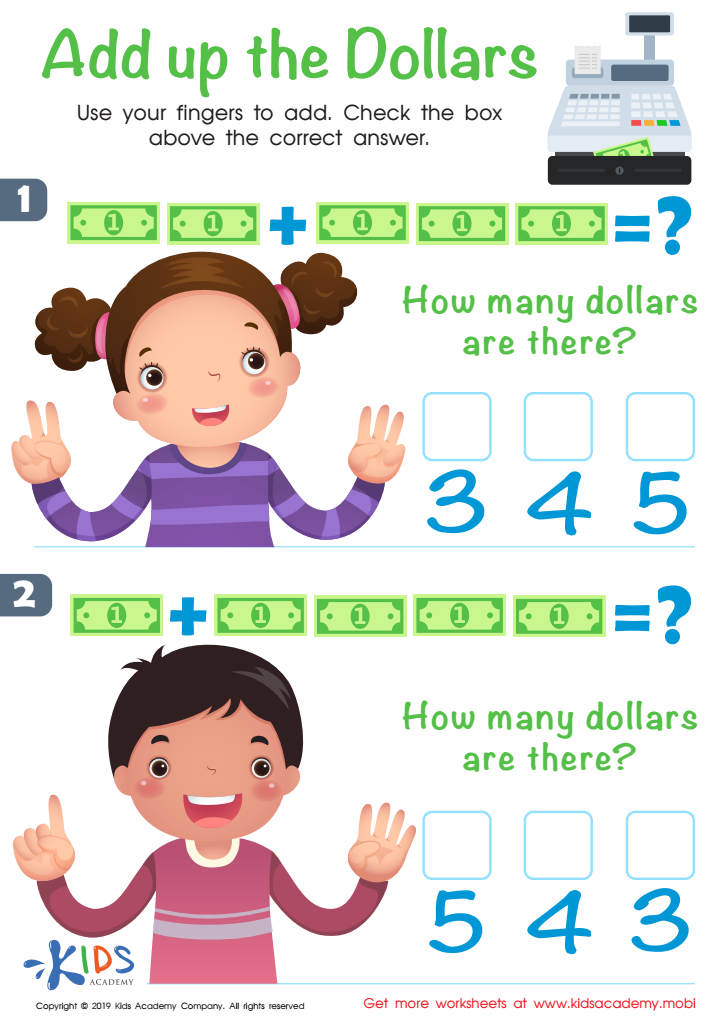
Add up the Dollars Worksheet






Understanding currency is crucial for children aged 4-5, as it lays the foundation for essential life skills. At this age, children are naturally curious and eager to learn about the world around them. Introducing them to the concept of money helps them grasp important concepts such as value, exchange, and financial responsibility.
By engaging with currency, young learners can enhance their mathematical skills, learning to count, recognize amounts, and understand basic addition and subtraction. These skills are vital in everyday situations, such as shopping or sharing items with friends. Moreover, discussing money encourages communication and social skills, as children may share experiences or trade items.
Understanding currency also nurtures decision-making skills. When children handle money, they learn the consequences of their choices, fostering a sense of accountability. This awareness can lead to healthier financial habits later in life. Furthermore, early interactions with money can spark interest in financial literacy, promoting a mindset that values savings and budgeting as they grow.
Incorporating currency education into daily activities can be both fun and practical, enabling parents and teachers to build a strong, well-rounded foundation in young children's understanding of economic concepts.








