Understanding ecosystems Worksheets for Ages 4-5
4 filtered results
-
From - To
Introduce your child to the wonders of nature with our "Understanding Ecosystems Worksheets for Ages 4-5." These engaging and colorful worksheets are designed to help young learners explore different ecosystems and the unique plants and animals that inhabit them. By combining fun activities with educational content, kids will enhance their critical thinking and observational skills. Our worksheets cover essential topics such as forests, oceans, and deserts, making learning an adventure. Perfect for preschool and kindergarten kids, these resources ensure that the first steps in scientific discovery are both enjoyable and enlightening. Give your child a head start in environmental education today!
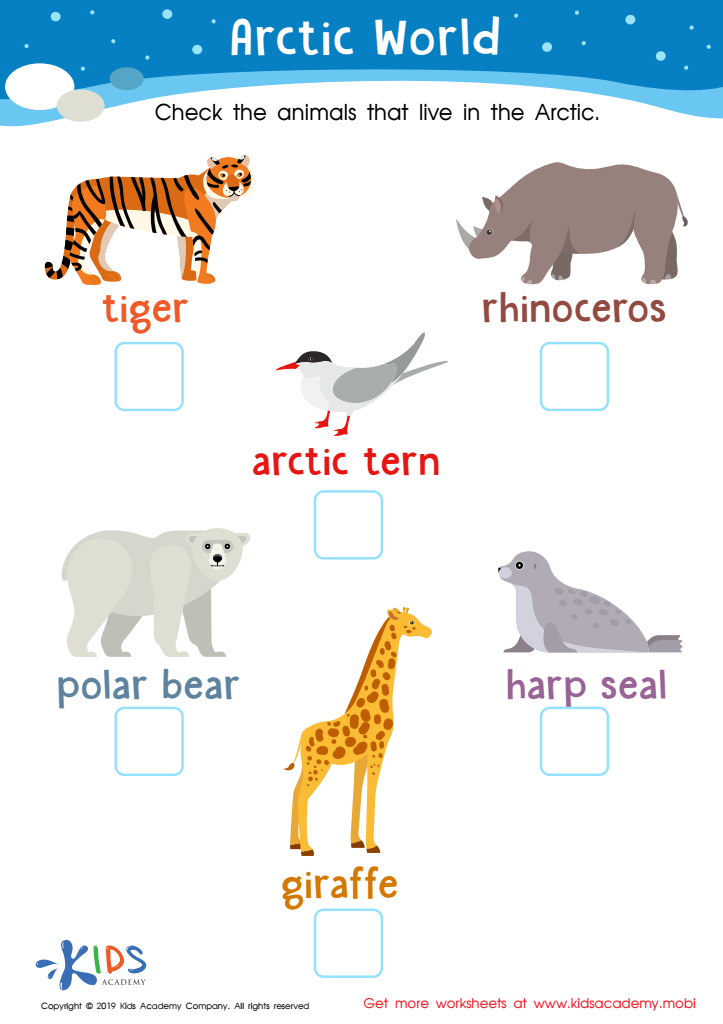
Arctic World Worksheet
 Assign to My Students
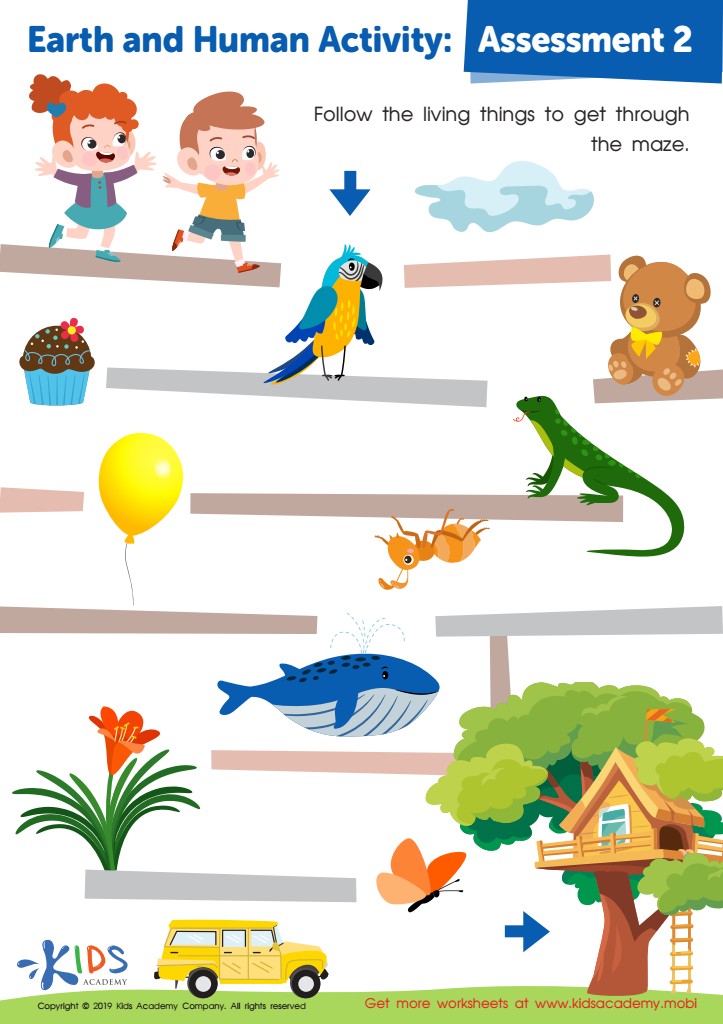
Earth and Human Activity: Assessment 2 Worksheet
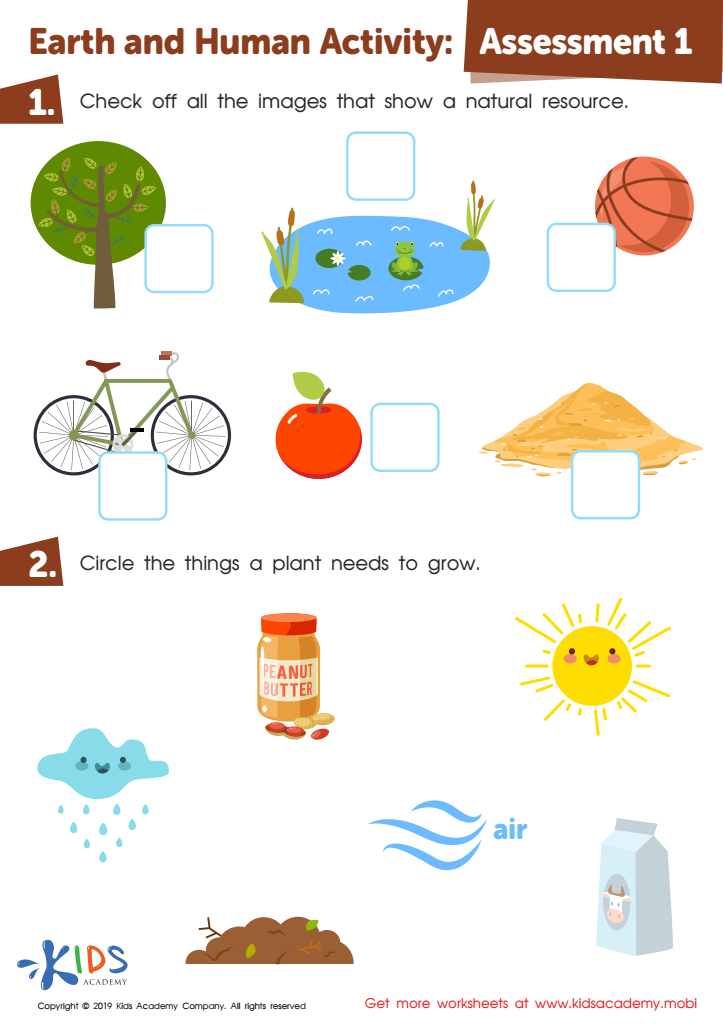
Earth and Human Activity: Assessment 1 Worksheet
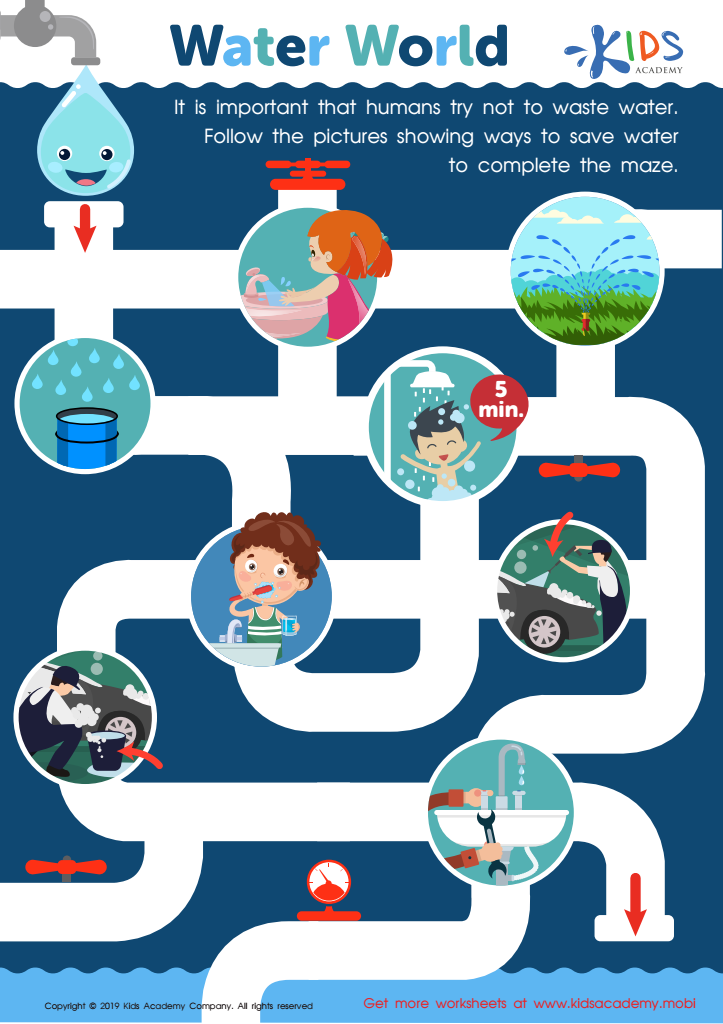
Water World Worksheet







Understanding ecosystems at ages 4-5 is pivotal for several reasons, bringing long-term benefits for children. For starters, young kids are naturally curious, and learning about ecosystems taps into this curiosity by introducing them to the world around them in an engaging way. When parents and teachers explore topics like plants, animals, weather, and the environment with children, it sparks a love for nature and science early on.
Introducing this knowledge fosters cognitive development. Understanding how living and non-living things interact helps children develop critical thinking and problem-solving skills. They begin to see connections between different elements of the natural world, fostering analytical skills that are useful in all areas of learning.
Moreover, learning about ecosystems builds a sense of responsibility towards the environment. At an impressionable age, kids can begin to understand the importance of taking care of the planet, leading to environmentally conscious adults in the future. Activities like planting a garden or recycling can form lifelong eco-friendly habits.
Lastly, it promotes empathy and cooperation. Seeing how plants and animals depend on each other teaches children empathy and the value of working together. Developing these social-emotional skills early is crucial for their overall development. Understanding ecosystems sets the foundation for respect, care, and sustainable living.








