Understanding number relationships Worksheets for Ages 4-5
4 filtered results
-
From - To
Discover our "Understanding Number Relationships Worksheets for Ages 4-5," designed to help young learners grasp basic math concepts in an engaging and interactive way. These printable worksheets introduce children to counting, comparing, and recognizing number patterns, laying a strong foundation for future math success. Each activity is crafted to enhance cognitive skills and boost confidence in early math, making learning fun and effective. Perfect for preschoolers and kindergartners, our worksheets promote hands-on practice and a love for numbers. Equip your child with the essential skills they need to excel in math with Kids Academy's expertly designed resources.
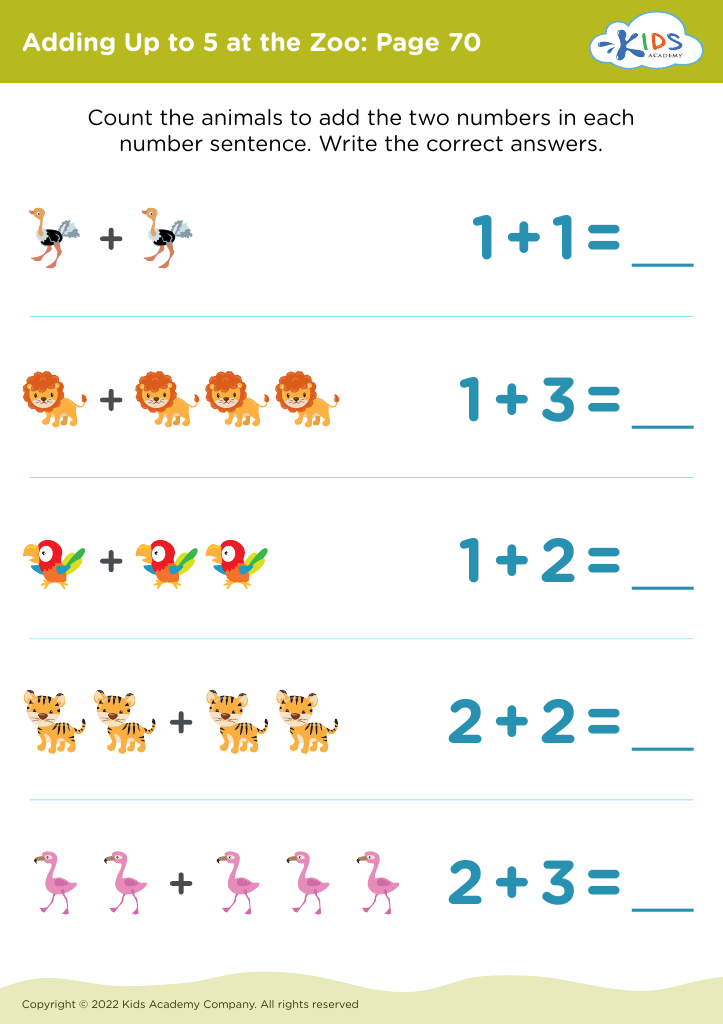
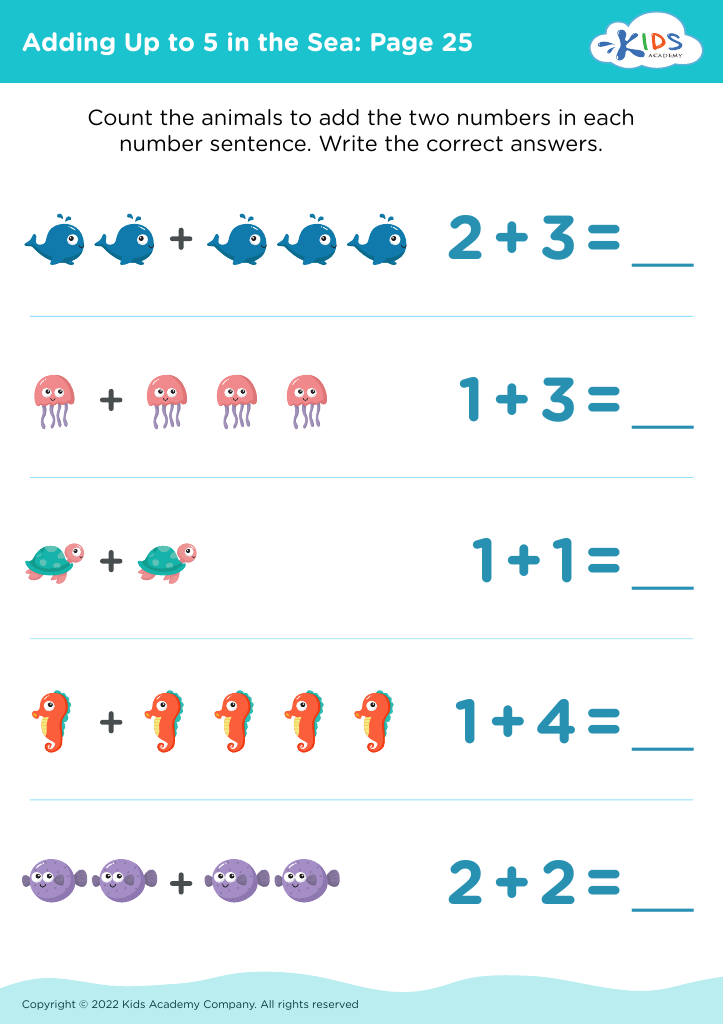
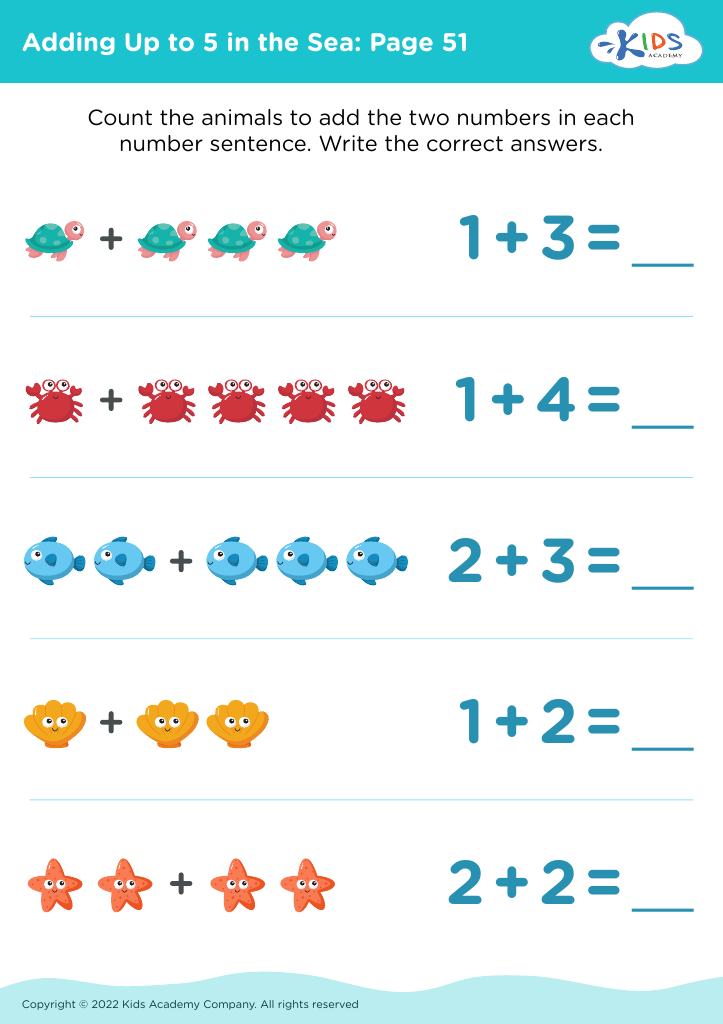
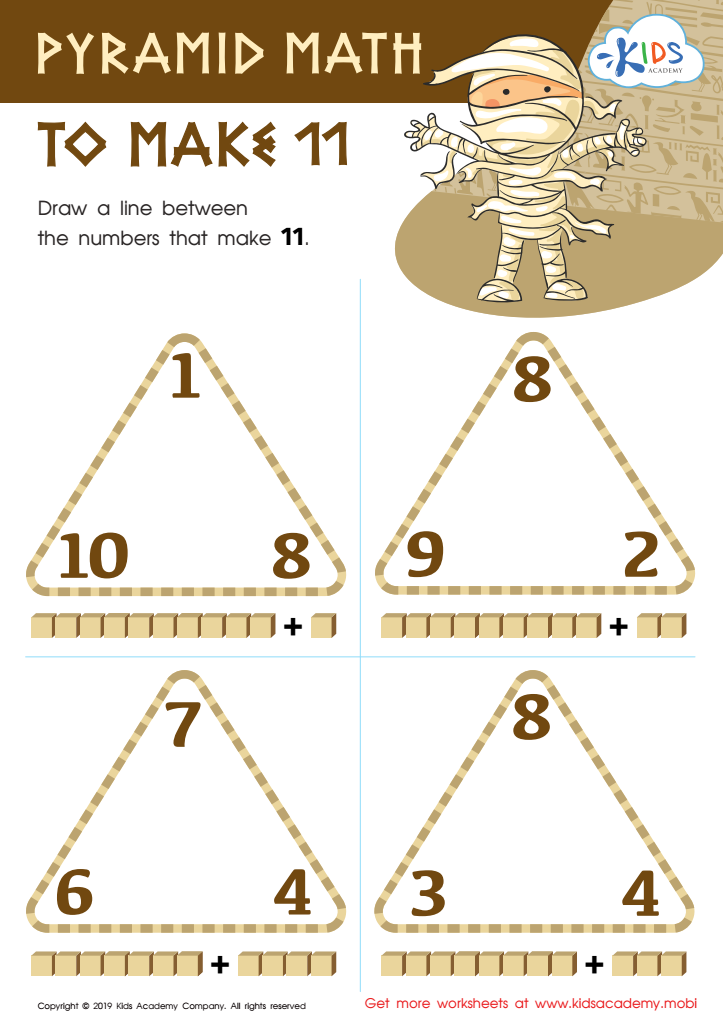
Pyramid Math to Make 11 Worksheet
 Assign to My Students







Understanding number relationships at ages 4-5 forms a critical foundation for young learners, significantly influencing their future mathematical abilities. At this stage, children are beginning to comprehend concepts of counting and quantity, which are the building blocks of numeracy. Delving into number relationships, such as grasping "more than," "less than," or "equal to," enables them to develop a concrete sense of comparison and estimation.
By mastering these early relationships, children can smoothly transition to more advanced mathematical operations like addition, subtraction, and understanding patterns. This not only enhances their problem-solving skills but also fosters logical thinking and reasoning. Parents and teachers play a pivotal role by nurturing these concepts through engaging, hands-on activities, like counting objects, playing with blocks, or interactive games.
Moreover, establishing a solid number sense early on boosts children's confidence and enthusiasm toward math, reducing potential anxieties around the subject as they progress through school. Recognizing and supporting the development of number relationships during these formative years sets the stage for academic success, empowering young learners with the tools they need to excel in a world increasingly driven by quantitative and analytical skills. Therefore, investing time and effort now can yield significant long-term educational and cognitive benefits.








