
Understanding opposites Worksheets for Ages 4-5
7 filtered results
Difficulty Level
Grade
Age
-
From - To
Subject
Activity
Standards
Explore our engaging "Understanding Opposites Worksheets" designed specifically for children aged 4-5! These worksheets offer a fun and interactive way for young learners to grasp the concept of opposites through vibrant illustrations and age-appropriate activities. Each worksheet promotes vocabulary development and critical thinking skills, helping kids distinguish between pairs like hot/cold, big/small, and more. Ideal for teachers and parents alike, these printable resources encourage hands-on learning and can easily be integrated into home or classroom settings. Foster your child's understanding of opposites while making learning enjoyable with our carefully crafted worksheets. Start the adventure today!
Favorites
With answer key
Interactive
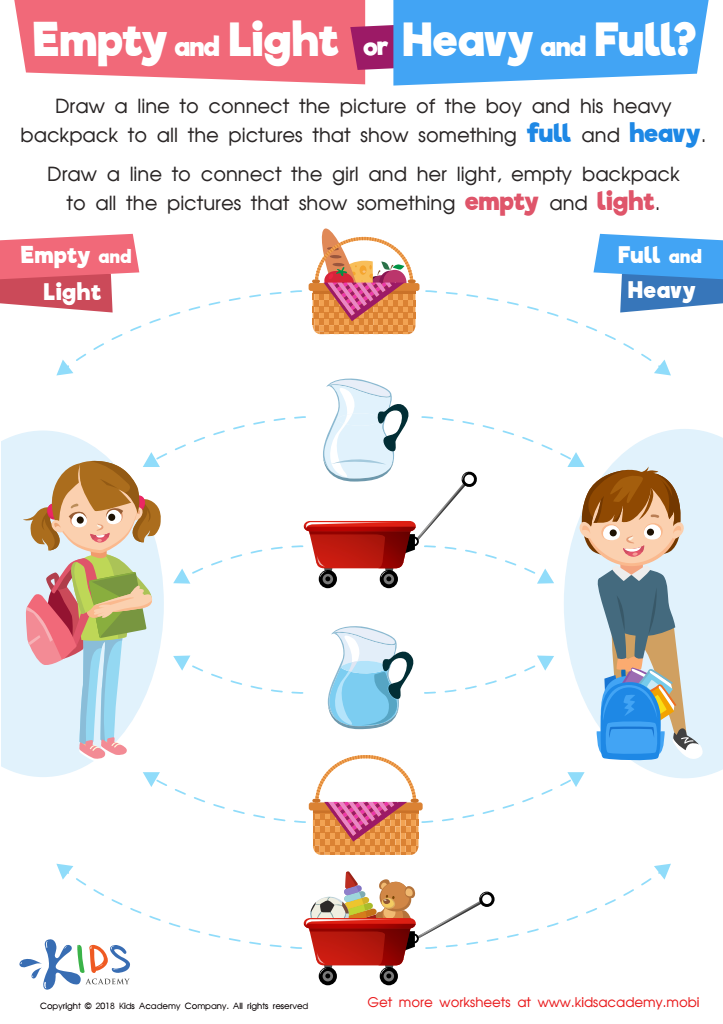
Empty and Light or Heavy and Full? Worksheet
Kids can have trouble understanding measurement, like the differences between heavy and light. This worksheet helps them associate full with heavy and empty with light, using familiar images. Plus, it's a fun way to practice fine motor skills, tracing the lines to connect the pictures.
 Assign to My Students
Empty and Light or Heavy and Full? Worksheet
Worksheet
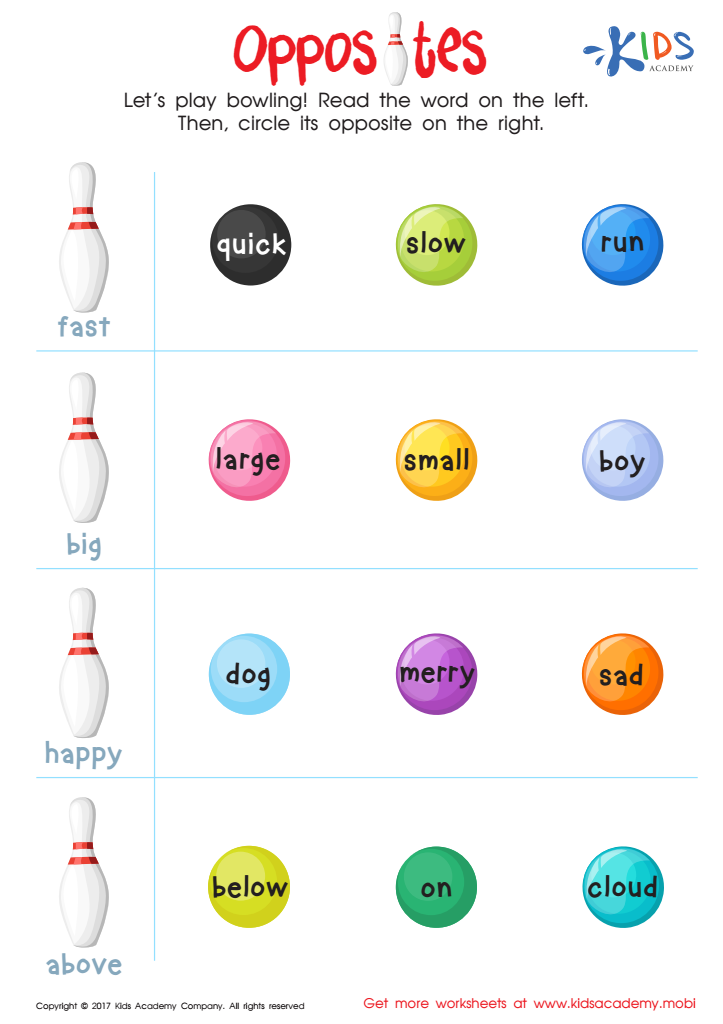
Opposites Worksheet
Have your students identify and circle the opposites of the words on the left. As a fun bowling-themed exercise, read the words and ask your kids if they know the opposites. Look through the options on the right and see if the answer is there; then, circle the correct answers.
Opposites Worksheet
Worksheet
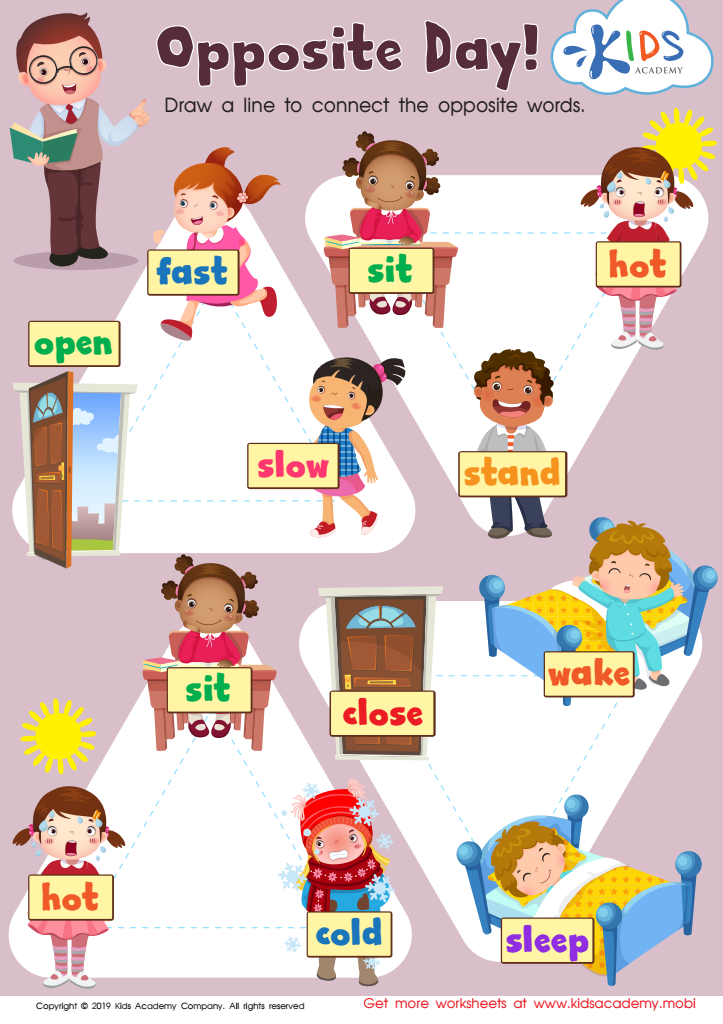
Opposite Day Worksheet
Early learners need to know about opposites to improve their higher-order thinking and critical thinking. This fun worksheet helps them understand the concept, practice opposite words, read high-frequency words and work on fine motor skills. Download the traceable PDF to get started.
Opposite Day Worksheet
Worksheet
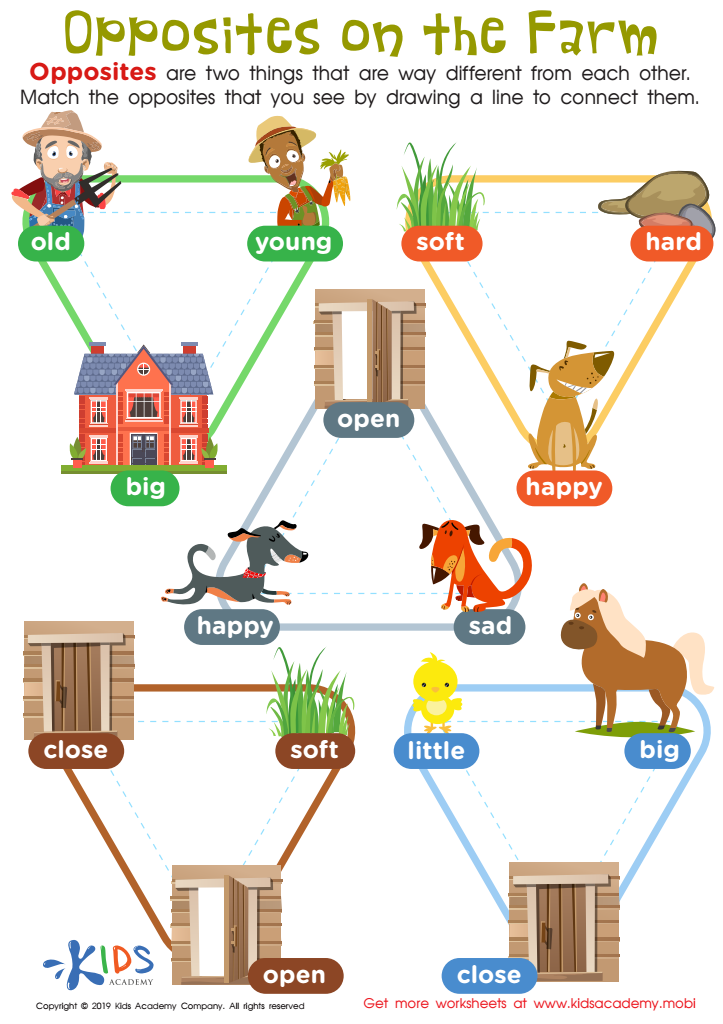
Opposites on the Farm Worksheet
Teaching children the concept of opposites is important for their development. This worksheet offers a fun way to practice. Kids can use traceable lines to match farm imagery with pairs of opposites. It's a great way to help them compare and contrast, a key skill for reading, math, writing and more.
Opposites on the Farm Worksheet
Worksheet
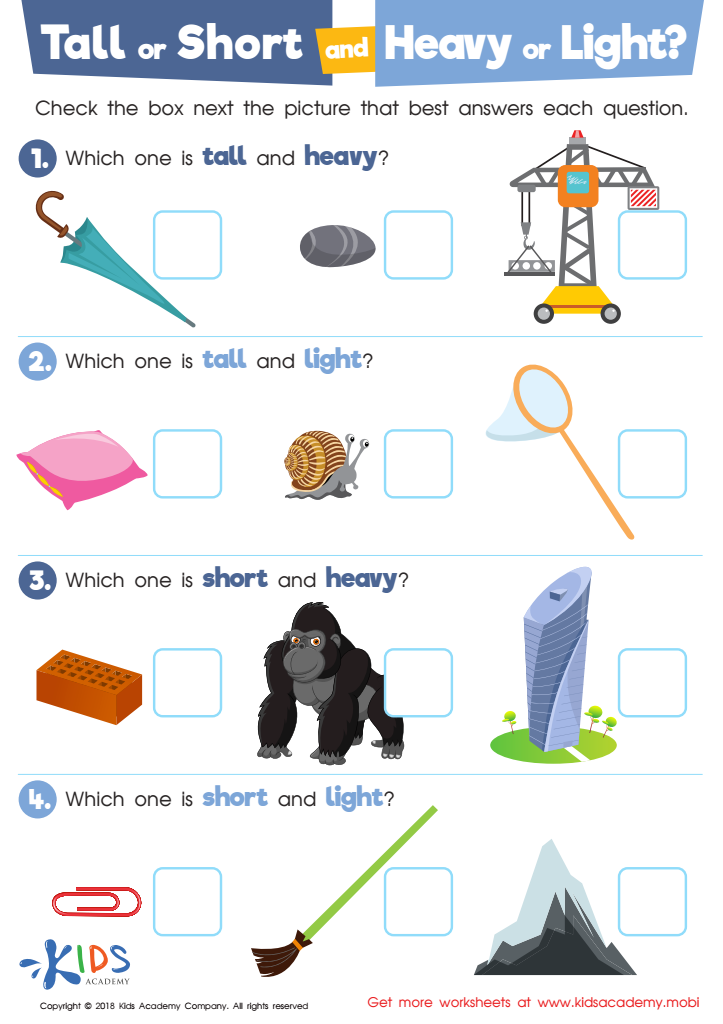
Tall or Short and Heavy or Light? Worksheet
Young children can find basic measurement concepts tricky. This PDF introduces them to the appropriate vocabulary for describing heavy, light, tall and short items, by using familiar pictures. It helps them accurately select which items fit each category.
Tall or Short and Heavy or Light? Worksheet
Worksheet
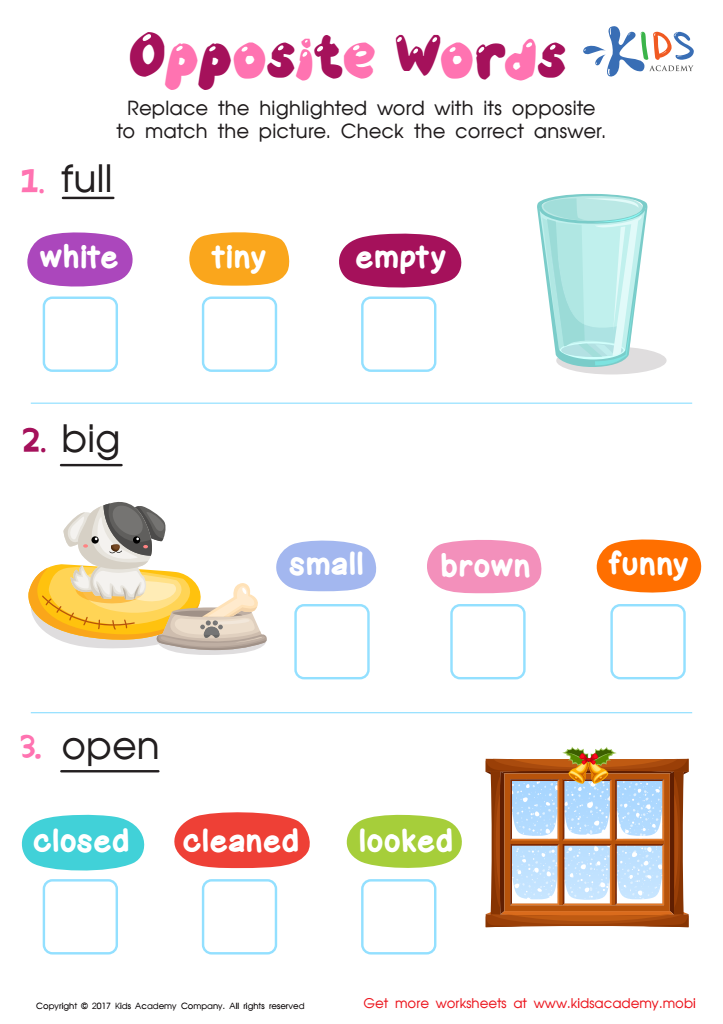
Opposite Words Worksheet
Help your child learn words and opposites. Look through a worksheet with them. Ask if they can read the underlined words. Then, ask which highlighted word is the opposite of the underlined word. The answer should match the picture.
Opposite Words Worksheet
Worksheet
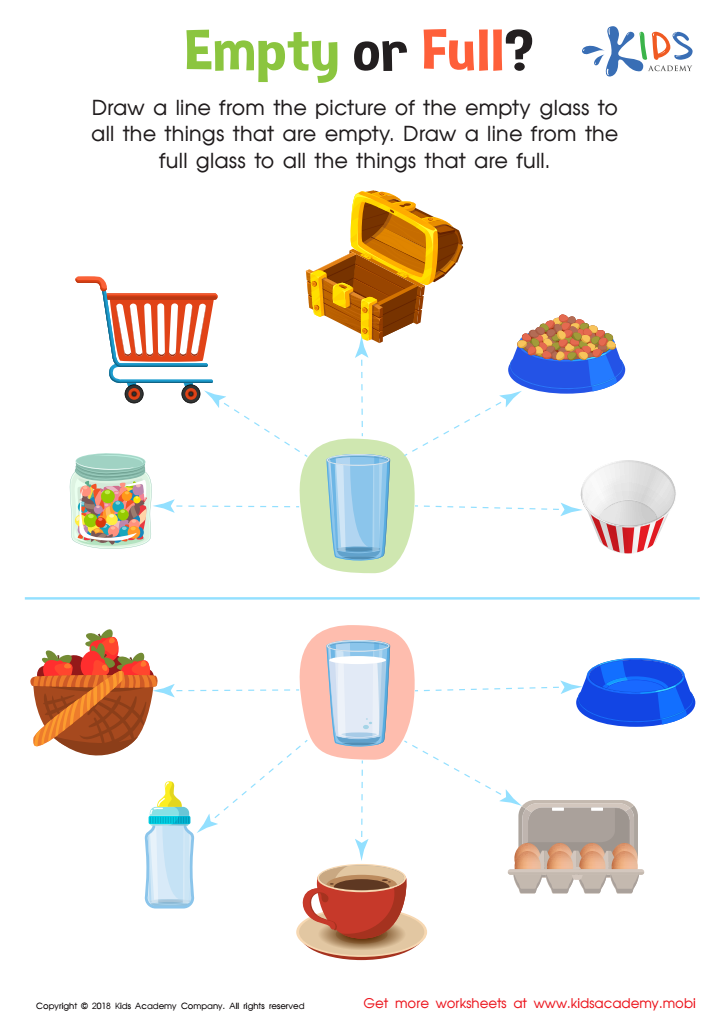
Empty or Full? Worksheet
Let students get to grips with the concepts of empty and full with this PDF worksheet. It uses fun, bright pictures to help them comprehend the difference and also helps develop fine-motor skills with tracing lines. Kids will be proud of themselves as they get answers right!
Empty or Full? Worksheet
Worksheet
Join Kids Academy for Free
Who is primarily going to use this learning content?




Understanding opposites is a fundamental concept for young children, particularly for those aged 4-5. It lays the groundwork for cognitive development, language skills, and critical thinking. At this stage, children are starting to explore the world around them, and grasping opposites enhances their ability to describe and engage with their environment effectively.
When children learn about opposites, such as hot/cold, big/small, or happy/sad, they enrich their vocabulary and enhance their communication skills. This understanding allows them to express their feelings and experiences more clearly. Additionally, recognizing opposites helps develop strong reasoning skills, as children begin to differentiate between various concepts and categorize them in their minds.
Furthermore, learning opposites promotes social and emotional understanding. Children who navigate the nuanced differences between concepts can recognize emotions in themselves and others, fostering empathy and emotional intelligence. Parents and teachers play a vital role in reinforcing this learning through playful activities, songs, and dialogues focused on contrast.
Incorporating lessons on opposites in everyday play and discussions cultivates an engaging learning environment. By doing so, parents and educators will not only enrich a child's vocabulary and comprehension, but also lay the foundation for essential life skills, ultimately promoting holistic development.








